

2014-2019 Ford Flex 3.5L AWD Transmission: Problems, Identification, and Used Replacement
Identify the DA8P-7000-SB 6F50 transaxle, learn what causes harsh shifting and PTU failures, and know exactly what to check before buying a used replacement unit.
- The replacement transmission's unique 13-digit Solenoid Strategy Code and 7-digit Solenoid Body ID must be programmed into the vehicle's PCM to prevent immediate shift problems and clutch damage.
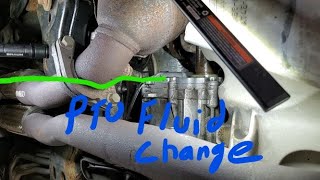
- The Power Transfer Unit (PTU) is a major weak point; its fluid must be changed with 75W-140 synthetic gear oil every 15,000-30,000 miles to prevent overheating and failure.
- Before purchasing, confirm your Flex is a 2014-2019 AWD model with the naturally aspirated 3.5L V6 (VIN '8') and matches the transmission ID DA8P-7000-SB, as units from FWD, EcoBoost, or other Ford models are not interchangeable.
- Always perform a high-pressure flush of the transmission cooler and lines before installing a replacement unit to remove contaminants that will destroy the new transmission.
- Ensure the torque converter is fully seated with a 'three-click' drop during installation to avoid cracking the internal fluid pump when tightening the bellhousing bolts.
Is This the Right Transmission for Your Ford Flex?


This article covers the automatic transmission assembly for the 2014-2019 Ford Flex equipped with the naturally aspirated 3.5L V6 engine and All-Wheel Drive (AWD). This specific six-speed transaxle is part of the Ford 6F50/6F55 family and is identified by the engineering code DA8P-7000-SB (or DA8P7000SB).
Pre-Purchase Checklist
Before purchasing a replacement transmission, verify these details on your Ford Flex to ensure compatibility:
- Check the VIN: The 8th digit of your Vehicle Identification Number (VIN) must be '8'. This confirms the vehicle has the naturally aspirated 3.5L Cyclone V6 engine.
- Confirm Drivetrain: Your vehicle must be an All-Wheel Drive (AWD) model.
- Check Door Sticker: The vehicle certification label, located on the driver's side door jamb, should have the code 'J' under the 'TR' (Transmission) section.
- Match the ID Tag: If possible, locate the identification tag on your current transmission case and confirm it matches the part number DA8P-7000-SB.
Pro Tip: A white tag on the top of the transmission case contains two critical numbers needed for installation: the 13-digit Solenoid Strategy Code and the 7-digit Solenoid Body ID. Ensure these numbers are legible on the used unit you purchase.
What Will Not Fit?
Warning: Not all transmissions from similar Ford models are interchangeable. Ordering the wrong unit is a common and costly mistake.
| Incompatible Part | Reason for Incompatibility |
|---|---|
| Front-Wheel Drive (FWD) Versions | Transmissions from FWD Flex models will not work. They lack the necessary output splines and mounting points for the Power Transfer Unit (PTU), which directs power to the rear wheels. |
| EcoBoost Engine Versions | Transmissions from a Flex with the 3.5L EcoBoost twin-turbo V6 (VIN 'T') are a different configuration (typically the heavier-duty 6F55) and are not compatible. |
| Other Ford/Lincoln Models | While models like the Ford Explorer, Taurus, and Lincoln MKT use similar 6F50/6F55 transmissions, they have different case mounting points, wiring harnesses, and computer calibrations that make them incompatible. |
Common Failure Symptoms
A failing 6F50/6F55 transmission can exhibit several distinct symptoms. If you experience any of the following, a transmission inspection is recommended:
- Sudden loss of Reverse, 3rd, or 5th gears.
- Harsh, erratic, or delayed shifting.
- A feeling of slipping or a neutral condition during acceleration.
- Illumination of the wrench or check engine light on the dashboard, often with transmission-related Diagnostic Trouble Codes (DTCs).
- A shudder or vibration, especially during acceleration in AWD models. 🎬 See this video guide on fixing transmission shudder
- A complete loss of power to the wheels, which could indicate a disengaged halfshaft.
Diagnostic Flowchart

Known Issues, Recalls, and Technical Service Bulletins (TSBs)
Several documented issues affect this transmission family. When diagnosing problems, reference these official service documents.
Direct Clutch Cylinder Snap Ring Failure (SSM 50861)
Affecting some 2015-2016 models, a snap ring in the direct clutch assembly can be forced out of position. This typically results in a sudden loss of Reverse, 3rd, and 5th gears and may set DTCs like P0715, P0717, P0756, or P2701. The remedy requires a transmission rebuild to replace the damaged direct clutch hub and cylinder.
Halfshaft Disengagement (NHTSA Recall 14V-393)
This critical safety recall applies to 2013-2014 Ford Flex models. The right front halfshaft retention clip may not have been properly installed at the factory, allowing the shaft to disengage from the driveline. This results in a complete loss of motive power and can allow the vehicle to roll away even when in Park if the parking brake is not engaged. Dealers will inspect the halfshaft and replace components free of charge if necessary.
PTU (Power Transfer Unit) Fluid Overheating
Pro Tip: Regular (every 15,000 to 30,000 miles) draining and refilling of the PTU with 75W-140 synthetic gear oil is a critical preventative measure to avoid costly failure.
A common issue for 2014-2019 AWD models is the severe overheating of the fluid in the PTU, which is bolted to the transmission. The PTU's small fluid capacity and proximity to the hot exhaust can cause the gear oil to break down, leading to bearing failure and a costly PTU replacement.
Turbine & Output Shaft Speed Sensor Failures (TSB 12-4-8)
Across all 2014-2019 model years, failures of the internal Turbine Shaft Speed (TSS) and Output Shaft Speed (OSS) sensors are known to occur. This can cause erratic shifting, a loss of the speedometer, and various transmission fault codes (DTCs P0715, P0717, P0720, P0721, P0722). Replacing these sensors requires significant labor, as they are located inside the transmission case.
AWD Shudder and Vibration (TSB 10-22-4)
Affecting 2014-2019 models, owners may experience a shudder or vibration from the driveline. This often requires servicing the AWD fluid or addressing mechanical wear in the AWD system.
Rear Drive Unit (RDU) Clutch Fault Codes (SSM 46703)
For 2013-2017 models, fault codes related to the Rear Drive Unit clutch may appear. The fix involves installing an RDU service kit.
Fuel Pump Control Module (Safety Recall)
While not a transmission issue, a safety recall was issued for 2013-2015 models due to a faulty fuel pump control module that could cause the engine to stall or fail to start. This is important to check if the vehicle experiences a sudden loss of power.
Real Owner Experiences
To understand how these failures happen in the real world, here is a collection of actual owner reports regarding the Ford Flex transmission and AWD system.
| Source | Mileage | What Happened | Cost |
|---|---|---|---|
| Reddit r/FordFlex | 22,437 | Owner performed a preventative PTU fluid change and found the fluid was already dark and smelly with metal shavings on the magnetic drain plug. | DIY |
| CarComplaints.com | 28,000 (average) | The most common transmission problems reported for the Ford Flex occur at an average of 28,000 miles. | $1,800 (average) |
| Reddit r/Ford | ~50,000 | A 2016 Flex owner noticed a burning smell and was informed by a shop that the PTU was leaking onto the exhaust. The failure was considered common for the platform. | N/A |
| CarComplaints.com | 83,000 | A 2011 Flex experienced a complete PTU failure, a problem the repair shop identified as common. | N/A |
| Reddit r/FordFlex | ~85,000 | A 2013 Flex had its PTU replaced under the powertrain warranty. | $0 (Warranty) |
| 100,000 km | Replaced the water pump, a common related repair that requires engine removal. | ~$3,400 CDN | |
| YouTube Comment | 136,000 | Owner of a 2014 Flex reported noticing transmission issues (harsh shifting) for a long time but found it was manageable by using manual mode. | N/A |
| Reddit r/FordFlex | 140,000 | A 2016 EcoBoost model experienced a complete transmission failure. It was replaced with a used unit from a 2017 model with 70k miles. | N/A |
| BobIsTheOilGuy Forums | 150,000 | A 2010 Flex with the 6F55 transmission had a torque converter clutch failure. The owner was swapping in a used transmission and remanufactured torque converter. | DIY |
| YouTube | 190,000 | A reviewed 2014 Flex with 190k miles was noted to have a transmission that did not shift like new, though it was still running. The video highlighted that these transmissions are known for harsh shifts and slipping. | N/A |
| Reddit r/FordFlex | 227,000 | A 2009 model ran to 227,000 miles before being sold in running condition. | N/A |
| Reddit r/FordFlex | 520,000 | An outlier 2009 Flex reportedly reached over 520,000 miles on the original engine and transmission, demonstrating that a very long life is possible with consistent maintenance. | N/A |
| SHO Forum | Not specified | Sought other opinions after being quoted $5,100 for a PTU replacement. Another owner paid $2,800-$2,900 for the same job. | $2,800 - $2,900 (comparable job) |
| Ford Forum | Not specified | Owner replaced transmission themselves and was quoted for the mandatory solenoid strategy programming by the dealer. | Seeking alternative to $220 dealer fee. |
What Fails at Every Mileage Band
Pro Tip: The mileage bands below describe what to expect from used replacement units of that mileage. The checklists provided are things to do WHILE INSTALLING the purchased unit, not maintenance for your current vehicle.
Under 60,000 Miles
Even at low mileage, the Power Transfer Unit (PTU) is a significant weak spot, with failures and leaks reported well under 60,000 miles. Some owners report a burning smell as the primary symptom when the PTU leaks onto the exhaust. Some transmission problems, such as harsh or erratic shifting, can occur at very low mileage, with an average occurrence reported around 28,000 miles. The halfshaft disengagement recall (NHTSA 14V-393) affects 2013-2014 models, which could cause a loss of power.
- ✓Do during install (required): Perform a drain and fill on the Power Transfer Unit (PTU) using 75W-140 synthetic gear oil. This is the most critical preventative maintenance item, as the 'lifetime' fluid often fails very early.
- ✓Do during install (required): Flush the transmission cooler and lines thoroughly to remove any potential contaminants from the previous unit.
- ✓Cheap insurance while the engine is out: Replace all external seals, including axle seals and the torque converter hub (front pump) seal, as a low-cost preventative measure.
60,000 - 100,000 Miles
PTU failures continue to be a common issue in this range, often due to the original 'lifetime' fluid overheating and breaking down. General transmission issues like slipping, jerking, and harsh shifting become more prevalent if the fluid has not been serviced. The direct clutch snap ring failure (affecting 2015-2016 models) can occur in this mileage band, leading to a loss of Reverse, 3rd, and 5th gears.
- ✓Do during install (required): Change the PTU fluid with 75W-140 synthetic gear oil. If buying a used unit in this mileage range, assume the PTU fluid is cooked and must be replaced.
- ✓Do during install (required): Flush the transmission cooler and lines to prevent contamination.
- ✓Do during install (recommended): If the used transmission has over 60,000 miles, strongly consider performing a drain and fill with fresh MERCON LV fluid before installation, as the internal filter is non-serviceable.
- ✓Cheap insurance while the engine is out: Replace the torque converter hub seal, axle seals, and the PTU-to-transmission seals.
100,000 - 150,000 Miles
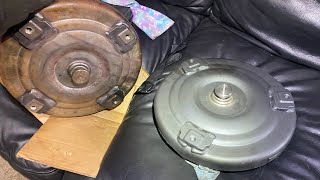
Torque converter failure, specifically the lock-up clutch, can occur, leading to shuddering. Complete transmission failure is more common in this range, especially if fluid changes have been neglected. Symptoms include slipping, harsh shifts, and loss of gears. PTU failure is almost expected if the fluid has never been changed. One owner reported a failure before 146,000 miles, with the old fluid resembling tar.
- ✓Do during install (required): Given the mileage, assume the PTU is on borrowed time. Replace its fluid (75W-140 synthetic) immediately.
- ✓Do during install (required): A complete flush of the cooler and lines is non-negotiable to protect the replacement unit.
- ✓Do during install (recommended): Consider replacing the torque converter with a remanufactured unit while the transmission is out, as shudder and failure are common at this mileage.
- ✓Cheap insurance while the engine is out: Replace all external seals (axle, front pump) and the PTU seals.
150,000+ Miles
At this mileage, failures are typically due to accumulated wear and tear. Problems include general slipping, harsh shifting, and component breakdown from fluid degradation. The internal, non-serviceable filter is likely to be clogged, contributing to fluid starvation and overheating. Water pump failure on the 3.5L engine becomes a major concern, which is an engine-out job and often done at the same time as a high-mileage transmission replacement.
- ✓Do during install (required): Service the PTU with fresh 75W-140 synthetic gear oil.
- ✓Do during install (recommended): At this mileage, a used transmission is a significant gamble. A remanufactured unit with a warranty is a much safer investment.
- ✓Cheap insurance while the engine is out: If proceeding with a high-mileage used unit, replace the torque converter, all external seals, and perform a meticulous flush of the cooler and lines.
Repair or Replace?
When facing transmission issues, deciding whether to repair your current unit or replace it entirely depends on the specific failure.
When Repair Makes Sense
| Scenario | Typical Repair Cost | Notes |
|---|---|---|
| Turbine/Output Shaft Speed Sensors | $400 - $800 | Makes sense if codes (e.g., P0720, P0722) point to sensors and the transmission otherwise shifts normally. Labor is a significant cost as sensors are internal. |
| External PTU Failure | $1,500 - $2,900 | Applicable when the transmission is healthy but the PTU is failing. A remanufactured PTU costs around $1,500 plus labor. |
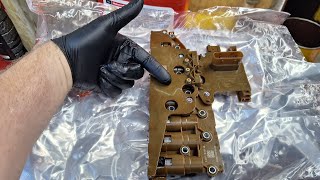
| Solenoid Body / Valve Body Issues | $800 - $1,500 | An option for shift quality problems without major mechanical failure. A solenoid kit is under $200, but labor and mandatory programming increase the cost. |
When Replacement is Smarter
Replacement is the better option when the vehicle experiences a loss of multiple gears (specifically Reverse, 3rd, or 5th), which strongly indicates the common direct clutch snap ring failure. This repair requires a complete teardown, making a used or remanufactured unit more economically viable. Also, if significant metal debris is found in the transmission fluid pan, it points to widespread internal damage where a simple repair is unlikely to be a long-term solution. Given the high labor cost to remove and install the transmission, opting for a replacement is often the safer financial bet.
Used replacement units typically run $575 to $1,200, while remanufactured units range from $2,495 to $3,700. New OEM units from a dealer can range from $3,500 to over $7,000. Keep in mind that installation labor will add $1,000 to $2,200 to the total cost.
What's Included in a Used Assembly?
When purchasing a used transmission, it's important to know what parts are typically included. Based on industry standards, here is what you should expect:
| What's Typically Included | What's Not Included |
|---|---|
|
|
Note: The main filter is internal and not serviceable without splitting the transmission case.
Freight & Delivery Reality

Shipping a transmission is not like receiving a standard parcel. Based on verified shipping data, this transmission assembly weighs approximately 248 lbs and measures roughly 33" x 28" x 25" before crating. It ships as LTL (Less-Than-Truckload) freight on a wooden pallet.
- Delivery Location: If you are shipping to a residential address, a liftgate service will be required to lower the heavy pallet to the ground. Shipping directly to a commercial repair shop with a forklift or loading dock is highly recommended and often cheaper.
- Inspect Before Signing: When the freight carrier arrives, inspect the transmission and pallet for any signs of damage during transit before signing the delivery receipt. Once you sign, you are accepting the item in its current condition.
- Pre-Purchase Verification: A reputable seller will conduct a pre-purchase verification interview to confirm your VIN, drivetrain (AWD), and engine type to ensure you are receiving the correct DA8P-7000-SB unit.
Installation: Critical Steps and Programming

Installing this transmission is an advanced job that requires special tools and procedures for a successful outcome.
Special Tools & Difficulty
- DIY Difficulty: Advanced to Expert
- Shop Labor Estimate: 7 to 12 hours
- Special Tools: An engine support bar, heavy-duty transmission jack, subframe alignment pins, and a J2534 pass-thru programming device or Ford-compatible scan tool (IDS/FJDS or FORScan) are required.
Required PCM Programming
Warning: Skipping the Solenoid Strategy Programming will lead to immediate shift flares and clutch damage. This step is mandatory.
The vehicle's Powertrain Control Module (PCM) must be programmed with the replacement transmission's unique solenoid information. This involves entering the 13-digit Solenoid Strategy Code and the 7-digit Solenoid Body ID from the tag on the replacement unit into the PCM using a compatible diagnostic tool. After programming, an adaptive learning drive cycle must be performed to allow the computer to learn the new transmission's characteristics.
Installation "Gotchas"
Pay close attention to these common installation mistakes:
- Torque Converter Seating:
Warning: Ensure the torque converter is fully seated into the transmission's front pump. You should feel a 'three-click' drop when seating the converter. Failure to do this will crack the internal pump gears when the bellhousing bolts are tightened.
- Flush the Cooler: Perform a high-pressure flush of the transmission cooler and lines with solvent to remove any metal debris from the previous transmission failure. Contamination will destroy the replacement unit.
- PTU Spline Lubrication: Clean and apply high-temperature anti-seize to the transmission output and PTU input splines.
- Subframe Realignment: Mark or use alignment pins on the front subframe before lowering to preserve steering and suspension geometry.
- Check Fluid Level Correctly: The fluid level must be checked when the transmission is at operating temperature (180-200F) using the short dipstick located deep under the air intake ducting. Use only Motorcraft MERCON LV fluid (11 to 12 quarts for a dry fill).
- Shifter Cable Adjustment: Ensure proper alignment to prevent neutral safety switch errors or a no-start condition.
Questions to Ask Your Installer
Before handing over your vehicle, ask your mechanic these questions to ensure a proper installation:
- Have you confirmed the replacement unit is from an AWD, 3.5L non-turbo (VIN 8) Flex with the ID DA8P-7000-SB?
- Do you have the proper scan tool, like Ford's IDS/FJDS or FORScan with an extended license, to perform the Solenoid Body Strategy programming?
- Will you be performing a full flush of the transmission cooler and lines before installing the replacement unit?
- How will you verify the torque converter is fully seated (the 'three-click' method) to prevent pump damage?
- What brand of MERCON LV fluid will you be using for the refill?
- Will you also be servicing the PTU by draining and refilling it with 75W-140 synthetic gear oil?
- Does your quote include the necessary new seals, such as axle seals and the PTU-to-transmission seal?
- How will you ensure the subframe is correctly realigned after reinstallation to preserve vehicle alignment?
Frequently Asked Questions (FAQ)
Is this a 6F50 or 6F55 transmission?
The naturally aspirated 3.5L V6 in the Flex is typically paired with the 6F50. The 6F55 is a heavier-duty version often reserved for the more powerful EcoBoost engine. However, parts catalogs and sources sometimes use the names interchangeably. The most reliable way to ensure a match is to use the engineering ID code (DA8P-7000-SB) and your vehicle's VIN.
Can I really skip the computer programming?
No. The solenoid strategy is a calibration unique to each transmission's valve body. The PCM uses this data to control shift timing and pressure precisely. Without the correct strategy, the transmission will shift poorly, leading to premature clutch failure and other internal damage.
What fluid does the 2014-2019 Ford Flex transmission use?
This transmission requires Motorcraft MERCON LV automatic transmission fluid. A full, dry fill requires approximately 11 to 12 quarts. Do not use other types of fluid, as they can cause damage.
What is the expected lifespan of this transmission?
With proper maintenance, a Ford Flex can last around 200,000 miles. However, the transmission lifespan is heavily dependent on fluid changes. Technicians recommend a drain-and-fill of the MERCON LV fluid every 30,000 to 60,000 miles. The PTU fluid is even more critical and should be changed every 15,000 to 30,000 miles to prevent failure.
Can I use a transmission from a Front-Wheel Drive (FWD) Ford Flex?
No. Ordering a FWD transmission for an AWD vehicle is a common mistake. The FWD version lacks the necessary mounting provisions and output splines to connect to the Power Transfer Unit (PTU), which is required for the AWD system to function.
How much does it cost to replace the PTU?
If your PTU fails, a replacement typically costs between $1,500 and $2,900, including parts and labor. Because the PTU is bolted to the outside of the transmission, it can be replaced independently without removing the entire transmission assembly.
Helpful Videos
Technical Specifications
OEM Part Numbers: DA8P-7000-SB
Vehicle Fitment: 2014-2019 Ford Flex; Engine: 3.5L Naturally Aspirated V6 (VIN 8th digit '8'); Drivetrain: All-Wheel Drive (AWD); Transmission Family: Ford 6F50 / 6F55; Speeds: 6-Speed Automatic; Engineering ID: DA8P-7000-SB (or DA8P7000SB); Door Sticker Code (TR): J; Required Fluid Type: Motorcraft MERCON LV; Fluid Capacity (Dry Fill): 11 to 12 quarts; PTU Fluid Type: 75W-140 Synthetic Gear Oil; Weight (approx): 248 lbs; Dimensions (approx): 33" x 28" x 25"
We Have This Part in Stock


The information in this article is provided for general reference and educational purposes only. Vehicle specifications, procedures, and part compatibility can vary by production date, trim level, and region. Always consult your vehicle's factory service manual and verify part numbers before purchasing or performing repairs. Safety-critical components such as airbags, seat belts, and braking systems should be installed by a qualified professional.
- Ford Flex:
- 🎬 Helpful Videos
- 🛍️ Shop This Part
- Is This the Right Transmission for Your Ford Flex?
- Pre-Purchase Checklist
- What Will Not Fit?
- Common Failure Symptoms
- Diagnostic Flowchart
- Known Issues, Recalls, and Technical Service Bulletins (TSBs)
- Direct Clutch Cylinder Snap Ring Failure (SSM 50861)
- Halfshaft Disengagement (NHTSA Recall 14V-393)
- PTU (Power Transfer Unit) Fluid Overheating
- Turbine & Output Shaft Speed Sensor Failures (TSB 12-4-8)
- AWD Shudder and Vibration (TSB 10-22-4)
- Rear Drive Unit (RDU) Clutch Fault Codes (SSM 46703)
- Fuel Pump Control Module (Safety Recall)
- Real Owner Experiences
- What Fails at Every Mileage Band
- Under 60,000 Miles
- 60,000 - 100,000 Miles
- 100,000 - 150,000 Miles
- 150,000+ Miles
- Repair or Replace?
- When Repair Makes Sense
- When Replacement is Smarter
- What's Included in a Used Assembly?
- Freight & Delivery Reality
- Installation: Critical Steps and Programming
- Special Tools & Difficulty
- Required PCM Programming
- Installation "Gotchas"
- Questions to Ask Your Installer
- Frequently Asked Questions (FAQ)
- 🎟️ Get 5% Off