

2018-2020 Ford F-150 3.3L V6 Transmission: Problems, Identification, and Used Replacement
Identify whether your 3.3L F-150 has the 6R80 or 10R80 transmission, learn what causes them to fail, and discover when replacing with a used OEM unit is the smartest choice.
- Correctly identify your transmission as a 6-speed (TR code '6') or 10-speed (TR code 'G') using the door jamb label before purchasing, as they are not interchangeable.
- Programming the replacement unit's 13-digit Solenoid Body Strategy and 12-digit Solenoid Body ID is mandatory and requires a Ford-specific scan tool to prevent severe shifting problems.
- Always flush the transmission cooler and lines before installing a replacement unit to remove debris from the previous failure, and use the correct fluid: MERCON LV for the 6R80 and MERCON ULV for the 10R80.
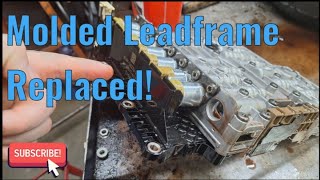
- For the 10R80, be aware of common CDF drum failures, while the 6R80 is prone to molded lead frame issues; consider preventative replacement of these parts when installing a used unit.
- Before condemning a 10R80 for harsh shifting, investigate cheaper software-based fixes like a PCM update and an adaptive learning reset as specified in Ford TSBs.
Identifying Your F-150's Transmission: 6-Speed or 10-Speed?


For the 2018–2020 model years, Ford equipped the F-150 with the 3.3L V6 engine with two different automatic transmissions: the 6-speed 6R80 and the 10-speed 10R80. These two units are not interchangeable, making correct identification the single most important step before purchasing a used replacement.
Warning: Ordering the wrong transmission is a common and costly mistake. A 6-speed will not work in a truck originally equipped with a 10-speed, and vice-versa. You must physically verify which unit your truck has.
The Definitive Checks
- Check the VIN: Look at the 8th digit of your Vehicle Identification Number (VIN). A 'B' indicates the 3.3L V6 (Arm 1), and a 'W' indicates the 3.3L V6 (Arm 2). This confirms your engine type.
- Check the Door Jamb Label: This is the fastest and most reliable method. Open the driver's door and find the Safety Compliance Certification Label on the door post. Look for the 'TR' code. A '6' indicates the 6-speed 6R80, while a 'G' indicates the 10-speed 10R80.
- Examine the Transmission Case Tag: A sticker on the driver's side of the transmission case contains the main part number (e.g., JL3P-7000-EA or JL3Z-7000-A), a 13-digit Solenoid Body Strategy number, and a 12-digit Solenoid Body ID. 🎬 Watch: Understanding transmission solenoid characterization programming These numbers are crucial for both identification and programming.
Confirming Drivetrain: 4x2 vs. 4x4
This specific transmission assembly is configured exclusively for 4x2 (Rear-Wheel Drive) models. A transmission from a 4x4 truck will not fit. 4x4 models use a different tail housing and output shaft to connect to a transfer case, making them physically incompatible with a 4x2 truck. Confirm your truck is 4x2 by checking for the absence of a front differential, front CV axles, and a 4WD selector switch inside the cab.
Common Failure Symptoms
A failing transmission can exhibit several symptoms. However, it's important to rule out simpler issues like faulty sensors, wiring problems, or engine performance issues before condemning the entire unit.
- Harsh or jerky shifting
- Delayed engagement when shifting into Drive or Reverse
- Slipping between gears, where the engine RPMs flare up without an increase in speed
- Whining, grinding, or clunking noises from underneath the truck
- Transmission cooler line quick-connect leaks (especially common on 6R80 models)
- An illuminated Malfunction Indicator Lamp (MIL) or "wrench" light, often with transmission-specific Diagnostic Trouble Codes (DTCs).
Diagnostic Flowchart
Known Issues, Recalls, and Technical Service Bulletins (TSBs)

Both the 6R80 and 10R80 have well-documented issues. Knowing which transmission you have is key to diagnosing the problem correctly.
6-Speed 6R80 Issues
| Issue | Details | Reference ID |
|---|---|---|
| Sudden Downshifts | A loss of signal from the molded lead frame can cause the transmission to unexpectedly downshift into a low gear, creating a severe loss of control risk. The remedy is replacing the molded lead frame and updating the powertrain control module (PCM) software. While the recall officially covers 2015-2017 models, 2018-2020 models share the same architecture. | NHTSA Recall 26V237 / Ford 26S28 |
| Torque Converter Shudder | A vibration or shudder felt during light acceleration can be caused by worn-out fluid or a failing torque converter. A complete fluid flush and refill with fresh, high-quality fluid often resolves minor cases. | N/A |
| Molded Lead Frame Failure | The internal lead frame, which houses speed sensors and communicates with the valve body, can degrade and cause erratic shifting or a loss of gear indication. | N/A |
10-Speed 10R80 Issues
| Issue | Details | Reference ID |
|---|---|---|
| Harsh and Delayed Shifting | This is the most common complaint. Symptoms include harsh engagements, delayed shifts, and a feeling of being bumped from behind. The issue can be caused by software problems, sticking valves in the main control valve body, or internal leaks from the CDF clutch cylinder sleeve. | TSB 22-2428 / TSB 25-2126 / TSB 23-2250 |
| Busy Shifting / Gear Hunting | Some owners report the transmission constantly shifting up and down, especially at lower speeds. A software reset and performing the adaptive learning drive cycle can sometimes resolve this minor issue. | N/A |
| Parking Pawl Damage Recall | A recall was issued for some 2018-2021 F-150s where the transmission could temporarily engage the parking pawl while in motion, potentially damaging it. This could prevent the vehicle from being held securely in Park. The fix involves a software update and inspection. | Recall |
What Fails at Every Mileage Band
Pro Tip: The mileage bands below describe the typical condition and risks of USED replacement units at that mileage. The checklists provided are critical steps you must take WHILE INSTALLING the purchased transmission to ensure it survives, not maintenance for your current broken unit.
Under 60,000 Miles
For the 10R80, early failures are not uncommon and can occur even with very low mileage. Issues include harsh/erratic shifting, delayed engagement, and in some cases, complete failure. These problems often stem from design or manufacturing issues like valve body cross-leaks, problems with the CDF drum, or aggressive factory shift programming causing premature wear. Some transmission specialists have seen clutch wear in units under 60,000 miles that would be expected at 150,000 miles. For the 6R80, issues under 60,000 miles are less common as it is generally considered a robust transmission. However, harsh shifting can occur, sometimes exacerbated by PCM software updates. Torque converter shudder can also appear at this mileage, which is sometimes addressed with a fluid change.
- ✓Do during install (required): Even on a low-mileage unit, a complete transmission cooler and line flush using a heated back-flush machine is mandatory to remove any potential debris from the donor vehicle.
- ✓Do during install (required): Replace the front pump seal (torque converter seal) and tail housing seal (driveshaft seal).
- ✓Do during install (required): Install a new transmission filter screen (Motorcraft FT-188 or equivalent) and a high-quality pan gasket.
- ✓Do during install (recommended): For the 10R80, consider upgrading to an improved valve body to correct potential cross-leakage issues and low line pressure from the factory.
- ✓Cheap insurance while the engine is out: For the 6R80, if any shudder was present in the donor, a fluid and filter change is a minimum requirement.
60,000 to 100,000 Miles
This is a common failure window for the 10R80. The primary culprit is often the CDF drum, where an internal sleeve shifts and causes fluid pressure loss, leading to incorrect gear ratios, harsh shifts, and failure to go into reverse. Valve body issues and general premature wear from aggressive shift logic also contribute to failures in this range. For the 6R80, the molded lead frame becomes a more significant concern in this mileage range. Failures can cause sudden, unexpected downshifts and erratic behavior. Torque converter shudder due to fluid breakdown is also a common complaint, though often fixable with a fluid service.
- ✓Do during install (required): All items from the 'Under 60K' band apply.
- ✓Do during install (recommended): For the 10R80, it is highly recommended to replace the CDF drum with the updated version that has a machined lip to prevent the sleeve from moving. Also, consider replacing the outer shell ('trash can') with the updated, anodized hardened version to prevent grooving from the F-clutch.
- ✓Do during install (recommended): For the 6R80, this is a prime opportunity to replace the molded lead frame as a preventative measure, especially since the valve body must be removed to do so.
- ✓Cheap insurance while the engine is out: At this mileage, replacing the torque converter is wise 'cheap insurance', especially if the original transmission failed catastrophically.
100,000 to 150,000 Miles
For the 10R80, if it hasn't failed already, this is a high-risk mileage. Failures of the CDF drum, valve body, and torque converter are common. Degraded fluid can cause hard shifting, which may be a precursor to mechanical failure. For the 6R80, this is typically considered a mid-life point, not an end-of-life one. However, if maintenance has been neglected, torque converter shudder, shift flares, and lead frame issues can become more pronounced. At this point, wear on internal 'soft parts' like seals and clutches means that a simple lead frame replacement might not be enough if other symptoms are present.
- ✓Do during install (required): All items from the previous bands apply.
- ✓Do during install (recommended): For both the 10R80 and 6R80, installing a used unit with this mileage warrants a more thorough approach. A full rebuild with replacement of all seals, clutches, and known-failure components (like the 10R80 CDF drum and the 6R80 lead frame) is the safest bet.
- ✓Cheap insurance while the engine is out: Absolutely replace the torque converter. The lockup clutch is a common wear item, and it's not worth risking contamination of the replacement transmission. Replace all accessible external seals and gaskets as a matter of course.
150,000+ Miles
It is rare for a stock 10R80 to reach this mileage without issues or a prior rebuild, though it is possible in light-duty applications with religious maintenance. Any unit at this mileage is living on borrowed time without preventative repairs. The 6R80 is known to be capable of very high mileage, with many owners reporting 200,000 to 300,000+ miles on the original unit with regular maintenance. Failures at this stage are typically due to accumulated wear on clutches and seals, or deferred maintenance finally catching up.
- ✓Do during install (required): Installing a used transmission with over 150,000 miles is a significant gamble. Assume a full rebuild is necessary before installation. This includes all 'soft parts' (clutches, steels, seals), the torque converter, and any known weak points like the 10R80 CDF drum/outer shell and the 6R80 lead frame.
- ✓Cheap insurance while the engine is out: If not rebuilding, at an absolute minimum: replace the torque converter, filter, all external seals, and perform a thorough cooler flush. Proceed with the understanding that the transmission's remaining service life is uncertain.
Real Owner Experiences
The expected service life differs significantly between the two transmissions. The 6R80 is a robust, ZF-based design widely considered to be reliable. In contrast, the 10R80 is known for a variety of issues, with failures occurring anywhere from 40,000 to 120,000 miles. Aggressively early and frequent fluid changes (every 30,000 to 60,000 miles) are the single most important factor in extending the life of both transmissions.
| Source | Mileage | What Happened | Cost |
|---|---|---|---|
| F-150 Forum | 45,000 miles | Owner of a 2018 F-150 with a 10R80 expressed concern about potential CDF drum issues and disappointment with needing to worry about transmission problems at such low mileage. | N/A (Covered by warranty) |
| Monster Transmission | 60,000 miles | A 2020 F-150 with a 10R80 experienced long delays shifting into reverse and shift flares between 4th and 5th gear. A teardown revealed a separated CDF drum sleeve and burnt fluid. | N/A (Shop case study) |
| F-150 Forum | 70,000 miles | A 2016 F-150 with a 6R80 developed harsh 3-4 shifts. A dealership PCM update immediately made the problem significantly worse, leading to the truck getting stuck in gear. | N/A (Diagnostic dispute) |
| F-150 Forum | 88,000 miles | A 2019 F-150 with a 10R80 experienced hard shifts and then a failure to shift into reverse. The dealer diagnosed a failed CDF drum requiring a full transmission replacement. | $10,207 (Dealer quote) |
| F-150 Forum | 88,000 miles | Owner of a 2018 F-150 Lariat with a 10R80 had the transmission rebuilt due to it skipping 2nd gear and having harsh shifts. | $4,400 (Rebuild) |
| 85,000 miles | A 10R80 transmission failed. The owner was fortunate that Ford covered 50% of the repair cost despite being out of warranty. | Partial assistance from Ford | |
| 73,000 miles | A 10R80 failed, and the owner noted that Ford had updated the CDF drum in the rebuild kit, suggesting an acknowledgment of a design flaw. | Not specified (Ford did nothing) | |
| 106,000 miles | A 2018 Lariat with a 10R80 was shifting very hard. After a software reset, it developed severe issues with gear engagement when cold. The owner ultimately sold the truck, and the issue was identified as the CDF drum. | N/A (Sold vehicle) | |
| 110,000 miles | A 6R80 owner experienced severe driveline vibration in higher gears. A fluid and filter change completely resolved the issue, indicating it was likely caused by fluid breakdown and torque converter shudder. | Cost of fluid and filter | |
| F-150 Forum | 152,000 miles | A 6R80 owner began experiencing unresponsive and then extremely harsh shifts after a hard deceleration event. | N/A |
| 367,000 miles | Owner of a 2013 F-150 5.0L reported their original 6R80 transmission was still going strong at this very high mileage. | N/A | |
| F-150 Forum | 286,000 miles | An owner with an '11 F-150 traded the truck in with the original 6R80 still functioning at this mileage. | N/A |
| Teardown Analysis | 200,000 miles | A technical teardown comparing high-mileage units found that the 10R80 showed significant wear on the CDF drum and torque converter clutch, while the 6R80 at the same mileage showed far fewer signs of wear, with factory honing marks still visible on some valve body surfaces. | N/A (Analysis) |
| Reddit r/f150 | Unknown | Replaced with a remanufactured unit with a 3-year unlimited mile warranty. | $5,800 |
| Reddit r/f150 | 104,000 | Replaced with a new build from Ford and had it installed. | $6,985 ($4,800 for the part, $2,185 for labor). |
| Ford F150 Forum | High | Had a Ford tech rebuild it on the side, including a new torque converter. | $5,000 ($4,500 for rebuild + $500 for converter). |
| Reddit r/f150 | Unknown | The user was weighing their options after the shop noted the transmission fluid condition was poor, indicating a reman might be the safer bet. | Not specified |
| Ford F150 Forum | Unknown | Owner was questioning the high labor cost (nearly 6 hours at $210/hr) for the job. | Not specified |
Repair or Replace?
Deciding whether to repair your existing transmission or replace it entirely depends heavily on the specific failure and the mileage of your truck.
| Common Failure | Applicable Transmission | Typical Repair Cost | When to Consider Repair |
|---|---|---|---|
| Molded Lead Frame Failure | 6R80 | $900 - $2,200 | This is a common issue and replacing the lead frame is significantly cheaper than a full transmission replacement. It makes sense if the rest of the transmission is in good health. |
| Harsh/Delayed Shifting | 10R80 | $200 - $2,400 | Always start with the cheapest option: a PCM software update. If that doesn't work, the next step is often a main control valve body overhaul or replacement, which is much more economical than a full replacement. |
| CDF Clutch Drum Failure | 10R80 | $4,500 - $6,000+ | This is a major internal failure requiring the transmission to be removed and disassembled. This makes sense if the quote is significantly less than a high-quality remanufactured unit and is performed by a trusted 10R80 specialist. |
Replacement with a remanufactured unit is often the better economic choice for high-mileage vehicles (over 150,000 miles) or when there is evidence of widespread internal damage, such as contaminated fluid with metal shavings. While a used transmission is the cheapest initial option, it carries the risk of inheriting the same common problems. A quality remanufactured unit from Ford or a reputable builder often includes updated parts (like the revised 10R80 CDF drum) and comes with a multi-year warranty.
Questions to Ask Your Installer
- Have you confirmed if my truck has the 6-speed (6R80) or 10-speed (10R80) and sourced the exact matching unit?
- Does the price for the used/reman unit include the torque converter?
- Will you be performing a complete, professional flush of the transmission cooler and lines before installing the replacement?
- Do you have the proper Ford-specific scan tool (like IDS, FDRS, or FORScan) to perform the mandatory solenoid body strategy programming after installation?
- What type of fluid will you be using for the refill? (Verify it is MERCON LV for a 6R80 or MERCON ULV for a 10R80).
Replacement Cost Estimates
The cost to replace the transmission varies widely based on the type of unit and local labor rates. These estimates are for the part and associated labor.
| Part / Service | Estimated Cost (USD) |
|---|---|
| New (OEM) | $4,000 - $9,500+ |
| Remanufactured | $3,700 - $5,800 |
| Used (OEM) | $500 - $1,400 |
| Installation Labor | $720 - $2,400 |
Freight and Delivery Reality

When ordering a used transmission assembly, understand that it will not arrive in a cardboard box via standard parcel delivery. A fully assembled 6R80 or 10R80 weighs approximately 240 lbs and measures roughly 44" x 24" x 27" before crating. It ships as Less-Than-Truckload (LTL) freight strapped to a wooden pallet.
Because of its size and weight, delivery requires a forklift or a truck equipped with a liftgate. You must be present to inspect the shipment before signing the delivery receipt. Look for any physical damage to the oil pan, bellhousing, or tail housing that may have occurred during transit. Reputable suppliers will conduct a pre-purchase verification interview to confirm your VIN, drivetrain (4x2), and engine (3.3L) to ensure they are shipping the exact correct unit.
What is Included: A standard used assembly includes the transmission case, all internally lubricated parts, extension/tail housing, transmission oil pan, internal valve body with integrated molded lead frame and shift solenoids, and the torque converter. The torque converter is secured to the front of the transmission bellhousing with a shipping strap; do not remove this strap until the transmission is positioned under the vehicle.
What is Excluded: You will need to reuse or replace external sensors, wiring harnesses extending beyond the case connector, external shifter assembly, shift linkage/cables, engine flexplate (flywheel), external transmission fluid cooler lines, and the Transmission Control Module (TCM) (on 10R80 models).
Installation: Critical Steps and Common Mistakes

Installing a used transmission is an advanced job that requires special tools and procedures. Shop labor is estimated at 6 to 12 hours. Required special tools include a transmission jack, heavy-duty jack stands or a vehicle lift, engine support, an OBD2 interface cable (e.g., OBDLink EX), a laptop with FORScan software or a Ford IDS/FDRS/FJDS scan tool, and fluid line disconnect tools. Skipping steps will lead to premature failure of the replacement unit.
Programming is Not Optional
Warning: You must program the replacement transmission's information into the vehicle's computer. Every unit has a unique 13-digit Solenoid Body Strategy and 12-digit Solenoid Body ID printed on the case. These numbers must be entered into the PCM/TCM using a tool like FORScan or a dealer-level scan tool. After programming, you must clear the Keep Alive Memory (KAM) and perform the adaptive learning drive cycle. Failure to do so will cause severe shifting problems and can quickly damage the transmission.
Key Installation "Gotchas"
Warning: Torque Converter Seating. Before bolting the transmission to the engine, ensure the torque converter is fully seated in the front pump. You should feel it click and drop backward three distinct times as you push and rotate it. An improperly seated converter will destroy the front pump as soon as the engine is started.
- Flush the Cooler and Lines: Debris from the original failed transmission will contaminate the fluid and lines. You must flush the external transmission cooler and all associated lines before installing the replacement unit to prevent immediate contamination and failure.
Warning: Use the Correct Fluid. The 6R80 and 10R80 use different fluids. The 6R80 requires Motorcraft MERCON LV, while the 10R80 requires Motorcraft MERCON ULV (Ultra-Low Viscosity). Using the wrong fluid will cause poor performance and internal damage.
- Fluid Level Check: These transmissions do not have a traditional under-hood dipstick. The fluid level must be checked via a shorty dipstick/standpipe on the transmission case while the vehicle is running, level, and the fluid is at a specific hot operating temperature (196°F-210°F for 6R80; 206°F-215°F for 10R80).
- Exhaust Pipe Interference: The exhaust crossover pipe runs directly underneath the transmission oil pan and must be loosened or pried out of the way during installation.
- Solenoid Matching (6R80): Solenoids on the 6R80 valve body are individually calibrated and assigned a band number (1 through 5). If replaced, they must match the original band number and snout color.
Arrival Inspection: What to Check Before Installation
When your used transmission arrives, inspect it closely before spending time on installation. Check these specific areas to ensure the unit is healthy.
- Pan and Magnet Inspection: Remove the bottom transmission fluid pan. Look at the small magnet attached to the inside of the pan. A light coating of fine, dark gray dust is normal. However, if you see large metal shavings, shiny flakes, or broken metal chunks, the internal gears are damaged. Do not install the unit.
- Fluid Color and Smell: Check any leftover fluid inside the pan or torque converter. Ford 10-speed transmissions use Mercon ULV fluid, while 6-speeds use Mercon LV. Healthy fluid is red or light brown. If the fluid is pitch black, thick, or smells like burnt toast, the internal friction clutches are burned out.
- Converter Hub Condition: Look at the torque converter hub. This is the smooth metal tube sticking out of the back center of the torque converter. The surface must be perfectly smooth. If you feel deep grooves with your fingernail, the front pump seal will leak fluid.
- Input Shaft Splines: Inspect the input shaft splines. These are the straight gear teeth on the main shaft that slide into the torque converter. The teeth must be straight and have sharp, clean edges. If the teeth look twisted, chipped, or worn flat, the transmission will slip or fail to move the truck.
Frequently Asked Questions (FAQ)
Can I use a 4x4 transmission in my 4x2 truck?
No. The 4x4 and 4x2 transmissions are not interchangeable. They have different output shafts and tail housings and cannot be physically connected to the wrong drivetrain.
Do I really have to program a used transmission?
Yes, it is mandatory. The vehicle's computer needs the specific calibration data (13-digit Solenoid Strategy and 12-digit Solenoid ID) from the replacement unit's valve body to control shifts correctly. Skipping this step will result in harsh shifting and likely damage the clutches.
My truck shifts harshly. Is the transmission definitely bad?
Not necessarily. For the 10R80 especially, many shifting complaints can be fixed with a software update (per TSB 22-2428, 25-2126, or 23-2250) and an adaptive learning reset. Always investigate software solutions and rule out other vehicle issues before assuming the transmission has failed mechanically.
What happens if I use the wrong transmission fluid?
Using the wrong fluid is a critical error. MERCON ULV is much thinner than MERCON LV. Using ULV in a 6R80 can lead to inadequate lubrication and wear, while using the thicker LV fluid in a 10R80 can cause shifting problems and strain the pump because it was designed for the thinner ULV fluid.
What is included when I buy a used transmission?
A standard used assembly includes the main case, all internal parts, the tail housing, oil pan, internal valve body with solenoids, and the torque converter. You will need to reuse your external sensors, wiring, shifter linkage, and transmission cooler lines.
How long will a used replacement transmission last?
This depends heavily on the mileage of the donor unit and how well it was maintained. A 6R80 is known to last 200,000 to 300,000 miles with proper care. A 10R80 has a shorter expected lifespan, often requiring major repairs between 100,000 and 150,000 miles. Changing the fluid every 30,000 to 60,000 miles is the best way to extend the life of either unit.
Helpful Videos
Technical Specifications
OEM Part Numbers: JL3P-7000-EA JL3Z-7000-A
Models: 6R80 (6-Speed Automatic), 10R80 (10-Speed Automatic); Drivetrain: 4x2 (Rear-Wheel Drive); Engine Application: 3.3L V6; 6R80 Fluid Type: Motorcraft MERCON LV; 10R80 Fluid Type: Motorcraft MERCON ULV; 6R80 Hot Check Temp: 196°F-210°F; 10R80 Hot Check Temp: 206°F-215°F; Approx. Weight: 240 lbs; Approx. Dimensions: 44" x 24" x 27"
We Have This Part in Stock


The information in this article is provided for general reference and educational purposes only. Vehicle specifications, procedures, and part compatibility can vary by production date, trim level, and region. Always consult your vehicle's factory service manual and verify part numbers before purchasing or performing repairs. Safety-critical components such as airbags, seat belts, and braking systems should be installed by a qualified professional.
- Ford F-150:
- 🎬 Helpful Videos
- 🛍️ Shop This Part
- Identifying Your F-150's Transmission: 6-Speed or 10-Speed?
- The Definitive Checks
- Confirming Drivetrain: 4x2 vs. 4x4
- Common Failure Symptoms
- Diagnostic Flowchart
- Known Issues, Recalls, and Technical Service Bulletins (TSBs)
- 6-Speed 6R80 Issues
- 10-Speed 10R80 Issues
- What Fails at Every Mileage Band
- Under 60,000 Miles
- 60,000 to 100,000 Miles
- 100,000 to 150,000 Miles
- 150,000+ Miles
- Real Owner Experiences
- Repair or Replace?
- Questions to Ask Your Installer
- Replacement Cost Estimates
- Freight and Delivery Reality
- Installation: Critical Steps and Common Mistakes
- Programming is Not Optional
- Key Installation "Gotchas"
- Arrival Inspection: What to Check Before Installation
- Frequently Asked Questions (FAQ)
- 🎟️ Get 5% Off