

2011-2019 Explorer, Edge & Taurus 3.5L 6F50: Problems, Identification, and Used Replacement
Identify what kills the Ford 6F50 transmission, how to spot the exact FWD variant you need, and when a used replacement makes financial sense.
- Programming is mandatory; the replacement unit's 13-digit Solenoid Strategy ID must be programmed into the vehicle's PCM to prevent severe shifting problems and damage.
- This transmission is highly specific; it only fits Front-Wheel Drive (FWD) models with the 3.5L/3.7L Duratec V6 and will not work in AWD or EcoBoost vehicles.
- The molded lead frame, which contains the TSS/OSS speed sensors, is a very common failure point and should be proactively replaced on any used unit with over 60,000 miles.
- Proper installation is critical; failing to fully seat the torque converter (three distinct 'clicks') before tightening bellhousing bolts will instantly destroy the transmission's oil pump.
- Always use Motorcraft Mercon LV fluid; using any other type of automatic transmission fluid will cause poor performance and internal damage.
Is This the Right Transmission for Your Ford?


This specific 6-speed automatic transmission, a member of the Ford 6F50 family, is designed for Front-Wheel Drive (FWD) vehicles equipped with the naturally aspirated 3.5L or 3.7L Duratec V6 engine. It will not work in All-Wheel Drive (AWD) models or vehicles with EcoBoost engines.
It is the original factory-installed unit for the following vehicles:
| Make | Model | Years | Engine | Drivetrain |
|---|---|---|---|---|
| Ford | Edge | 2011–2018 | 3.5L V6 | FWD |
| Ford | Explorer | 2011‒2012 | 3.5L V6 | FWD |
| Ford | Taurus | 2013–2019 | 3.5L V6 non-turbo | FWD |
| Ford | Flex | 2013–2019 | 3.5L V6 non-turbo | FWD |
| Lincoln | MKX | 2011–2015 | 3.7L V6 | FWD |
| Lincoln | MKT | 2013–2019 | 3.7L V6 | FWD |
How to Confirm Fitment on Your Vehicle
Before purchasing, verify the following on your vehicle to ensure compatibility. You can also look for identifying part codes on the transmission case, such as BA8P-7000-FA, BA8P-7000-FB, BA8P-7000-MB, BA8P-7000-MC, BA8P, or DA8P.
- Check the VIN: The 8th digit of your Vehicle Identification Number (VIN) must be an '8' (for the 3.5L Duratec V6) or 'W' in some earlier models.
- Confirm Drivetrain: Ensure your vehicle is Front-Wheel Drive (FWD). This transmission will not work in an All-Wheel Drive (AWD) vehicle.
- Check the Door Sticker: Open the driver's door and find the Safety Compliance Certification Label. Look for the 'TR' code. For this transmission, the code should be 'J'.
Pro Tip: The transmission's main identification tag and a separate Solenoid Body ID tag are located on top of the transaxle case. It's wise to photograph these tags on the replacement unit before installation, as they become impossible to see once the transmission is in the vehicle.
What It Doesn't Fit: Critical Interchange Notes
Warning: Ordering the wrong transmission is a common and costly mistake. This 6F50 unit is highly specific.
| Incompatibility | Details |
|---|---|
| Engine Incompatibility | This transmission is cast specifically for the 3.5L/3.7L Duratec V6 engine bolt pattern. It will NOT bolt up to the 2.0L EcoBoost I-4 or the 3.5L EcoBoost twin-turbo V6. |
| FWD Only | This is a Front-Wheel Drive unit. The case lacks the necessary mounting bosses and output shaft for the Power Transfer Unit (PTU) required on AWD models. |
| Final Drive Ratio | This transmission has a 3.16:1 final drive ratio. This must match your vehicle's original specification to avoid performance issues and fault codes. |
Diagnostic Flowchart
Common Failure Symptoms & Known Issues
A failing 6F50 transmission can present several symptoms. The check engine light may illuminate with a generic transmission fault code like P0700, which simply signals that the transmission module has stored a more specific fault. Key symptoms include:
- Sluggish acceleration or a noticeable "bump" when taking off from a stop.
- Harsh, erratic, or delayed shifting between gears.
- Getting stuck in first gear or intermittently failing to upshift.
- A shudder or vibration felt during light acceleration, especially when the torque converter lock-up engages.
- Whining or grinding noises from the transmission area.
Known Issues, TSBs, and Recalls
Several Technical Service Bulletins (TSBs) have been issued by Ford to address common issues. No widespread safety recalls exist for the transmission assembly itself, but related recalls for shifter components may apply to some vehicles.
| Issue / TSB | Description |
|---|---|
| TSB 11-5-6 | Addresses sluggish acceleration/harsh take-off on units built on or before April 15, 2011. The fix is a software update for the Powertrain Control Module (PCM). |
| TSB 13-4-16 | For intermittent no upshift / stuck in 1st gear on transmissions built on or before September 22, 2012. This also calls for a PCM software update. |
| TSS/OSS Sensor Failure | The Turbine Shaft Speed (TSS) and Output Shaft Speed (OSS) sensors can fail (all years), causing erratic shifting and fault codes. Replacement requires removing the transmission's front side cover. |
| Torque Converter Shudder | A persistent shudder (all years) can indicate a failing torque converter lock-up clutch. A complete fluid exchange with Mercon LV can sometimes resolve minor cases, but converter replacement is often necessary. |
| Half-Shaft Seal Leaks (2013+) | TSBs like ASI-44301 and ASI-32216 note that some 2013+ models can develop a fluid leak from the left-hand (driver side) CV axle seal due to bushing wear. |
| NHTSA Program 19N01 | Ford issued an extended warranty (10 years/150,000 miles) for the molded lead frame, which can cause an illuminated malfunction indicator light and requires replacement. |
What Fails at Every Mileage Band
Pro Tip: The mileage bands below describe what typically fails on USED replacement units at these mileages. The checklists provided are critical steps to perform WHILE INSTALLING the purchased transmission, not maintenance for your current broken unit.
Under 60,000 Miles
Even low-mileage units can experience early failure of the molded lead frame (which contains the TSS/OSS speed sensors), sometimes occurring under 40,000 miles. Software calibration issues causing harsh shifting are also common and are typically addressed by TSBs. Premature torque converter issues can happen, though they are less common at this stage.
- ✓Do during install (required): Replace the torque converter hub seal (front pump seal) and both left and right CV axle shaft seals.
- ✓Do during install (required): Thoroughly flush the transmission cooler and lines with a solvent-based flush (like Lubegard Kooler Kleen) to remove any potential debris from the donor vehicle.
- ✓Do during install (recommended): Perform all PCM software updates (TSBs) available for the transmission to correct known factory shift quality issues.
60,000 - 100,000 Miles
In this band, molded lead frame and TSS/OSS sensor failures become much more common, causing erratic shifting, the wrench light to illuminate, and the speedometer to drop to zero. Solenoid body and valve body wear can lead to intermittent hard shifts, clunking, and delayed engagement. Torque converter shudder often begins to appear, feeling like driving over rumble strips at light throttle.
- ✓Do during install (required): All required items from the Under 60K band.
- ✓Do during install (recommended): If the used transmission's history is unknown, proactively replace the molded lead frame (which includes the TSS/OSS sensors). It is a very common point of failure and requires significant labor to access later.
- ✓Cheap insurance while the engine is out: If purchasing a used unit in the upper end of this mileage band, consider replacing the torque converter as a preventative measure, especially if any shudder was noted in the donor vehicle.
100,000 - 150,000 Miles
Torque converter clutch failure is a significant risk here, causing slipping, RPM flares, overheating, and shudder. Molded lead frame failure remains a very common issue. Internal wear on clutch packs and seals can lead to slipping, delayed engagement, and eventual total failure.
- ✓Do during install (required): All required items from previous bands.
- ✓Do during install (required): Replace the torque converter. Debris from a failing original converter is a primary cause of repeat failure in the replacement unit.
- ✓Do during install (required): Replace the molded lead frame if it is not a new component on the replacement transmission.
- ✓Do during install (recommended): Replace the external transmission harness bulkhead connector sleeve and seal to prevent future leaks and connection issues.
Over 150,000 Miles
General end-of-life wear on all internal components (clutches, seals, bearings, valve body) is expected. Lead frame failure continues to be a possibility. Complete failure requiring a full rebuild or replacement is common if maintenance has been deferred. With typical factory-recommended maintenance, the expected service life is generally between 150,000 and 200,000 miles. However, diligent maintenance (fluid changes every 30,000 miles) can push this past 300,000 miles.
- ✓Do during install (required): All items from the 100-150K band are considered mandatory at this mileage.
- ✓Do during install (recommended): Assume the unit is at the end of its service life. A lower-mileage used unit is a significantly better investment than a high-mileage one.
- ✓Cheap insurance while the engine is out: A remanufactured transmission with a warranty is a more financially sound option than installing a used unit with over 150,000 miles.
Real Owner Experiences
| Source | Mileage | What Happened | Cost |
|---|---|---|---|
| r/f150 Reddit | ~37,000 miles | A 2017 model required the replacement of the molded lead frame. The owner was disappointed by the failure at such low mileage. | Covered by warranty |
| r/fordfusion Reddit | 65,000 miles | Owner of a Lincoln MKZ with the 6F50 reported symptoms of transmission failure. | N/A |
| Ford Truck Enthusiasts Forums | 77,000 - 100,000 miles | An '08 Edge exhibited a 'reverse clunk' since 77k miles. At 100k, it developed firmer shifts. The owner suspected a failing solenoid valve body, a known problem for hard shifts. | N/A |
| r/f150 Reddit | 103,000 miles | Owner of a 2016 F-150 had to replace the transmission lead frame. | ~$220 for OEM part |
| r/f150 Reddit | ~136,000 miles | A 2016 F-150 5.0L required a lead frame replacement. | N/A (Dealer replaced) |
| NHTSA Customer Satisfaction Program 19N01 | Up to 150,000 miles | Ford issued an extended warranty (10 years/150k miles) for the molded leadframe, which can cause an illuminated malfunction indicator light and requires replacement. | Covered by extended warranty program if eligible |
| BobIsTheOilGuy Forums | 150,000 miles | The owner reported that the torque converter clutch failed, necessitating a replacement of the used transmission and a remanufactured torque converter. | N/A (DIY replacement) |
| Reddit r/FordEdge | 160,000 miles | Owner was researching the cost to repair a TSS/OSS sensor failure. Forum users reported costs from $400-$900 for the job. | One user paid $2,000 at a Ford dealer for a new valve body and speed sensors. |
| r/MechanicAdvice Reddit | 170,000 miles | Owner acquired a Ford Edge that had never had a transmission service. The car shifted fine, and the owner was advised by a Ford tech on the forum to begin drain-and-fill procedures. | N/A (Preventative Maintenance) |
| Ford Truck Enthusiasts Forums | 236,000 miles | A 2011 F-150 5.0L needed a lead frame replacement. The owner debated repairing it versus replacing the entire transmission due to the high mileage. | N/A |
| Ford Edge Forum | 358,000 miles | An owner reported their original 3.5L engine and 6F50 transmission were still running well with no oil use. The key was changing the transmission fluid every 30,000 miles. | N/A (Preventative Maintenance) |
| Reddit r/FordEdge | Unknown | Replaced transmission and half shafts due to slipping and slamming into gear on a 2015 Ford Edge SEL. | $8,200 |
| transmissionrepaircostguide.com | Unknown | Owner was experiencing issues related to known TSS/OSS sensor TSBs on a 2008 Lincoln MKX. One shop quoted $2,400 to pull the trans to replace sensors. A Ford dealer quoted around $400 plus parts. | N/A |
Replacement Cost Comparison
The cost to replace a 6F50 transmission varies significantly based on the type of replacement unit you choose. Labor costs for the swap are also substantial due to the complexity of the job.
| Part Type | Estimated Price Range (Part Only) | Notes |
|---|---|---|
| New OEM (Dealer Installed) | $6,800 - $8,800 | Brand new units are generally not sold outright; dealers use remanufactured assemblies. This price includes parts and labor at a dealership. |
| Remanufactured OEM | $2,500 - $3,700 | Rebuilt by a specialized facility with updates to address known flaws. Often comes with a multi-year warranty. |
| Used OEM | $570 - $1,850 | A salvaged unit from a donor vehicle. Price depends heavily on mileage and condition. A cost-effective option if the unit is verified to be in good working order. |
Professional Labor: Expect to pay between $1,200 and $1,800 for installation at a professional repair shop. The job is labor-intensive, typically requiring 9.5 to 12 hours, as the front subframe must be removed for access.
Repair or Replace?
Not every transmission issue requires a full replacement. Here is a breakdown of when a targeted repair makes more financial sense than a complete swap.
| Repairable Issue | Estimated Cost | Notes |
|---|---|---|
| Torque Converter Shudder | $600 - $1,500 | Common issue. Repair makes sense if the rest of the transmission is healthy. Cost is primarily labor, as the transmission must be removed. A new converter part costs $150 to $500. |
| TSS/OSS Sensor Failure | $400 - $900 | Very common failure (codes P0715-P0722). Sensors are inexpensive ($50 to $110), but labor is significant. Repair is almost always the correct choice over replacement. |
| Solenoid Body / Valve Body Failure | $450 - $850 | If shifting problems are isolated, replacing these components is cost-effective. A remanufactured solenoid pack can cost $180 to $250. Does not require full transmission removal. |
When Replacement is Smarter: Replacement with a warrantied used or remanufactured unit is smarter when the transmission has suffered major internal damage (e.g., burned clutches, broken hard parts), has very high mileage, or exhibits multiple failure symptoms simultaneously. If the estimated cost of a major rebuild approaches or exceeds $2,000, the value and warranty of a complete replacement unit often provide better long-term security.
Questions to Ask Your Installer
Pro Tip: Before handing over your vehicle, ensure your mechanic is prepared for this specific job by asking these critical questions.
- Do you have a Ford-compatible scan tool (like Ford IDS, a J2534 pass-through, or FORScan) to program the 13-digit solenoid strategy ID from the new transmission into my car's computer?
- How do you plan to flush the transmission cooler and lines to prevent contamination of the replacement unit?
- Are you aware of the three-step process for seating the torque converter to avoid breaking the front pump?
- Will you be using Motorcraft Mercon LV fluid specifically? Using the wrong fluid can cause damage.
- Will you inspect and align the engine-to-transmission dowel pins to ensure proper alignment?
- Since the subframe has to be lowered, what is your process for ensuring it is correctly realigned using subframe alignment pins to maintain proper vehicle steering and suspension geometry?
Installation: What to Know Before You Start

What's Included (and What's Not)
A used transmission assembly typically includes the core components but requires you to transfer over parts from your old unit.
- What's Included: The main transmission case, all internally lubricated parts, the transmission oil pan, the internal valve body / solenoid lead frame, and the torque converter.
- What's Not Included: External sensors (like TSS/OSS speed sensors), the external wiring harness, the Transmission Control Module (TCM is integrated into the PCM), shifter linkage, brackets, and cables, the engine flexplate (flywheel), and transmission fluid cooler lines. These parts must be swapped from your original transmission or purchased new.
CRITICAL: Solenoid Strategy Programming
Warning: You cannot simply install this transmission and drive. The vehicle's main computer must be programmed with the specific calibration data for the replacement unit. Skipping this step will cause immediate and severe shifting problems, leading to permanent transmission damage.
Every 6F50 has a unique 13-digit Solenoid Strategy code and a 7-digit Solenoid Body ID printed on a tag on the case. This information must be programmed into your vehicle's Powertrain Control Module (PCM) using a professional-grade scan tool. After programming, a Keep Alive Memory (KAM) reset and an adaptive learning drive cycle are required to finalize the process.
Installation Gotchas & Common Mistakes
Warning: The torque converter must be carefully pushed back and rotated until it fully engages and drops inward three distinct times. If it's not fully seated, tightening the bellhousing bolts will instantly crack the transmission's oil pump gear, destroying the unit.
- Photograph the Strategy Tag: Take a clear photo of the Solenoid Strategy tag on the case before installation, as it is completely obscured and impossible to read once installed in the engine bay.
- Dowel Pin Alignment: Ensure the alignment dowel pins are present in the engine block and free of rust to prevent misalignment, front pump seal failure, and input shaft wear.
- Fluid Level Check Procedure: The 6F50 has a short dipstick under the air filter box. Check fluid level on level ground, with the engine idling in Park, and fluid temperature warmed up to between 175°F and 190°F.
- Using the Wrong Fluid: This transmission requires Motorcraft Mercon LV fluid. Mistakenly using older Mercon V or a generic all-vehicle ATF will cause poor performance and damage.
- AWD vs. FWD Mix-up: Buying a FWD transmission for an AWD vehicle (or vice versa) is a costly error. The cases are physically different.
- Attempting to Replace the Filter: Trying to replace the internal transmission filter is a mistake, as it is non-serviceable and requires splitting the case halves.
Freight & Delivery Reality

When ordering a used 6F50 transmission, understand that it will not arrive in a standard cardboard box. This assembly weighs approximately 216 pounds and measures roughly 46" x 24" x 25" before crating. It ships as Less-Than-Truckload (LTL) freight on a wooden pallet.
Because of its size and weight, delivery requires a truck equipped with a liftgate if you are having it shipped to a residential address or a shop without a loading dock. Always perform a pre-purchase verification interview with the seller to confirm the exact part codes and mileage. When the freight carrier arrives, you must inspect the transmission for any physical damage (such as cracked bellhousings or broken sensors) before signing the delivery receipt.
Frequently Asked Questions (FAQ)
Do I have to program a replacement 6F50 transmission?
Yes, programming is mandatory. The 13-digit Solenoid Strategy ID and 7-digit Solenoid Body ID from the replacement unit's tag must be flashed to your vehicle's PCM. Failure to do so will result in harsh shifting, slipping, and likely clutch failure.
Can I use this transmission in my All-Wheel Drive (AWD) Explorer or Taurus?
No. This is a Front-Wheel Drive (FWD) specific unit. The case is physically different and does not have the mounting bosses or output shaft required to mount the Power Transfer Unit (PTU) used in AWD systems.
What is the correct fluid for the 6F50 transmission?
You must use Motorcraft Mercon LV Automatic Transmission Fluid. Do not use Mercon V or any generic multi-vehicle fluid, as it will cause internal damage.
Can I replace the internal transmission filter during service?
No, the main filter inside the 6F50 is considered a non-serviceable part. Accessing it requires a complete teardown of the transmission case halves. The only serviceable items during a fluid change are the fluid itself and external seals.
What does the 3.16 final drive ratio mean for my replacement?
The final drive ratio dictates how the transmission's output speed translates to the wheels. If you install a transmission with a different ratio than your vehicle's original specification, the vehicle's computer will detect a speed mismatch, resulting in immediate fault codes, limp mode, and incorrect speedometer readings. You must match the 3.16 ratio exactly.
Helpful Videos
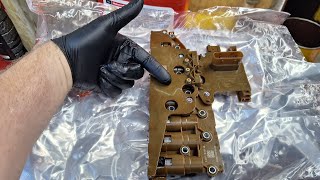
![How to Program Ford Escape 6F35 Transmission Solenoid Strategy [Required if Replaced Transmission!]](https://img.youtube.com/vi/gKPTkzr1Hd0/mqdefault.jpg)
Technical Specifications
OEM Part Numbers: BA8P-7000-FA BA8P-7000-FB BA8P-7000-MB BA8P-7000-MC BA8P DA8P
Transmission Family: Ford 6F50; Speeds: 6-Speed Automatic; Drivetrain: Front-Wheel Drive (FWD); Engine Compatibility: 3.5L / 3.7L Duratec V6 (Naturally Aspirated); Final Drive Ratio: 3.16:1; Required Fluid: Motorcraft Mercon LV; Weight: ~216 lbs; Door Sticker TR Code: J
We Have This Part in Stock


The information in this article is provided for general reference and educational purposes only. Vehicle specifications, procedures, and part compatibility can vary by production date, trim level, and region. Always consult your vehicle's factory service manual and verify part numbers before purchasing or performing repairs. Safety-critical components such as airbags, seat belts, and braking systems should be installed by a qualified professional.
- Ford Explorer:
- Ford Edge:
- Ford Taurus:
- 🎬 Helpful Videos
- 🛍️ Shop This Part
- Is This the Right Transmission for Your Ford?
- How to Confirm Fitment on Your Vehicle
- What It Doesn't Fit: Critical Interchange Notes
- Diagnostic Flowchart
- Common Failure Symptoms & Known Issues
- Known Issues, TSBs, and Recalls
- What Fails at Every Mileage Band
- Under 60,000 Miles
- 60,000 - 100,000 Miles
- 100,000 - 150,000 Miles
- Over 150,000 Miles
- Real Owner Experiences
- Replacement Cost Comparison
- Repair or Replace?
- Questions to Ask Your Installer
- Installation: What to Know Before You Start
- What's Included (and What's Not)
- CRITICAL: Solenoid Strategy Programming
- Installation Gotchas & Common Mistakes
- Freight & Delivery Reality
- Frequently Asked Questions (FAQ)
- 🎟️ Get 5% Off