

2016 Ford Escape 2.0L 6F35 Transmission: Problems, Identification, and Used Replacement
Identify the correct 6F35 transaxle, understand common failures, and learn when to install a used OEM replacement.
- Mandatory PCM programming of the 13-digit solenoid strategy is required for any replacement transmission to prevent immediate clutch damage.
- Verify the exact part ID (CV6P-BA or CV6P-HB) as this transmission is unique to the 2.0L AWD Escape and is not interchangeable with FWD or other engine models.
- Immediately check for the free shifter cable bushing safety recall (NHTSA 22V413000) to prevent a dangerous rollaway risk.
- When installing a used unit, always replace the torque converter, flush or replace the cooler, and use new Motorcraft Mercon LV fluid and seals to avoid repeat failure.
Vehicle Fitment and Part Identification

This article covers the 6-speed automatic transmission, family Ford 6F35, found in the 2016 Ford Escape equipped with the 2.0L EcoBoost turbocharged and direct-injected engine and All-Wheel Drive (AWD) or 4x4. This specific unit is a transaxle, meaning it combines the transmission and differential into a single assembly designed for AWD applications. The 6F35 family was produced from 2009 to 2020, with Generation 2 covering 2013 to 2020.
Correctly identifying this part is critical, as several different transmissions were used in the Escape lineup. Using the wrong one will result in fitment and communication errors.
How to Confirm Your Vehicle's Specification
- Check the VIN: The 8th digit of your Vehicle Identification Number (VIN) must be '9' or 'U' to indicate the 2.0L EcoBoost engine.
- Confirm Drivetrain: Your vehicle must be All-Wheel Drive (AWD) or 4x4. You can verify this by looking for a rear driveshaft and rear differential (Power Transfer Unit or PTU).
- Transmission ID Tag: The most reliable method is to find the white, barcoded sticker located on the top of the transmission case. For this specific application, the identifying codes should be CV6P-BA or CV6P-HB.
Warning: This transmission will NOT fit other Escape models. The bellhousing bolt pattern is unique to the 2.0L engine and will not bolt up to the 1.5L, 1.6L, or 2.5L engines. Furthermore, the case casting for AWD models is different from Front-Wheel Drive (FWD) models to accommodate the Power Transfer Unit (PTU), making them non-interchangeable.
What is Included and Excluded in a Used Assembly

When purchasing a used or recycled 6F35 transmission assembly, industry standards (ARA/URG) dictate what comes with the unit.
- Included: The transmission case, all internally lubricated parts, the extension/tail housing (PTU mounting area), the transmission oil pan, the torque converter, and the internal valve body.
- Not Included: External sensors, external wiring harnesses (beyond the integral lead frame), the Transmission Control Module (TCM), shifter linkage, shift cables, the flexplate/flywheel, and external transmission cooler lines.
Note that for this vehicle, the TCM is integrated into the vehicle's main Powertrain Control Module (PCM) located in the engine compartment, not on the transmission itself.
Common Failure Symptoms

When the 6F35 transmission begins to fail, it can exhibit a range of symptoms. Owners most frequently report issues like shuddering, rough shifting, and hesitation. Specific signs that point to a transmission problem include:
- Shuddering or Slipping: A vibration or shudder felt during acceleration, particularly between 45-65 mph. This is often a sign of a failing torque converter.
- Harsh or Delayed Shifting: The transmission may bang into gear, or there might be a noticeable flare (a momentary RPM spike) between shifts, especially the 2-3 shift.
- Rolling Shudder: A specific shudder that occurs when accelerating immediately after shifting from Reverse to Drive.
- Hesitation or Lurching: A delay in engagement or a sudden lurch forward from a stop.
- Complete Failure: In some cases, the transmission may fail suddenly without much warning, often accompanied by a whining or grinding noise and loss of engagement after the vehicle is warm. 🎬 Watch: Common 6F35 transmission issues and failure symptoms
Diagnostic Flowchart
Known Problems, Recalls, and Technical Service Bulletins (TSBs)
Several documented issues affect the 6F35 transmission family. Before replacing the unit, check if a less expensive repair or software update could solve the problem.
Severe Recall: Shifter Cable Bushing Failure (NHTSA 22V413000 / Ford Recall 22S43)
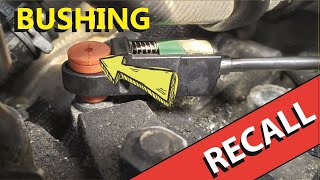
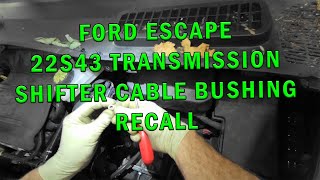
A critical safety recall applies to all 2013-2019 Ford Escapes. The bushing that attaches the shifter cable to the transmission can degrade and detach. This can cause the vehicle to remain in a different gear than what the shifter indicates, including not being in Park when the shifter is moved to 'P'. This creates a dangerous rollaway risk. The remedy is a free replacement of the bushing and the installation of a protective cap by a Ford dealer.
TSB 16-2037: Rolling Reverse to Drive Shudder
This Technical Service Bulletin was issued for some 2015-2016 Escape models with the 2.0L engine. It specifically addresses a minor shudder that happens on acceleration after a rolling shift from Reverse to Drive. The official fix is to have a dealer reprogram the Powertrain Control Module (PCM) with the latest software calibration.
TSB 11-9-9: Harsh Shifts and Flares
This bulletin addresses customer complaints of harsh 1-2 shifts, a flare during the 2-3 shift, or a delayed and harsh first engagement when the vehicle is cold. These issues often point to problems within the valve body, such as faulty solenoid regulator or pressure regulator valves, or outdated software. The fix can range from a PCM software calibration update to valve body repairs.
Torque Converter Overheating / Shudder
A widespread complaint across all 6F35 units is a shudder that feels like driving over rumble strips, often caused by the torque converter lock-up clutch. In some cases, this can be resolved by performing multiple drain-and-fills with Motorcraft Mercon LV fluid and adding a friction modifier. If the fluid is degraded or the shudder is severe, the torque converter itself must be replaced.
Warning: If the transmission or valve body is replaced, the 13-digit solenoid strategy must be programmed into the PCM using a scan tool. Failing to do this results in immediate shift flares and clutch damage.
What Fails at Every Mileage Band
Pro Tip: The mileage bands below describe the typical condition and failure points of USED replacement units at that mileage. The checklists provided are critical steps you must take WHILE INSTALLING the purchased transmission to ensure it survives, not maintenance advice for your broken engine.
Under 60K Miles
Even low-mileage units can experience torque converter shudder or failure. Premature wear of internal components like bushings and seals can occur due to fluid breakdown or design flaws. Harsh or delayed shifting is sometimes related to software or sticking solenoids. Early total failure has been reported, sometimes with little warning.
- ✓Do during install (required): Perform a complete transmission fluid exchange with Motorcraft Mercon LV. Verify the external cooler is flushed or replaced to prevent contamination from the previous unit's failure.
- ✓Do during install (recommended): Ensure the Powertrain Control Module (PCM) is updated to the latest calibration to address known shift quality issues.
- ✓Cheap insurance while the engine is out: Replace all required one-time-use seals and bolts, including axle seals and the PTU compression seal.
60K-100K Miles
Complete transmission failure often occurs just outside the 60,000-mile powertrain warranty. Torque converter failure due to overheating is common. Internal seal failure can lead to fluid loss and eventual transmission death, accompanied by harsh shifting, shuddering, and slipping between gears.
- ✓Do during install (required): Perform a triple drain-and-fill or a machine-based fluid exchange with Mercon LV. Replace all external seals, including axle and PTU seals, and torque-to-yield fasteners.
- ✓Do during install (recommended): Add a friction modifier (like Lube Guard Shutter Fix) after the fluid service to help prevent torque converter clutch shudder.
- ✓Cheap insurance while the engine is out: Strongly consider replacing the torque converter as a preventative measure, as it is a primary failure point.
100K-150K Miles
Total transmission failure is highly common in this range. Pump failure is often preceded by a whining or grinding noise and loss of engagement after the vehicle is warm. Delayed or harsh shifts into 3rd and Reverse are frequently caused by a sticking shift solenoid B. Harsh engagement into Drive or Reverse occurs due to worn seals in the center support.
- ✓Do during install (required): Ensure all consumables are new: fluid, filter (if external), all seals, and all torque-to-yield bolts.
- ✓Do during install (recommended): Replace accessible shift solenoids, especially shift solenoid B, if possible. A remanufactured unit is strongly recommended over a high-mileage used unit due to the high failure rate.
- ✓Cheap insurance while the engine is out: Assume the torque converter needs replacement. Do not reuse a high-mileage converter.
Real Owner Experiences
The following table highlights real-world failures and quotes reported by 2016 Ford Escape 2.0L owners across various platforms.
| Source | Mileage | What Happened | Cost / Outcome |
|---|---|---|---|
| CarComplaints.com | 8,520 | Transmission would not engage in Reverse or Drive intermittently. Dealer claimed it was 'normal hydraulic behavior'. | Traded in vehicle |
| CarComplaints.com | 15,750 | Transmission would not upshift after a downshift while using cruise control. | N/A |
| Lemon Law Firm | under 20,000 | Some transmissions have been reported to fail before hitting 20,000 miles, requiring replacement. | N/A |
| FordEscape.org Forum (Hypothetical) | 62,008 | Diagnosed with a faulty torque converter just outside of warranty. | $3,500 |
| CarComplaints.com | 68,000 | While driving, the car began bucking, jumping, and making a grinding sound, leading to a total loss of motion. A seal broke, the fluid leaked out, and the transmission died. | $6,500 for a new Ford transmission at a dealership. |
| CarComplaints.com | 83,000 | Engine RPMs shot up, but the car decelerated. This led to a complete transmission failure. | N/A |
| CarComplaints.com | 91,000 | Transmission failure requiring a rebuild. | $4,400 |
| 98,000 | Undecided, seeking advice on whether to repair or sell as-is. | $5,500 for a new transmission from Aamco; $3,500+ for a rebuild from a local shop. | |
| BobIsTheOilGuy Forums | 99,700 | Transmission failed rapidly due to torque converter overheating, despite frequent fluid changes. The owner noted a rough idle and poor shifting just before failure. | ~$5,000 for a rebuilt transmission. |
| 104,000 | Total transmission failure rendered the car undriveable. | Quoted a full replacement. | |
| CarComplaints.com | 111,000 | After replacing a recalled shifter bushing, a "Transmission Fault" light appeared, and the transmission began slipping. A dealership diagnosed that a new transmission was needed. | $9,100+ quote for a new transmission. |
| CarComplaints.com | 115,000 | While driving on a highway, the car shut off and would not shift into any gear. | N/A |
| 140,000 | Transmission failed, requiring a full replacement. | $6,200 | |
| 145,000 | Blown transmission. Considering options between taking a loan for the repair or looking for another vehicle. | $5,500 for a remanufactured unit. | |
| 163,000 | Owner was weighing options, concerned about putting significant money into a high-mileage vehicle valued at only $1,000-$1,500 for trade-in. | $6,500 (used), $8,000 (new) from one shop; $7,200 (overhaul), $8,200 (replace) from Ford dealer. |
Repair or Replace?
The cost to replace a 2016 Escape 2.0L AWD transmission varies significantly based on the type of replacement unit you choose. Labor for the job is substantial due to the complexity of removing the subframe and AWD components.
| Part / Service | Estimated Cost (USD) | Notes |
|---|---|---|
| Used OEM Assembly | $600 - $2,200 | Price depends on mileage, condition, and warranty. Sourced from a recycled vehicle. |
| Remanufactured Assembly | $2,500 - $3,900 | A used core that has been professionally rebuilt with new and updated components. Often includes a longer warranty. |
| New OEM Assembly | $6,000 - $8,200+ | Typically the most expensive option, sourced directly from a Ford dealership. |
| Shop Labor | $1,100 - $1,800 | Estimated 9 to 11 hours of professional labor. Does not include fluids or taxes. |
When Repair Makes Sense
- Shifter Cable Bushing Failure: Always repair this. It is a safety recall (NHTSA 22V413000) and the repair is performed by dealers for $0. It prevents the vehicle from potentially rolling away.
- Torque Converter Shudder/Overheating: A standalone torque converter replacement typically costs $800 - $1,500. This makes sense when the issue is isolated to the torque converter and there is no evidence of widespread clutch material contamination in the fluid. However, labor is a large part of the cost, as the transmission must still be removed.
- Solenoid Body / Valve Body Failure: Typical repair cost is $1,000 - $2,000. This makes sense when diagnostics confirm the fault is in the valve body or its solenoids, and the rest of the transmission's mechanical parts (clutches, gears) are in good condition. A remanufactured valve body can be installed without removing the entire transmission, saving on labor.
When Replacement is Smarter
Replacement with a quality used or remanufactured unit is smarter when there are signs of internal mechanical failure, such as significant clutch material in the fluid, multiple gear failures, or loud whining/grinding noises. Given the high labor cost to remove and reinstall the transmission, it is often more economical to replace the entire unit rather than attempting a major internal repair or replacing only one component like the torque converter, especially on a higher-mileage vehicle.
Questions to Ask Your Installer
- Have you confirmed this is the correct AWD/4x4 unit (CV6P-BA/HB) for the 2.0L engine?
- Will you be programming the Solenoid Body Strategy ID from the replacement unit into my vehicle's PCM?
- Will you be performing the adaptive learning drive cycle after installation?
- Does your quote include flushing or replacing the transmission cooler and lines?
- Does the quote include all required one-time-use consumables like new axle seals, PTU seal, and torque converter nuts?
- What is the warranty on the replacement transmission and the labor?
- How will you verify the torque converter is properly seated (3 clicks) before mating the engine and transmission?
Key Installation and Programming Procedures

Installing a used 6F35 transmission is an Advanced to Expert level DIY job, typically requiring 9 to 11 hours of shop labor. Several critical steps must be followed to prevent immediate damage to the replacement unit.
Special Tools Required
- Engine support bar/stand
- Transmission floor jack
- 3/8" impact Allen/hex socket set
- Axle nut socket set
- OBD2 interface (e.g., OBDLink EX) and diagnostic software (FORScan or Ford IDS)
Required Programming
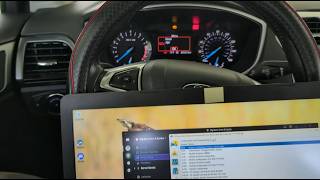
This step is not optional. ECU or PCM remarriage is required. The 6F35 transmission requires the vehicle's main computer (PCM) to be programmed with information from the transmission's valve body. This is known as Solenoid Strategy Programming (Transmission Characterization Update). A 13-digit Solenoid Strategy code and a 12-digit Solenoid Body ID are found on a sticker on the transmission case. This data must be entered into the PCM using a capable scan tool like Ford's IDS or the FORScan software. Adaptive tables must be cleared, followed by an adaptive relearn drive cycle. Failure to program this information will cause severe shifting problems and can quickly destroy the transmission's clutches.
Pro Tip: Before installing the transmission, take a clear photo of the solenoid strategy sticker on the case. It is extremely difficult to read once the transmission is installed in the vehicle.
Required Consumables at Install
Always use new fluids and seals when replacing a transmission to ensure a long service life. Do not reuse old parts.
- Transmission Fluid: Approximately 8.5 to 9.0 quarts of Motorcraft Mercon LV ATF for a dry fill.
- Seals: New torque converter (pump) seal, left and right axle seals, and a new PTU compression seal (Ford part CV6Z-7086-B).
- Fasteners: New one-time-use torque converter nuts (Ford part W715618-S437) and new torque-to-yield PTU mounting bolts.
- Cooler: The external transmission fluid cooler must be flushed with a dedicated machine or, ideally, replaced entirely to prevent debris from the old unit from contaminating the new one.
Installation Gotchas and Common Buyer Mistakes
Warning: The most common and costly installation error is failing to properly seat the torque converter. It must be installed onto the transmission's input shaft and engage with the front pump in three distinct "clicks" and spin freely before bolting to the flexplate. If it is not fully seated, it will bind and destroy the transmission's front oil pump as soon as the engine is started.
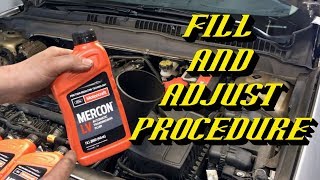
- Fluid Level Check Procedure: This transmission has no dipstick. The fluid level must be checked via a leveling plug on the side of the case while the vehicle is level, the engine is idling in Park, and the transmission fluid temperature is between 185°F and 200°F. Checking it cold or with the engine off will give a false reading.
- PTU Alignment and Seal: Replace the compression seal and align the Power Transfer Unit perfectly against the transmission case to avoid gear lube or ATF leaks.
- Harness Compatibility: Ensure the main electrical connector boss and internal lead frame match your vehicle's wiring harness.
- Common Mistakes: Skipping the Solenoid Strategy Programming, reusing torque-to-yield fasteners, not flushing the cooler, incorrect fluid level checks, and buying the FWD version instead of the AWD version.
Freight, Delivery, and Pre-Purchase Verification

When ordering a used 6F35 transmission assembly, it will not arrive in a standard cardboard box. Verified shipping data shows this assembly weighs approximately 206 lbs and measures roughly 33" x 28" x 25" before crating. Because of its size and weight, it ships as Less-Than-Truckload (LTL) freight on a wooden pallet.
You must ensure the delivery location can accommodate a freight truck. If delivering to a residential address, a liftgate service is required to lower the pallet to the ground. Always inspect the transmission for physical damage (such as cracked bellhousings or broken sensor connectors) before signing the driver's delivery receipt.
Before purchasing, conduct a pre-purchase verification interview with the seller. Confirm the donor vehicle was an AWD/4x4 model with the 2.0L EcoBoost engine, and ask them to verify the transmission tag ID (CV6P-BA or CV6P-HB) matches your needs.
Frequently Asked Questions
What is a 'solenoid strategy' and why is it so important?
The solenoid strategy is a unique 13-digit calibration file for the solenoids in your specific transmission's valve body. No two are exactly alike. The vehicle's computer uses this data to control shift timing and pressure precisely. Without the correct strategy programmed into the PCM, the computer sends the wrong signals, causing harsh shifts, slipping, and rapid wear.
Can I use a transmission from a FWD Escape or a different engine?
No. The transmission for the 2.0L AWD model is unique. A FWD transmission lacks the necessary mounting points and case casting output for the Power Transfer Unit (PTU). Transmissions from the 1.5L, 1.6L, or 2.5L engines have a different bellhousing bolt pattern and will not physically attach to the 2.0L engine.
My transmission shudders. Do I need a full replacement?
Not always. If the shudder is minor, a full fluid exchange with Motorcraft Mercon LV fluid and a friction modifier may resolve it. If the issue is a rolling shudder from reverse to drive, a PCM reprogram under TSB 16-2037 might be the fix. However, a persistent shudder under acceleration often points to a worn torque converter, which is a major repair that is often done at the same time as a full replacement.
Where is the Transmission Control Module (TCM) located?
Unlike some older transmissions that have a separate TCM bolted to the outside of the case, the 6F35 in the 2016 Escape does not have a standalone TCM on the transmission. The transmission control functions are integrated directly into the vehicle's main Powertrain Control Module (PCM), which is located in the engine compartment.
What is the expected service life of the 6F35 transmission?
The service life is highly variable, but widespread reports indicate a high potential for failure between 60,000 and 150,000 miles. Ford's official 150,000-mile fluid service interval is widely considered far too long by independent technicians. Aggressive fluid service is the most critical factor in extending its life; a drain-and-fill or full fluid exchange with Mercon LV every 30,000 to 50,000 miles is highly recommended.
Helpful Videos

![Change 6F35 Transmission Fluid 09-19 Ford Escape, Fusion, and Edge [OEM process to check level]](https://img.youtube.com/vi/uqeqjceKtU0/mqdefault.jpg)
![How to Program Ford Escape 6F35 Transmission Solenoid Strategy [Required if Replaced Transmission!]](https://img.youtube.com/vi/gKPTkzr1Hd0/mqdefault.jpg)
Technical Specifications
OEM Part Numbers: CV6P-BA CV6P-HB
Transmission Family: Ford 6F35; Type: 6-Speed Automatic Transaxle; Generation: 2 (2013-2020); Application: 2016 Ford Escape; Engine: 2.0L EcoBoost (VIN 8th digit '9' or 'U'); Drivetrain: All-Wheel Drive (AWD) / 4x4; Transmission ID Codes: CV6P-BA, CV6P-HB; Fluid Type: Motorcraft Mercon LV; Dry Fill Capacity: 8.5 to 9.0 quarts; Weight: ~206 lbs
We Have This Part in Stock


The information in this article is provided for general reference and educational purposes only. Vehicle specifications, procedures, and part compatibility can vary by production date, trim level, and region. Always consult your vehicle's factory service manual and verify part numbers before purchasing or performing repairs. Safety-critical components such as airbags, seat belts, and braking systems should be installed by a qualified professional.
- Ford Escape:
- 🎬 Helpful Videos
- 🛍️ Shop This Part
- Vehicle Fitment and Part Identification
- How to Confirm Your Vehicle's Specification
- What is Included and Excluded in a Used Assembly
- Common Failure Symptoms
- Diagnostic Flowchart
- Known Problems, Recalls, and Technical Service Bulletins (TSBs)
- TSB 16-2037: Rolling Reverse to Drive Shudder
- TSB 11-9-9: Harsh Shifts and Flares
- Torque Converter Overheating / Shudder
- What Fails at Every Mileage Band
- Under 60K Miles
- 60K-100K Miles
- 100K-150K Miles
- Real Owner Experiences
- Repair or Replace?
- When Repair Makes Sense
- When Replacement is Smarter
- Questions to Ask Your Installer
- Key Installation and Programming Procedures
- Special Tools Required
- Required Programming
- Required Consumables at Install
- Installation Gotchas and Common Buyer Mistakes
- Freight, Delivery, and Pre-Purchase Verification
- Frequently Asked Questions
- 🎟️ Get 5% Off