

2016-2021 Trax & Encore 1.4L AWD 6T40 Transmission: Problems, Identification, and Used Replacement
Identify the exact GM Hydra-Matic 6T40 AWD variant, learn what causes premature failure, and know exactly what to look for when buying a used replacement unit.
- This specific AWD 6T40 transmission is not interchangeable with FWD or other GM models; you must match the VIN, RPO codes (MNK/MH8), and broadcast code.
- A used replacement transmission must be reprogrammed to your vehicle's VIN to function, requiring specialized tools and a GM service subscription.
- During installation, it is mandatory to install a new torque converter and thoroughly flush the transmission cooler and lines to prevent immediate failure.
- Known major failure points include the internal control module (TEHCM), the 3-5-Reverse wave plate, and the torque converter clutch.
Identifying the Correct 6T40 AWD Transmission

The automatic transmission in the 2016-2021 Chevrolet Trax and 2016-2021 Buick Encore with All-Wheel Drive (AWD) is the GM Hydra-Matic 6T40. This specific unit was only paired with the 1.4L Turbo LUV engine. Correctly identifying this transmission is critical before purchasing a replacement, as it will not interchange with other versions.
Follow these steps to confirm you have the correct vehicle and transmission:
- Check the VIN: The 8th digit of your vehicle's Vehicle Identification Number (VIN) must be 'B'. This signifies the 1.4L LUV turbocharged engine that was paired with this specific transmission.
- Confirm Drivetrain: This transmission is for All-Wheel Drive (AWD) models only. It cannot be used in a Front-Wheel Drive (FWD) vehicle.
- Check the RPO Code Sticker: Look for a silver sticker labeled "Service Parts Identification" inside the glove box or in the spare tire well. This sticker lists three-character Regular Production Option (RPO) codes for all the options on your vehicle. You should find MNK or MH8, which identifies this specific 6-speed automatic transmission. You may also see FXH, which denotes the final drive ratio.
- Inspect the Transmission Tag: The original transmission has a metal identification tag on the left-hand side of the housing, behind the selector cable and above the pan rail. This tag has a 4-character broadcast code that must be used to match it precisely with a replacement unit.
Warning: Do not attempt to use a transmission from a Front-Wheel Drive (FWD) Trax or Encore. Also, transmissions from other GM vehicles that use the 6T40/6T45 family—like the Cruze, Sonic, Malibu, Equinox, Terrain, Regal, or Verano—will not fit or function correctly due to different internal gearing, bellhousings, and electronic calibrations.
Common Symptoms of a Failing Transmission

When the 6T40 transmission begins to fail, it can show several distinct symptoms. Recognizing these signs can help you determine if the transmission is the source of the problem.
- Harsh or Delayed Shifting: The vehicle may slam into gear, hesitate, or jerk when shifting, especially between first and second gear or during downshifts.
- Shuddering or Vibration: A feeling similar to driving over rumble strips may occur at steady speeds, particularly during light acceleration. This is often related to the torque converter clutch.
- Loss of Power or Gears: The transmission may slip, where the engine RPMs increase but the vehicle doesn't accelerate properly. In severe cases, it can lose certain gears entirely (like 3rd, 5th, and Reverse) or go into a "limp mode," where it stays in a single gear.
- Check Engine Light: A variety of diagnostic trouble codes (DTCs) can be triggered. A generic P0700 code indicates a general transmission fault, while more specific codes point to solenoids (e.g., P0776) or communication errors (U0101).
Diagnostic Flowchart
Known Issues, Recalls, and Technical Service Bulletins (TSBs)

This transmission family has several well-documented issues. Knowing which problems apply to your model year can aid in diagnosis and repair.
NHTSA Recall 20V668000: Start-Stop Accumulator Bolts
Select 2019-2020 Buick Encore and Chevrolet Trax models with the start-stop system were recalled for missing bolts on the start-stop transmission accumulator. This defect can cause a significant transmission fluid leak, leading to a loss of propulsion and increasing the risk of a crash or fire. The remedy involves dealers inspecting the accumulator and replacing it if bolts are missing. GM's internal number for this recall is N202313440.
DTC U0101: Loss of Communication with TCM
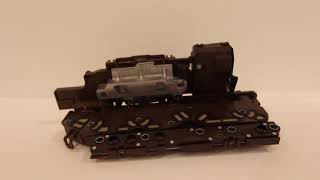
A common issue across all years is the U0101 trouble code, which means the vehicle's main computer has lost communication with the Transmission Control Module (TCM). The TCM (also called a TEHCM) is located inside the transmission on the valve body. Symptoms include a check engine light, the transmission entering a fail-safe "limp mode," and the inability to shift gears. According to GM Technical Service Bulletins PIP4990B, PIP4990C, and PIP4990D, before replacing the expensive TEHCM, a technician should first inspect for loose pins in the main transmission connector, check the TCM ground, and look for any wiring harness rubbing against the engine block.
Broken 3-5-Reverse Wave Plate
A widely known problem in the 6T40 family is the failure of the 3-5-Reverse clutch wave plate. This part is a thin, springy steel plate that applies pressure to a clutch pack. When it breaks, metal fragments can travel throughout the transmission, causing shifting problems or a complete loss of 3rd, 5th, and Reverse gears. While this was more common on pre-2012 Gen 1 units, it has been noted across the family. Later Gen 2 and Gen 3 designs have largely resolved this issue, but it remains a known failure point.
Pressure Regulator Valve Wear (Gen 3 Units)
On Gen 3 units (2015 and newer), wear on the pressure regulator valve is a severe issue. GM technician bulletins advise inspecting the pump cover and replacing a worn pressure regulator valve to prevent a loss of line pressure, which ultimately leads to clutch burn-up.
Axle Bushing Wear & Seal Leaks
Across all years, the driver-side axle seal is prone to leaking. GM service bulletins recommend replacing the seal and inspecting the internal differential case axle support bushing for wear, which often causes the seal failure.
Torque Converter Shudder
Drivers may experience a shudder or vibration during light acceleration at steady speeds. This can be caused by a failing torque converter clutch (TCC) or contaminated transmission fluid. Diagnosing the TCC or addressing fluid contamination is required to fix this moderate severity issue.
What Fails at Every Mileage Band
Pro Tip: The mileage bands below describe the typical condition of USED replacement units at that mileage. The checklists provided are things to do WHILE INSTALLING the purchased transmission, not maintenance for your current vehicle.
Under 60,000 Miles
Even at lower mileages, some owner reports mention transmission issues starting as early as 30,000 miles, including slipping, jerking, and hesitation. The 2019-2020 recall (20V668000) for missing start-stop accumulator bolts can cause fluid leaks and loss of propulsion. Failures of the internal TEHCM can cause erratic shifting, and torque converter issues can present as a shudder. Fluid leaks from worn seals or damaged pans are a common early sign of trouble.
- ✓Do during install (required): Replace all external seals (torque converter seal, axle seals).
- ✓Do during install (required): Install a new torque converter; do not reuse the old one.
- ✓Do during install (required): Thoroughly flush the transmission cooler and lines with a dedicated transmission line flushing solvent to remove any debris from the previous unit.
- ✓Do during install (recommended): Perform a transmission fluid and filter service. A fluid change is recommended every 30,000-45,000 miles.
- ✓Do during install (recommended): Inspect the start-stop accumulator on 2019-2020 models to ensure all bolts are present per recall 20V668000.
- ✓Cheap insurance while the engine is out: Inspect the main transmission connector pins to ensure they are secure and the harness is routed away from sharp engine block edges.
60,000 - 100,000 Miles
Torque converter failure becomes more common in this range. Shift flares, slipping, and harsh shifts (especially 2-3) are often linked to valve body wear or solenoid issues. Transmission fluid degradation is a major concern, leading to overheating, slipping, and internal component wear if not serviced. Internal components like clutch packs and transmission bands can begin to wear out.
- ✓Do during install (required): All items from the 'Under 60K' band apply.
- ✓Do during install (required): Perform a full transmission fluid and filter service with DEXRON-VI Full Synthetic ATF (7.4 to 9.5 quarts for a dry fill).
- ✓Do during install (recommended): Consider replacing the internal TEHCM/solenoid body, as they are a frequent failure point and accessible during replacement.
- ✓Do during install (recommended): Inspect and consider replacing the pressure regulator valve, especially on 2015+ Gen 3 units, to prevent low line pressure and clutch burn-up.
- ✓Cheap insurance while the engine is out: Replace the driver-side axle seal and inspect the internal differential case axle support bushing for wear.
100,000 - 150,000 Miles
Internal mechanical failures, such as a broken 3-5-Reverse wave plate, become more likely, leading to a loss of those gears. Wear on internal gears and clutch apply pistons can lead to slipping or failure to engage gears. Overall transmission wear is expected, and the likelihood of needing a replacement versus a repair increases significantly.
- ✓Do during install (required): All items from the previous bands apply.
- ✓Do during install (required): If installing a used unit, it is critical to replace all accessible wear items, including the TEHCM/solenoid body, all seals, and the torque converter.
- ✓Do during install (recommended): A used transmission in this mileage range is a higher risk. A remanufactured unit with component-level updates (e.g., improved valve body, updated clutch packs) is a strongly recommended alternative to a high-mileage used unit.
- ✓Cheap insurance while the engine is out: Inspect and replace output shaft seals between the transmission and the Power Take-Off Unit (PTU), and lubricate the splines with high-pressure grease.
Over 150,000 Miles
At this mileage, the transmission is approaching or has exceeded its expected service life of 150,000 to 200,000 miles. Failures are typically due to cumulative wear and tear on all internal components. Catastrophic failure of hard parts like drums, hubs, or planetary gear sets is highly likely.
- ✓Do during install (required): Installing a used transmission with over 150,000 miles is not recommended. The risk of imminent failure is very high.
- ✓Do during install (recommended): The only recommended course of action at this stage is to install a professionally remanufactured or new transmission assembly.
- ✓Cheap insurance while the engine is out: N/A.
Real Owner Experiences
The following table highlights real-world experiences from owners dealing with 6T40 transmission issues across various mileages.
| Source | Mileage | What Happened | Cost |
|---|---|---|---|
| 56,000 | A 2021 Buick Encore suddenly lost overdrive, with RPMs jumping from 2000 to 3000 at cruising speed. The issue was intermittent. A fluid flush was considered as a potential fix. | N/A | |
| CarComplaints.com | 6,000 | The most common mileage for transmission problems to be reported for the Buick Encore, though specific details are limited. | N/A |
| Valero Law | New (August 2019) | A 2019 Chevy Trax exhibited rough shifting, no shifting at all, and a lack of power, which started shortly after purchase and progressively worsened. | N/A |
| GM-Trucks.com Forum | 95,000 | A 2014 Silverado (with a related 6-speed transmission) experienced complete transmission failure. Transmission shop feedback suggested a life expectancy of 80-100k miles is common for the family. | N/A |
| 88,000+ | An owner of a Chevy Trax reported no transmission issues at this mileage. | N/A | |
| Barry's Chevrolet, Inc. | 100,000+ | Well-maintained examples are reported to surpass 100,000 miles without major mechanical issues, but maintenance sensitivity is high. | N/A |
| Ranger Station Forum | 200,000+ | A vehicle with a 6T40 family transmission was still running at over 200,000 miles after a sensor replacement, though it exhibited some hard shifting. | N/A |
| Reddit - r/ChevySonic | Not specified | A transmission shop quoted for TEHCM replacement on a Chevy Sonic (similar 6T40 family). The quote included $850 for the part, $750 for labor, plus fluid. | $2,102 quoted |
| Torque News | 110,000 | Owner had the Torque Converter Clutch (TCC) replaced under an extended warranty for a shudder issue on a GMC Sierra (different transmission, but relevant cost data). | Over $4,000 quoted, paid $100 deductible |
Transmission Replacement Cost Comparison
The cost to replace a 6T40 transmission varies significantly based on the type of replacement unit you choose. Labor for this job is intensive, typically requiring 7 to 14 hours.
| Item | Estimated Cost (USD) | Notes |
|---|---|---|
| New OEM Unit | $3,500 - $9,100+ (Part Only) | Brand new from a GM dealer. Often the most expensive option. |
| Remanufactured Unit | $2,800 - $3,600 (Part Only) | Disassembled, cleaned, inspected, and rebuilt with updated parts to meet or exceed original specifications. |
| Used OEM Unit | $950 - $1,500 (Part Only) | A salvaged unit from a donor vehicle. Price depends on mileage and condition. |
| Installation Labor | $1,000 - $2,100 | Shop labor rates can range from $100 to over $200 per hour. This estimate includes removal, installation, and initial setup procedures. |
Repair or Replace?
Deciding whether to repair your existing transmission or replace the entire assembly depends heavily on the specific failure mode and the overall cost.
| Failure Mode | Repair Viability & Estimated Cost |
|---|---|
| Loss of TCM Communication (DTC U0101) | Repair makes sense. A pre-programmed, remanufactured TEHCM costs $200-$450. A shop replacement ranges from $800-$1,200, avoiding high dealer programming fees. |
| Torque Converter Shudder | Borderline decision. Repair involves replacing the torque converter and flushing the system, costing $1,500-$3,000+. This can approach or exceed the price of a used transmission. |
| Broken 3-5-Reverse Wave Plate | Replacement is often smarter. The repair requires transmission removal and partial disassembly, costing $1,500-$2,500+. The high labor cost makes a quality used or remanufactured unit more sensible. |
| Start-Stop Accumulator Leak (Recall 20V668000) | Repair immediately. If your vehicle has an open recall, the dealer will fix the issue for $0. |
When Replacement is Smarter: Replacement is the better option when internal mechanical failure occurs, such as clutch pack burn-up or gearset damage. When the cost of a specific repair (like a torque converter or wave plate) plus labor approaches or exceeds the cost of a lower-mileage used transmission ($1,200-$2,500 installed), replacing the entire unit is the more economical and reliable long-term choice.
What's Included in a Used Assembly?
When buying a used transmission, it's important to know what parts are typically included versus what you'll need to transfer from your old unit. Based on standards from the Automotive Recyclers Association (ARA), a used assembly's contents are as follows:
| Typically Included | Typically Excluded (Must Transfer or Buy New) |
|---|---|
| The main aluminum transmission case and all internally lubricated parts. | The Power Take-Off Unit (PTU), also known as the AWD transfer case. |
| The torque converter. | External sensors and wiring harnesses extending beyond the case. |
| The transmission side cover and fluid pan. | The flexplate / flywheel. |
| The integrated Transmission Electronic Hydraulic Control Module (TEHCM) and solenoid body. | Shifter assembly, linkage, and selector cables. |
| The AWD extension/tail housing where the transfer case bolts on. | Transmission fluid cooler lines. |
Freight & Delivery Reality

A used 6T40 AWD transmission is a heavy, bulky industrial component. It does not ship in a cardboard box via standard parcel services. Verified shipping data shows this assembly weighs approximately 195 lbs and measures roughly 35" x 24" x 19" before crating.
It will ship as Less-Than-Truckload (LTL) freight strapped to a wooden pallet. If you are having it delivered to a residential address or a shop without a loading dock or forklift, you must request a truck with a liftgate to lower the pallet to the ground.
When the freight carrier arrives, you must inspect the transmission for any physical damage (such as cracked aluminum housings or crushed pans) before signing the delivery receipt. Signing without inspecting means you accept the shipment in its current condition, which can void shipping damage claims.
Industry best practice dictates a pre-purchase verification interview with the seller. Be prepared to confirm your VIN's 8th digit is 'B', your vehicle is AWD, your RPO codes include MNK or MH8 and FXH, and provide the 4-character broadcast code from your original transmission's metal tag.
Critical Installation and Programming Gotchas

Installing this transmission is an expert-level task with a DIY difficulty rating of "Expert." It requires special tools, including an engine support fixture, a transmission jack, and subframe alignment tools. There are several potential pitfalls that can cause immediate failure if not done correctly.
Warning: This transmission MUST be programmed. The control module (TEHCM) inside the used transmission is programmed to the donor vehicle's VIN. It will not function correctly until it is reprogrammed to your vehicle's VIN using a specialized J2534 pass-through tool and a subscription to GM's online service (SPS2). Failure to program it will result in a no-start condition or the transmission being locked in limp-home mode.
After installation and programming, a mandatory Transmission Adaptive Values Learn (Fast Learn) procedure must be performed with a GM MDI/GDS2 or equivalent professional scan tool capable of reading Transmission Fluid Temperature (TFT). This procedure quickly teaches the TEHCM the engagement points of the clutches. Skipping this step will cause harsh shifting and can quickly damage the new transmission.
Other Key Installation Points:
Warning: The torque converter must be fully seated into the transmission's fluid pump (typically recessed about 1 inch). This usually requires rotating it until it drops into place multiple times. If it is not fully seated, bolting the transmission to the engine will break the internal fluid pump, destroying the transmission.
- Fluid Level Check Temperature: This transmission has no dipstick. The fluid level must be checked via a plug on the side of the case ONLY when the transmission fluid is at a specific temperature (strictly between 85°C and 95°C, or 70°C and 80°C depending on your specific GM service manual version), with the engine idling and the vehicle level. Incorrect fluid level will cause damage.
- Flush the Cooler: The transmission fluid cooler and lines must be thoroughly flushed with a dedicated solvent before connecting them to the replacement transmission. Reusing contaminated fluid or lines will send old debris into the new unit, causing it to fail and voiding most warranties.
- AWD Transfer Case (PTU) Alignment: Inspect and replace the output shaft seals between the transmission and the PTU, and lubricate the splines with high-pressure grease during reassembly.
Arrival Inspection for Your Used Transmission
Fluid Color, Smell, and Magnet Inspection
The 6T40 transmission does not have a traditional flat bottom pan. Instead, it uses a side cover and a magnetic drain plug. Follow these steps when your used unit arrives:
- Check the magnetic drain plug: Remove the drain plug located at the bottom of the case. A small amount of fine, gray metal paste is normal. Large metal shavings or chunky pieces mean internal gears are broken. Reject the unit if you see large metal chunks.
- Inspect the fluid: The 6T40 requires Dexron VI transmission fluid. Catch a few drops of fluid on a white paper towel. Good fluid is red or light brown. If the fluid is thick, dark black, or smells like burnt toast, the internal clutches are destroyed.
Converter Hub and Input-Spline Condition
You must inspect the physical connection points before installing the transmission into your Trax or Encore.
- Torque converter hub: This is the smooth metal snout on the back of the torque converter that slides into the transmission pump. Run your fingernail across this metal surface. It must be perfectly smooth. If you feel deep grooves or scratches, the hub will tear the front pump seal and cause a massive fluid leak.
- Input shaft splines: These are the straight metal teeth on the shaft that connect the transmission to the engine. The teeth must be perfectly straight and evenly spaced. If the splines look twisted, rusted, or rounded off at the edges, the transmission will slip or fail to move the vehicle.
Frequently Asked Questions (FAQ)
Do I have to program this transmission?
Yes. The integrated control module (TEHCM) is VIN-locked to the original vehicle. It must be reprogrammed to your car's VIN using a J2534 pass-through device and a GM SPS2 subscription. Alternatively, a highly skilled technician can swap your original TEHCM into the replacement transmission, but this is a complex and delicate procedure.
Can I use a transmission from a Chevy Cruze or Sonic?
No. While other GM vehicles use a version of the 6T40/6T45 family, the AWD version for the Trax and Encore is unique. Transmissions from FWD cars or other models have different bellhousings, gear ratios, and programming and are not interchangeable.
What fluid does the 6T40 transmission take?
This transmission requires DEXRON-VI Full Synthetic Automatic Transmission Fluid (ATF). A complete fill from dry requires between 7.4 and 9.5 quarts.
What questions should I ask the installer before buying a replacement?
You should ask if they have a GM SPS2 subscription and a J2534 pass-through tool to perform the mandatory VIN programming. Ask if they can perform the 'Transmission Adaptive Values Learn' (Fast Learn) procedure. Confirm their quote includes fully flushing the cooler lines with solvent, installing a new torque converter, and matching the RPO codes (MNK/MH8) and broadcast code of the donor unit to your vehicle.
How long should this transmission last?
With proper maintenance, the expected service life for the GM 6T40 transmission is generally between 150,000 to 200,000 miles. The single most critical factor for longevity is regular transmission fluid changes. Changing the DEXRON-VI fluid every 30,000 to 60,000 miles is highly recommended to prevent overheating and contamination of the solenoids and valve body.
Helpful Videos

Technical Specifications
Transmission Model: GM Hydra-Matic 6T40; Vehicle Applications: 2016-2021 Chevrolet Trax, 2016-2021 Buick Encore; Engine Pairing: 1.4L Turbo LUV; Drivetrain: All-Wheel Drive (AWD); VIN Engine Code (8th Digit): B; RPO Codes: MNK, MH8; Final Drive RPO Code: FXH; Required Fluid: DEXRON-VI Full Synthetic ATF; Fluid Capacity (Dry Fill): 7.4 to 9.5 quarts; Weight (Approximate): 195 lbs; Dimensions (Approximate): 35" x 24" x 19"; Expected Service Life: 150,000 to 200,000 miles
We Have This Part in Stock


The information in this article is provided for general reference and educational purposes only. Vehicle specifications, procedures, and part compatibility can vary by production date, trim level, and region. Always consult your vehicle's factory service manual and verify part numbers before purchasing or performing repairs. Safety-critical components such as airbags, seat belts, and braking systems should be installed by a qualified professional.
- Chevrolet Trax:
- Buick Encore:
- 🎬 Helpful Videos
- 🛍️ Shop This Part
- Identifying the Correct 6T40 AWD Transmission
- Common Symptoms of a Failing Transmission
- Diagnostic Flowchart
- Known Issues, Recalls, and Technical Service Bulletins (TSBs)
- NHTSA Recall 20V668000: Start-Stop Accumulator Bolts
- DTC U0101: Loss of Communication with TCM
- Broken 3-5-Reverse Wave Plate
- Pressure Regulator Valve Wear (Gen 3 Units)
- Axle Bushing Wear & Seal Leaks
- Torque Converter Shudder
- What Fails at Every Mileage Band
- Under 60,000 Miles
- 60,000 - 100,000 Miles
- 100,000 - 150,000 Miles
- Over 150,000 Miles
- Real Owner Experiences
- Transmission Replacement Cost Comparison
- Repair or Replace?
- What's Included in a Used Assembly?
- Freight & Delivery Reality
- Critical Installation and Programming Gotchas
- Other Key Installation Points:
- Arrival Inspection for Your Used Transmission
- Fluid Color, Smell, and Magnet Inspection
- Converter Hub and Input-Spline Condition
- Frequently Asked Questions (FAQ)
- 🎟️ Get 5% Off