

2018-2024 Chevrolet Traverse 3.6L AWD Transmission: Problems, Identification, and Used Replacement
Identify the GM 9T65 AWD transmission, understand what causes torque converter shudder and sun gear failure, and know when it's time to swap in a used OEM unit.
- VIN-specific programming is mandatory for any used or remanufactured 9T65 transmission; skipping this step will cause shifting problems and damage.
- You must confirm your vehicle is a 3.6L V6 AWD model and that the replacement transmission has the correct RPO code (M3W/M3V) and broadcast code (9IKB/9LKB).
- Address torque converter shudder early by performing a fluid flush with approved fluid and a TCM reprogram per TSB 18-NA-091/18-NA-359 to prevent further damage.
- Check for open recalls, especially the shattered sun gear on 2022-2023 models (NHTSA 23V172000) and missing accumulator bolts on 2018-2020 models (NHTSA 20V668000).
- During installation, it is critical to flush the transmission cooler, replace all external seals, and ensure the torque converter is fully seated to prevent immediate failure.
Is My Traverse Transmission Failing? Common Symptoms

The GM 9T65 is a 9-speed automatic transmission found in the 2018-2024 Chevrolet Traverse with the 3.6L V6 engine and All-Wheel Drive (AWD). While generally a sophisticated unit, it can develop issues. Watch for these common symptoms that may indicate your transmission needs attention:
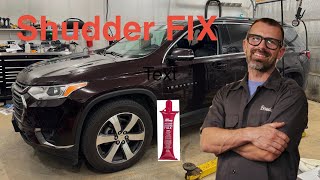
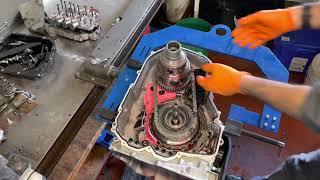
- Shuddering or Jerking: A slight to moderate shudder or vibration felt during gear shifts, especially at lower speeds. This is often related to the torque converter. 🎬 Watch: How to service and fix transmission shudder
- Sudden Loss of Power: The engine revs, but the vehicle fails to move forward as if it were in neutral. This can be a sign of catastrophic internal failure, such as a shattered sun gear.
- Transmission Fluid Leaks: Puddles of red or brown fluid under the vehicle. Leaks can stem from improperly seated seals or a known issue with missing accumulator bolts.
- No Reverse Gear: The vehicle will not move when shifted into reverse. This points to a significant internal problem requiring a rebuild or replacement.
- Warning Lights: A "Shift to Park" message on the dashboard or an illuminated Check Engine Light can be triggered by transmission faults.
- Grinding or Clunking Noises: Loud, violent mechanical noises from under the vehicle can precede a total loss of power and indicate severe internal damage.
Vehicle and Part Identification: Confirming the 9T65 AWD Unit

Before buying a replacement, you must confirm your Traverse has this exact transmission. It is designed specifically for the All-Wheel Drive (AWD) drivetrain and the 3.6L V6 engine (engine code LFY). Using the wrong transmission will result in failure to fit or function.
How to Verify Your Vehicle
Check these three points on your own Traverse to confirm fitment:
- Check for AWD: Your vehicle must be an All-Wheel Drive model. Look for a drive-mode selector knob on the center console that includes an "AWD" or "4x4" setting.
- Check the VIN: The 8th digit of your Vehicle Identification Number (VIN) should be 'W', which designates the 3.6L LFY V6 engine.
- Check the RPO Code: Look for a silver sticker, usually inside the driver's side door jamb or glove box. This sticker lists the vehicle's Regular Production Option (RPO) codes. You should find the code M3W or M3V, which identifies this 9-speed transmission.
How to Identify the Transmission
To be certain a used unit is correct, check the barcode label on the transmission case. This label contains a four-character broadcast code. For this specific Traverse application, the code will be 9IKB or 9LKB.
Warning: Not all 9T65 transmissions are the same. A unit from a Front-Wheel Drive (FWD) Traverse will not work in an AWD model, as the transmission case is physically different. Transmissions from other GM vehicles like the Buick Enclave, GMC Acadia, Chevrolet Blazer, or Cadillac XT5/XT6—even if they are also 9T65s—are not interchangeable due to differences in mounting points, wiring, and internal computer calibrations.
What is Included with a Used Assembly?
When purchasing a used OEM transmission from a recycler, industry standards dictate what is included. You will typically receive the transmission case, all internally lubricated parts, the valve body, shift solenoids, transmission oil pan, torque converter, and the extension/tail housing.
You will not receive external sensors, wiring harnesses, the shifter assembly, shift linkage, shifter cables, the engine flexplate/flywheel, or external transmission fluid cooler lines. Note: The Transmission Control Module (TCM) is located internally, but you should never assume it is included or plug-and-play. The original TCM must be swapped over, or the replacement unit must be programmed to your vehicle's VIN.
Diagnostic Flowchart
Known Problems, Recalls, and Technical Service Bulletins (TSBs)

Several documented issues affect this transmission. Knowing the specific model years for each problem can help you diagnose your vehicle or inspect a used unit.
| Issue | Affected Models | Reference ID | Description |
|---|---|---|---|
| Shattered Sun Gear | 2022–2023 | Recall: NHTSA 23V172000 / GM N222389310 | An improperly heat-treated sun gear can shatter, causing a sudden loss of forward power or a rollaway risk in Park. |
| Missing Start-Stop Accumulator Bolts | 2018–2020 | Recall: NHTSA 20V668000 / GM N202313440 | Missing bolts can cause a significant transmission fluid leak, leading to loss of propulsion and a fire risk. |
| Torque Converter Shudder | 2018–2024 | TSB: 18-NA-091 / 18-NA-359 | A shudder or vibration during light acceleration caused by the torque converter clutch slipping. The fix involves a fluid flush and TCM reprogram. |
| Internal Component Failures | 2018–2021 | TSB: 20-NA-136 | Guidance for low-mileage failures like a worn valve body spacer plate or a broken internal snap ring for the 1-2-3-4-5-6 clutch pack. |
| Axle Seal Leaks | 2019 | CSP: N192220190 | Improperly seated axle seals from the factory can cause minor to moderate fluid leaks. |
What Fails at Every Mileage Band
Pro Tip: The mileage bands below describe the typical condition and known failures of used replacement units at that mileage. The checklists provided are critical steps you must take WHILE INSTALLING the purchased transmission to ensure it survives.
Under 60,000 Miles
Even low-mileage units can have factory defects. Early 2018 models built before September 28, 2017, could have an undersized orifice in the separator plate causing 1-2 shift stumbles (TSB 20-NA-136). Torque converter shudder (TSB 18-NA-091/18-NA-359) is common here due to incorrect factory fluid. You may also encounter the missing accumulator bolts (Recall 20V668000) or the shattered sun gear (Recall 23V172000). Some owners report an intermittent loss of reverse or drive engagement as early as 59,000 miles.
- Do during install (required): Perform a complete transmission fluid and filter change using GM-approved DEXRON-VI or Mobil 1 Synthetic LV ATF HP.
- Do during install (required): Replace all external seals, including axle seals and the torque converter (front pump) seal.
- Do during install (required): Thoroughly flush the transmission cooler and lines to remove any potential contaminants from the previous unit.
- Do during install (recommended): Inspect and replace the PTU (Power Transfer Unit) mounting gasket and input seals to prevent future leaks between the units.
60,000 - 100,000 Miles
Reports of total transmission failure increase significantly in this band. A case study on an 81,000-mile 2018 Traverse revealed a worn check ball and damaged separator plate causing a loss of reverse and a 6-7 shift flare. Torque converter shudder will persist or worsen if the fluid was never updated. Multiple owners report intermittent or complete loss of reverse gear.
- Do during install (required): All items from the 'Under 60K' band are critical here.
- Do during install (recommended): Replace the internal transmission fluid filter and pan gasket as part of the fluid service.
- Cheap insurance while the engine is out: Replace the engine's rear main seal while the transmission is out; it's a cheap part and prevents a very costly future labor bill.
- Cheap insurance while the engine is out: Inspect the engine flexplate for cracks or damage.
100,000 - 150,000 Miles
At this mileage, wear and tear lead to significant internal problems. Excessive slippage is common; one owner reported severe shuddering starting at 100,600 miles that required a full replacement. Intermittent communication errors causing bucking, slipping, and a no-accelerator condition can also arise.
- Do during install (required): All items from the previous bands are mandatory.
- Do during install (required): Assume the fluid in the used unit is spent. A full flush, filter, and replacement of all seals is not optional.
Over 150,000 Miles
Complete mechanical and hydraulic failure is the primary concern here. An owner of a 2019 Traverse with 184,000 miles reported a complete loss of movement in Drive and Reverse, caused by metal shavings from a failed torque converter contaminating the entire system.
- Do during install (recommended): A remanufactured unit with a long-term warranty is strongly recommended over a high-mileage used part.
- Do during install (required): If installing a used unit, all previously mentioned service items are absolutely essential for any hope of reliability.
Real Owner Experiences
The expected service life of the 9T65 is highly variable. While some well-maintained units reach 150,000 to 200,000 miles, failures under 100,000 miles are common. Here is what real owners have experienced:
| Source | Mileage | What Happened | Cost |
|---|---|---|---|
| CarComplaints.com | 9,400 | A 2018 Traverse Premier began dropping out of gear and wouldn't rev past 1500 RPM. A blown seal caused damage to the 6-9 gear set, requiring repair. | Not specified (Warranty) |
| 25,000 | A 2019 Traverse developed a subtle shudder. The dealer identified it as a known issue, changing the torque converter and fluid under warranty. The transmission later failed completely at 75,000 miles. | $0 (Warranty for initial shudder) | |
| Traverse Forum | 35,500 | A 2022 Traverse experienced harsh reverse engagement, then wouldn't shift beyond 4th gear and lost reverse completely. A valve body issue was diagnosed which caused internal damage, requiring parts replacement under warranty. | $0 (Warranty) |
| CarComplaints.com | 55,000 | A 2018 Traverse LT experienced jerking when shifting. The dealer diagnosed a shot transmission just outside of warranty. After complaining, the owner paid over $2,000 for labor while the dealer covered the part. | >$2,000 |
| ~75,000 | A 2019 Traverse RS had its transmission completely fail. The owner had an extended warranty which covered the nearly $10,000 replacement cost. | $10,000 (Covered by extended warranty) | |
| Traverse Forum | 78,000 | An owner of a 2018 Traverse notes that while the owner's manual is vague, the dealer recommends a transmission fluid change every 45,000 miles. | N/A (Service discussion) |
| YouTube / Bumper to Bumper Podcast | 81,000 | A 2018 Traverse presented with no reverse and a flare on the 6-7 shift. The cause was a worn check ball and a damaged valve body separator plate, which was repaired without replacing the entire transmission. | Not specified (Repair, not replacement) |
| 89,000 | Dealer quoted for a new transmission ($5,800 part + labor) on a 2018 Premier. Owner was fighting with GM for assistance. | $9,300 (quoted) | |
| 90,000 | Dealer replacement for a blown transmission on a 2018 Premier. | $6,200 | |
| 93,000 | Owner of a 2020 experienced a P2723 code (Pressure Control Solenoid 5 Stuck Off). Mechanics advised a full replacement rather than a component repair. | N/A | |
| 94,000 | Full transmission replacement at a Chevrolet dealer for a 2019 Traverse. | $9,568 | |
| Chevrolet Forum | ~100,000 | A 2018 Traverse experienced intermittent but severe issues including bucking, slipping, and loss of accelerator response, particularly in stop-and-go traffic. The dealer had difficulty diagnosing the issue due to cleared error codes. | Not specified (Diagnostic) |
| Traverse Forum | 100,600 | A 2019 Premiere AWD that was dealer-serviced began shuddering. The dealer diagnosed excessive slippage and recommended replacement. Owner was seeking a second opinion from an independent transmission shop. | $8,900 (quoted) |
| Traverse Forum | 184,000 | A 2019 Traverse lost all movement. A shop quoted $5,300 for a used transmission (53k miles) with a 3-year/100k warranty or $7,200 for a GM remanufactured unit. The failure was attributed to a bad torque converter spreading debris. | $5,300 - $7,200 (Repair Quotes) |
| Traverse Forum | 200,000 | An owner of a 2010 Traverse (different generation but relevant to maintenance) noted their transmission lasted 200,000 miles without ever having the fluid changed, but acknowledged this was extremely lucky and the unit was worn out. | N/A (Anecdotal) |
| Traverse Forum | N/A | Replaced valve body and two solenoids under warranty for shudder and strange shifts on a 2018 Traverse. | Would have been around $3,000 |
Repair or Replace?
When faced with a failing 9T65, you must decide whether to repair the existing unit or replace it entirely. Many shops, including dealerships, are not equipped to perform in-depth internal rebuilds and will default to recommending a complete replacement.
When Repair Makes Sense
- Torque Converter Shudder (Typical Cost: $250 - $800): If caught early, a complete fluid flush with the correct synthetic fluid and a TCM reprogram often resolves it. Some owners have success with anti-shudder additives as a temporary measure.
- Valve Body / Solenoid Failure (Typical Cost: $800 - $2,500): For specific diagnostic codes pointing to a solenoid (like P2723) or erratic shifting, a valve body replacement avoids a full unit replacement if the internal mechanical parts are still good.
- Fluid Leaks (Typical Cost: $200 - $600): External leaks from axle seals or the start-stop accumulator endcap are almost always worth repairing to prevent fluid starvation.
When Replacement is Smarter
Replacement is the recommended path when there is evidence of widespread internal failure, such as a shattered sun gear, multiple clutch pack failures, or significant metal debris found in the oil pan. If the vehicle has over 100,000 miles and experiences a major failure like loss of reverse or excessive slippage, the cost-benefit analysis often favors a used or remanufactured unit over a complex rebuild.
Questions to Ask Your Installer:
- Have you confirmed the failure is internal to the transmission and not an external sensor or wiring issue?
- Will you be installing a used, remanufactured, or new OEM unit?
- What is the warranty on the replacement transmission part and your labor?
- Does the quoted price include the mandatory VIN-specific Solenoid Characterization Programming and the adaptive relearn procedure with a GM scan tool?
- Will you be flushing the transmission cooler and lines completely before installing the new unit?
- Does the estimate include the necessary new fluid, seals, and gaskets, or are those separate charges?
Replacement Cost Estimates
The cost to replace a 9T65 transmission varies based on the type of part and labor rates. Installation is a complex job, typically requiring 8 to 13 hours of shop time.
| Part or Service | Estimated Cost (USD) | Notes |
|---|---|---|
| New OEM | $3,400 - $3,950 | Brand new from a GM dealer. Often has a very high core charge (up to ~$4,000) until the old unit is returned. |
| Remanufactured OEM | $4,000 - $5,500 | Rebuilt at a factory to meet or exceed original specifications. Often comes with a multi-year warranty. |
| Used OEM | $1,800 - $4,500 | A functional unit from a recycled vehicle. Price depends heavily on mileage and warranty. Used units typically run $2,500 - $4,500 for lower mileage examples. |
| Shop Labor | $1,200 - $2,200 | Cost to remove the old transmission and install the replacement. Does not include fluids or programming. |
Key Installation and Programming Procedures

Installing this transmission is a job for experienced technicians. It requires dropping the entire front subframe, disconnecting the steering shaft and suspension components, and unbolting the AWD Power Transfer Unit (PTU). It involves several critical steps that cannot be skipped.
Special Tools Required
- Engine support bar/fixture
- Transmission jack
- Subframe jack/adapter
- Torque converter clutch alignment tool
- GM-compatible diagnostic scan tool (Techline Connect / SPS2 / GDS 2)
Required Consumables
- GM DEXRON-VI Full Synthetic Automatic Transmission Fluid (or GM-approved Mobil 1 Synthetic LV ATF HP)
- Internal transmission fluid filter and pan gasket
- Torque converter hub seal (front pump seal)
- Left and right axle shaft seals
- Power Transfer Unit (PTU) mounting gasket and input shaft seals
- Transmission cooler line flush solvent
Installation Gotchas
- Torque Converter Seating: The torque converter must be carefully rotated until it drops into place multiple times (usually 2-3 distinct clicks). Tightening bellhousing bolts on an unseated converter will crush the internal oil pump.
- AWD Power Transfer Unit (PTU): Take extreme care to align splines perfectly and avoid nicking seals to prevent fluid leaks between the transmission and PTU.
- ETRS Connector Security: Ensure the main electrical harness connector (Shift-by-Wire) is completely seated and locked to avoid "Shift to Park" errors.
Pro Tip: This transmission does not have a traditional dipstick. The fluid level must be checked via a plug on the side of the case while the engine is idling, the vehicle is perfectly level, and the transmission fluid temperature is strictly between 185°F and 203°F (85°C to 95°C). Checking it under any other conditions will result in an incorrect fluid level (often severe underfilling) and can cause severe damage.
Required Computer Programming
Warning: A used or remanufactured 9T65 transmission will not work correctly without VIN-specific programming. The Transmission Control Module (TCM), which is located inside the transmission, must be programmed with the unique calibration data for the solenoids in the replacement unit. This procedure, called Solenoid Characterization Programming, requires a GM-compatible scan tool and access to GM's Service Programming System (SPS2). After programming, a "Transmission Service Fast Learn" adaptive relearn procedure must also be performed.
Shipping and Freight Reality

If you are ordering a used 9T65 transmission online, be prepared for freight delivery. This is a heavy industrial component, not a standard parcel.
- Weight and Dimensions: The bare transmission assembly weighs approximately 215 lbs. Before crating or palletizing, it measures roughly 32" x 28" x 28".
- Delivery Method: It will ship as LTL (Less-Than-Truckload) freight on a wooden pallet. It cannot be shipped via standard UPS or FedEx ground.
- Receiving the Freight: You will need a commercial address with a forklift or loading dock, or you must request a truck with a liftgate for residential delivery. Always inspect the pallet and the transmission case for physical damage before signing the driver's delivery receipt.
- Pre-Purchase Verification: A reputable supplier will conduct a pre-purchase verification interview to confirm your VIN, engine code (LFY), and AWD status before shipping to ensure you receive the correct M3W/M3V unit.
Frequently Asked Questions (FAQ)
Do I have to program a used transmission?
Yes. This is not an optional step. The internal solenoids that control shifting have tiny manufacturing differences. The calibration file (known as TUN/PUN data) matches the TCM to the exact performance of the solenoids in that specific transmission. Skipping this step will result in harsh shifting, poor performance, and eventual damage to the transmission.
Can I use a transmission from a FWD Traverse?
No. The transmission case for an All-Wheel Drive model is physically different from the Front-Wheel Drive version to accommodate the Power Transfer Unit (PTU). They are not interchangeable.
What is a torque converter shudder and is it serious?
Torque converter shudder feels like driving over a rumble strip at low speeds and is caused by the clutch inside the converter slipping. While it may start as a minor annoyance, if left unaddressed, the slipping material can contaminate the transmission fluid and lead to more widespread damage. The fix often involves a fluid flush and a TCM software update as described in TSB 18-NA-091.
What parts are included with a used 9T65 transmission?
A standard used assembly includes the transmission case, all internally lubricated parts, the valve body, shift solenoids, oil pan, torque converter, and tail housing. It does not include external wiring, sensors, shifter cables, or cooler lines. The internal TCM is present but must be reprogrammed to your VIN.
How do I check the fluid level on the 9T65?
There is no dipstick. You must check the fluid using a level set plug on the side of the transmission case. The engine must be idling, the vehicle must be perfectly level, and the fluid temperature must be exactly between 185°F and 203°F (85°C to 95°C). Checking it with the engine off is a common mistake that causes severe underfilling.
What does the "Shift to Park" message mean?
This warning on the dashboard often indicates a communication error or a physical issue with the Electronic Transmission Range Selector (ETRS). If this happens immediately after a transmission replacement, it usually means the main electrical harness connector was not completely seated and locked during installation.
Helpful Videos

Technical Specifications
Type: GM 9T65 9-Speed Automatic; Drivetrain: All-Wheel Drive (AWD); Engine Application: 3.6L V6 (LFY); VIN Engine Code (8th digit): W; RPO Codes: M3W, M3V; Transmission Broadcast Codes: 9IKB, 9LKB; Fluid Type: GM DEXRON-VI Full Synthetic or Mobil 1 Synthetic LV ATF HP; Fluid Check Temperature: 185°F - 203°F (85°C - 95°C); Weight: ~215 lbs
We Have This Part in Stock


The information in this article is provided for general reference and educational purposes only. Vehicle specifications, procedures, and part compatibility can vary by production date, trim level, and region. Always consult your vehicle's factory service manual and verify part numbers before purchasing or performing repairs. Safety-critical components such as airbags, seat belts, and braking systems should be installed by a qualified professional.
- Chevrolet Traverse:
- 🎬 Helpful Videos
- 🛍️ Shop This Part
- Is My Traverse Transmission Failing? Common Symptoms
- Vehicle and Part Identification: Confirming the 9T65 AWD Unit
- How to Verify Your Vehicle
- How to Identify the Transmission
- What is Included with a Used Assembly?
- Diagnostic Flowchart
- Known Problems, Recalls, and Technical Service Bulletins (TSBs)
- What Fails at Every Mileage Band
- Under 60,000 Miles
- 60,000 - 100,000 Miles
- 100,000 - 150,000 Miles
- Over 150,000 Miles
- Real Owner Experiences
- Repair or Replace?
- When Repair Makes Sense
- When Replacement is Smarter
- Replacement Cost Estimates
- Key Installation and Programming Procedures
- Special Tools Required
- Required Consumables
- Installation Gotchas
- Required Computer Programming
- Shipping and Freight Reality
- Frequently Asked Questions (FAQ)
- 🎟️ Get 5% Off