

2016 Chevrolet Sonic 1.4L Turbo 6T40 Transmission: Problems, Identification, and Used Replacement
Learn how to identify the correct 6T40 transaxle, diagnose common wave plate and TEHCM failures, and know when it is time for a used OEM replacement.
- You must verify your vehicle has the 1.4L Turbo engine (VIN 8th digit 'B' or 'M') and the 6T40 transmission (RPO code MH8) before purchasing a replacement, as it is not interchangeable with the 1.8L engine's 6T30 unit.
- A used replacement transmission is not 'plug-and-play'; its internal control module (TEHCM) must be reprogrammed to your car's VIN using GM's SPS2 software to prevent a no-start condition (DTC B3902).
- The 3-5-R wave plate is a common and catastrophic failure point that contaminates the entire unit with metal debris, necessitating a full rebuild or replacement rather than a simple repair.
- During installation, the torque converter must be seated in three distinct 'clicks' to avoid destroying the oil pump, and the transmission cooler and lines must be professionally flushed to remove old debris.
Identifying the Correct 2016 Sonic Transmission

The 2016 Chevrolet Sonic with the 1.4L turbocharged engine uses a specific six-speed automatic transaxle from the GM Hydra-Matic family, known as the 6T40. A transaxle is a combination of a transmission and differential in one unit, common in front-wheel-drive vehicles. This transmission is designed only for the 1.4L turbo engine (engine codes LUV/LUJ) and will not work with the 1.8L naturally aspirated engine, which uses a different unit (the 6T30). It is also not compatible with AWD models.
Vehicle Verification: VIN and RPO Codes
Before purchasing a replacement, you must confirm that your vehicle has the correct engine and transmission combination. There are two simple ways to do this:
- Check the VIN: The Vehicle Identification Number (VIN) is a 17-digit code found on your dashboard (visible through the driver's side of the windshield) and on the driver's door jamb sticker. For a 2016 Sonic, the 8th digit of the VIN must be 'B' or 'M' to confirm it has the 1.4L turbo engine.
- Check the RPO Sticker: General Motors uses Regular Production Option (RPO) codes to list all the factory-installed options on a vehicle. You can find the RPO sticker, often labeled "Service Parts Identification," in the spare tire well. You are looking for two specific codes: MH8 (which identifies the 6T40 transmission) and FXH (which indicates the specific 3.53 final drive ratio used in the Sonic RS).
Part Number Verification
To be certain you have a direct match, check the identification tag on the transmission itself. Look for a barcode sticker or a stamped metal tag on the side pan rail or top of the main housing. The correct GM part number for this unit is 24268368, and it will often have the broadcast code 6SAW printed on it.
Pro Tip: The 1.8L engine's 6T30 transmission looks similar but has different internal gear ratios and will not function correctly if installed in a 1.4L turbo model. Always verify the engine size and RPO codes before buying.
What is Included and Excluded in a Used Assembly

When buying a used OEM 6T40 transmission from a professional auto recycler, industry standards dictate what parts come with the unit and what parts you must transfer from your old transmission.
- Typically Included: The main transmission case and all internally lubricated parts, the transmission oil pan and side cover, the torque converter, the integrated Transmission Electro-Hydraulic Control Module (TEHCM / TCM), the valve body with internal solenoids, and the tail/extension housing. Note that the TEHCM houses the TCM and shift solenoids inside the side cover.
- Typically Excluded: External sensors (like externally mounted input/output speed sensors), the external wiring harness, shifter linkage and selector cables, the engine flexplate (flywheel), and the transmission fluid cooler lines.
Common Failure Symptoms

When the 6T40 transmission begins to fail, it can exhibit several distinct symptoms. Recognizing these can help you determine if the transmission is the source of the problem.
- Sudden Loss of Gears: A catastrophic failure of an internal component called the 3-5-R wave plate can cause an immediate loss of 3rd, 5th, and Reverse gears. The vehicle may drive normally in 1st and 2nd gear but will not shift higher or move in reverse.
- Harsh Shifting or Slipping: Worn solenoids or issues within the valve body can cause the transmission to slam into gear, hesitate during shifts, or feel like it's slipping between gears.
- Shuddering or Vibration: A noticeable vibration or shudder, especially during light acceleration at steady speeds, often points to a problem with the Torque Converter Clutch (TCC).
- No Start or Immediate Limp Mode: If the internal Transmission Control Module (TCM) fails, it can prevent the engine from starting or immediately put the car into a reduced-power "limp mode."
- Visible Fluid Leaks: A common issue is a leak from the driver's side axle seal. This is often caused by a worn case bushing, which allows the axle to move excessively and damages the seal.
Diagnostic Flowchart
Known Issues, Bulletins, and Recalls
The 6T40 transmission family has several well-documented issues. As of mid-2024, there are no specific safety recalls for the 2016 Sonic's transmission, but several Technical Service Bulletins (TSBs) have been issued.
Severe Mechanical Failures
- Broken 3-5-R Wave Plate: This is a well-known, severe failure across the 6T40 family. The thin, spring-like wave plate breaks into pieces, which can travel through the transmission, causing a sudden loss of 3rd, 5th, and Reverse gears and often requiring a complete rebuild or replacement.
- Driver's Side Axle Seal Leak: Caused by premature wear of the transmission case bushing that supports the CV axle. The resulting play in the axle shaft quickly destroys the seal, causing a significant fluid leak. An upgraded, wider bushing (such as the Superior K0199 or K0100 kit) is available to provide a permanent fix.
Electronic and Control-Related Issues
- TSB 15-NA-085 / N222383970: This bulletin addresses a condition where the vehicle may lose communication with the Transmission Control Module (TCM), potentially causing shifting issues or a no-start condition. The prescribed fix is a software calibration update performed by a GM dealer using their programming system.
- Gen 2 TEHCM and Solenoid Faults: The integrated Transmission Electro-Hydraulic Control Module (TEHCM) contains both the computer (TCM) and the shift solenoids. These components can fail, leading to harsh shifts, slipping, and diagnostic trouble codes like P0776. Sometimes a solenoid cleaning procedure with a scan tool can help, but often the entire TEHCM must be replaced and reprogrammed.
- Torque Converter Clutch (TCC) Shudder: Owners frequently report a shudder or vibration during light acceleration as the TCC engages. This can be caused by a faulty TCC solenoid or contaminated fluid.
Minor Issues
- TSB 150089004C: This bulletin helps technicians differentiate between minor, normal fluid "seepage" on the outside of the transmission case and a true fluid leak that requires repair.
What Fails at Every Mileage Band
Pro Tip: The mileage bands below describe used replacement units of that mileage. The checklists are things to do WHILE INSTALLING the purchased unit, not maintenance for your current engine.
Under 60,000 Miles
Even at lower mileages, the 6T40 can experience early failure of the 3-5-R wave plate, which fractures and causes a sudden loss of 3rd, 5th, and Reverse gears. This is a catastrophic failure requiring a complete teardown. Other issues include Torque Converter Clutch (TCC) shudder during light acceleration, and faulty TEHCM/solenoids leading to erratic shifting. In Gen 3 units (2015+), issues with the pressure regulator valve or the off-axis pump can cause low line pressure, leading to burnt clutches.
- ✓Do during install (required): Replace all external seals, including both axle seals and the torque converter (front pump) seal. Flush the transmission cooler and lines professionally to remove any debris from the previous unit's failure.
- ✓Do during install (recommended): Check for any available TCM software updates from GM to address potential shifting issues or communication loss (TSB 15-NA-085).
- ✓Cheap insurance while the engine is out: Perform a transmission fluid and filter service with DEXRON-VI fluid. Given reports of very dirty fluid at low miles, this is highly advised.
60,000 - 100,000 Miles
The 3-5-R wave plate failure remains a significant risk in this range, often happening before 90,000 miles. TEHCM and solenoid failures become more common, causing harsh or delayed shifting, slipping, and setting diagnostic trouble codes. Driver's side axle seal leaks due to case bushing wear become more prevalent, and valve body wear leads to internal pressure loss, causing shift flares.
- ✓Do during install (required): Replace all external seals and professionally flush the cooler lines.
- ✓Do during install (recommended): Physically check for play at the driver's side axle output. If any vertical movement exists, replace the case bushing and seal to prevent a guaranteed leak. If the TEHCM is not replaced, perform the solenoid cleaning procedure with a capable scan tool.
- ✓Cheap insurance while the engine is out: Consider replacing the entire TEHCM/solenoid body assembly with a remanufactured unit as a preventative measure, as this is a peak failure window.
100,000 - 150,000 Miles
Failures here are generally due to accumulated wear and tear. If the 3-5-R wave plate hasn't failed yet, the risk persists. Expect widespread wear in the valve body and solenoids causing significant shift quality degradation. Torque converter failure can move beyond just a shudder to complete lock-up failure. Clutch packs are likely worn, leading to slipping, and pump wear can lead to catastrophic low line pressure.
- ✓Do during install (required): At this mileage, installing a used unit without internal work is a major gamble. It is strongly advised to have the unit professionally inspected and rebuilt. If installing as-is, at a minimum, replace the torque converter, the TEHCM/solenoid assembly, and the 3-5-R wave plate with an updated aftermarket kit.
- ✓Do during install (recommended): If rebuilding, replace all friction materials (clutches and steels), all seals and gaskets, bonded pistons, the valve body, and the torque converter.
- ✓Cheap insurance while the engine is out: Inspect the pump and case bushings for wear.
Over 150,000 Miles
Any original unit over 150,000 miles is living on borrowed time. Failures are expected from general, advanced wear of all internal components. If a unit has reached this mileage, it has likely either been exceptionally well-maintained or has already had major repairs performed. Catastrophic hard part failure (gears, drums, pump) is highly likely.
- ✓Do during install (required): A complete rebuild is the only viable path. This includes replacing all soft parts, the torque converter, TEHCM, valve body, clutch packs, and pistons.
- ✓Do during install (recommended): Inspect all hard parts like the pump, drums, and gearsets for wear.
- ✓Cheap insurance while the engine is out: Replace all transmission mounts and ensure all ground straps are perfectly clean.
Real Owner Experiences
| Source | Mileage | What Happened | Cost |
|---|---|---|---|
| CarComplaints.com | 40,000 miles | A 2012 Chevy Cruze with a 6T45 transmission (similar to 6T40) had a broken wave plate causing a loss of reverse. The transmission required a complete teardown due to metal debris. | Major repair |
| Cars.com | 43,000 miles | Owner of a Sonic reported frequent breakdowns related to the cooling system, which can contribute to transmission overheating. | Not specified |
| YouTube | 37,000 miles | On a vehicle with a 6T40-family transmission, the fluid was noted as 'terrible' and very dirty for the low mileage, highlighting the need for early fluid changes. | DIY fluid change |
| CarComplaints.com | 80,000 miles | Owner of a 2012 Sonic reported the transmission died. | Not specified |
| CarComplaints.com | 72,000 miles | A 2012 Sonic experienced a disintegrated 3-5 wave plate, which destroyed the rest of the transmission. The owner was quoted $3,327 for a rebuild. | $3,327 (quoted) |
| Reddit r/ChevySonic | 80,000 miles | Owner of a 2016 Sonic reported numerous issues starting at 80,000 miles, including rough idling and stalling, which can sometimes be linked to transmission or torque converter problems. | $1,000+ |
| Traverse Forum | 117,000 miles | Owner experienced a wave plate failure. Quoted repair costs ranged from $1,500 to $3,600. | $1,500 - $3,600 |
| Reddit r/ChevySonic | 130,000+ miles | A user mentioned hearing that the transmission can go anytime after 130k miles, with repair costs around $4,000. | $4,000 (estimated) |
| GM-Trucks.com Forum | ~100,000 miles | A consensus among transmission shops for a similar GM 6-speed was a life of 80-100k miles before the pump or torque converter fails. | Varies |
| Reddit r/ChevySonic | 304,306 miles | An owner of a 2013 Sonic 1.4L replaced the original 6T40 transmission at just over 300,000 miles, showing high mileage is possible. | Not specified |
| Reddit r/ChevySonic | 153,000 miles | A 2016 1.4L Sonic is reported as still going strong with the original transmission. The owner performs a drain and fill every 60,000 miles. | Preventative Maintenance |
| Sonic Owners Forum | Not specified | Owner was contemplating a full replacement at a shop. | $2,900 - $3,200 (quoted) |
| Chevrolet Forum | 104,000 miles | Owner experienced hard downshifting after a fluid change at a non-dealer shop. Attempted to fix with additives, then had a dealer change the fluid again, which did not resolve the issue. Finally, the owner performed a flush and filled with the correct Valvoline DEXRON-VI fluid, which resolved the shifting problems. | Cost of fluids |
| Reddit r/ChevySonic | Not specified | Vehicle was stuck in 3rd gear (limp mode) with a P0700 code. A user suggested a fluid change to check for metal debris, and noted a remanufactured shift solenoid could be ~$700, similar to the cost of a salvage yard transmission. | Not specified |
Repair or Replace?
Deciding whether to repair your existing 6T40 or replace it entirely depends on the specific failure mode. Used replacement units typically run between $500 and $1,950 depending on mileage and condition.
- TEHCM / Solenoid Failure ($300 - $800): Repair makes sense when the vehicle has shifting issues, limp mode, or specific TEHCM-related diagnostic trouble codes (like P0700) but no evidence of major internal mechanical damage (no metal chunks in the fluid). A pre-programmed, remanufactured TEHCM can be purchased for around $280-$350, making it a cost-effective repair if the rest of the transmission is healthy.
- Driver's Side Axle Seal Leak ($200 - $500): This is a common wear item. If the leak is the only issue, replacing the seal and the worn case bushing is a standard maintenance repair and far cheaper than replacing the entire unit.
- TCC Shudder / Torque Converter Issues ($800 - $1,500): If the shudder is the primary symptom and can be definitively traced to the torque converter, replacing only the converter and flushing the system can be a viable repair, assuming no widespread contamination has occurred.
When Replacement is Smarter: Replacement is necessary when catastrophic internal failure has occurred, most notably a broken 3-5-R wave plate. When this part fails, it sends metal debris throughout the entire transmission, which can destroy clutch packs, the valve body, the pump, and the torque converter. At this point, a simple repair is not possible. Also, if the vehicle has high mileage and multiple issues (e.g., leaks, slipping, and electronic faults), the cumulative cost and risk of future failures make a complete replacement a more sensible long-term investment.
Replacement Cost Comparison
The cost to replace a 2016 Sonic transmission varies widely based on the type of replacement unit chosen. Labor costs for the swap are also significant due to the complexity of the job.
| Part or Service | Estimated Cost (USD) | Notes |
|---|---|---|
| New OEM | $3,400 - $5,000+ | Brand new from a GM dealer. Often the most expensive option. |
| Remanufactured | $2,400 - $3,800 | Rebuilt by a specialized company with updates to correct original flaws. Often comes with a long-term warranty. |
| Used OEM | $500 - $1,950 | A salvaged unit from a donor vehicle. Price varies heavily with mileage and condition. |
| Shop Labor | $900 - $2,200 | Based on an estimated 6.0 to 11.0 hours of work. Does not include programming. |
Freight & Delivery Reality

If you are ordering a used 6T40 transmission online, you need to be prepared for how it ships. This is not a small parcel delivery.
- Size and Weight: The 6T40 assembly weighs approximately 186 lbs and measures roughly 34" x 22" x 10" before it is crated or strapped down.
- Shipping Method: It will ship as LTL (Less-Than-Truckload) freight on a wooden pallet. It will arrive on a large semi-truck.
- Delivery Requirements: You will need a commercial address with a loading dock or forklift, or you must request "liftgate service" so the driver can lower the pallet to the ground at a residential address.
- Inspection: Always inspect the transmission for physical damage (like cracked bellhousings or broken sensors) before signing the driver's delivery receipt.
Pro Tip: A reputable auto recycler will conduct a pre-purchase verification interview with you to confirm your VIN, engine size, and RPO codes to ensure they are shipping the exact correct unit.
Installation: Critical Steps & Requirements

Installing a replacement 6T40 is an expert-level job requiring an engine support bar, a transmission jack, and CV axle removal tools. Several steps are absolutely critical to prevent immediate damage to the new unit and ensure proper function.
Mandatory Reprogramming
Warning: This transmission is NOT "plug-and-play." The internal control module (TEHCM) is electronically locked to the donor vehicle's VIN. If you install a used transmission, it must be reprogrammed to your vehicle's VIN using GM's official software (SPS2) and a J2534 pass-through device. Failure to do this will trigger DTC B3902 (Incorrect Immobilizer ID) and result in a no-crank/no-start condition or immediate limp mode.
Required Parts & Fluids
Always use new seals and the correct fluid when installing a replacement transmission. A service refill typically requires 4.2 to 6.3 quarts, while a completely dry unit needs 8.5 to 9.0 quarts.
- Fluid: GM DEXRON-VI Full Synthetic Automatic Transmission Fluid. Do not use any other type.
- Seals: Replace the torque converter (front pump) hub seal and both left and right CV axle seals.
- Cooler Flush: You must flush the transmission cooler and lines with a professional aerosol flushing agent (e.g., Kooler Kleen) to remove any metal debris from the old, failed unit.
Installation Gotchas (The "Unit Killers")
Simple mistakes during installation can instantly destroy the replacement transmission. Pay close attention to these details:
Warning: The torque converter must be fully seated into the transmission's oil pump. You should feel it click and drop inward three distinct times as you rotate it. If it is not fully seated, using the bellhousing bolts to force the transmission flush against the engine block will instantly crush and crack the oil pump gear, destroying the unit.
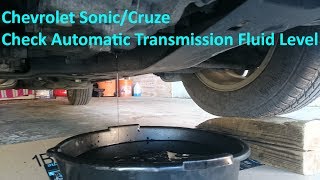
- Fluid Level Check Procedure: This transmission has no dipstick. The fluid level must be checked when the vehicle is perfectly level, the engine is idling in Park, and the transmission fluid is warmed to 185°F to 203°F (85°C to 95°C). You check it by removing a small check plug on the side of the case; fluid should slowly trickle out. Checking it cold or with the engine off is a common buyer mistake.
- Ground Straps: Ensure all ground straps between the engine, transmission, and chassis are clean, tight, and reconnected. Poor grounds can cause bizarre electronic behavior and shifting problems.
- Axle Bushing Check: Before installing the driver's side CV axle, check for any up-and-down play in the inner axle stub shaft at the transmission case. If there is any movement, the case bushing is worn and must be replaced (using a tool like the Superior K0100 kit) along with a new seal to prevent an immediate and recurring axle seal leak.
- Bellhousing Dowel Pins: Ensure alignment dowel pins are present and correctly seated between the engine block and transmission bellhousing to prevent misalignment, seal leaks, or pump damage.
Questions to Ask Your Installer
Before handing over your vehicle and the replacement transmission, ask your mechanic these specific questions to ensure they know how to handle the 6T40:
- Have you confirmed this is the correct part number (24268368) and code (6SAW) for my 1.4L Turbo Sonic?
- Do you have a J2534 pass-through device and a subscription to GM's Service Programming System (SPS2) to perform the mandatory VIN-reprogramming for the TEHCM?
- What is your procedure for flushing the transmission cooler and lines to prevent contamination from the old unit?
- Will you be checking for play at the driver's side axle and replacing the case bushing if it's worn?
- How do you verify the torque converter is fully seated before mating the transmission to the engine?
- Can you describe the fluid level check procedure you will perform after installation, since there is no dipstick?
- Does your quoted price include the ~6-9 quarts of full synthetic DEXRON-VI fluid, new axle seals, and a new front pump seal?
- Are you inspecting and transferring the bellhousing alignment dowel pins from the old unit?
Arrival Inspection Checklist
Inspect your used 6T40 transmission immediately upon delivery before you begin installation. Catching a problem now saves you hours of wasted labor.
- Fluid Color and Smell: Remove the drain plug and catch a few drops of the remaining transmission fluid. The fluid should be red or light brown. If the fluid is pitch black, thick, or smells like burnt toast, the internal clutches are burned up.
- Magnet Inspection: Check the inside of the magnetic drain plug. A small amount of fine, gray metallic paste is normal. If you find large, jagged metal shavings or chunks on the magnet, the transmission has severe internal gear damage.
- Torque Converter Hub: Look at the snout (the metal tube sticking out) on the back of the torque converter. This hub slides into the transmission pump seal. The metal surface must be perfectly smooth. Deep grooves or scratches will cause fluid leaks.
- Input Shaft Splines: Check the splines (the grooved metal teeth) on the input shaft. These teeth connect the transmission to the engine. The splines must be straight and sharp. If the teeth look twisted, chipped, or worn flat, the transmission will fail to move the vehicle.
Frequently Asked Questions (FAQ)
Can I just swap the control module (TEHCM) from my old transmission to the new one to avoid programming?
No. The TEHCM is a precisely calibrated component matched to the valve body and solenoids inside its specific transmission. Swapping it can lead to poor performance and codes. The correct procedure is to install the replacement transmission with its matched TEHCM and then reprogram it to the vehicle's VIN using GM's SPS2 software.
What fluid does the 2016 Sonic 1.4L Turbo transmission take?
It requires a licensed DEXRON-VI full synthetic automatic transmission fluid. Using any other type of fluid can cause damage. A typical service drain and refill uses between 4.2 and 6.3 quarts, while a dry unit takes 8.5 to 9.0 quarts.
How do I check the transmission fluid level?
There is no dipstick. The vehicle must be on a level surface with the engine running in Park and the transmission fluid temperature between 185°F and 203°F (85°C to 95°C). Remove the fluid level check plug on the side of the transmission case. A small, steady trickle of fluid indicates the level is correct. If no fluid comes out, it is low. If it gushes out, it is overfilled.
What is the labor time and cost to install this transmission?
Professional installation typically takes between 6.0 and 11.0 hours of shop labor. Depending on your local shop rates, this usually translates to $900 to $2,200 in labor costs alone, not including the cost of the transmission, fluids, seals, or the mandatory programming.
Will this transmission fit my 1.8L Chevy Sonic?
No. The 1.4L turbocharged engine uses the 6T40 transmission (RPO MH8). The 1.8L naturally aspirated engine uses a different transmission called the 6T30. They have different internal gear ratios and are not interchangeable.
What happens if I don't program the replacement transmission?
If you install a used 6T40 without reprogramming the internal TEHCM to your vehicle's VIN, the vehicle's computer will trigger Diagnostic Trouble Code (DTC) B3902 for an Incorrect Immobilizer ID. This will result in a no-crank/no-start condition or immediately force the vehicle into a reduced-power limp mode.
Helpful Videos
Technical Specifications
OEM Part Numbers: 24268368
Type: 6-speed automatic transaxle; Model: GM Hydra-Matic 6T40; RPO Code: MH8; Broadcast Code: 6SAW; Engine Compatibility: 1.4L Turbo (LUV/LUJ); Drivetrain: Front-Wheel Drive (FWD); Final Drive Ratio: 3.53 (RPO FXH); Fluid Type: DEXRON-VI; Dry Capacity: 8.5 - 9.0 quarts; Service Refill: 4.2 - 6.3 quarts; Weight: ~186 lbs
We Have This Part in Stock


The information in this article is provided for general reference and educational purposes only. Vehicle specifications, procedures, and part compatibility can vary by production date, trim level, and region. Always consult your vehicle's factory service manual and verify part numbers before purchasing or performing repairs. Safety-critical components such as airbags, seat belts, and braking systems should be installed by a qualified professional.
- Chevrolet Sonic:
- 🎬 Helpful Videos
- 🛍️ Shop This Part
- Identifying the Correct 2016 Sonic Transmission
- Vehicle Verification: VIN and RPO Codes
- Part Number Verification
- What is Included and Excluded in a Used Assembly
- Common Failure Symptoms
- Diagnostic Flowchart
- Known Issues, Bulletins, and Recalls
- Severe Mechanical Failures
- Electronic and Control-Related Issues
- Minor Issues
- What Fails at Every Mileage Band
- Under 60,000 Miles
- 60,000 - 100,000 Miles
- 100,000 - 150,000 Miles
- Over 150,000 Miles
- Real Owner Experiences
- Repair or Replace?
- Replacement Cost Comparison
- Freight & Delivery Reality
- Installation: Critical Steps & Requirements
- Mandatory Reprogramming
- Required Parts & Fluids
- Installation Gotchas (The "Unit Killers")
- Questions to Ask Your Installer
- Arrival Inspection Checklist
- Frequently Asked Questions (FAQ)
- 🎟️ Get 5% Off