

2015-2016 Chevrolet Cruze 1.4L 6T40: Problems, Identification, and Used Replacement
Identify the exact Gen 2 6T40 transmission for your 1.4L Turbo Cruze, understand common wave plate and TEHCM failures, and learn when a used replacement unit is the smartest fix.
- Before buying, you must verify the exact transmission using the RPO code MH8 and the transmission ID code 5CTW to ensure compatibility.
- A replacement transmission's internal computer (TEHCM) is VIN-locked and MUST be reprogrammed with GM-specific tools to function in your vehicle.
- The most critical installation steps are flushing the cooler lines to remove old debris and ensuring the torque converter is fully seated (3 distinct clicks) to avoid destroying the replacement unit's pump.
- Common failures include TCC shudder (often fixed with a fluid change and software update per TSB 18-NA-091) and catastrophic 3-5-R wave plate failure, which requires a full replacement.
- Rule out 1.4L engine issues like a bad PCV valve (P0171) or turbo leaks (P0299), as they can cause a lack of power that mimics transmission slipping.
Identifying the Correct Transmission for Your 2015-2016 Cruze


The 2015-2016 Chevrolet Cruze with the 1.4L turbocharged engine uses a specific version of the GM Hydra-Matic 6T40 automatic transmission. This is a second-generation (Gen 2) transverse, front-wheel-drive (FWD) unit. Because several GM vehicles use transmissions with the same "6T40" name, verifying the exact version for your Cruze is critical before ordering a replacement.
Step 1: Confirm Your Vehicle's Build
First, check your vehicle's factory specifications using the Vehicle Identification Number (VIN) and the Service Parts Identification sticker (often called the RPO code sticker).
| VIN Check | The 8th digit of your VIN should be a B or 7, which identifies the 1.4L Turbo engine. The 4th digit should be a P for Cruze Limited models (CRUZEOLD). |
| RPO Code | Look for the code MH8 on the sticker, which is typically located inside the glove box. This code specifically designates the 6T40 automatic transmission. |
Step 2: Match the Transmission ID Code
For final confirmation, match the identification code on the transmission itself. This is the most reliable way to ensure you are getting an identical part. The transmission ID code is printed on a barcode label or stamped on a metal tag located on the top or side of the transmission case.
| Transmission ID Code | The tag should display the code 5CTW. Used parts suppliers often list the unit by this specific code. |
| GM Part Number | The tag may also display the GM part number 24272446. |
Warning: Not all 6T40 transmissions are the same. A 6T40 from a Buick Encore, Chevrolet Malibu, or GMC Terrain will not work in your Cruze. These other versions have different mounting points, gear ratios, and internal electronics that make them incompatible. This unit fits 1.4L Turbo Gen 2 models only.
🎬 Watch this step-by-step 2016 Cruze transmission replacement guideCommon Failure Symptoms
A failing 6T40 transmission in a 2015-2016 Cruze can exhibit several symptoms. It's important to properly diagnose the issue, as some engine problems can feel like a transmission failure.
- Shuddering or Vibration: A light shudder or vibration felt during slow-speed gear shifts or when accelerating lightly.
- Harsh Shifting: Banging or clunking noises when the transmission shifts between gears.
- Slipping or Flaring: The engine RPMs increase, but the vehicle doesn't accelerate accordingly, as if the transmission is in neutral for a moment.
- No Forward or Reverse Movement: A complete loss of engagement, which can indicate a catastrophic internal failure.
- Check Engine Light: The Malfunction Indicator Lamp (MIL) may illuminate, storing diagnostic trouble codes (DTCs) related to the transmission.
Diagnostic Flowchart
Known Problems, Recalls, and Service Bulletins

This transmission family has several well-documented issues. Always check for applicability to your specific vehicle's model year.
Torque Converter Clutch (TCC) Shudder
A common complaint is a slight shudder felt during gear shifts at speeds below 40 mph. This is often caused by issues with the torque converter clutch. General Motors released Technical Service Bulletin (TSB) 18-NA-091 to address this. The official repair involves a drain and refill of the transmission fluid with fresh GM DEXRON-VI Full Synthetic ATF and a software update for the Transmission Control Module (TCM). A Service Fast Learn (SFL) procedure is also required.
Internal 3-5-R Clutch Wave Plate Failure
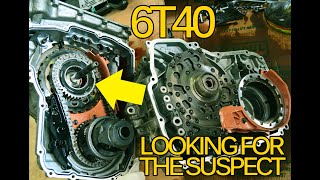
A severe and well-known issue in the 6T40 family is the failure of the 3-5-R clutch wave plate. This component can break apart, sending metal debris throughout the transmission. This typically results in a loss of 3rd, 5th, and Reverse gears and requires a complete transmission replacement or rebuild.
TEHCM / Solenoid Failure
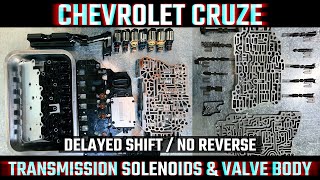
The Transmission Electro-Hydraulic Control Module (TEHCM) is the transmission's computer, and it is located inside the transmission oil pan, submerged in fluid. Failure of the TEHCM or the internal solenoids attached to it can cause a wide range of shifting problems and diagnostic codes. Because the TEHCM is electronically locked to the original vehicle's VIN, it is a primary reason why programming is mandatory during replacement.
Recalls: Ignition Key and Accumulator Bolts
NHTSA Campaign ID 16V502000 (GM recall numbers 50490, 50491) affects 2011-2016 Chevrolet Cruze models. A defect in the ignition switch housing could allow the key to be removed when the transmission is not in Park, creating a rollaway risk. Dealers will inspect and replace the key cylinder lock housing free of charge.
Additionally, a family-level recall (NHTSA Campaign ID 16V502000 / GM Recall N202313440) was issued for 2018-2020 Gen 3 models regarding missing bolts on the start-stop accumulator, which can cause fluid leaks. While this targets newer models, it is wise to inspect the accumulator area on any replacement unit.
Pro Tip: TSB 13282 regarding an improperly manufactured snap ring applies to early 6T40 units (like the 2013 Malibu and Regal), not the 2015-2016 Cruze. Be aware that not all 6T40 family issues apply to your specific vehicle.
Engine Issues That Mimic Transmission Problems
Before condemning the transmission, rule out common engine-related issues on the 1.4L Turbo that can feel similar. A faulty Positive Crankcase Ventilation (PCV) valve, covered under GM Special Coverage N192210230, can cause a rough idle and set a P0171 code. Additionally, leaks in the turbocharger's air hoses can cause underboost (code P0299) and MAF sensor errors (code P1101), leading to a lack of power that can be mistaken for transmission slipping.
What Fails at Every Mileage Band
Pro Tip: The mileage bands below describe the condition of used replacement units of that mileage. The checklists provided are things to do WHILE INSTALLING the purchased transmission, not maintenance for your current vehicle.
Under 60,000 Miles
Transmissions in this range may show early signs of torque converter clutch (TCC) shudder during light acceleration, harsh or delayed shifting (particularly between 2nd and 3rd gear), or early signs of TEHCM/solenoid issues presenting as erratic shifting.
- ✓Do during install (required): Perform all available TCM software updates to address shift quality and TCC shudder. Flush the transmission cooler lines thoroughly to remove any potential debris from the previous unit. Verify the torque converter is fully seated (three distinct 'clicks') before bolting the transmission to the engine to prevent pump damage.
- ✓Do during install (recommended): Replace external seals like the left and right CV axle shaft seals as a low-cost preventative measure against future leaks.
- ✓Cheap insurance while the engine is out: Inspect the start-stop accumulator for any missing bolts or signs of leakage.
60,000 - 100,000 Miles
At this mileage, internal failure of the 3-5-R clutch wave plate becomes more common, leading to a loss of 3rd, 5th, and Reverse gears. You may also see worsening TCC shudder, increased likelihood of TEHCM failures, and fluid leaks from axle seals or case bolts.
- ✓Do during install (required): Perform a complete fluid exchange with DEXRON-VI fluid. Replace the front pump/torque converter seal and axle seals.
- ✓Do during install (recommended): Strongly consider replacing the torque converter with an updated unit, as the original may be worn or contributing to shudder.
- ✓Cheap insurance while the engine is out: If swapping the TEHCM from the original transmission, replace the front control cover gasket.
100,000 - 150,000 Miles
Units in this band are at risk for complete transmission failure due to catastrophic internal damage, often stemming from an initial wave plate or torque converter issue. Significant wear in the valve body leads to pressure loss, slipping, and harsh shifts. Worn bushings can cause persistent axle seal leaks, and internal plastic components may fail.
- ✓Do during install (required): Assume the donor torque converter has significant wear; replacement is highly recommended for reliability. Replace all external seals and gaskets accessible during the installation.
- ✓Do during install (recommended): Install an aftermarket external transmission cooler to help manage heat, a primary cause of failure.
- ✓Cheap insurance while the engine is out: Carefully inspect and clean all mating surfaces and electrical connectors.
Over 150,000 Miles
The expected service life of the 6T40 is typically 100,000 to 150,000 miles. Units that reach over 150,000 miles have usually been well-maintained, but failures are generally due to the cumulative effect of wear and tear on all internal components (clutches, seals, bearings). Major component failure is highly possible.
- ✓Do during install (required): If proceeding with a used unit of this mileage, replace the torque converter, all seals, and the TEHCM (or have it reprogrammed by a professional using a GM-compatible J2534 pass-through programming device).
- ✓Do during install (recommended): At this mileage, installing a used transmission is a significant gamble. A remanufactured unit with upgraded components is a more reliable choice.
- ✓Cheap insurance while the engine is out: A new water pump, thermostat, and coolant hoses are considered cheap preventative maintenance while access is available.
Real Owner Experiences
| Source | Mileage | What Happened | Cost |
|---|---|---|---|
| carcomplaints.com | N/A | Owners of 2016 models reported electrical failures and harsh shifting. | N/A |
| N/A | A 2015 Cruze owner described a jerk when accelerating from a stop and the car rolling backward on a slight incline while in Drive. | N/A | |
| 80,000 | An owner of a 2018 model reported engine misfires, brake failure, and transmission failure where the car would not go into gear. | N/A | |
| YouTube | N/A | A video documented a 6T40 transmission that would fail to move once it reached normal operating temperature, a problem traced back to a broken internal clutch wave plate. | Full replacement or rebuild. |
| 110,000 | An owner reported needing to replace the entire transmission and turbo on their 2011 1.4L model. | N/A | |
| carcomplaints.com | N/A | Transmission failure was a top complaint for 2011 models, with symptoms including rattling noises followed by the transmission shifting into reverse on its own or getting stuck in gear. | N/A |
| Quora | 175,000-200,000 | A Chevrolet technician noted that most Cruzes will require major engine or transmission work around this mileage. | Major repair/replacement. |
| CoPilot | 200,000-250,000 | With proper care, the Chevy Cruze as a whole can last this long, but it's near the end of its expected life when expensive repairs become necessary. | N/A |
| 180,000 | Bought a used transmission for $600 and had a family member install it after being quoted $5000. | $600 | |
| 112,000 | Replaced the transmission entirely. | $4500 | |
| YouTube | Unknown | Bought a used transmission for $800 and had it installed as an alternative to a $2600 repair quote. | $1600-1700 |
| 113,000 | Quoted for a full replacement ($5025 parts, $1705 labor) after finding clutch material in the fluid. | $7370 quoted | |
| Traverse Forum | 117,000 | Received quotes from a dealership ($1500-$3600) and an independent shop ($1650-$1850) for a wave plate failure on a similar 6T family unit. | $1500-3600 quoted |
Repair or Replace?
Deciding whether to repair your existing 6T40 or replace it entirely depends on the specific failure mode and the condition of the transmission fluid.
| Failure Mode | Typical Repair Cost | When Repair is Viable |
|---|---|---|
| TEHCM / Solenoid Failure | $300-$1200 | Repair makes sense when diagnostics confirm an electrical fault (DTCs for solenoids, communication loss) and the transmission fluid is clean and free of metal debris. A pre-programmed TEHCM can be purchased for around $300. |
| Torque Converter Clutch (TCC) Shudder | $200-$500 | Repair makes sense when the only symptom is a mild shudder during lockup, without slipping or harsh shifts. This is often resolved with a TCM software update and a complete fluid exchange with DEXRON-VI (around $193). |
| 3-5-R Clutch Wave Plate (Caught Early) | $1600-$2500 | If symptoms (e.g., harsh or slipping 3rd/5th/Reverse gears) are present but the vehicle is still drivable, an independent shop may be able to perform a rebuild before widespread contamination occurs. |
When Replacement is Smarter: Replacement is necessary when catastrophic internal failure has occurred, evidenced by significant metal debris in the transmission pan, loud grinding/banging noises, or a complete loss of drive. When a wave plate shatters, it sends shrapnel throughout the unit, making a simple repair impossible and a full replacement with a quality used or remanufactured unit the only reliable path forward. Given the high cost of a new or remanufactured unit, replacement may not be economically viable on a higher-mileage vehicle valued at less than the total repair cost.
Questions to Ask Your Installer
- Have you confirmed this is a transmission mechanical failure and not an engine sensor, wiring, or TEHCM issue?
- Will you be flushing the transmission cooler and lines completely before installing the replacement unit?
- How do you ensure the torque converter is fully seated in all three stages before mating the transmission to the engine?
- Do you have the GM-specific tools (SPS2/MDI) to perform the VIN programming and Transmission Adaptive Values Learn procedure on the TEHCM?
- If I supply my own used transmission, will you still offer a warranty on your labor?
- What is the source and warranty on the used or remanufactured transmission you are quoting?
- Does your quote include the necessary new seals (axle, torque converter), gaskets, and a full fill of DEXRON-VI fluid?
Replacement Cost Comparison
The cost to replace a 6T40 transmission can vary significantly based on the type of replacement unit and local labor rates. Shop labor is estimated at 6-10 hours.
| Part / Service | Estimated Cost (USD) |
|---|---|
| New OEM | $4,500 - $5,500 (Part Only) |
| Remanufactured | $2,300 - $4,000 (Part Only) |
| Used OEM | $600 - $1,100 (Part Only) |
| Labor to Install | $900 - $1,700 |
Freight & Delivery Reality

Shipping a complete 6T40 transmission assembly is a major logistical process. Verified shipping data shows this assembly weighs approximately 192 lbs and measures roughly 36" x 23" x 11" before crating. It ships as LTL (Less-Than-Truckload) freight on a pallet—it is NOT a standard parcel delivery.
Because of its size and weight, delivery requires a truck equipped with a liftgate or a facility with a forklift. Always inspect the pallet and the transmission case for any physical damage before signing the delivery receipt. A reputable auto recycler will conduct a pre-purchase verification interview to confirm your VIN, RPO codes, and exact fitment before shipping the unit to ensure you receive the correct Gen 2 assembly.
Installation & Programming: Key Considerations

Installing a used 6T40 is an Advanced / Expert job. Several steps are critical for success and to avoid damaging the replacement unit.
Warning: The internal Transmission Electro-Hydraulic Control Module (TEHCM) is electronically locked to the donor vehicle's VIN. The replacement transmission will not function until it is reprogrammed. You must either use a GM Service Programming System (SPS2) to program the donor TEHCM or carefully swap the original TEHCM from your old transmission into the replacement unit.
Installation "Gotchas"
- Torque Converter Seating: The torque converter must be fully seated into the transmission's front pump before installation. You should feel it drop into place three distinct times as you rotate it. Failure to do this will cause the pump to break when the engine and transmission are bolted together. Forcing the bellhousing bolts to draw the engine and transmission together is a common buyer mistake that destroys the unit.
- Fluid Level Check: This transmission has no dipstick. The fluid level must be checked with the engine running at operating temperature (185°F to 203°F) via a standpipe/check plug on the side of the case.
- Cooler Line Flush: Always flush the transmission cooler and lines professionally using a flush kit before installing a replacement unit. Debris from the previous failure can contaminate and destroy the new transmission.
- Adaptive Relearn: After installation and programming, a "Service Fast Learn" or "Transmission Adaptive Values Learn" procedure must be performed with a bi-directional scan tool (GDS2/MDI). This allows the TEHCM to learn the clutch engagement points for smooth shifting.
- Subframe Alignment: Lowering the subframe is required for removal; alignment holes must be marked to avoid throwing off suspension geometry.
Inspect the Fluid Pan and Magnet
Remove the transmission fluid pan (the bottom metal cover) to look inside. Locate the small magnet resting in the bottom of the pan. A small amount of fine, dark paste on the magnet is normal wear. If you see large metal shavings, silver flakes, or broken metal chunks, do not install the unit. This means internal gears or parts are destroyed.
Check Fluid Color and Smell
Examine any leftover transmission fluid inside the pan or cooling lines. Healthy fluid should be red or light brown. Smell the fluid. If it smells like burnt toast or is completely black, the internal clutches are burnt out. A used transmission with burnt fluid will slip or fail quickly.
Examine the Converter Hub and Input Splines
Look at the torque converter (the large, heavy metal bowl at the front of the transmission). Check the converter hub, which is the smooth metal tube sticking out of the back of the converter. It must be perfectly smooth. Deep grooves or scratches here will damage the front seal and cause fluid leaks.
Next, check the input splines (the grooved metal shafts that connect the transmission to the engine). The grooves must be straight and sharp. If the splines look twisted, stripped, or heavily rusted, the transmission will not connect properly and will fail to move the vehicle.
Frequently Asked Questions (FAQ)
What is a TEHCM?
The TEHCM, or Transmission Electro-Hydraulic Control Module, is the computer that controls all transmission functions. In the 6T40, it is a single unit that combines the control module, pressure switches, and shift solenoids, and it lives inside the transmission oil pan.
Why does the replacement transmission need to be programmed?
The TEHCM is a security component that is electronically paired to the vehicle's VIN. This prevents theft but also means a used transmission's computer will not communicate with your car's engine computer until it is reprogrammed with your vehicle's VIN and specific calibration files.
Do I have to replace the torque converter?
Yes. A quality used transmission assembly will include the matching torque converter. It is critical to use the converter that comes with the replacement unit, as it is part of the balanced assembly and contains fluid and wear material that should not be mixed with your old parts.
What is included with a used 6T40 transmission?
A standard used assembly includes the transmission case, all internally lubricated parts, extension/tail housing, transmission oil pan, torque converter, valve body, and internal solenoids. It does NOT include external sensors, shifter linkage, shift cables, flexplate/flywheel, external transmission cooler lines, or wiring harnesses.
What tools do I need to install this?
This is an advanced job requiring specialized equipment. You will need an engine support bar/fixture, a transmission jack, a CV axle popper or pry tool, a torque converter alignment/holding tool, a fluid pump, a GM-compatible J2534 pass-through programming device, and a bi-directional scan tool (GDS2/MDI) for the adaptive relearn.
Can I install this myself?
This is considered an advanced to expert-level job. It requires lowering the vehicle's subframe, using an engine support fixture, and having specialized tools for programming and diagnostics. It is not recommended for beginners.
Helpful Videos


Technical Specifications
OEM Part Numbers: 24272446
Model: GM Hydra-Matic 6T40; Generation: Gen 2; Application: 2015-2016 Chevrolet Cruze; Engine: 1.4L Turbo (VIN 8th digit B or 7); Drivetrain: Transverse, Front-Wheel-Drive (FWD); RPO Code: MH8; Transmission ID Code: 5CTW; Fluid Type: GM DEXRON-VI Full Synthetic ATF; Weight: Approx. 192 lbs
We Have This Part in Stock


The information in this article is provided for general reference and educational purposes only. Vehicle specifications, procedures, and part compatibility can vary by production date, trim level, and region. Always consult your vehicle's factory service manual and verify part numbers before purchasing or performing repairs. Safety-critical components such as airbags, seat belts, and braking systems should be installed by a qualified professional.
- Chevrolet Cruze:
- 🎬 Helpful Videos
- 🛍️ Shop This Part
- Identifying the Correct Transmission for Your 2015-2016 Cruze
- Step 1: Confirm Your Vehicle's Build
- Step 2: Match the Transmission ID Code
- Common Failure Symptoms
- Diagnostic Flowchart
- Known Problems, Recalls, and Service Bulletins
- Torque Converter Clutch (TCC) Shudder
- Internal 3-5-R Clutch Wave Plate Failure
- TEHCM / Solenoid Failure
- Recalls: Ignition Key and Accumulator Bolts
- Engine Issues That Mimic Transmission Problems
- What Fails at Every Mileage Band
- Under 60,000 Miles
- 60,000 - 100,000 Miles
- 100,000 - 150,000 Miles
- Over 150,000 Miles
- Real Owner Experiences
- Repair or Replace?
- Questions to Ask Your Installer
- Replacement Cost Comparison
- Freight & Delivery Reality
- Installation & Programming: Key Considerations
- Installation "Gotchas"
- Inspect the Fluid Pan and Magnet
- Check Fluid Color and Smell
- Examine the Converter Hub and Input Splines
- Frequently Asked Questions (FAQ)
- 🎟️ Get 5% Off