

2015 Chevrolet Camaro SS 6.2L 6L80 Transmission: Problems, Identification, and Used Replacement
Identify the MYC 6L80 transmission, learn why torque converter shudder and TEHCM failures kill it, and know when to replace it with a used OEM assembly.
- A used 6L80 transmission's control module (TEHCM) is VIN-locked and must be professionally reprogrammed to your vehicle to function.
- When replacing the transmission, you must also install a new torque converter and a new transmission cooler to prevent immediate contamination and failure of the replacement unit.
- Before purchase, confirm your vehicle has the 'MYC' RPO code on the SPID sticker to ensure you are buying the correct 6L80 variant for a 2015 Camaro SS.
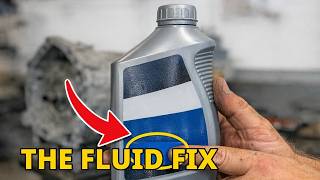
- A 'rumble strip' vibration is a sign of torque converter failure; addressing it early with a fluid flush (per TSB 18-NA-355) may prevent a full replacement.
Part Identification: Confirming the 6L80 'MYC' Transmission

The automatic transmission used in the 2015 Chevrolet Camaro SS with the 6.2L V8 engine is the GM Hydra-Matic 6L80. This is a 6-speed, rear-wheel-drive (RWD) unit known by its Regular Production Option (RPO) code MYC. It is specifically paired with the 6.2L L99 V8 engine. The production years for this transmission family span from 2006 to 2020.
Before purchasing a replacement, you must verify that your vehicle is equipped with this exact transmission. Using the wrong unit will result in fitment, electronic, or performance issues.
- Check Your VIN: The 8th digit of your Vehicle Identification Number (VIN) should be W or 2, which designates the 6.2L L99 V8 engine used with the automatic transmission.
- Find the RPO Code: Look for the Service Parts Identification (SPID) sticker, typically located under the carpet in the trunk or in the glove box. This sticker lists all the three-character RPO codes for your car. You must find MYC and L99 on this list to confirm you have the correct powertrain.
- Locate the Transmission Tag: For a final check, look for a white barcode sticker on the passenger side of the transmission case near the oil pan rail. It will have a four-character broadcast code; for this exact model, it is often 4CRA (or sometimes 5CRA). You may also see OEM part numbers 24260178 or 19329872.
Warning: Not all 6L80 transmissions are the same. Units from other GM vehicles like the Silverado, Tahoe, Corvette, or Pontiac G8 will not fit or function correctly. They have different mounting points, oil pan depths, output shaft styles, and electronic control module calibrations. The V6 Camaro uses a different bellhousing bolt pattern, and the high-performance ZL1 model uses the heavier-duty 6L90 (RPO: MYD).
Common Failure Symptoms

When the 6L80 transmission begins to fail, it can show several distinct symptoms. Recognizing them can help you determine if the transmission is the source of the problem.
- Torque Converter Shudder: The most common complaint is a vibration that feels like driving over rumble strips at steady speeds, typically between 25 and 80 mph. This is often caused by a failing Torque Converter Clutch (TCC).
- Harsh or Delayed Shifts: You may experience banging or jolting when the transmission shifts, especially from 1st to 2nd gear. You might also notice a significant delay when shifting from Park into Drive or Reverse.
- Limp Mode: A serious failure can cause the transmission to enter a fail-safe mode, where it gets stuck in 3rd gear to prevent further damage.
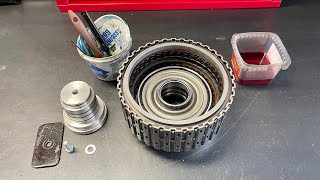
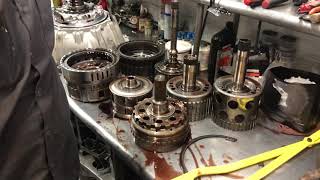
- Loss of Gears: A complete failure of the 3-5-Reverse clutch drum, a known weak point, will result in the loss of 3rd gear, 5th gear, and Reverse. 🎬 See: Diagnosing 3-5-Reverse clutch drum failure
- Check Engine Light: Numerous diagnostic trouble codes (DTCs) can point to a transmission problem. Common codes include P0741 (TCC Stuck Off), P0776 (Pressure Control Solenoid 'B' Performance), P0872, P0877, P0751, P2714, P0796, and U0101 (Lost Communication with TCM).
Diagnostic Flowchart
Known Issues and Technical Service Bulletins (TSBs)

Several well-documented issues affect the 6L80 transmission family. Understanding these can help in diagnosis and repair.
Torque Converter Clutch (TCC) Shudder & Delamination
This severe issue is addressed by GM Technical Service Bulletins TSB 22-NA-182 (which replaces PIP5792E) and TSB 18-NA-355. It applies to 2010-2015 models that experience a shudder during light acceleration. The cause is often related to the original-fill transmission fluid absorbing moisture and glazing the clutch lining. The prescribed remedy is to perform a complete fluid exchange with an updated, full synthetic transmission fluid. If the shudder is severe or has been present for a long time, the torque converter itself may be damaged and require replacement.
Transmission Electro-Hydraulic Control Module (TEHCM) Failure
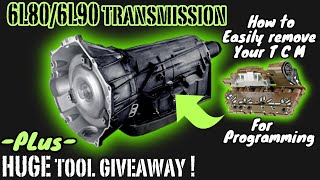
The TEHCM is the transmission's computer, and it is integrated with the valve body inside the oil pan, submerged in hot fluid. Heat and contaminated fluid are its biggest enemies. When it fails, it can cause erratic shifting, limp mode, and a host of diagnostic codes related to pressure switches and solenoids. In most cases, the only reliable fix is to replace the TEHCM or pressure switch membranes, and clean the solenoids.
3-5-Reverse Clutch Drum Fatigue
The stamped steel drum for the 3-5-R clutch pack is known to develop cracks at its weld points, leading to a loss of hydraulic pressure. This results in a no-move condition in Reverse and slipping or complete loss of 3rd and 5th gears. This is a severe internal mechanical failure that requires removing and disassembling the transmission to replace the clutch drum.
What Fails at Every Mileage Band
Pro Tip: The mileage bands below describe the typical condition of used replacement units at that mileage. The checklists provided are critical steps you must take WHILE INSTALLING the purchased transmission to ensure it survives, not just maintenance advice for your current broken unit.
Under 60,000 Miles
Even low-mileage units can experience Torque Converter Clutch (TCC) shudder, often appearing as a vibration between 35-55 mph due to fluid breakdown. Some owners also report harsh or slipping shifts on the 2-3 or 3-4 transition. In performance applications, overheating can accelerate wear even at this low mileage.
- ✓Do during install (required): Replace Torque Converter. Reusing the old one risks immediate contamination of the replacement transmission.
- ✓Do during install (required): Replace Transmission Cooler. The original plate-style cooler cannot be flushed effectively and will hold debris from the prior failure.
- ✓Do during install (required): Full Fluid Exchange with DEXRON VI. A simple pan drop is insufficient.
- ✓Do during install (recommended): Install an external auxiliary transmission cooler to prevent overheating, a primary cause of fluid breakdown and failure.
- ✓Cheap insurance while the engine is out: Install a thermal bypass valve upgrade to ensure faster cooler flow and more stable operating temperatures.
60,000 - 100,000 Miles
This is the window where torque converter shudder often progresses to complete failure, contaminating the entire system with metallic debris. TEHCM (solenoid/valve body) failures also become much more common, presenting as limp mode or codes like P0776 and P0796. Fluid breakdown is significant if it has never been changed.
- ✓Do during install (required): All items from the 'Under 60K' band are mandatory.
- ✓Do during install (recommended): Inspect and Replace Driveline Components: Check transmission mounts, driveshaft U-joints, and the flexplate for cracks or wear, as vibrations can damage the transmission case.
- ✓Cheap insurance while the engine is out: Consider a Billet Torque Converter: As a preventative upgrade, a billet-cover torque converter offers significantly better durability and heat management than the stock unit.
100,000 - 150,000 Miles
At this stage, 3-5-Reverse clutch drum failures (cracks at the weld points) become highly likely due to prolonged heat stress. Pump failures also occur, often accelerated by contaminated fluid from a failing torque converter. The cumulative effect of heat and debris often leads to widespread internal damage.
- ✓Do during install (required): All items from the previous bands are mandatory.
- ✓Do during install (recommended): Proactive TEHCM Replacement: Given the high failure rate, installing a new, pre-programmed TEHCM with the used transmission is a wise investment to prevent electronic issues.
- ✓Cheap insurance while the engine is out: Upgrade Internal Components: If rebuilding, use upgraded parts like a welded 3-5-R drum, billet pistons, and an improved valve body separator plate to address known weak points.
Over 150,000 Miles
Units surviving past 150,000 miles are subject to general wear and tear on all internal components, including clutch packs, bushings, and seals. Most units that fail at this mileage have experienced a long-term issue (like TCC shudder) that finally caused a secondary, catastrophic failure of a hard part.
- ✓Do during install (recommended): Assume a full rebuild or remanufactured unit is a better investment than a high-mileage used unit. If installing a used unit, all previously mentioned 'do during install' items are critical for any hope of reliability.
Real Owner Experiences
The service life of the 6L80 varies dramatically based on maintenance. While some owners report failures between 80,000 and 100,000 miles, proactive maintenance (fluid changes every 30,000-50,000 miles and heat management) can push the lifespan to 150,000 - 200,000 miles. Here is what real owners have experienced:
| Source | Mileage | What Happened | Cost |
|---|---|---|---|
| Camaro5 Forums | 50k | Owner experienced slipping between 3rd and 4th gear at light throttle after a fluid flush. A tuner adjusted line pressure, which reduced the symptom. | Not specified |
| Camaro5 Forums | 55k | After a dealer transmission flush, the car would not shift correctly above light throttle, specifically on the 2-3 shift. Issue persisted after reverting to stock tune. | Not specified |
| Reddit r/ChevyTrucks | 65k | Owner reported a weak-feeling torque converter and a 'jingle' under load between 40-60 mph, along with an occasional slip into 3rd gear. | Warranty claim |
| GM-Trucks.com Forum | 95,000 | Transmission failed within the first week of ownership. Local shops reported that failures of the pump or torque converter are common between 80k-100k miles. | Not specified |
| Forum Owner Report | 90k | Even after a complete replacement with a new GM transmission, new torque converter, and new cooler/lines, the torque converter shudder returned after 90,000 miles. | Not specified |
| GMTNation Forum | 101,000 | Transmission went into limp mode (2nd gear only). The pan was full of metal, indicating a catastrophic internal failure, likely originating from the torque converter. | Full replacement |
| Reddit r/Silverado | 136k | Despite preventative maintenance including a thermal bypass and frequent fluid changes, the owner experienced classic torque converter shudder (rumble strip feeling). | Pending diagnosis |
| NC4x4 Forum | 145,000 | Torque converter failed completely, filling the transmission with metal shavings and black fluid. Required a full rebuild. | $2,800 - $3,800 |
| GM-Trucks.com Forum | 161k | Owner sold the vehicle with 161k miles and the transmission was still running well after a fluid change and the addition of a large cooler earlier in its life. | N/A |
| Reddit r/ChevyTrucks | 205k | The original factory transmission failed, losing 3rd gear. This was considered an exceptionally long life for the unit. | Full replacement |
| Reddit r/ChevyTrucks | 265k | The original transmission lasted 265,000 miles before requiring a rebuild. | Rebuild |
| Reddit r/camaro | Unknown | Dealer quoted for torque converter replacement due to shudder. Quote included $750 for the part and $2600 for labor. Another shop advised they would only do a full rebuild for $8k-10k. | Quoted $3500 |
| Camaro5 Forum | Unknown | Owner had transmission rebuilt to address slipping and a torque converter solenoid code. The rebuild included a new converter, clutch packs, and seals. | $3500 |
| Reddit r/mechanics | Very low | Owner experienced torque converter shudder. A shop quoted a full transmission rebuild, stating that replacing only the torque converter was insufficient due to contamination risk. | Quoted $3000 - $4000 |
| Camaro5 Forum | 60000 | Owner experienced a catastrophic failure (planetary gear). One user commented they paid $2,500 for a rebuild after a bad experience with another shop that charged $2,200 and failed to fix it. | $3600 |
| Reddit r/AskAMechanic | 200000 | Owner was quoted just under $7,000 for a remanufactured transmission replacement, with about $1,200 of that being labor. | Quoted ~$7000 |
| Camaro5 Forum | Unknown | Owner had a complete performance rebuild with billet parts and a new 3200 stall converter after a transmission failure. | Nearly $10,000 |
Repair or Replace?
Deciding whether to repair your existing 6L80 or replace it entirely depends on the extent of the damage. Here is a breakdown of the economics:
| When Repair Makes Sense | If you catch Torque Converter Clutch (TCC) shudder early, a complete fluid flush with updated fluid costs $400 - $800 and may resolve the issue. If diagnostic codes point strictly to a TEHCM or valve body failure (and the mechanical parts are pristine), a repair typically costs $800 - $1,800. |
| When Replacement is Smarter | If there is evidence of internal mechanical failure, such as metal debris in the transmission fluid, replacement is the only logical choice. A torque converter failure contaminates the entire system, making a partial repair a short-lived fix. Many shops will only warranty a full replacement in these cases. |
Cost Estimates:
| Used OEM Assembly | $900 - $3,300 (depending on mileage and condition) |
| Remanufactured Assembly | $2,587 - $4,000+ (often addresses factory weak points) |
| New OEM (GM Part #24260178) | $3,500 - $4,800+ (usually reserved for dealer warranty work) |
| Shop Labor | $650 - $1,500 for a standard swap (taking 5-8 hours), though complex rebuilds or dealer labor can push total labor costs up to $2,600. |
Questions to Ask Your Installer:
- Does your quote include a new, quality remanufactured torque converter?
- How will you be flushing the transmission cooler and lines? Do you use a heated flushing machine?
- Does the price include the mandatory VIN-specific programming and the 'Service Fast Learn' procedure for the TEHCM?
- What is the warranty on the replacement unit, and does it cover both parts and labor?
- Will you be replacing the transmission filter, pan gasket, and front seal?
- Can you confirm the broadcast code on the replacement unit matches '4CRA' for my 2015 Camaro SS?
Installation and Programming: Critical Steps

Installing a used 6L80 is an advanced-to-expert level job. Specific procedures must be followed to ensure the replacement unit works correctly and is not immediately damaged.
Required Consumables and Tools
You will need DEXRON VI Full Synthetic Automatic Transmission Fluid, a new transmission filter (GM PN 24236517), a pan gasket (GM PN 24224781), a front pump/torque converter seal (GM PN 24230687), and cooler line flush solvent. Special tools required include a transmission jack, an engine support fixture, cooler line flush equipment, a J2534 pass-through programming tool (or GM MDI2 device), and a bi-directional scan tool.
Required Programming
The TEHCM inside the transmission is electronically tied to the original donor vehicle's VIN. It will not function until it is reprogrammed for your car.
Warning: Failure to program the replacement TEHCM will result in a no-start condition or cause the transmission to be locked in limp mode. The vehicle will not operate correctly.
This is not an optional step. A technician must use a GM MDI2 or a J2534 pass-through tool with GM's Service Programming System (SPS2) software to flash your car's VIN and the correct calibration file to the new transmission's control module. After programming, a Service Fast Learn procedure must be performed with a professional scan tool to allow the TEHCM to learn the clutch engagement points.
Installation Gotchas
- Replace the Torque Converter: Never reuse the old torque converter. Debris from the previous transmission failure is almost certainly trapped inside it and will contaminate and destroy your replacement unit.
- Flush the Cooler: The transmission fluid cooler and lines must be thoroughly flushed with a heated flushing machine before installing the new transmission. Skipping this step will send metal debris directly into the new TEHCM, causing immediate failure and voiding your warranty.
- Seat the Torque Converter: The torque converter must be fully seated into the transmission's front pump. You must rotate and push the converter onto the shaft until you feel or hear three distinct clicks or drops. If it is not fully seated, tightening the bellhousing bolts will crush the internal oil pump rotor upon engine startup.
- Check Fluid Level Correctly: The 6L80 has no dipstick. The fluid level must be checked from underneath the vehicle with the engine running, the transmission at operating temperature (86°F to 122°F), and cycling through the gears.
- Alignment Dowel Pins: Ensure the alignment pins are clean and in place. Never use the bellhousing bolts to force the transmission case flush against the engine block.
- Ground Connections: The external wiring harness is not included with a used unit. Ensure all vehicle ground connections, especially those between the engine, transmission, and chassis, are clean and tight.
Freight & Delivery Reality for Used Transmissions

When ordering a complete used 6L80 transmission assembly, it will not arrive in a standard cardboard box via regular mail. This is a heavy, industrial piece of equipment.
- Size and Weight: A fully assembled 6L80 transmission weighs approximately 241 lbs and measures roughly 46" x 23" x 25" before it is even crated or palletized.
- LTL Freight: Because of its size and weight, it ships via Less-Than-Truckload (LTL) freight on a wooden pallet.
- Delivery Requirements: You must have a commercial address with a loading dock or forklift, or you must request a truck equipped with a liftgate to lower the pallet to the ground.
- Inspect Before Signing: Always inspect the transmission while the delivery driver is present. Check for cracked bellhousings, broken sensor connectors, or crushed oil pans. Once you sign the delivery receipt, you are legally accepting the freight in its current condition.
Frequently Asked Questions
Do I have to program a used 2015 Camaro transmission?
Yes, programming is mandatory. The Transmission Electro-Hydraulic Control Module (TEHCM) inside the used unit is locked to the donor car's VIN. It must be flashed with your vehicle's VIN and calibration files using special tools (SPS2 and a J2534 device), followed by a Service Fast Learn procedure.
Can I reuse my old torque converter?
No. The old torque converter is full of contaminated fluid and metal shavings from the failed transmission. Reusing it will send that debris into your replacement transmission and cause it to fail very quickly, voiding any warranty.
What causes the "rumble strip" shudder in a 6L80?
This shudder is a classic symptom of Torque Converter Clutch (TCC) failure. It is often caused by degraded transmission fluid absorbing moisture. GM issued TSB 18-NA-355, which recommends a fluid flush with a newer type of synthetic fluid to resolve the issue.
How do I check the transmission fluid if there is no dipstick?
The 6L80 fluid level must be checked from underneath the vehicle while it is level. The engine must be running, and the transmission fluid must be at operating temperature (86°F to 122°F). You remove a level control plug in the oil pan; if fluid drips out slowly, it is full.
Can I use a 6L80 from a Silverado or Tahoe in my Camaro SS?
No. While they share the 6L80 family name, truck and SUV transmissions differ significantly in their mounting points, oil pan depth, output shaft style, and internal electronic control module calibration. You must use a unit specifically designed for the RWD Camaro SS 6.2L.
What is included with a standard used transmission assembly?
According to standard auto recycler practices, a used 6L80 assembly includes the transmission case, internally lubricated parts, extension/tail housing, oil pan, torque converter, and the internal TEHCM/valve body. It does not include external sensors, the external wiring harness, shifter cables, the engine flexplate, or cooler lines.
Helpful Videos
Technical Specifications
OEM Part Numbers: 24260178 19329872
Name: GM Hydra-Matic 6L80; RPO Code: MYC; Type: 6-speed automatic; Drivetrain: Rear-Wheel-Drive (RWD); Paired Engine: 6.2L L99 V8; Engine VIN Digit: W or 2; Broadcast Code: 4CRA (or 5CRA); Production Years: 2006-2020; Weight: ~241 lbs; Fluid Type: DEXRON VI Full Synthetic
We Have This Part in Stock


The information in this article is provided for general reference and educational purposes only. Vehicle specifications, procedures, and part compatibility can vary by production date, trim level, and region. Always consult your vehicle's factory service manual and verify part numbers before purchasing or performing repairs. Safety-critical components such as airbags, seat belts, and braking systems should be installed by a qualified professional.
- Chevrolet Camaro:
- 🎬 Helpful Videos
- 🛍️ Shop This Part
- Part Identification: Confirming the 6L80 'MYC' Transmission
- Common Failure Symptoms
- Diagnostic Flowchart
- Known Issues and Technical Service Bulletins (TSBs)
- Torque Converter Clutch (TCC) Shudder & Delamination
- Transmission Electro-Hydraulic Control Module (TEHCM) Failure
- 3-5-Reverse Clutch Drum Fatigue
- What Fails at Every Mileage Band
- Under 60,000 Miles
- 60,000 - 100,000 Miles
- 100,000 - 150,000 Miles
- Over 150,000 Miles
- Real Owner Experiences
- Repair or Replace?
- Installation and Programming: Critical Steps
- Required Consumables and Tools
- Required Programming
- Installation Gotchas
- Freight & Delivery Reality for Used Transmissions
- Frequently Asked Questions
- 🎟️ Get 5% Off