

2019 Cadillac CT6 3.0L Twin Turbo Transmission: Problems, Identification, and Used Replacement
The 10L90 transmission in the 3.0L CT6 is plagued by valve body wear and harsh shifting. Learn how to identify your unit, what fails, and when to replace it with a used OEM assembly.
- Fitment is extremely specific; you must verify the VIN (8th digit '6'), RPO codes (MHS/MHW), and transmission broadcast code (9SWJ) before purchase.
- A used replacement transmission requires mandatory electronic reprogramming with a GM GDS2/SPS2 tool to flash the VIN and calibrate the solenoids; the car will not operate without it.
- The control valve body is a primary failure point, causing harsh shifting (DTC P0747) and a safety recall (25V-148) for potential wheel lock-up; check the history of any used unit.
- This transmission is not interchangeable with 10-speed units from GM trucks or SUVs due to different physical and electronic configurations.
- Only use ACDelco DEXRON ULV (Ultra-Low Viscosity) ATF; using any other fluid will cause severe damage.
Identifying the 2019 Cadillac CT6 3.0L Transmission

The 2019 Cadillac CT6 equipped with the 3.0L Twin-Turbo V6 engine (engine code LGW) uses a specific variant of the GM Hydra-Matic 10-speed automatic transmission, known as the 10L90. This advanced, electronically controlled unit was configured exclusively for the All-Wheel Drive (AWD) Omega platform, making it unique to this model.
How to Confirm Fitment on Your Vehicle
Before purchasing a used transmission, it is critical to verify that it is the correct unit for your specific vehicle. Mismatched parts will not work. Follow these steps to confirm you have the right model:
- Check the VIN: The 8th digit of your Vehicle Identification Number (VIN) must be '6'. This confirms the vehicle is equipped with the 3.0L Twin-Turbo (LGW) engine that was paired with this transmission.
- Find the RPO Codes: Locate the silver Service Parts Identification (RPO) sticker, typically found in the trunk or glove box. Look for codes MHS or MHW, which designate this specific 10-speed transmission.
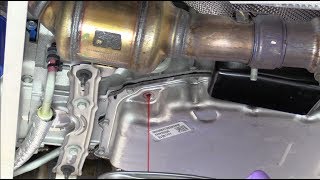
- Inspect the Transmission Tag: The most reliable method is to physically inspect the barcode sticker on the right (passenger) side of the transmission case. Confirm the GM part number is 24269983 (which may be superseded by 19367435) and the broadcast code is 9SWJ.
Interchangeability: What Will Not Fit

While General Motors uses 10-speed automatic transmissions in many vehicles, the unit from the 2019 CT6 3.0L is not interchangeable with others. Versions of the 10-speed used in trucks like the Chevrolet Silverado and GMC Sierra, or SUVs like the Cadillac Escalade, Yukon, and Tahoe, have significant differences.
Warning: Transmissions from other GM models will have different bellhousing bolt patterns, internal valve-body wiring, case mounting points, and electronic shifter calibrations. They will not physically bolt up or electronically communicate with the CT6 3.0L's systems.
Freight and Delivery Reality

Buying a used transmission means dealing with heavy freight. This is not a standard parcel delivery.
- Size and Weight: Verified shipping data shows this transmission assembly weighs approximately 233 lbs. Before crating, its dimensions are roughly 50" x 30" x 25".
- Shipping Method: It ships as LTL (Less-Than-Truckload) freight on a wooden pallet.
- Receiving the Freight: You will need a loading dock, a forklift, or a delivery truck equipped with a liftgate to get the pallet on the ground.
- Inspect Before Signing: Always inspect the transmission for physical damage (like a cracked case or broken sensors) before signing the driver's delivery receipt. Once you sign, you accept it as-is.
- Pre-Purchase Verification: As an industry best practice, expect a pre-purchase verification interview from reputable sellers. They will ask for your VIN and RPO codes to guarantee you are buying the correct 9SWJ / MHS / MHW unit.
Common Failure Symptoms

A failing 10L90 transmission can exhibit several warning signs. If you experience any of the following, it is crucial to have the vehicle diagnosed by a professional technician:
- Harsh, jerky, or delayed shifting.
- Transmission shudder or vibration, especially during gear changes.
- A sudden loss of power or failure to accelerate.
- The vehicle entering a "limp mode," often restricting it to a single gear.
- Illumination of the Check Engine Light, often with transmission-specific Diagnostic Trouble Codes (DTCs) like P0747, P0606, P06AF, P07E4, P0607, or P2732.
Diagnostic Flowchart
Known Issues, Recalls, and Service Bulletins
Several documented issues affect this transmission family. Always check with a GM dealer using your VIN to see which recalls or service bulletins apply to your specific vehicle.
NHTSA Safety Recall 25V-148 (GM Recall N242480630)
This is a severe safety recall affecting 2019-2022 models. The defect involves excessive wear of a transmission control valve body, which can lead to a loss of hydraulic pressure. This may cause harsh shifting and, in rare cases, a momentary lock-up of the drive wheels, increasing the risk of a crash. The remedy provided by GM is a software update for the Transmission Control Module (TCM) that detects the wear and puts the vehicle into a limited-gear limp mode before a lock-up can occur. This software update does not fix the mechanical wear itself, which requires physical repairs.
GM Special Coverage Program #N242454441
This program addresses the same control valve body wear issue for 2019-2020 models, specifically when it triggers Diagnostic Trouble Code (DTC) P0747 (Solenoid 1 Stuck On). GM extended the warranty coverage for this specific condition to 15 years or 150,000 miles from the vehicle's original in-service date. Under this program, dealers will replace the control valve body if the condition is confirmed.
GM Technical Service Bulletin #25-NA-255
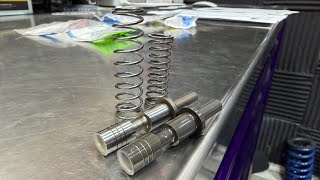
This TSB provides an updated repair procedure for the P0747 code on 2019-2020 models. Instead of replacing the entire valve body, technicians are instructed to install a specialized repair kit containing an updated feed-limit valve, a higher-tension spring, and a new spacer plate. This bulletin formalizes a more targeted and efficient repair for the known valve wear issue.
Additional Service Updates and TSBs
- Service Update N192287020: Addresses a momentary loss of park engagement when shifting, setting DTCs P0606, P06AF, and P07E4. The remedy is for the dealer to reprogram the Engine Control Module (ECM).
- Service Update N192278200: Fixes an ECM software error causing intermittent DTC P0607, which defaults the transmission to 3rd gear on the next startup. Requires an ECM reprogram.
- TSB 25-NA-014: Addresses a condition of no reverse and no shifting past third gear (DTC P2732) on units that had a service valve body or transmission installed, caused by a mis-stamped spacer plate.
Active Class-Action Litigation
General Motors is facing class-action lawsuits concerning its 10-speed transmissions for 2019-2020 models. The lawsuits allege that GM knowingly sold vehicles with defective transmissions prone to violent shifting, hesitation, and sudden power loss. The litigation seeks compensation for owners for repair costs and diminished vehicle value.
What Fails at Every Mileage Band
Pro Tip: The mileage bands below describe what typically fails on USED REPLACEMENT units at these mileages. The checklists provided are critical steps you must take WHILE INSTALLING the purchased transmission to ensure it survives, not general maintenance for your current vehicle.
Under 60,000 Miles
Even at low mileage, this transmission is highly susceptible to premature wear of the transmission control valve body. This leads to harsh shifting, DTC P0747, and potential wheel lock-up (NHTSA Recall 25V-148). Shuddering and jerky shifts between 1st and 2nd gear have been reported by owners at mileages as low as 15,000 to 28,000 miles. Some catastrophic failures have occurred between 8,500 and 20,000 miles.
- ✓Do during install (required): Verify the NHTSA Safety Recall 25V-148 has been completed. This involves a crucial TCM software update to prevent wheel lock-up. Replace front and rear AWD output shaft seals, and the torque converter hub seal.
- ✓Do during install (recommended): Replace the transmission fluid filter (ACDelco TF937), pan gasket (GM Part #24297886), and the one-time-use filter stretch bolts (GM Part #24050764).
- ✓Cheap insurance while the engine is out: Given the prevalence of valve body issues even at low mileage, consider having the valve body inspected or proactively repaired with updated components (e.g., steel feed-limit valve from TSB #25-NA-255) if the unit's history is unknown.
60,000 - 100,000 Miles
Valve body wear and related harsh shifting, shudder, and hesitation are the primary concerns in this range, potentially escalating if not addressed. Torque converter issues can contribute to shuddering sensations, sometimes described as driving over rumble strips. Fluid leaks can also develop from worn seals or gaskets.
- ✓Do during install (required): All items from the 'Under 60k' band apply. Perform a complete transmission fluid and filter change using only DEXRON ULV fluid. The recommended service interval for transmission fluid is often around 45,000 miles.
- ✓Do during install (recommended): Replace all external seals and gaskets accessible during installation.
- ✓Cheap insurance while the engine is out: Given the mileage, if the torque converter's history is unknown, replacement is cheap insurance against future shudder issues while the transmission is out of the vehicle.
100,000 - 150,000+ Miles
The likelihood of significant internal wear increases greatly. This includes worn clutch packs, in addition to the persistent valve body issues. Failures of internal hard parts become more probable due to accumulated stress. GM's Special Coverage Program (#N242454441) for valve body wear extends to 15 years or 150,000 miles, indicating failures are expected throughout this entire mileage range.
- ✓Do during install (required): All items from the previous bands apply. A thorough inspection of the fluid and pan for excessive clutch material or metal debris is critical. If debris is found, the transmission has imminent internal problems.
- ✓Do during install (recommended): Proactively replace the entire valve body or have it rebuilt with updated components, as wear is highly probable.
- ✓Cheap insurance while the engine is out: At this mileage, installing a remanufactured torque converter is strongly advised.
Real Owner Experiences
Here is a summary of real-world problems reported by owners of vehicles with this 10-speed transmission family.
| Source | Mileage | What Happened | Cost |
|---|---|---|---|
| NHTSA / GM Recall N242480630 | Varies, can be low | Excessive wear in the transmission control valve body causes a pressure drop, leading to harsh shifts and potential momentary wheel lock-up. The remedy is a TCM software update to detect wear early and put the transmission into a limited-gear mode. | Free under recall. |
| Cadillac Society Forum | Under 15,000 | Owner of a 2018 CT6 Platinum reported transmission shuddering. Dealer performed three fluid flushes which only temporarily resolved the issue. The problem persisted at 28,000 miles. | N/A (Warranty) |
| GM-Trucks.com Forum | 21,000 | An owner of a truck with a 10-speed transmission (similar valve body issues) experienced the transmission going into limp mode (stuck in 5th gear) due to a valve body failure. A previous, similar truck had the same failure at 1,500 miles after a valve body replacement. | N/A (Warranty/Trade-in) |
| CoPilot Analysis | Up to 92,000 | General reports of shuddering, hesitation, and rough shifts persist into higher mileages, indicating the problem is not limited to low-mileage units. | Varies, can be thousands of dollars for out-of-warranty repairs. |
| General Automotive Repair Data | 100,000-150,000 | Modern automatic transmissions are generally expected to last between 100,000 and 150,000 miles before requiring a rebuild or replacement, though some can last longer with meticulous maintenance. Units with known design flaws like the 10L90 may be on the lower end of this spectrum. | Rebuild/replacement can cost several thousand dollars. |
| N/A | A user suggests that a proper fix for the valve body issue involves a 'Nextgen valve body upgrade' and installation. | ~$2,000 | |
| 116,000 | Owner was seeking advice on whether to replace the whole unit or just the valve body. Quotes were $2,500 for a used transmission vs. $1,500 for a valve body replacement. | N/A | |
| N/A | A user mentions that companies are remaking the valve bodies correctly to address the known issues with the 10-speed transmissions. | $3,500 for the valve body alone |
Repair or Replace?
When facing a 10L90 failure, you must decide whether to repair your current unit or replace the entire assembly.
- When Repair Makes Sense: The most common failure is Control Valve Body Wear (triggering DTC P0747). A typical repair for this costs between $800 and $2,500. Repair makes sense if the rest of the transmission's internal mechanical parts (clutches, gears) are in good condition. GM has a specific repair kit (TSB #25-NA-255) and extended warranty coverage for this issue, which may reduce your out-of-pocket cost.
- When Replacement is Smarter: Replacement is the better option when there is evidence of catastrophic internal failure, such as metal debris in the transmission pan, multiple gear failures, or a cracked case. If the cost of a valve body replacement approaches the cost of a low-mileage used unit, replacement offers a better value, as it also renews the life of the internal clutches and mechanical components. Given the complexity and mandatory programming, starting with a known-good assembly can be more reliable than a partial repair.
Replacement Cost Estimates
The cost to replace a 10L90 transmission in a 2019 Cadillac CT6 can vary significantly based on the part type and labor rates. The following estimates do not include taxes, fluids, or required programming fees.
| Part or Service | Estimated Cost (USD) | Notes |
|---|---|---|
| New OEM | $5,500 - $8,300+ | Brand new from a GM dealer. Part number 24269983 may be superseded by 19367435. A significant core charge often applies. |
| Remanufactured | $4,500 - $7,100+ | Rebuilt by a specialized company with updates to address common failures. High-end performance builds can exceed $7,100. Often comes with a warranty. |
| Used OEM | $1,800 - $11,000 | Price varies widely based on mileage, condition, and seller. Typical used units run $4,000 to $11,000, though higher-mileage units can be found cheaper. |
| Shop Labor | $1,100 - $2,000 | Estimated 8 to 12 hours for removal and replacement. Does not include diagnostics or programming. |
Installation and Programming: What to Know

Installing a used transmission for this vehicle is an expert-level job that requires specialized tools and mandatory electronic programming. The DIY difficulty is rated as expert.
Special Tools Required
A successful installation requires tools not found in a typical home garage, including:
- Heavy-duty transmission jack.
- Fluid transfer pump with a specialized GM bottom-fill pan adapter.
- Professional-grade diagnostic scan tool with GM GDS2/SPS2 programming capability.
- Digital torque wrench for low-torque, angle-spec stretch bolts.
- Engine support bar.
- Cooler line flush machine.
- Cooler line disconnection tools (e.g., DT-52263).
Installation Gotchas
- Torque Converter Seating: You must rotate and push the converter until it fully engages all three stages of the internal pump gears (you will feel three distinct drops). Failure to do so will crack the internal oil pump rotor upon bolting the transmission to the engine.
- Bottom-Fill Fluid Level Procedure: No dipstick is present. You must fill from the bottom pan plug using a fluid pump. The vehicle must be level, the engine idling, and the transmission fluid temperature strictly between 167°F and 178°F (75°C to 81°C) when checking the level. Checking it cold or with the engine off will result in severe underfill or overfill.
- Exhaust and Subframe Alignment: Exhaust pipes run directly beneath the transmission pan and must be dropped to gain clearance. Be prepared for seized exhaust flange bolts.
- Cooler Line Flush: Debris from the previous transmission failure will circulate and destroy the replacement unit if the cooler and lines are not professionally flushed with high-pressure solvent.
Pro Tip: When interviewing a shop for the install, ask if they have the GM GDS2/SPS2 software, if they use a fluid pump with the correct bottom-fill adapter, and if they have a machine to properly flush the transmission cooler lines.
Mandatory Electronic Programming
Warning: You cannot simply install a used transmission and drive away. The Transmission Control Module (TCM), which is internal to the transmission, is electronically locked to the original donor vehicle. It must be reprogrammed using a dealer-grade scan tool with GM's Service Programming System (SPS2).
The programming process involves several steps:
- VIN Reprogramming: The TCM must be flashed with the recipient vehicle's specific VIN and software calibration.
- Solenoid Characterization (TRID): A 13-digit strategy code and 12-digit ID code, stamped on the replacement transmission's case, must be programmed into the TCM. This calibrates the module to the unique performance of the new valve body's solenoids.
- Service Fast Learn (SFL): After programming, a 'fast learn' adaptive procedure must be performed. This allows the TCM to measure and calibrate the clutch fill times, ensuring smooth shifts. Skipping this step will result in poor shift quality and potential immediate clutch damage.
Frequently Asked Questions
What fluid does the 2019 CT6 3.0L transmission use?
This transmission requires a very specific fluid: ACDelco DEXRON ULV (Ultra-Low Viscosity) ATF. Using any other fluid, including standard Dexron VI or universal ATF, will cause severe damage.
Can I reuse the transmission filter bolts?
No. The bolts that secure the internal transmission filter to the valve body are one-time-use aluminum stretch bolts (GM Part #24050764). They are designed to yield when torqued and must be replaced. Reusing them can lead to them snapping or backing out, causing the filter to fall and starving the transmission of fluid.
Is flushing the transmission cooler really necessary?
Yes, it is absolutely essential. When a transmission fails, it sheds metallic debris. This debris circulates into the transmission fluid cooler and lines. If not professionally flushed out, this debris will be pumped directly into your replacement transmission, destroying it almost immediately.
Can I use a 10-speed transmission from a Silverado or Escalade?
No. The 10L90 in the CT6 3.0L is configured exclusively for the AWD Omega platform. Truck and SUV versions have different bellhousing bolt patterns, internal wiring, and case mounting points. They are not interchangeable.
What does the P0747 code mean?
DTC P0747 stands for "Solenoid 1 Stuck On." In this transmission, it is a common indicator of severe control valve body wear. GM has issued a Special Coverage Program (#N242454441) and a specific repair kit (TSB #25-NA-255) to address this exact code.
Does a used transmission come with the TCM?
Yes, the Transmission Control Module (TCM) is located internally inside the transmission case and is included. However, external sensors, the external wiring harness, and shifter linkage are typically excluded. Remember, the internal TCM must be reprogrammed to your vehicle's VIN before it will work.
Helpful Videos
Technical Specifications
OEM Part Numbers: 24269983 19367435
Type: GM Hydra-Matic 10-speed automatic; Model Code: 10L90; Engine Application: 3.0L Twin-Turbo V6 (LGW); Drivetrain: All-Wheel Drive (AWD); Platform: Omega; RPO Codes: MHS, MHW; Broadcast Code: 9SWJ; Weight: ~233 lbs; Dimensions: ~50" x 30" x 25"; Required Fluid: ACDelco DEXRON ULV ATF
We Have This Part in Stock


The information in this article is provided for general reference and educational purposes only. Vehicle specifications, procedures, and part compatibility can vary by production date, trim level, and region. Always consult your vehicle's factory service manual and verify part numbers before purchasing or performing repairs. Safety-critical components such as airbags, seat belts, and braking systems should be installed by a qualified professional.
- Cadillac CT6:
- 🎬 Helpful Videos
- 🛍️ Shop This Part
- Identifying the 2019 Cadillac CT6 3.0L Transmission
- How to Confirm Fitment on Your Vehicle
- Interchangeability: What Will Not Fit
- Freight and Delivery Reality
- Common Failure Symptoms
- Diagnostic Flowchart
- Known Issues, Recalls, and Service Bulletins
- NHTSA Safety Recall 25V-148 (GM Recall N242480630)
- GM Special Coverage Program #N242454441
- GM Technical Service Bulletin #25-NA-255
- Additional Service Updates and TSBs
- Active Class-Action Litigation
- What Fails at Every Mileage Band
- Under 60,000 Miles
- 60,000 - 100,000 Miles
- 100,000 - 150,000+ Miles
- Real Owner Experiences
- Repair or Replace?
- Replacement Cost Estimates
- Installation and Programming: What to Know
- Special Tools Required
- Installation Gotchas
- Mandatory Electronic Programming
- Frequently Asked Questions
- 🎟️ Get 5% Off