

2015 Buick Verano 2.4L GF6 Transmission: Problems, Identification, and Used Replacement
Identify the exact MH8 6T40 transmission for your 2015 Verano, understand common failures like the 3-5-R wave plate, and learn when to replace it with a used OEM unit.
- Mandatory VIN programming and a 'Fast Learn' procedure are required for any replacement transmission to prevent immediate damage and ensure proper shifting.
- You must verify the replacement is the correct Gen 2 6T40 with RPO code MH8 for the 2.4L engine (VIN 8th digit 'K'), as other GM 6-speed transmissions are not interchangeable.
- Always replace the torque converter and thoroughly flush the transmission cooler and lines during installation to avoid contaminating the replacement unit with old debris.
- Common failure points include the internal TCM (TEHCM), the 3-5-R wave plate, and the torque converter clutch, with failures frequently seen between 80,000 and 100,000 miles.
Identifying the 2015 Verano 2.4L Transmission

The 2015 Buick Verano with the 2.4L engine uses a specific 6-speed, front-wheel drive (FWD) automatic transmission from the General Motors GF6 family. This transmission is more commonly known by its engineering designation, the 6T40, and is identified for this specific vehicle with the Regular Production Option (RPO) code MH8.
Confirming Your Vehicle's Transmission
Before purchasing a replacement, you must verify that your vehicle is equipped with this exact transmission. Mismatched parts will not work. Follow these steps to confirm what your vehicle needs:
- Check the VIN: The 8th digit of your Vehicle Identification Number (VIN) must be a 'K'. This signifies the 2.4L naturally aspirated engine that was paired with this transmission.
- Find the RPO Code: Look for the Service Parts Identification sticker, which is typically located in the glove box or trunk. On this sticker, you should find the code MH8.
- Identify the Generation: This model uses a "Generation 2" 6T40. You can identify it by looking at the barcode on the Transmission Control Module (TCM), which is located behind the front cover of the transmission. The 8th digit of this barcode string will be a letter, indicating it is a Gen 2 unit.
Warning: This transmission assembly is configured specifically for the 2015 Buick Verano 2.4L FWD. While other GM vehicles like the Chevrolet Cruze, Malibu, Equinox, and Terrain use versions of the 6T40/6T45 transmission, they are not interchangeable. They have different bellhousing bolt patterns, mounting brackets, wiring harness pinouts, and internal TCM programming.
Common Failure Symptoms
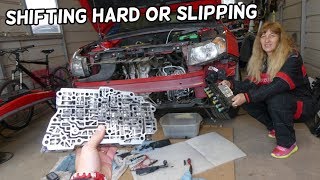
A failing 6T40 transmission can present several distinct symptoms. 🎬 Watch: Common 6T40 transmission problems explained If you experience any of the following, it may be time to have the transmission inspected by a professional:
- No-start, no-crank, or no-engagement conditions, sometimes caused by a loss of communication with the internal TCM (TEHCM). 🎬 Watch: What to know about TEHCM replacements
- Delayed or harsh shifting between gears, especially the 2-3 shift.
- Shuddering or shaking, especially under light acceleration or when shifting into 2nd gear.
- Slipping, where the engine revs but the car fails to accelerate properly.
- The check engine light is on, with transmission-specific Diagnostic Trouble Codes (DTCs) like P0776 stored in the computer.
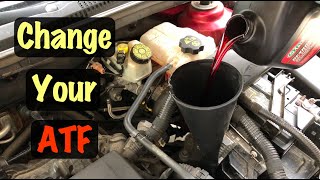
- Visible fluid leaks from the torque converter housing or driver's side axle seal areas. 🎬 Watch: How to change the transmission fluid
- A blinking gear selector light ('D' light) on the shifter.
Diagnostic Flowchart
Known Issues, Recalls, and Service Bulletins

Several documented issues exist for this transmission family. Always check with a GM dealer to see if a specific recall or special coverage applies to your vehicle's VIN.
Recalls and Official Campaigns
- Ignition Key Removable When Not in Park: A damaged component in the steering column could allow the key to be removed when the transmission is not in Park, creating a rollaway risk. This issue prompted NHTSA Recall 16V-502 (GM recall numbers 50490, 50491) and affects some 2013-2015 Verano models.
- Shift Cable Disengagement: On some 2014 models, the transmission shift cable adjuster could detach from the shift lever, causing the displayed gear to differ from the actual gear. This was addressed by NHTSA Campaign 14V152000.
Technical Service Bulletins (TSBs)
TSBs are instructions from the manufacturer to dealers for repairing common, non-safety-related problems.
- Solenoid/Clutch Drum Issues (DTC P0776): TSB PI0780A addresses conditions like slipping, no reverse, or no 3rd gear, often accompanied by code P0776. This is frequently caused by a broken 3-5-R waved apply plate, which can contaminate the entire transmission with debris. The repair requires a full disassembly and cleaning, and the TSB warns against operating with contaminated fluid.
- Torque Converter Area Fluid Leaks: TSB PI0785B (and related bulletin 150089004C) notes that fluid leaks from the front of the transmission can occur. It advises replacing the torque converter seal anytime the transmission is removed.
- No Crank/No Start/No Engagement: TSB PI0324F provides diagnostic steps for Generation 2 communication faults with the internal Transmission Control Module (TEHCM) that prevent the vehicle from starting or engaging a gear.
What Fails at Every Mileage Band
Pro Tip: The mileage bands below describe what to expect from used replacement units of that mileage. The checklists are things to do WHILE INSTALLING the purchased unit, not maintenance for your current transmission.
Under 60,000 Miles
Even low-mileage units can experience issues. A GM Service Bulletin mentions that vehicles under 10,000 miles can experience no forward/reverse engagement, no-crank, or harsh shifts due to a damaged transmission fluid pump. Torque Converter Clutch (TCC) shudder during light acceleration and fluid leaks can occur at any mileage. Failures of the internal Transmission Control Module (TCM/TEHCM) can also happen early, leading to erratic shifting or getting stuck in one gear.
- ✓Do during install (required): Flush transmission cooler and lines to remove any potential debris from the previous unit. Install a new or remanufactured torque converter; do not reuse the old one.
- ✓Do during install (recommended): Replace the transmission filter.
- ✓Cheap insurance while the engine is out: Replace all external seals, including the torque converter hub seal and both axle shaft seals, as a preventative measure against future leaks.
60,000 - 100,000 Miles
Torque converter clutch shudder and harsh or delayed shifts (especially 2-3) are common in this range due to fluid degradation and valve body wear. The 3-5-Reverse wave plate is a well-documented weak point that can break, leading to a loss of 3rd, 5th, and reverse gears. Transmission shops note that failures of the torque converter or fluid pump are frequently seen between 80,000 and 100,000 miles.
- ✓Do during install (required): Perform all required steps from the Under 60K band.
- ✓Do during install (recommended): Replace the TEHCM (internal TCM) if the replacement unit does not include a new or updated one, as this is a frequent point of failure.
- ✓Cheap insurance while the engine is out: Strongly consider using a remanufactured unit that includes an upgraded valve body and torque converter with improved materials to address known wear points.
100,000 - 150,000+ Miles
The general service life of the 6T40 transmission is estimated to be between 150,000 and 200,000 miles with proper care. At high mileage, internal hard parts like gears and clutch packs may simply be worn out from normal use, leading to slipping. Failures of the 3-5-R wave plate remain a significant risk, and leaks from worn seals and gaskets become more probable. Complete failure requiring replacement or rebuild becomes much more common.
- ✓Do during install (required): Follow all required recommendations from the lower mileage bands.
- ✓Do during install (recommended): Ensure all related components like engine and transmission mounts are inspected and replaced if they show signs of wear.
- ✓Cheap insurance while the engine is out: At this mileage, installing a fully remanufactured and dyno-tested transmission with all known factory updates is the most reliable path.
Real Owner Experiences
Here is a look at what real owners have experienced with this transmission family, highlighting the symptoms and costs they encountered.
| Source | Mileage | What Happened | Cost |
|---|---|---|---|
| CarComplaints.com | 15 mph (reported 5 days after purchase) | Owner reported the car shakes and wobbles when taking off from a stop, specifically when shifting into 2nd gear. A dealer acknowledged other similar complaints but had no immediate solution from GM at the time. | N/A (under warranty/investigation) |
| Reddit r/MechanicAdvice | 59,500 miles | An owner of a 2012 Verano (same transmission family) with 59.5k miles described harsh upshifts and downshifts at low speeds, and hesitation when reapplying the throttle after coasting. The issues were present since 35k miles and did not change after two separate fluid services. | N/A (describing behavior, not a specific repair bill) |
| Reddit r/MechanicAdvice | Unknown (2015 model in 2021) | A 2015 Verano had the check engine light come on, refused to accelerate, and shook when shifted into park. A mechanic diagnosed a faulty transmission control module (TCM) requiring replacement and software recalibration. | Quoted ~$1,800 by a dealership. |
| GM-Trucks.com Forum | 95,000 miles | A user reported their transmission failed within the first week of owning the vehicle. Transmission shops informed them that failures around 80k-100k miles are common for this transmission family. | N/A |
| 97,000 miles | An owner of a 2015 Verano purchased at 97k miles needed to have the timing chain and intake manifold replaced, but did not report transmission issues at that time. | N/A | |
| Reddit r/Buick | 157,000 miles | A prospective buyer was looking at a 2013 Verano with 157k miles. The current owner claimed the transmission was still in good condition, which the buyer noted was contrary to frequent complaints they had seen about the model. | N/A |
Repair or Replace?
When facing a transmission failure, you must decide whether to repair the specific broken part or replace the entire assembly. Here is how the economics break down:
| Repair Scenario | Typical Cost | When It Makes Sense |
|---|---|---|
| Internal Transmission Control Module (TEHCM) Failure | $800 - $1,800 | This is a very common failure, and repair makes sense when the rest of the transmission is mechanically sound. A dealership may quote near the high end ($1,800), while an independent shop using a remanufactured TEHCM can be significantly less. |
| Torque Converter Clutch (TCC) Shudder | $600 - $1,500 | This makes sense when the shudder is the only symptom and there are no signs of widespread internal damage. The majority of the cost is the labor to remove and reinstall the transmission to access the converter. |
| External Fluid Leaks (seals, gaskets) | $200 - $800 | This makes sense if the leak is from an axle seal or pan gasket and is caught early. However, if the front pump seal is leaking, the transmission must be removed, making the cost primarily labor. |
When Replacement is Smarter: Replacement with a low-mileage used unit (typically $500 to $1,800) or a remanufactured unit ($2,500 to $3,600) is the smarter economic choice when the 3-5-R wave plate fails or there is other catastrophic internal mechanical damage. A broken wave plate generates a large amount of metal debris that contaminates the entire transmission, including the valve body, solenoids, and torque converter. The labor required to completely disassemble, decontaminate, and rebuild the original unit is extensive and costly, often exceeding the price of a quality replacement assembly.
Replacement Cost Estimates
The cost of replacing a transmission varies based on the type of part used and local labor rates. The labor for this job is estimated to take between 7 and 10 hours.
| Part Type | Estimated Cost (Part Only) |
|---|---|
| New OEM | $3,500 - $5,000+ |
| Remanufactured | $2,500 - $3,600 |
| Used OEM | $500 - $1,800 |
| Installation Labor | $800 - $1,600 |
Freight & Delivery Reality

If you are purchasing a used or remanufactured transmission online, it will not arrive in a standard cardboard box via regular mail. This assembly weighs approximately 181 lbs and measures roughly 36" x 24" x 18" before crating. It ships as Less-Than-Truckload (LTL) freight on a wooden pallet.
Because of its size and weight, delivery requires a truck with a liftgate or a facility with a forklift. Always inspect the transmission carefully while it is still on the pallet before signing the delivery receipt. Look for any damage to the case, sensors, or pan that may have occurred during transit. As an industry best practice, perform a pre-purchase verification interview with the seller to ensure they have confirmed the 8th VIN digit is 'K', the RPO code is 'MH8', and the Gen 2 barcode is present.
Installation and Programming Essentials

Proper installation is critical for the longevity of a replacement transmission. Failure to follow these procedures is a common cause of premature failure. The job requires special tools, including an engine support bar, a transmission jack, an axle popper tool or pry bars, a torque converter holding tool (GM J-46409), and a professional-grade scan tool with J2534 pass-thru programming capability.
Required Programming
Warning: A used transmission must be reprogrammed. The internal Transmission Control Module (TCM), also called a TEHCM, is programmed to the donor car's VIN. It will not function correctly until it is reprogrammed to the recipient vehicle's VIN using a dealer-level tool and the GM Service Programming System (SPS). After programming, a 'Fast Learn' adaptive relearn procedure must be performed before the vehicle is driven.
Installation Gotchas
Warning: Torque Converter Seating: The torque converter must be fully seated into the transmission's fluid pump. You should feel it drop into place three distinct times. Failure to do this before bolting the transmission to the engine will crack the pump, destroying the new unit.
Warning: Flush Cooler Lines: The transmission cooler and lines must be thoroughly flushed with an aerosol flush before installing the replacement. Reusing contaminated fluid or lines will send metal shavings and debris into the new transmission, causing immediate damage.
- Fluid Level Check: This transmission has no dipstick. The fluid level must be checked via a level-check plug on the side of the case while the engine is idling, the vehicle is level, and the fluid is strictly between 85°C and 95°C (185°F to 203°F).
- Dowel Pin Alignment: Ensure alignment dowel pins are clean and in place; do not use bolts to pull the transmission to the engine.
Pro Tip: Always use new consumables during installation. This includes licensed GM Dexron VI synthetic automatic transmission fluid, a new torque converter hub seal (front pump seal), left and right axle shaft seals, and a new TEHCM filter plate gasket if the module is being swapped.
Questions to Ask Your Installer
Before handing over your keys, make sure your mechanic is prepared for this specific job by asking these questions:
- Have you confirmed this specific transmission (RPO code MH8) is the correct interchange for my 2015 Verano 2.4L?
- Does the price for the replacement unit include a new or remanufactured torque converter?
- Will you be performing a full flush of the transmission cooler and lines before installing the replacement?
- How will the mandatory VIN programming for the internal TCM be handled? Do you have a GM SPS subscription or J2534 pass-thru tool?
- Will you perform the 'Fast Learn' adaptive relearn procedure with a scan tool after installation and before test driving?
- What brand of Dexron VI fluid will you be using to fill the new unit?
- Does your labor estimate include replacing the axle seals and torque converter seal during the installation?
Frequently Asked Questions
Do I have to replace the torque converter?
Yes. The original torque converter contains old, contaminated fluid and metallic debris from the previous failure. Reusing it is the fastest way to destroy your replacement transmission. A quality used or remanufactured unit should include a matching torque converter.
Can I use a universal transmission fluid?
No. You must use a fully licensed GM Dexron VI synthetic automatic transmission fluid. Using incorrect or generic multi-vehicle fluids can cause shifting problems and long-term damage.
What is the most common mistake when installing this transmission?
Besides failing to seat the torque converter properly, the most common mistake is skipping the mandatory TCM VIN programming and the 'Fast Learn' adaptive procedure. Driving the vehicle without performing these steps can lead to severe shifting issues and burn up the clutches in the new unit.
How often should I change the transmission fluid?
Regularly changing the transmission fluid with GM DEXRON VI is the most critical maintenance task. Mechanics recommend a fluid and filter change every 30,000 to 50,000 miles to prevent premature wear, overheating, and fluid breakdown. Adhering to a 30,000-mile interval is suggested because the internal filter screens on the solenoids cannot be easily serviced and can get clogged with contaminated fluid.
What does the 'Fast Learn' procedure actually do?
The 'Fast Learn' procedure uses a professional scan tool to force the Transmission Control Module (TCM) to adapt to the specific clutch clearances and fluid pressures of the newly installed transmission. Without this relearn, the computer will use the old transmission's data, resulting in harsh shifts and rapid clutch wear.
Helpful Videos


Technical Specifications
Vehicle: 2015 Buick Verano; Engine: 2.4L (VIN 8th digit 'K'); Transmission Family: General Motors GF6; Engineering Designation: 6T40; Generation: Gen 2; Drivetrain: Front-Wheel Drive (FWD); RPO Code: MH8; Weight: Approx. 181 lbs; Fluid Type: GM Dexron VI Synthetic
We Have This Part in Stock


The information in this article is provided for general reference and educational purposes only. Vehicle specifications, procedures, and part compatibility can vary by production date, trim level, and region. Always consult your vehicle's factory service manual and verify part numbers before purchasing or performing repairs. Safety-critical components such as airbags, seat belts, and braking systems should be installed by a qualified professional.
- Buick Verano:
- 🎬 Helpful Videos
- 🛍️ Shop This Part
- Identifying the 2015 Verano 2.4L Transmission
- Confirming Your Vehicle's Transmission
- Common Failure Symptoms
- Diagnostic Flowchart
- Known Issues, Recalls, and Service Bulletins
- Recalls and Official Campaigns
- Technical Service Bulletins (TSBs)
- What Fails at Every Mileage Band
- Under 60,000 Miles
- 60,000 - 100,000 Miles
- 100,000 - 150,000+ Miles
- Real Owner Experiences
- Repair or Replace?
- Replacement Cost Estimates
- Freight & Delivery Reality
- Installation and Programming Essentials
- Required Programming
- Installation Gotchas
- Questions to Ask Your Installer
- Frequently Asked Questions
- 🎟️ Get 5% Off