

2017-2020 Buick Envision 2.5L FWD Transmission: Problems, Identification, and Used Replacement
Identify the exact 6T50 transmission for your 2.5L FWD Envision, understand what causes it to fail, and learn when replacing it with a used OEM unit is the smartest choice.
- Before purchasing, you must verify fitment for a 2.5L FWD model using the VIN (8th digit 'A') and RPO codes (MHG or MHK), as it does not interchange with AWD or other GM models.
- Installation of a replacement unit requires mandatory flushing of the transmission cooler lines and programming the internal control module (TEHCM) to your vehicle's VIN to prevent immediate damage and ensure proper function.
- This transmission is prone to specific failures like 3-5-R wave plate fracture and TCC shudder; proactive fluid and filter changes every 30,000-50,000 miles with licensed Dexron VI fluid are critical for longevity.
Identifying the Correct Transmission for Your Envision

This article covers the specific 6-speed automatic transmission, part of the GM Hydra-Matic 6T50 family, found in the 2017-2020 Buick Envision equipped with the 2.5L engine and Front-Wheel Drive (FWD). This transmission is identified by the Regular Production Option (RPO) codes MHG or MHK.
Warning: This FWD transmission does not fit All-Wheel Drive (AWD) Envision models. It also does not interchange with transmissions from other GM vehicles like the Impala, Malibu, Acadia, Regal, Terrain, or Equinox, due to significant differences in mounting points, wiring, bellhousing bolt patterns, and internal calibration.
How to Verify Fitment
Before purchasing a replacement, confirm your vehicle requires this exact unit by checking the following:
- VIN Check: The 8th digit of your Vehicle Identification Number (VIN) must be 'A', which identifies the 2.5L LCV engine.
- Drivetrain: Ensure your vehicle is Front-Wheel Drive. An easy way to check is to look for the absence of a rear differential and rear drive axles. 🎬 Watch: How to check fluid levels on dipstick-free GM transmissions
- Service Label: Locate the Service Parts Identification label (often in the glove box or trunk) and look for the RPO codes MHG or MHK.
- Part Number: The barcode tag on the transmission case should show GM part number 24282523 or 24290330.
Symptoms of a Failing Transmission
A failing 6T50 transmission can present several noticeable symptoms. If you experience any of the following, the transmission may be the cause:
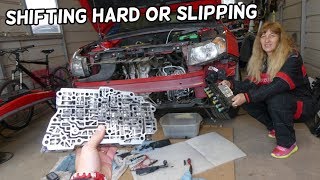
- Harsh or delayed shifting between gears. 🎬 Watch: Why your GM transmission is shifting hard or slipping
- A noticeable shudder or vibration, especially at steady speeds (a classic sign of Torque Converter Clutch failure).
- Slipping, where the engine RPMs increase but the vehicle doesn't accelerate accordingly.
- Complete loss of forward or reverse gears.
- A lit Check Engine Light on the dashboard.
- Grinding or whining noises coming from the transmission area.
Diagnostic Flowchart

Known Issues, Bulletins, and Recalls
This transmission family has several well-documented issues. While no specific transmission-related safety recalls have been issued for the 2017-2020 Envision, several Technical Service Bulletins (TSBs) address common problems.
Severe Issues
- 3-5-R Clutch Wave Plate Failure: A known weak point in this transmission family is the wave plate for the 3rd, 5th, and reverse gears. It can fracture, sending metal debris throughout the transmission. This typically results in a loss of 3rd, 5th, and reverse gears and requires a complete rebuild or replacement before metal fragments circulate further.
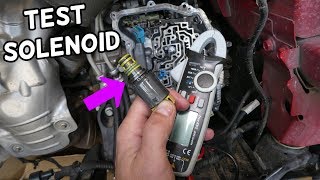
- Solenoid / Gear Loss (TSB PI1131 / NHTSA 10054361): This bulletin addresses conditions where certain gears may be missing due to malfunctioning pressure control solenoids within the TEHCM (the combined Transmission Control Module and solenoid body). The solution is to address the malfunctioning solenoid or replace the entire TEHCM assembly.
- Transmission Pump Damage (TSB PI0324F): A damaged transmission fluid pump can cause low line pressure, leading to slipping, harsh shifts, and eventual transmission failure. The remedy is to replace the damaged fluid pump.
Moderate & Minor Issues
- Torque Converter Clutch (TCC) Shudder: Many owners report a shudder or vibration that feels like driving over rumble strips under light acceleration. This is often caused by a failing TCC or contaminated transmission fluid.
- 2-6 Shift Flare / Slipping (TSB PI0376A): This issue, characterized by the engine RPMs flaring up during the 2-6 shift, is often caused by debris blocking fluid passages in the channel plate and spacer plate. The fix involves clearing the debris from these passages.
- Harsh or Delayed Shifts (TSB 20-NA-142): While originally noted for related 9-speed units, similar software and sticking solenoid complaints exist for this 6-speed, leading to shift problems.
- Driver's Side Axle Seal Leaks: A common leak point is the driver's side axle seal, often caused by a worn case bushing. This allows the axle to move excessively. The remedy is to replace the worn case bushing and seal using the Superior K099/K0100 kit.
- Start/Stop Feature Disabled (RPO KL9): On vehicles equipped with the start/stop feature, the system may become disabled. The GM Service Manual recommends performing a scan tool relearn or letting the vehicle rest undisturbed for 3+ hours.
What Fails at Every Mileage Band
Pro Tip: The mileage bands below describe the typical condition of USED REPLACEMENT units of that mileage. The checklists provided are critical steps to perform WHILE INSTALLING the purchased unit, not general maintenance advice for your current transmission.
Under 60,000 Miles
Transmissions in this range are generally in good condition, but early failures can occur. Known issues include Torque Converter Clutch (TCC) shudder under light acceleration, harsh or delayed shifts, premature solenoid failure or sticking, and early signs of transmission fluid contamination.
- ✓Do during install (required): Flush cooler lines and replace the external filter. Replace axle seals and the torque converter seal (front pump seal).
- ✓Do during install (recommended): Perform a complete transmission fluid exchange with licensed GM Dexron VI fluid, as the fluid from the donor unit is of unknown age and condition. Inspect and replace the driver's side axle case bushing if any play is detected.
- ✓Cheap insurance while the engine is out: Inspect the engine's rear main seal for leaks while the transmission is removed, replacing it if necessary to prevent future labor costs.
60,000 - 100,000 Miles
Wear and tear become more apparent in this band. The 3-5-R clutch wave plate failure becomes more common. You may also see torque converter failure causing shudder and slipping, valve body wear leading to pressure loss, solenoid performance issues within the TEHCM, and driver's side axle seal leaks due to a worn case bushing.
- ✓Do during install (required): Replace the transmission fluid filter and side pan gasket (GM part #24234281). Complete all mandatory steps from the previous band.
- ✓Do during install (recommended): Carefully inspect the TEHCM connectors for any signs of fluid intrusion or corrosion before installation.
- ✓Cheap insurance while the engine is out: Strongly consider replacing the torque converter with a new or remanufactured unit, as TCC shudder is a very common failure point in this mileage range.
100,000 - 150,000 Miles
At this stage, there is an increased likelihood of complete internal failure requiring a rebuild or replacement due to accumulated wear on clutches, seals, and the valve body. Transmission pump failure (TSB PI0324F) and catastrophic failure from a fractured 3-5-R wave plate are significant risks if not previously addressed.
- ✓Do during install (required): Replace the internal transmission fluid filter and side pan gasket.
- ✓Do during install (recommended): Given the high mileage of the donor unit, have a frank discussion with the supplier about its history. If the donor TEHCM is used, be prepared for potential programming challenges or failure.
- ✓Cheap insurance while the engine is out: Replacing the torque converter should be considered mandatory given the high labor cost of installation.
Over 150,000 Miles
Transmissions over 150k miles have a high probability of failure in all major components: torque converter, clutch packs, valve body/solenoids, and pump. Failures here are typically considered terminal, making a complete rebuild or replacement more cost-effective than targeted repairs.
- ✓Do during install (required): Verify the warranty period and terms from the supplier for a unit with such high mileage.
- ✓Do during install (recommended): Assume all wear items (seals, filter, torque converter) are at the end of their life and must be replaced during installation. A used transmission in this mileage band is a significant risk.
- ✓Cheap insurance while the engine is out: Replace all accessible engine and transmission seals while the assembly is separated to prevent immediate leaks.
Real Owner Experiences
The 6T50 transmission is often cited as a weak point in the Envision. While a lifespan of 200,000 miles is possible with meticulous maintenance, many owners face issues well before 150,000 miles. The single most critical factor for extending its life is regular fluid and filter changes every 30,000 to 50,000 miles using only licensed Dexron VI fluid.
| Source | Mileage | What Happened | Cost |
|---|---|---|---|
| YouTube/Mechanic Forum | 46,000 | Owner had transmission serviced at a GM dealer, who reported it was fine. At 59,000 miles, the transmission was found to be full of metal shavings, requiring a full replacement. | Not specified (required new trans, cooler, and line flush) |
| CarComplaints.com | Under 60,000 | Multiple owners report shuddering, hesitation, and hard shifts. Some cases were resolved with a fluid flush, while others required torque converter replacement under warranty. | $0 (Warranty) to ~$2,000 |
| 75,000 | Owner purchased the vehicle at 75k miles and proactively performed maintenance. A mechanic advised that GM transmissions are a 'weak point' and recommended frequent fluid changes. | N/A (Preventative) | |
| CARFAX Vehicle History | 69,512 | A 2020 Envision with damage reported had its last service at this mileage, indicating a potential issue leading to its sale as a used vehicle. | Unknown |
| 141,000 | Owner reports no current issues but is concerned about longevity. Mechanic recommended proactive fluid changes. | N/A (Seeking preventative advice) | |
| YourMechanic.com | Over 100,000 | General auto repair guide notes that around the 100,000-mile mark, internal parts and gears simply wear out, and problems are accelerated by old or low fluid. | N/A (General information) |
| CARFAX Vehicle History | 187,924 | A 2020 Buick Envision Premium II had its last service recorded at this very high mileage, indicating that a long service life is possible. | Unknown |
| Tahoe Yukon Forum | Not Stated | Owner was quoted for a full rebuild including a new HD torque converter, clutches, and TCM after the original torque converter failed and sent metal through the system. | $3,898 |
| Traverse Forum | 117,000 | Owner experienced a confirmed 3-5-R wave plate failure on a similar 6-speed. They were deciding between a dealer repair and an independent shop. | $1,500 - $3,600 |
| Traverse Forum | Not Stated | Owner was diagnosed with a bad valve body, not a wave plate failure. | $2,000 |
Repair or Replace?
When facing transmission failure, deciding whether to repair the existing unit or replace it entirely depends on the specific failure mode and the extent of internal damage.
- Torque Converter Clutch (TCC) Shudder (Typical Repair: $800 - $1,500): If addressed early by replacing the torque converter and flushing the fluid before it contaminates the rest of the transmission, a full replacement can be avoided.
- TEHCM / Solenoid Failure (Typical Repair: $500 - $1,200): If the transmission is shifting harshly or going into 'limp mode' with specific solenoid codes, replacing the internal TEHCM can be cost-effective. A full valve body replacement is more expensive, around $2,000.
- 3-5-R Clutch Wave Plate Failure (Typical Repair: $1,800 - $3,500+): If caught immediately, a shop can sometimes replace the wave plate without a full rebuild. However, if metal fragments have circulated, it is often more economical to opt for a replacement used or remanufactured unit.
When Replacement is Smarter: Replacement with a quality used or remanufactured unit is the smarter choice when a catastrophic failure has occurred (like a broken wave plate circulating metal debris) or when the vehicle has multiple issues (e.g., TCC shudder combined with failing solenoids).
Questions to Ask Your Installer
- Have you confirmed this is a FWD 2.5L (MHG/MHK) transmission and not for an AWD model?
- Will you be performing a complete, professional flush of the transmission cooler and lines before installing the replacement unit?
- Does your quote include programming the replacement TEHCM/TCM to my vehicle's VIN with the latest GM software?
- Does the quote also include performing the Service Fast Learn (adaptive relearn) procedure at the correct operating temperature?
- What brand of DEXRON VI ATF will you be using, and how many quarts are included in the quote?
- Will you inspect the driver's side axle case bushing for wear and replace the axle seals as a preventative measure?
- How do you ensure the torque converter is fully seated into the transmission pump before mating the engine and transmission?
- What warranty do you offer on your labor, and what is the warranty on the replacement transmission itself?
Replacement Cost Estimates
The cost to replace a transmission varies based on the type of replacement unit and local labor rates. The job typically takes a professional technician between 7.5 and 13.0 hours, resulting in estimated labor costs of $1,100 to $2,000+.
| Part Type | Estimated Cost (Part Only) | Notes |
|---|---|---|
| New OEM | $3,500+ | Ordered directly from a GM dealer; may be difficult to source for older models. |
| Remanufactured OEM | $2,500 - $4,500 | Rebuilt at a factory to meet or exceed original specifications. Often includes a warranty and a core charge. |
| Used OEM | $440 - $2,200 | A direct pull from a donor vehicle. Price varies greatly with mileage and condition. |
What's Included in a Used Assembly?
When buying a used transmission, it's important to know what parts are typically included. Based on standards from the Automotive Recyclers Association (ARA), here is what you should expect:
What's Typically Included
- Transmission Case and all internally lubricated parts
- Extension/tail housings
- Side transmission pan (valve body cover)
- Torque Converter
- Valve Body
- Internal Transmission Control Module (TEHCM / TCM / solenoids)
What's Not Included
- External sensors (input/output speed sensors)
- External wiring harnesses
- Shifter cables and linkage
- Flexplate (flywheel)
- External transmission cooler and lines
Warning: The included internal TEHCM is an electronic part and is not guaranteed to be functional or pre-programmed to your vehicle. If your original transmission failed catastrophically, do not reuse your old TEHCM, as it may be contaminated with metal debris.
Freight & Delivery Reality

A replacement transmission is not a standard parcel. Based on verified shipping data, this 6T50 assembly weighs approximately 189 lbs and measures roughly 36" x 24" x 28" before crating. It will ship as Less-Than-Truckload (LTL) freight strapped to a wooden pallet.
- Delivery Requirements: LTL freight requires a commercial address with a loading dock or a forklift. If delivering to a residential address or a shop without a dock, you must request a truck with a liftgate.
- Inspect Before Signing: Never sign the driver's delivery receipt until you have visually inspected the transmission case, sensors, and pan for damage that may have occurred during transit. Signing the receipt without noting damage releases the freight carrier from liability.
- Pre-Purchase Verification: Reputable suppliers will conduct a pre-purchase verification interview. They will ask for your VIN to confirm the 8th digit is 'A', verify your vehicle is FWD, and check for the MHG/MHK RPO codes to ensure you receive the correct unit.
Installation and Programming: Critical Steps

Installing this transmission is a complex job with a DIY difficulty rating of "Expert." It requires specialized tools, including an engine support bar (or subframe/cradle support fixture), a transmission jack, a bidirectional scan tool (GM SPS2 / MDI with GDS2 software), and a torque converter alignment/holding tool (GM J-46409).
Mandatory Programming Required
Warning: The transmission will not function correctly without proper programming. This is not an optional step.
- TCM Flashing: The internal TEHCM (Transmission Control Module) must be programmed with software specific to your vehicle's VIN. This requires a GM MDI scan tool with GDS2 software or a J2534 pass-thru device with a subscription to GM's programming service (SPS2).
- Service Fast Learn: After programming, a "Service Fast Learn" or adaptive relearn procedure must be performed with a scan tool. This allows the TCM to learn the specific clutch engagement points. This must be done while the transmission fluid is between 158°F and 239°F.
Pro Tip: Before installation, the torque converter must be fully seated into the transmission's front pump. Spin it while pushing inward until you feel it drop into place multiple times. Failure to do this will result in damage to the pump rotor when the engine and transmission are bolted together.
Required Consumables
Always use new fluids and seals during installation to ensure a long service life.
- Transmission Fluid: 7.0 to 9.0 quarts of GM DEXRON VI licensed automatic transmission fluid for a full fill.
- Seals and Gaskets: Replace the torque converter seal (front pump seal) and both axle seals.
- Cooler Flush: It is mandatory to use a transmission cooler line flush solvent or machine to remove any debris from the previous transmission's failure. Failure to do so can cause immediate damage to the replacement unit's TEHCM.
- Ground Straps: Ensure all engine and transmission ground straps are clean, secure, and correctly reinstalled to prevent electronic issues.
Frequently Asked Questions (FAQ)
Can I use a transmission from an AWD Envision?
No. The FWD and AWD transmissions have different cases, mounting points, and output shafts to accommodate the transfer case on AWD models. They are not interchangeable. Ordering a FWD transmission for an AWD vehicle is a common buyer mistake.
Do I have to program a used transmission?
Yes. The internal control module (TEHCM) is programmed to the VIN of the donor car. It must be reprogrammed to your vehicle's VIN using GM's SPS2 software to communicate with the engine and other modules. A Service Fast Learn procedure is also required.
How do I check the transmission fluid level?
This transmission does not have a traditional dipstick. The fluid level is checked via a plug on the side of the transmission case while the engine is running and the fluid is at a specific temperature. Checking the fluid without following this exact temperature-based procedure is a common mistake that leads to incorrect fluid levels.
What is the most common mistake when installing this transmission?
The most common and costly mistake is forcing the engine and transmission together with bellhousing bolts when the torque converter is not fully seated. This cracks the front pump, destroying the transmission. Another critical error is skipping the mandatory flush of the transmission cooler, which introduces debris into the new unit.
My Start/Stop feature stopped working after the transmission was replaced. How do I fix it?
On vehicles equipped with the RPO KL9 Start/Stop feature, the system may disable itself after major powertrain work. You must perform a scan tool relearn procedure or let the vehicle rest undisturbed for at least 3 hours to reset the system.
What type and how much transmission fluid does this unit take?
This transmission requires GM Dexron VI licensed automatic transmission fluid. A full fill typically requires between 7.0 and 9.0 quarts, depending on how much fluid was drained from the torque converter and cooler lines.
Helpful Videos


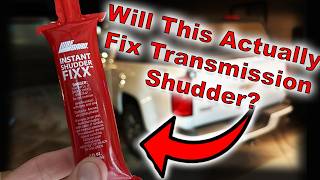
Technical Specifications
OEM Part Numbers: 24282523 24290330
Vehicle Fitment: 2017-2020 Buick Envision; Engine: 2.5L LCV (VIN 8th digit 'A'); Drivetrain: Front-Wheel Drive (FWD); Transmission Family: GM Hydra-Matic 6T50; Speeds: 6-Speed Automatic; RPO Codes: MHG, MHK; Fluid Type: GM DEXRON VI; Fluid Capacity: 7.0 - 9.0 quarts; Weight: ~189 lbs
We Have This Part in Stock


The information in this article is provided for general reference and educational purposes only. Vehicle specifications, procedures, and part compatibility can vary by production date, trim level, and region. Always consult your vehicle's factory service manual and verify part numbers before purchasing or performing repairs. Safety-critical components such as airbags, seat belts, and braking systems should be installed by a qualified professional.
- Buick Envision:
- 🎬 Helpful Videos
- 🛍️ Shop This Part
- Identifying the Correct Transmission for Your Envision
- How to Verify Fitment
- Symptoms of a Failing Transmission
- Diagnostic Flowchart
- Known Issues, Bulletins, and Recalls
- Severe Issues
- Moderate & Minor Issues
- What Fails at Every Mileage Band
- Under 60,000 Miles
- 60,000 - 100,000 Miles
- 100,000 - 150,000 Miles
- Over 150,000 Miles
- Real Owner Experiences
- Repair or Replace?
- Questions to Ask Your Installer
- Replacement Cost Estimates
- What's Included in a Used Assembly?
- What's Typically Included
- What's Not Included
- Freight & Delivery Reality
- Installation and Programming: Critical Steps
- Mandatory Programming Required
- Required Consumables
- Frequently Asked Questions (FAQ)
- 🎟️ Get 5% Off