

2013-2017 Audi Q5 2.0T ZF 8HP Transmission: Problems, Identification, and Used Replacement
The ZF 8HP55 (NTB) is a robust 8-speed automatic, but neglected fluid changes and mechatronic failures can kill it. Learn how to identify your unit, fix common problems, and when to swap in a used OEM replacement.
- Before purchasing, you must verify your vehicle has the three-letter transmission code 'NTB', found on a sticker in the trunk or stamped on the transmission itself.
- A replacement transmission requires 'Component Protection' programming by a dealer or specialist; otherwise, it will not shift out of Park.
- Regular fluid and filter service every 60,000-80,000 miles is the most critical factor for longevity, despite Audi's 'lifetime fluid' claim.
- When installing a used unit, it is mandatory to flush the transmission cooler and lines to prevent contamination from the previously failed unit.
- Always use the correct ZF Lifeguard 8 fluid and replace one-time-use stretch bolts for the subframe and driveshaft during installation.
Is This the Right Transmission for Your Audi Q5?


The 2013-2017 Audi Q5 with the 2.0L turbocharged four-cylinder engine and quattro All-Wheel Drive uses a specific version of the ZF 8HP family of transmissions. This 8-speed automatic is known as the 8HP55 (or sometimes 8HP45) by its manufacturer, ZF, and as the 0BK or AL551-8Q by Audi. It is a "Tiptronic" transmission, which is a conventional automatic with a torque converter, not to be confused with Audi's dual-clutch "S-Tronic" or DSG gearbox.
Confirming Your Vehicle's Transmission Code
The most reliable way to ensure you are buying the correct used transmission is to match the three-letter transmission code. For this specific Q5 model, the code is NTB.
| Method | Location / Details |
|---|---|
| Vehicle ID Sticker | Look for the white paper build sticker, typically located in the spare tire well in the trunk or in your maintenance booklet. It lists various codes for the vehicle's equipment, including the transmission code 'NTB'. |
| Transmission Housing | The code is also stamped on a metal data type plate on the underside of the transmission oil pan. |
| VIN Decoder | The Vehicle Identification Number (VIN) can also help. This transmission is for models where the 7th and 8th digits of the VIN are 'FP'. |
Pro Tip: Always verify the 'NTB' code on your vehicle before ordering a replacement. This simple check prevents costly purchasing mistakes.
What Will Not Fit
While other Audi models use similar ZF 8-speed transmissions, 🎬 Watch: ZF8 transmission fluid and filter change walkthrough they are not interchangeable with the NTB unit. Transmissions from the following vehicles will not work in a 2013-2017 Q5 2.0T because they have different bellhousing bolt patterns to match different engines, different internal gear ratios, different torque converter stall speeds, and unique software programming (calibrations) inside the control unit.
| Incompatible Vehicles |
|---|
| Audi Q5 models with a 3.0T V6, 3.0L TDI diesel, or Hybrid engine. |
| Other Audi sedans and coupes like the A4, A5, A6, A7, or A8. |
Common Failure Symptoms

A failing ZF 8HP transmission in the Audi Q5 can present several noticeable symptoms. If you experience any of the following, a professional diagnosis is recommended:
- Harsh or Jerky Shifting: Especially noticeable on the 1-2 upshift when accelerating, or when downshifting as you brake. This can also be more pronounced when the vehicle is cold.
- Torque Converter Shudder: A vibration or shuddering feeling, particularly under light acceleration while cruising at highway speeds. This often points to an issue with the torque converter clutch.
- Delayed Engagement: A noticeable pause after shifting from Park into Drive or Reverse before the transmission engages and the vehicle starts to move.
- Fluid Leaks: Puddles of reddish-brown or green fluid under the vehicle. Leaks often originate from the plastic oil pan gasket or the mechatronics sealing sleeve.
- Warning Lights: A "Gearbox Malfunction" message on the dashboard, often accompanied by the vehicle going into a "limp mode" where it may be stuck in one gear.
Diagnostic Flowchart
Known Problems, Bulletins, and Recalls
Several issues are well-documented for this transmission. Some can be fixed with software updates, while others require mechanical repair.
Harsh Shifting (TSB 37-13-84)
For 2012-2013 models, Audi released Technical Service Bulletin 37-13-84 to address complaints of harsh 1-2 upshifts and rough downshifts when braking. The fix involves a transmission control module (TCM) software update performed by a dealer, followed by a specific dynamic adaptation driving procedure to relearn shift points.
Torque Converter Clutch Fault (TSB 2028985/6)
This bulletin, also known by NHTSA ID 10051816, applies to earlier 2011–2013 models. It addresses a software calibration issue that could cause problems with the torque converter clutch. The remedy is a TCM firmware update from an authorized dealer.
Fluid Leaks from Mechatronics Sleeve
A common issue across all years is a fluid leak from the electrical connector sleeve on the mechatronics unit (the transmission's internal computer and valve assembly). This is a minor part to replace but requires draining the fluid and removing the oil pan to access.
No Major Recalls for This Specific Transmission Failure
While Audi has issued recalls for other components on the Q5, there have been no widespread safety recalls specifically for catastrophic failure of the 8-speed ZF transmission in this model range.
What Fails at Every Mileage Band
Pro Tip: The mileage bands below describe used replacement units of that mileage. The checklists provided are things to do WHILE INSTALLING the purchased transmission, not maintenance for your current engine or transmission.
Under 60,000 Miles
Known Failures: Harsh shifting between 1st-2nd and 2nd-3rd gears, especially when cold, is widely reported. This is often related to software calibrations and can be addressed by a dealer software update. While less common at this mileage, premature mechatronic (TCM) failures can occur, presenting as jerky shifts, delayed gear engagement, or the transmission entering limp mode. Minor fluid leaks from the mechatronic sealing sleeve or the plastic oil pan gasket can also appear.
- ✓Cheap insurance while the engine is out: Install a new integrated filter/pan, new pan bolts, a new mechatronic sealing sleeve, and fresh ZF Lifeguard 8 fluid.
- ✓Do during install (recommended): Replace the front torque converter seal and both axle seals while the transmission is out of the vehicle.
60,000 - 100,000 Miles
Known Failures: This is the mileage range where the manufacturer, ZF, recommends the first fluid and filter service (60,000 to 80,000 miles). Neglecting this service is linked to most subsequent failures. Torque converter shudder or lock-up clutch issues may begin to appear, sometimes felt as a vibration or surging under light throttle. Mechatronic unit failures become more common, exacerbated by old, degraded fluid. Fluid leaks are more frequently reported in this range.
- ✓Do during install (required): Mandatory replacement of the oil pan/filter, pan bolts, mechatronic sealing sleeve, and fluid.
- ✓Do during install (recommended): Strongly consider replacing the torque converter if the vehicle history is unknown or if any shudder was present, as this is a primary failure point. Replace all external seals as a preventative measure.
100,000 - 150,000 Miles
Known Failures: If the transmission has not been serviced, this is a high-risk mileage band for significant failures. Mechatronic unit failure is a primary concern. Torque converter failure becomes more common, often due to worn lock-up clutch material contaminating the fluid and valve body. Internal wear of bushings and clutch packs ('D' and 'A' clutches) can occur, leading to pressure loss, slipping in higher gears, and shaky takeoffs.
- ✓Do during install (required): Assume the torque converter needs replacement. Debris from a failing converter is a leading cause of repeat transmission failure. Absolutely mandatory to replace the oil pan/filter, fluid, mechatronic sealing sleeve, and all external seals.
- ✓Do during install (recommended): Given the high mileage, swapping the original, known-good mechatronic unit from the old transmission into the replacement unit is a common strategy to avoid programming issues, assuming the original failure was not electronic.
Over 150,000 Miles
Known Failures: At this mileage, failures are typically due to accumulated wear and tear on internal hard parts, such as clutches, bushings, and seals, especially if fluid services were neglected. Complete mechatronic failure is common. Torque converter failure is highly likely if it's the original unit.
- ✓Do during install (required): If installing a used high-mileage unit, it is critical to replace the torque converter, all seals, the pan/filter, the mechatronic sleeve, and perform a complete cooler flush.
- ✓Do during install (recommended): Consider a mechatronic rebuild kit, which includes solenoids and separator plates, as a preventative measure if swapping the original mechatronic unit. A used transmission in this mileage band is a high-risk purchase; a complete rebuild or remanufactured unit is a safer investment.
Real Owner Experiences
| Source | Mileage | What Happened | Cost |
|---|---|---|---|
| AudiWorld Forums | ~70,000 miles | Owner reported noticeable shift shock from 1st to 2nd, stalling when shifting into reverse, and unnatural downshifting. Another user suggested a transmission fluid change is scheduled for every 40,000 miles. | N/A |
| BimmerLife | 60,000 miles | Owner noted a faint groan at startup and cold shifts hanging longer than usual, prompting a fluid and filter service. | N/A (DIY) |
| Reddit r/BmwTech | ~38,000 miles (62k km) | A user reported a potential mechatronics failure where the car would not go into gear and would just rev as if in neutral. | N/A |
| AudiWorld Forums | 72,000 miles | An owner had the fluid and filter changed by an independent shop after dealers refused, citing 'lifetime' fluid. The old fluid was dark brown with a burnt smell. | ~$450 |
| Au7o.com | 60,000 - 100,000 miles | A report notes that mechatronic unit failures, causing harsh shifts and limp mode, become more apparent in this mileage range. | $2,500 - $4,500 |
| Foreign Automotive Report | 60,000 - 80,000 km | A repair shop strongly recommends fluid service in this interval, noting that jerky low-speed shifts and delayed engagement are signs of neglect. | $450 - $750 CAD |
| AudiWorld Forums | 100,000 miles | Owner experienced a sudden 'Transmission failure' message while driving; the engine revved as if in neutral. The issue temporarily resolved after a restart but indicated a significant problem, likely mechatronic-related. | N/A |
| Reddit r/Audi | 108,000 miles | An owner reported transmission slipping that started before a fluid service and continued after. Symptoms included a hard shift from 1st to 2nd when cold and slipping when accelerating from a stop. | N/A |
| Bimmerpost Forums | 120,000-150,000 miles | A user suggests that if a car is shifting rough in this mileage range, a mechatronic rebuild kit with new solenoids and separator plates should be considered. | N/A |
| YouTube (Oakes Performance) | 177,000+ miles | A technician performed a fluid and filter service on a Q5 TDI with over 177k miles to demonstrate that it can and should be done, contrary to myths about servicing high-mileage units. | N/A (DIY/Shop Car) |
| Reddit r/Audi | 336,000 miles | An owner reported their original ZF8 transmission in a 2012 Q5 2.0T reached 336,000 miles after the original engine was replaced at 180k miles, demonstrating the potential longevity of the transmission. | N/A |
| AudiWorld Forums | >150,000 miles | An Audi technician commented that they have never seen a 100% internally failed ZF8, but have seen failures caused by neglected fluid leaks. They've seen many units over 150k miles with no problems. | N/A |
| Reddit r/Audi | 130,000 Km | Dealer quoted $9,200 for a mechatronic unit, stating it was 'risky' and would likely lead to a full $27,000 transmission replacement. The owner took the car to an independent shop for a second opinion. | Not specified |
| Reddit r/AudiQ7 | 105,000 miles | Dealership quoted $30,000 for a replacement. An independent specialist quoted and performed a replacement with a used, lower-mileage transmission. This included the used unit, cooler lines, pan/filter, fluid, and Component Protection programming. | $10,000 - $11,000 |
| ozAudi Forums | 50,000 kms | $7,000 for a replacement mechatronics unit. After the owner mentioned online research about known issues, Audi replaced the unit under 'goodwill' just out of warranty. | $0 |
| Reddit r/Audi | 50,000 miles | $12,000 from the dealership for a mechatronics replacement. The owner was advised to seek a quote from an independent European auto shop. | Not specified |
Repair or Replace?
The cost to replace a failed transmission varies significantly based on the type of replacement unit you choose. Labor costs for this job are substantial (estimated at 7-12 shop labor hours) due to the complexity of the work.
| Part Type | Estimated Cost (Part Only) |
|---|---|
| New OEM (Dealer) | $10,000 - $13,000+ |
| Remanufactured | $2,800 - $4,500 |
| Used (Recycled OEM) | $900 - $2,600 |
| Installation Labor | $1,000 - $2,200 |
When Repair Makes Sense
- Fluid Leaks: This is almost always worth repairing. A transmission pan gasket leak can cost $150-$400 to fix. A leak from the mechatronics sleeve is more labor-intensive, often running $700-$1,500 at an independent specialist.
- Harsh Shifting / TCC Shudder: If addressed early, a dealer software update can resolve harsh shifting for $200-$1,000. If TCC shudder is caused by old fluid, a complete fluid and filter service ($500-$1,000) can resolve it.
- Torque Converter Replacement: Makes sense when the rest of the transmission is healthy. Costs include a new converter and labor ($1,800-$3,800). A remanufactured ZF torque converter can be sourced for around $360, but performance billet options can exceed $2,000.
- Mechatronic Unit Failure: When there is no evidence of widespread mechanical failure (like metal debris in the pan). A repair service may cost around $1,900 USD. A replacement unit itself can be sourced for under $500, but the total job with programming and labor is often in the $1,800-$2,800 range at an independent shop. Dealer quotes can exceed $9,000.
When Replacement is Smarter
Replacement with a quality used or remanufactured unit is the smarter economic choice when there are signs of catastrophic internal mechanical failure. This includes loud whining or grinding noises, the presence of significant metal shavings in the transmission fluid, or multiple simultaneous fault codes pointing to both mechanical and electronic issues. In these cases, the cost of a full internal rebuild often exceeds the price of a warranted, lower-mileage used assembly.
Questions to Ask Your Installer
- Have you worked on the ZF 8HP transmission in an Audi Q5 before?
- How will you handle the Component Protection programming? Do you have an ODIS subscription with GeKo access, or will you swap my original TCM into the new unit?
- Does your quote include a full flush of the external transmission cooler and lines?
- What brand of fluid will you be using? (It must meet Audi G 060 162 A2 / ZF Lifeguard 8 spec).
- Does the quote include replacing the one-time-use subframe and driveshaft stretch bolts?
- How do you verify the torque converter is fully seated before installation?
- How will you perform the fluid level check within the required temperature window (30°C-45°C)?
- Will you reset the transmission's adaptive shift values with a scan tool after the installation is complete?
- What is the warranty on the replacement transmission and your labor?
Installation and Programming: What to Know

Replacing this transmission is an expert-level DIY job or one best left to professionals. It requires special tools, procedures, and vehicle-specific programming.
Mandatory Component Protection Programming
Warning: This transmission contains a control module that is part of Audi's 5th Generation Immobilizer anti-theft system, known as "Component Protection." If a used transmission is installed as-is, the vehicle will start, but it will lock into Component Protection mode, preventing shifting out of Park. Unlocking requires an authorized Audi dealer or specialist with an active ODIS subscription and GeKo online access. This service can cost between $300 and $500.
A common workaround is to carefully remove the original mechatronic/TCM unit from the failed transmission and install it into the replacement unit. This bypasses the need for Component Protection programming, but still requires a fluid drain, pan removal, and careful work. A TCM adaptive value relearn is also mandatory.
Special Tools and Required Parts
A successful installation requires several specific items:
- Special Tools: An Audi-compatible diagnostic scan tool (VCDS, OBDeleven, or ODIS), a Metric Triple Square (XZN) socket set (specifically M14), a Torx bit set (T40), an automatic transmission fluid transfer pump with a hook-style fill adapter (VAS6542), an engine support bar, and torque wrenches.
- Required Consumables: 6 to 9 liters of ZF Lifeguard 8 fluid (Audi Spec G 060 162 A2), an integrated plastic transmission oil pan/filter/gasket, new aluminum pan bolts, a torque converter seal (front pump seal), axle seals, and all new one-time-use stretch bolts for the subframe (2x M14 Triple Square WHT005372, 4x 18mm Hex N91151101), crossmember, and driveshaft.
Installation Gotchas
Warning: Torque Converter Seating: The torque converter must be spun and pushed until it fully engages with the transmission's front pump, feeling three distinct clicks. If not fully seated, tightening the bellhousing bolts will crack the front pump, destroying the unit.
- Fluid Fill Temperature Window: Fluid level must be finalized with the vehicle level, engine idling, and fluid temperature strictly between 30°C and 45°C. Thermal expansion outside this window causes underfilling or overfilling.
- Aluminum Pan Bolts: Replacement bolts for the plastic oil pan are aluminum and have an extremely low torque spec (4 Nm plus 45 degrees); they snap easily if over-tightened.
- Reset Adaptations: Learned shift pressure values must be reset using a scan tool after installation to prevent poor shift quality and damage.
Pro Tip: Before installing the replacement transmission, the external transmission fluid cooler and lines must be thoroughly flushed. Debris from the previous failure can get trapped in the cooler and will contaminate the new unit, leading to a repeat failure and voiding most warranties.
Freight and Delivery Reality

When ordering a used replacement transmission, be prepared for freight delivery. Verified shipping data for this assembly shows it weighs approximately 310 lbs and measures roughly 36" x 24" x 24" before crating. Because of this size and weight, it ships as LTL (Less-Than-Truckload) freight on a pallet—NOT as a standard parcel.
You will need a delivery location capable of handling freight, often requiring a liftgate service if you do not have a loading dock or forklift. It is an industry best practice to perform a pre-purchase verification interview with the seller to confirm the NTB code and vehicle specs. Finally, always inspect the transmission for physical damage before signing the delivery receipt.
Arrival Inspection: What to Check Before Installation
Fluid Color and Smell: The ZF 8HP transmission uses a special fluid called ZF Lifeguard 8. When new, this fluid is green. Used fluid will often look dark green or brown. This color change is normal. However, smell the fluid. If it smells like burnt toast, the internal clutches (friction discs that change gears) are burnt. Do not install a transmission with burnt-smelling fluid.
Pan and Magnet Inspection: The ZF 8HP uses a plastic oil pan with a built-in filter. Remove the pan to check the magnets inside. You will likely see a fine, gray paste on the magnets. This paste is normal wear from the clutches. If you see large metal flakes, shiny metal chunks, or brass-colored pieces, the transmission has major internal damage.
Converter Hub and Input-Spline Condition: Look at the torque converter (the large metal bowl that connects the engine to the transmission). Check the converter hub (the smooth tube sticking out of the back of the converter). If this hub has deep grooves worn into it, it will ruin the front pump seal and leak fluid. Next, check the input shaft splines (the grooved teeth that slide into the converter). The splines must be perfectly straight. If the splines are twisted, sharp, or chipped, the transmission will fail.
Frequently Asked Questions (FAQ)
What's the difference between Tiptronic and S-Tronic?
This Q5 uses a Tiptronic, which is a traditional automatic transmission with a torque converter, manufactured by ZF. S-Tronic is Audi's name for its dual-clutch automated manual gearbox (DSG). They are completely different technologies and their parts, fluids, and service procedures are not interchangeable.
Why won't my newly installed used transmission shift out of Park?
This is almost always due to the Component Protection anti-theft system. The transmission's internal control module must be electronically matched to your vehicle by a dealer or specialist shop with online access to Audi's service network, or you must swap your original mechatronic unit into the replacement transmission.
Can I reuse my old transmission fluid?
No. You must use new, correct-specification fluid. The recommended fluid is ZF Lifeguard 8 or an OEM-approved equivalent meeting Audi specification G 060 162 A2. Using generic multi-vehicle ATF or the wrong fluid can cause shifting problems and permanent damage.
Do I really need to replace the subframe bolts?
Yes. These are torque-to-yield, or "stretch" bolts. They are designed for one-time use only. Once they have been tightened to specification and then removed, they are permanently stretched and will not hold the correct torque again. Reusing them can lead to the subframe shifting or bolts breaking while driving.
How long does the ZF 8HP transmission last?
With proper maintenance, the ZF 8HP transmission is highly reliable and capable of lasting well beyond 200,000 miles. The single most important factor for longevity is performing a transmission fluid and filter service every 60,000 to 80,000 miles, which is ZF's recommendation. Audi's "lifetime fluid" claim should be ignored if you want the transmission to last.
What is included when I buy a used transmission?
A standard used assembly typically includes the transmission case, all internally lubricated parts (gears, shafts, clutches, internal oil pump), the integrated front differential, center Torsen differential, transmission oil pan, torque converter, valve body/solenoids, and tail housing. It does NOT include external sensors, switches, external wiring harnesses, shifter assembly, linkage, selector cables, engine flexplate, or external transmission fluid cooler lines.
Helpful Videos

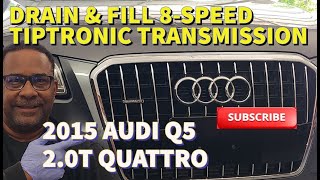

Technical Specifications
Manufacturer: ZF; Model Family: 8HP; Manufacturer Model: 8HP55 (or 8HP45); Audi Designation: 0BK / AL551-8Q; Type: Tiptronic (Conventional Automatic); Speeds: 8; Drivetrain: quattro All-Wheel Drive; Engine Compatibility: 2.0L Turbocharged Four-Cylinder; Model Years: 2013-2017; Vehicle: Audi Q5; Transmission Code: NTB; VIN Digits (7th & 8th): FP; Fluid Specification: ZF Lifeguard 8 / Audi G 060 162 A2; Weight: ~310 lbs
We Have This Part in Stock


The information in this article is provided for general reference and educational purposes only. Vehicle specifications, procedures, and part compatibility can vary by production date, trim level, and region. Always consult your vehicle's factory service manual and verify part numbers before purchasing or performing repairs. Safety-critical components such as airbags, seat belts, and braking systems should be installed by a qualified professional.
- Audi Q5:
- 🎬 Helpful Videos
- 🛍️ Shop This Part
- Is This the Right Transmission for Your Audi Q5?
- Confirming Your Vehicle's Transmission Code
- What Will Not Fit
- Common Failure Symptoms
- Diagnostic Flowchart
- Known Problems, Bulletins, and Recalls
- Harsh Shifting (TSB 37-13-84)
- Torque Converter Clutch Fault (TSB 2028985/6)
- Fluid Leaks from Mechatronics Sleeve
- No Major Recalls for This Specific Transmission Failure
- What Fails at Every Mileage Band
- Under 60,000 Miles
- 60,000 - 100,000 Miles
- 100,000 - 150,000 Miles
- Over 150,000 Miles
- Real Owner Experiences
- Repair or Replace?
- When Repair Makes Sense
- When Replacement is Smarter
- Questions to Ask Your Installer
- Installation and Programming: What to Know
- Mandatory Component Protection Programming
- Special Tools and Required Parts
- Installation Gotchas
- Freight and Delivery Reality
- Arrival Inspection: What to Check Before Installation
- Frequently Asked Questions (FAQ)
- 🎟️ Get 5% Off