

2013-2015 Audi A6 & A7 3.0L ZF 8HP55A Transmission: Problems, Identification, and Used Replacement
Identify the correct ZF 8HP55A transmission code, understand common mechatronic failures, and learn when to replace it with a used OEM unit.
- You must match the three-letter transmission code (NNT or QCZ) exactly, as units from other Audi models are not compatible.
- A used transmission requires mandatory 'Component Protection' removal by a qualified shop with an ODIS scan tool to function in a new vehicle.
- When installing a used unit, it is critical to use new ZF Lifeguard 8 fluid, replace the pan/filter assembly, and thoroughly flush the external transmission cooler.
- Failure to properly seat the torque converter (three distinct 'clicks') before bolting the transmission to the engine will destroy the internal fluid pump.
- Many shifting problems can be caused by degraded fluid; a fluid and filter service is recommended by ZF every 60,000-100,000 miles.
Identifying the Correct Transmission for Your A6 or A7


The 2013-2015 Audi A6 and A7 with the 3.0L Supercharged V6 gasoline engine use a specific 8-speed automatic transmission known as the ZF 8HP55A (also identified by codes 0BK and AL551-8Q). Audi markets this transmission as "Tiptronic." It is an advanced design that includes an integrated front differential and a Torsen center differential for the Quattro All-Wheel Drive system.
Transmission Codes: The Only Way to Be Sure
To ensure you get the correct replacement, you must match the three-letter transmission code. For this specific application, the codes are NNT or QCZ. Ordering a transmission with the wrong code will lead to fitment, wiring, and programming problems.
Pro Tip: You can find your vehicle's transmission code on the vehicle data sticker, which is often located in the spare tire well in the trunk or inside your original maintenance booklet. The code is also stamped on a metal identification plate on the bottom of the transmission oil pan or case.
What Will Not Fit? The Interchange Trap
Audi used different versions of the ZF 8HP transmission family in other models like the A4, A5, A8, Q5, and SQ5. While they may seem similar, they are not direct replacements. These other units have different bellhousings, mounting points, internal wiring, and most importantly, different software programming in the transmission's internal computer. Attempting to install a transmission from a different model will result in failure.
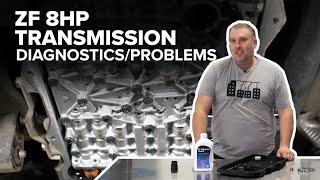
🎬 Watch this comprehensive ZF 8-speed transmission guide and diagnostic walkthrough.Common Failure Symptoms
When the ZF 8HP55A begins to fail, you may experience one or more of the following symptoms:
- Harsh or Jerky Shifting: Especially noticeable on the 1-2 and 2-3 upshifts, or when coming to a stop.
- Shuddering at Steady Speeds: A vibration or shudder felt during light acceleration or when cruising can indicate a problem with the torque converter clutch (TCC).
- Dashboard Warnings: You might see a "Gearbox Malfunction: you can continue driving" message or other transmission-related warnings.
- Limp Mode: The vehicle may lock itself into a single gear (often 3rd or 5th) with limited power. This is a protective measure to prevent further damage.
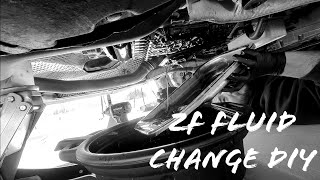
- Fluid Leaks: Leaks can develop from the transmission oil pan gasket or the main electrical connector sleeve. 🎬 Watch our step-by-step ZF-8 fluid and filter change DIY video.
Warning: Some issues can mimic a transmission failure. A faulty right-front ABS wheel speed sensor can cause erratic shifting, trigger limp mode, or refuse to adapt. Additionally, a known recall exists for a gateway control module located under the rear seat; if liquid spills on it, the engine can enter a low-power emergency mode that could be mistaken for a transmission problem.
Diagnostic Flowchart
Known Issues, Bulletins, and Recalls

While generally reliable, this transmission has several documented issues. There are Technical Service Bulletins (TSBs) that address common complaints.
| Bulletin | NHTSA ID(s) | Summary & Remedy |
|---|---|---|
| TSB 37J1 | 10124915 & 10124908 | Addresses complaints of rough or uncomfortable shifting on 2013-2015 models. The official remedy is a software update for the Transmission Control Module (TCM). |
| TSB 371664 | 10055834 | For 2012-2014 models, this TSB targets faulty shift patterns and associated dash warnings. The recommended procedure involves flushing the transmission fluid and/or updating the TCM software. |
| TSB A372001 | 10177882 | This bulletin provides instructions for addressing a fluid leak from the transmission oil pan gasket or the transfer case across various model years. |
Mechatronic and Solenoid Issues
The Mechatronic unit is the complex electro-hydraulic control center of the transmission, combining the valve body and the internal computer (TCM). Over time, degraded fluid can cause the small solenoid valves within this unit to stick or fail, leading to erratic shifting and fault codes. Regular fluid service is the best prevention.
Torque Converter Clutch (TCC) Shudder
A common complaint across the ZF 8HP family is a shudder or vibration caused by wear inside the torque converter's lock-up clutch. This often requires replacing the torque converter.
What Fails at Every Mileage Band
Pro Tip: The mileage bands below describe used replacement units of that mileage. The checklists provided are things to do WHILE INSTALLING the purchased unit, not maintenance for your current transmission.
Under 60,000 Miles
While major mechanical failures are uncommon at this mileage, some issues can appear. Mechatronic unit replacement due to jerking, lurching, or error messages has been reported, sometimes covered under warranty. Software glitches can cause "Transmission Malfunction" warnings, which may sometimes be resolved by a reset or are intermittent. Fluid leaks from seals or the transmission pan gasket can also occur.
- ✓Do during install (required): Even on a low-mileage unit, it is critical to use new ZF Lifeguard 8 fluid and a new transmission pan/filter assembly. Ensure the mandatory Component Protection removal and TCM adaptation relearn are performed by a qualified shop.
- ✓Do during install (recommended): Replace the torque converter seal (front pump seal) as a preventative measure.
- ✓Cheap insurance while the engine is out: Inspect all other external seals for any signs of leaks.
60,000 - 100,000 Miles
This is the mileage range where ZF, the manufacturer, recommends the first fluid and filter service. Failures in this range are often linked to fluid degradation, leading to harsh shifting (especially 1-2 and 2-3), hesitation, or shuddering. Mechatronic (valve body) and solenoid issues can begin to surface, causing erratic shifting and fault codes. Torque converter clutch (TCC) shudder can become apparent, and fluid leaks from the pan gasket, cooler lines, or mechatronic connector sleeve are more common.
- ✓Do during install (required): This is the most critical mileage for preventative replacement. Absolutely install with a new pan/filter, new ZF Lifeguard 8 fluid, and all required single-use aluminum bolts. Perform a thorough flush of the external transmission cooler and lines to prevent contamination from the old unit.
- ✓Do during install (recommended): Strongly consider replacing the mechatronic connector sleeve, as it is a common leak point and inexpensive.
- ✓Cheap insurance while the engine is out: Replace the torque converter seal and inspect driveshaft seals.
100,000 - 150,000 Miles
If the fluid has never been changed, this is a high-risk mileage band. Problems like harsh shifting, slipping, and mechatronic/solenoid failure are much more likely. Internal wear items, such as bushings and clutch packs, begin to show their age, especially if maintenance has been deferred. Torque converter failure becomes more common, and electronic issues, such as faulty sensors or intermittent TCM problems, can arise.
- ✓Do during install (required): Assume the unit will need all associated wear items addressed. Mandatorily replace the pan/filter, fluid, mechatronic connector sleeve, and torque converter seal. A complete cooler and line flush is non-negotiable to protect the investment in the used transmission.
- ✓Do during install (recommended): Carefully inspect and consider replacing transmission mounts.
- ✓Cheap insurance while the engine is out: Inspect and replace driveshaft flex joints (guibos) while they are accessible.
Over 150,000 Miles
The service life of the transmission is heavily dependent on its maintenance history. Units with regular fluid changes can continue to function well, while neglected units are at high risk of complete failure. Mechanical failure of internal components like clutch packs and bushings is a significant risk. Some owners report driving over 200,000 miles on the original transmission with proper care, but failures caused by neglected fluid leaks are common.
- ✓Do during install (required): Purchasing a unit in this mileage range is a gamble. At a minimum, all items from the 100-150k mileage band must be replaced.
- ✓Do during install (recommended): A professional inspection of the used unit before installation is highly recommended.
- ✓Cheap insurance while the engine is out: Consider replacing the torque converter and mechatronic assembly as a matter of practice, as they are the most common and expensive failure points on high-mileage units.
Real Owner Experiences
| Source | Mileage | What Happened | Cost |
|---|---|---|---|
| AudiWorld Forums | 44,000 | A 2016 Audi A7 3.0T required a mechatronic and transmission replacement due to jerking, lurching, and engine surges. | Warranty |
| 43,600 | A 2018 Q5 (which can use a similar transmission family) displayed a "gearbox malfunction" warning. | Not specified | |
| YouTube DIY | 43,000 | Owner of a tuned 2014 Audi A6 performed a preventative fluid and filter change due to the increased strain from the tune. | DIY |
| BimmerLife | 60,000 | An owner performed a preventative fluid service due to the manufacturer's recommendation and noticing a faint groan at startup and slightly longer cold shifts. | DIY |
| 85,000 | A 2017 Audi A3 with a related transmission type experienced a "transmission malfunction" warning, which led to the replacement of an auxiliary hydraulic pump under an extended warranty/TSB. | Warranty | |
| Ross-Tech Forums | 98,000 | An owner experienced shuddering when coming to a stop. A fluid change and clutch adaptation reset resolved the issue. The fluid analysis suggested the fluid itself was still in decent condition, pointing to the adaptation reset as a key part of the fix. | DIY |
| AudiWorld Forums | 108,000 | 2012 A6 3.0T owner diagnosed a 'Transmission Communication Error' as coolant wicking from a faulty TSC valve into the mechatronic connector. He cleaned the connector himself, resolving the issue. | Minimal (cost of cleaning supplies). Quoted $11,000 by dealer. |
| 108,000 | An owner reported hard shifts when cold (1st to 2nd) and slipping when accelerating from a stop, even after a recent fluid and filter service. | Not specified | |
| 109,000 | A 2013 A6 3.0T intermittently failed to engage reverse and drive, displaying a "Transmission Malfunction" error. The issue appeared after the car sat for a long period and was parked on a slope. | Not specified, ongoing diagnosis | |
| 125,000 | An owner of a 2012 A4 with the ZF8 had no issues after performing a fluid and filter change at 95k miles. | None | |
| 130,000 Km | 2016 S7 owner experienced limp mode and a jerk in reverse. Took it to an independent German shop for a second opinion after the dealer quote. | Quoted $10,000 for mechatronic replacement. | |
| 215,000 | A 2013 A6 owner reported the original transmission was still functioning when the engine failed at 215k miles. The car had no major issues before 175k-185k miles. | N/A (Engine Failure) | |
| 336,000 | A user reported their 2012 Q5 2.0T with an original ZF8 transmission reached 336,000 miles (after an engine replacement at 180k). | N/A | |
| AudiWorld Forums | Not Stated | 2014 A6 TDI owner received multiple simultaneous failure messages (Transmission, TPMS, Parking Brake). | Quoted $6,000 - $8,000 for refurbished unit. |
| Not Stated | Owner was experiencing loss of even gears (2,4,6) and was told it was a fork issue, not the mechatronic unit. | Quoted $12,000 for new transmission. |
Repair or Replace?
Replacing the transmission is a major repair. Costs vary based on the type of replacement unit you choose. These estimates reflect typical market pricing.
| Part or Service | Estimated Cost (USD) |
|---|---|
| New OEM | $9,000 - $14,000+ |
| Remanufactured | $2,500 - $9,000 |
| Used OEM | $250 - $2,500 |
| Shop Labor for Installation | $1,200 - $2,400 (8-12 hours) |
When Repair Makes Sense
- Mechatronic Unit / Valve Body Failure: If the issue is isolated to the mechatronic unit (solenoid failure, communication errors) and internal mechanicals are good, a rebuild service typically costs $500 - $1,500. A replacement part plus labor runs $1,200 - $3,500+.
- Torque Converter Clutch (TCC) Shudder: If the transmission shifts well and the only symptom is a shudder under light load, replacing the torque converter costs $1,500 - $3,500.
- Fluid Leaks: Replacing the connector sleeve or pan gasket costs $200 - $600 and should always be addressed to prevent fluid starvation.
When Replacement is Smarter
Replacement with a used or remanufactured unit becomes the smarter choice when there is evidence of major internal mechanical failure. This includes catastrophic noises (grinding, banging), significant metal debris in the transmission pan, or multiple simultaneous shifting problems. If the cost of diagnosing and repairing multiple discrete faults approaches or exceeds the cost of a warranted, low-mileage used unit, replacement is more economical.
Questions to Ask Your Installer
- Have you confirmed the 3-letter transmission code on my vehicle (NNT or QCZ) to ensure the replacement unit is a direct match?
- Are you equipped with an ODIS scan tool to perform the online 'Component Protection' removal required for this transmission?
- What is your procedure for flushing the transmission cooler and lines to prevent contamination?
- Will you be replacing all single-use aluminum stretch bolts for the subframe, bellhousing, and mounts?
- How do you verify the torque converter is fully seated (the 'three clicks') before installation to prevent pump damage?
- Does your quote include the correct ZF Lifeguard 8 fluid, a new pan/filter assembly, and other required seals?
- What warranty do you offer on the used transmission and your labor?
- Can you provide a detailed, itemized written estimate before work begins?
Installation: Critical Steps and Common Mistakes

This is an "Expert" level DIY job, requiring 8-12 hours of labor. Installation should ideally be performed by a professional technician experienced with modern Audi vehicles.
Special Tools Required
- Triple Square (XZN) socket set (specifically M10, M12, M14)
- Torx socket set (T30, T40)
- Engine support bar
- VCDS (Vag-Com Diagnostic System) or ODIS scan tool
- Fluid pump adapter (VAS 6262/2 or equivalent)
Component Protection: The Anti-Theft Hurdle
This transmission contains an integrated computer that is locked to the original donor car's security system. This is called Component Protection. When a used transmission is installed, it will not work correctly until this security feature is removed and the unit is adapted to your car's VIN.
Warning: Removing Component Protection is mandatory. It cannot be done with standard diagnostic tools like VCDS. The procedure must be performed online by an Audi dealership or a qualified independent shop with a licensed ODIS scan tool connected to Audi's factory servers. Skipping this step will leave the transmission in a restricted safe mode, and it will not shift properly.
Installation Gotchas & Buyer Mistakes
- Torque Converter Seating: The torque converter must be carefully rotated and pushed until it fully seats into the transmission's front pump with three distinct "clicks" or drops. Failure to do this will destroy the pump the moment the bellhousing bolts are tightened. Access to bolts connecting the torque converter to the flexplate is achieved by removing the starter motor.
- Fluid Fill Procedure & Temperature: There is a strict temperature-dependent fill procedure. Final fluid level check must be done with the vehicle level, engine idling, and fluid temperature between 30°C and 40°C (or 30-50°C) monitored via a scan tool.
- Fluid and Filter: A used transmission must be installed with a new filter (which is integrated into a new plastic oil pan) and the correct fluid. Attempting to use cheap, generic multi-vehicle ATF instead of genuine ZF Lifeguard 8 or Audi G 060 162 A2 will cause damage.
- Flushing the Cooler: The external transmission oil cooler and lines must be thoroughly flushed with solvent to remove any metal debris from the old, failed transmission. Skipping this contaminates the replacement unit.
- Replacing Stretch Bolts: Critical bolts for the subframe, transmission mount, and bellhousing are single-use aluminum stretch bolts and must be replaced with new ones to ensure proper torque and safety.
What's Included in a Used Assembly?
When buying a used transmission, it's important to know what parts are typically included. Based on standards from the Automotive Recyclers Association (ARA), you should expect the following:
What It Includes:
- Main transmission case and all internally lubricated parts
- Torque converter
- Valve body and internal transmission computer (Mechatronic unit)
- Integrated front differential
- Torsen center differential
- Transmission oil pan (with integrated filter)
What It Typically Excludes:
- External sensors and external wiring harnesses
- Flexplate / flywheel
- Shifter assembly, shift linkage, and cables
- External transmission cooler lines
Freight and Delivery Reality

Shipping a complete ZF 8HP55A transmission is not like receiving a standard parcel. The assembly weighs approximately 310 lbs and measures roughly 36" x 24" x 24" before crating. It will ship as LTL (Less-Than-Truckload) freight on a wooden pallet.
Because of its size and weight, delivery requires a truck equipped with a liftgate if it is being sent to a residential address, or a forklift if delivered to a commercial shop. Always inspect the transmission carefully before signing the delivery receipt. Check for cracked oil pans, broken electrical connectors, or damage to the aluminum case. A reputable seller will conduct a pre-purchase verification interview, asking for your VIN or transmission code (NNT or QCZ) to guarantee exact fitment before shipping.
Frequently Asked Questions (FAQ)
Do I have to reprogram a used transmission for my Audi?
Yes. A used transmission must have its "Component Protection" security feature removed and be programmed to your vehicle's VIN. This requires special tools (ODIS) and online access available only at dealerships or specialized European auto repair shops.
Can I use a transmission from an Audi A8 or Q5 in my A6/A7?
No. While they may also be ZF 8-speed transmissions, they have different physical dimensions, software, and internal components that make them incompatible with your A6 or A7. You must match the transmission code (NNT or QCZ).
What is a Mechatronic unit?
The Mechatronic unit is the electronic and hydraulic brain of the transmission. It is located inside the oil pan and consists of the valve body, solenoids, and the Transmission Control Module (TCM). This entire unit is included with a used assembly but is the part that contains the Component Protection security.
What fluid does the ZF 8HP55A require?
You must use genuine ZF Lifeguard Fluid 8 or the Audi equivalent (spec G 060 162 A2). Do not use generic, multi-vehicle automatic transmission fluid, as it will cause poor shifting and internal damage. You will also need SAE 75W-90 synthetic for the front differential and Audi spec G 055 145 A2 for the center differential.
How long does this transmission typically last?
The ZF 8HP55A is highly reliable. With proper maintenance—specifically changing the fluid and filter every 50,000 to 80,000 miles—it is common for these units to exceed 150,000 to 200,000 miles. ZF considers 100,000 miles to be the "lifetime" of the original fluid fill, after which the failure rate increases significantly if left unserviced.
What special tools are needed for installation?
You will need a Triple Square (XZN) socket set (M10, M12, M14), a Torx socket set (T30, T40), an engine support bar, a fluid pump adapter (VAS 6262/2), and a VCDS or ODIS scan tool to monitor fluid temperatures during the fill procedure.
Helpful Videos
Technical Specifications
Model: ZF 8HP55A; Audi Designation: Tiptronic; Audi Internal Code: 0BK / AL551-8Q; Vehicle Application: 2013-2015 Audi A6 & A7 (3.0L Supercharged V6); Transmission Codes: NNT, QCZ; Drivetrain: Quattro All-Wheel Drive; Integrated Components: Front Differential, Torsen Center Differential; Weight: Approx. 310 lbs; Required Fluid (Automatic): ZF Lifeguard 8 / Audi G 060 162 A2; Required Fluid (Front Diff): SAE 75W-90 Synthetic; Required Fluid (Center Diff): Audi G 055 145 A2
We Have This Part in Stock


The information in this article is provided for general reference and educational purposes only. Vehicle specifications, procedures, and part compatibility can vary by production date, trim level, and region. Always consult your vehicle's factory service manual and verify part numbers before purchasing or performing repairs. Safety-critical components such as airbags, seat belts, and braking systems should be installed by a qualified professional.
- Audi A6:
- Audi A7:
- 🎬 Helpful Videos
- 🛍️ Shop This Part
- Identifying the Correct Transmission for Your A6 or A7
- Transmission Codes: The Only Way to Be Sure
- What Will Not Fit? The Interchange Trap
- Common Failure Symptoms
- Diagnostic Flowchart
- Known Issues, Bulletins, and Recalls
- Mechatronic and Solenoid Issues
- Torque Converter Clutch (TCC) Shudder
- What Fails at Every Mileage Band
- Under 60,000 Miles
- 60,000 - 100,000 Miles
- 100,000 - 150,000 Miles
- Over 150,000 Miles
- Real Owner Experiences
- Repair or Replace?
- When Repair Makes Sense
- When Replacement is Smarter
- Questions to Ask Your Installer
- Installation: Critical Steps and Common Mistakes
- Special Tools Required
- Component Protection: The Anti-Theft Hurdle
- Installation Gotchas & Buyer Mistakes
- What's Included in a Used Assembly?
- Freight and Delivery Reality
- Frequently Asked Questions (FAQ)
- 🎟️ Get 5% Off