

2016-2018 Audi A6 2.0T Quattro ZF 8HP55A Transmission: Problems, Identification, and Used Replacement
Identify the exact 'QLR' transmission code, understand common Mechatronic failures, and learn when replacing with a used OEM unit is the smartest economic choice.
- Before purchasing, you must verify your transmission has the specific three-letter code 'QLR' by checking the build sticker in the trunk or the ID plate on the transmission itself.
- Many drivability issues like harsh shifting can be fixed with a TCM software update; check for applicable TSBs before condemning the hardware.
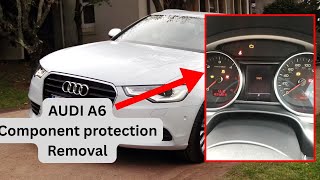
- Replacement is not plug-and-play; the unit's Component Protection must be unlocked and programmed to the car's VIN by a dealer or specialist with online ODIS access.
- During installation, the torque converter must be seated in three distinct steps and the external cooler must be flushed to prevent immediate failure of the replacement unit.
- Only use the specified ZF Lifeguard 8 or Audi G 060 162 A2 fluid and check the level with the engine running and fluid between 30°C-45°C to prevent severe damage.
Part Identification: Confirming the 'QLR' Transmission


The automatic transmission in the 2016-2018 Audi A6 with the 2.0L turbocharged four-cylinder engine and quattro All-Wheel Drive (AWD) is the ZF 8HP55A HIS. This is a longitudinal transaxle, which means it is mounted lengthwise in the car and includes the front and center differentials as part of its assembly. For replacement purposes, it is crucial to match the specific three-letter transmission code: QLR. Using a transmission with a different code can lead to incorrect gear ratios, software conflicts, and other compatibility problems.
| Code Type | Identifier |
|---|---|
| Primary Replacement Code | QLR |
| Transmission Family | 0BK |
| Transmission Type | AL551-8Q |
| Part Numbers | 0BK300041B001, 0BK 300 041 B |
How to Verify Your Vehicle's Transmission
Before purchasing a replacement, you must confirm your vehicle has the 'QLR' transmission. Here is how:
- Check the Build Sticker: Look for a white paper sticker in the trunk area, usually in the spare tire well or with the owner's manual. This sticker lists all the option codes for your car, including the transmission code 'QLR'.
- Check the VIN: The 8th digit of your Vehicle Identification Number (VIN) should be 'G' or 'F', which identifies the 2.0L EA888 turbocharged engine (code CYNB or CYN) this transmission was paired with.
- Visually Confirm AWD: Ensure your vehicle is a 'quattro' model. You can verify this by checking for rear axle shafts and a rear differential.
- Check the Transmission Case: The 'QLR' code is also stamped on a metal identification plate on the underside of the transmission itself, near the oil pan.
What Does Not Interchange?
Fitment for this transmission is very specific. Do not attempt to use a transmission from a different A6 model, as it will not work.
| Incompatible A6 Model | Reason for Incompatibility |
|---|---|
| Front-Wheel Drive (FWD) Models | Use entirely different transmissions, such as a CVT (Continuously Variable Transmission) or an S-Tronic dual-clutch gearbox. These are not compatible. |
| 3.0T V6 Models | Uses a different version of the ZF 8-speed transmission designed for higher torque and has a different bellhousing, which is the part that bolts to the engine. |
Common Failure Symptoms and Diagnosis
Transmission problems can appear as drivability issues or dashboard warning lights. If you experience any of the following, the transmission may be at fault:
- Harsh or delayed shifting
- Clunking noises when coming to a stop or shifting into gear
- A transmission warning light on the dashboard
- Hesitation or surging at low speeds, especially around 35 mph
- Visible fluid leaks under the vehicle
- Vehicle fails to move after being put into gear
Pro Tip: Many shifting and drivability complaints can be caused by outdated software. Before condemning the transmission, check with an Audi dealer or qualified independent shop to see if any Technical Service Bulletins (TSBs) for a software update apply to your vehicle.
Diagnostic Flowchart

Known Issues, Bulletins, and Recalls
While generally robust, the ZF 8HP55A has several known issues. Many are addressable with software updates, while others indicate mechanical failure.
Technical Service Bulletins (TSBs)
- TSB 2029027/8 (also SB-10054865-6305 / TSB 2082106/1): Addresses a transmission warning light and a no-movement condition after starting, often with diagnostic trouble code (DTC) P060A00. The fix is a Transmission Control Module (TCM) software update using SVM action code 02A072 or 02A048.
- TSB 2028985/13 (and 2028985/6): Pertains to Torque Converter Clutch performance issues (DTC P074100) when the transmission fluid is below 60°C. This is resolved with a TCM software update to correct a diagnostic calibration error.
- Drivability Campaigns (37G1, 37F8, 37F5): Audi released several software updates to fix complaints of harsh shifting, low-speed hesitation, and clunking noises when coming to a stop by improving stationary neutral-idle control.
Common Mechanical Failures
- Fluid Leaks: Leaks can develop from the oil pan gasket, the electrical connector sleeve, or the lines running to the external cooler.
- Mechatronic Unit Failure: This is the complex electro-hydraulic control center of the transmission. Failure is a severe issue that can cause major shifting problems or a complete loss of drive, requiring replacement or rebuilding of the unit.
- Internal Clutch Wear: Over time, internal clutch packs can wear out, particularly the 'E' and 'D' clutches. This is a severe failure that requires a complete transmission rebuild or replacement.
- Low-Speed Surge: RPM fluctuation around 35 mph often points to torque converter lock-up clutch wear.
What Fails at Every Mileage Band
Pro Tip: The mileage bands below describe what to expect from used replacement units of that mileage. The checklists provided are critical steps to perform while installing the purchased unit, not general maintenance for your current transmission.
Under 60,000 Miles
Transmissions in this range are generally healthy but can suffer from software glitches causing harsh shifting or false warnings (DTC P060A00, P074100). Minor fluid leaks from the pan gasket or electrical connector sleeve may begin to appear. Rarely, premature mechatronic or solenoid issues occur, often worsened by aggressive driving or high heat.
- ✓Do during install (required): Verify the unit has the latest TCM software updates; flash if necessary. Install a new transmission filter/pan assembly, pan bolts, and the electrical connector sleeve seal. Perform a complete transmission cooler flush to remove any potential debris. Use only the specified ZF Lifeguard 8 / Audi G 060 162 A2 fluid.
- ✓Cheap insurance while the engine is out: Replace the torque converter seal and axle seals.
60,000 - 100,000 Miles
Mechatronic (valve body) and solenoid failures become more common in this band, leading to erratic shifting, slipping, and warning lights. Internal valve body wear, such as pressure regulator valve bores, can cause pressure loss under load. Torque converter clutch wear may cause shuddering or surging around 35-45 mph. Fluid leaks from aging seals are frequent.
- ✓Do during install (required): A full fluid and filter service is mandatory. ZF recommends service every 50,000 to 75,000 miles. Replace the entire mechatronic connector sleeve, not just the o-rings.
- ✓Do during install (recommended): Carefully inspect the torque converter for any signs of bluing (overheating) or hub damage before installation.
100,000 - 150,000 Miles
There is an increased likelihood of mechanical wear, particularly in the 'E' and 'D' clutch packs. Full mechatronic unit failure is a significant risk if the fluid has never been serviced. Torque converter failure becomes more probable. Wear on internal bushings can cause cross-leaks and pressure loss, leading to vibrations or shuffling sensations.
- ✓Do during install (required): Assume the unit requires a full service (fluid, filter/pan, connector sleeve, all external seals). It is critical to have the unit's history; a transmission that has had at least one fluid service is a much better candidate.
- ✓Cheap insurance while the engine is out: Consider having the torque converter sent out for inspection or remanufacturing as a preventative measure.
Over 150,000 Miles
General internal wear of multiple components is expected. Failures of clutch packs ('A', 'D', 'E'), bushings, and the torque converter are common. Complete failure requiring a full rebuild or replacement is not uncommon, especially if maintenance has been neglected. However, units with proper fluid maintenance can exceed this mileage reliably.
- ✓Do during install (required): Mandatory replacement of all service items (fluid, filter/pan, connector sleeve, seals) is required.
- ✓Do during install (recommended): Budget for a potential near-term failure or consider the cost of a professional rebuild prior to installation as the most reliable path forward.
Real Owner Experiences
The table below highlights real-world problems, mileages, and costs reported by Audi A6 and similar ZF 8-speed owners.
| Source | Mileage | What Happened | Cost |
|---|---|---|---|
| TSB 2029027/8 | Under 60,000 | Transmission Warning Light appeared, sometimes with no movement after starting the car. The issue was related to a software glitch in the TCM (DTC P060A00). | Covered by warranty or requires a dealer software update. |
| TSB 2028985/6 | Under 60,000 | Transmission warning light with DTC P074100 (Torque Converter Clutch Performance) stored, particularly at cold temperatures. | Resolved with a TCM software update to correct a diagnostic calibration error. |
| Forum reports | 40,000-60,000 | Reports of harsh 2-1 downshifts or hesitation when coming to a stop, often addressed by software updates or adaptation resets. | Varies; may be a simple dealer software flash or part of a larger diagnostic fee. |
| Reddit r/Audi | ~60,000 | Owner experienced a faint groan at startup and cold shifts hanging longer than usual, prompting a preventative fluid and filter service. | $300-$500 at an independent shop. |
| Next Gen Drivetrain, Inc. | 60,000-100,000+ | Transmission begins to display symptoms of malfunction under hard throttle or heavy loads due to pressure regulator valve leaks within the valve body. | Requires valve body rebuild or replacement. |
| Forum reports | 80,000 | Shifting between Reverse and Drive while the vehicle is still rolling can cause extreme drivetrain shock, leading to mechatronic wear and potential failure. | Can lead to catastrophic failure requiring full replacement. |
| reddit.com | ~81,000 | Dealer diagnosed a Mechatronic issue (P0750 code) and recommended full replacement. Owner took it to an independent German shop for a second opinion. | Quoted $10,000 (CAD) for Mechatronic, $27,000 (CAD) for full transmission replacement. |
| Reddit r/BmwTech | 108,000 | Owner reports slipping when accelerating from a stop and a hard shift from 1st to 2nd on cold starts, even after a recent fluid and filter service. This points to likely internal wear or a mechatronic issue beyond what fluid can fix. | Likely requires significant repair, such as a mechatronic rebuild or transmission replacement. |
| Reddit r/Audi | 120,000 | Vehicle displayed multiple error codes including 'no reverse gear', 'incorrect gear ratio', and 'internal control module processor performance'. A fluid change was not sufficient; replacement was recommended. | Quoted nearly $10,000 for a new transmission from the dealer. |
| reddit.com | 121,000 | Owner was quoted by an Audi dealer for a Mechatronic replacement. | Quoted $11,500. |
| Reddit r/Audi | 336,000 | A 2012 Q5 with a ZF8 transmission was reported to be running on the original transmission at 336,000 miles, demonstrating the potential for longevity with proper care. | N/A (Report of longevity). |
| youtube.com | N/A | Owner took the vehicle to a specialist for Mechatronic repair. | Paid £1,520 (including repair, new gearbox oil, filter, labor, and VAT). Quoted £3,000+ from Audi. |
| reddit.com | N/A | Owner was quoted for a transmission pan gasket replacement to fix a leak. | Paid $1,100. Quoted $1,050 (dealer) / $1,100 (indy shop). |
Repair or Replace?
When facing a major transmission issue, deciding whether to repair your current unit or replace it with a used assembly comes down to economics. Shop labor for removing and installing this transmission is estimated at 8-12 hours, costing between $900 and $2,000.
| Replacement Type | Estimated Price Range (USD) |
|---|---|
| New OEM | $6,000 - $9,000+ (Part only, rarely sold standalone) |
| Remanufactured | $2,500 - $4,500+ |
| Used OEM | $450 - $1,505 |
When Repair Makes Sense
- Fluid Leaks ($600 - $1,200): Replacing a leaking pan gasket or connector sleeve is expensive due to labor, but far cheaper than a full replacement.
- TCM Software Glitches ($200 - $500): Always the first step for drivability issues. A simple software update can often resolve harsh shifting without physical repairs.
- Mechatronic Failure ($1,500 - $4,000+): If the rest of the transmission (clutches, torque converter) is healthy, independent specialists can often repair or replace the Mechatronic for a fraction of the dealer's price.
- Torque Converter Issues ($1,000 - $2,500): If the issue is isolated to the torque converter (e.g., shuddering), replacing just the converter makes sense, though labor is significant since the transmission must be removed.
When Replacement is Smarter
Replacement with a warrantied, low-mileage used unit is the smarter economic choice when multiple internal failures are suspected (e.g., Mechatronic failure combined with clutch slip or torque converter noise), or when catastrophic internal damage has occurred. Given that used units typically run $450 to $1,505, replacement is often much more cost-effective than a single major repair like a dealer-quoted Mechatronic replacement, which can exceed $9,000.
Questions to Ask Your Installer
- How will you handle the Component Protection programming? Do you have an online ODIS subscription to perform this?
- Will you be swapping my original Mechatronic unit into the donor transmission or programming the donor unit?
- Do you have the specialized fluid pump and a scan tool to monitor temperature to ensure the fluid is leveled correctly between 30°C and 45°C (or 50°C)?
- Will you be flushing the external transmission cooler and lines completely before installing the replacement unit?
- Does your quote include all required consumables like new torque-to-yield stretch bolts for the subframe and mounts, new axle seals, and the correct ZF Lifeguard 8 / G 060 162 A2 fluid?
- How do you verify the torque converter is fully seated (all three clicks) before mating the transmission to the engine?
- What warranty do you provide on your labor, and what is the warranty on the used transmission itself?
Freight & Delivery Reality

Purchasing a used transmission means dealing with heavy freight. This assembly weighs approximately 210 lbs and measures roughly 36" x 24" x 28" before crating. It will ship as LTL (Less Than Truckload) freight on a wooden pallet, not as a standard parcel.
- Delivery Requirements: You will need a loading dock, a forklift, or a truck equipped with a liftgate to unload the pallet. Most residential deliveries require a liftgate service.
- Inspect Before Signing: Never sign the delivery receipt until you have fully inspected the transmission. Check for a cracked oil pan, broken external sensors, or damage to the bellhousing. Once you sign, you accept the condition of the part, making damage claims extremely difficult.
Installation and Programming: Critical Steps

Warning: This is not a DIY-friendly job. Replacing this transmission requires specialized tools, software, and knowledge. Improper installation can destroy the replacement unit instantly.
Component Protection and Programming
This transmission contains an integrated control module (TCM) that is part of Audi's anti-theft system, known as Component Protection. When a used or new transmission is installed, it will be in a locked 'SAFE' mode, preventing it from functioning.
- The system must be unlocked and programmed to the vehicle's VIN.
- This procedure requires an Audi dealer or a certified independent shop with the ODIS diagnostic tool, which connects to Audi's factory servers (GeKo).
- As an alternative, a technician can sometimes transfer the original, functional Mechatronic unit into the replacement transmission, but this is a highly delicate process that may void the part's warranty.
Key Installation "Gotchas"
Mistakes during installation are common and costly. Key points to follow include:
Warning: The torque converter must be carefully rotated until it drops into place three distinct times. If it is not fully seated, it will crush the internal pump gear when the engine is bolted on, destroying the unit.
- Engine Alignment Dowel Pins: Ensure dowel pins are not double-stacked between the engine block and replacement transmission, which causes misalignment and immediate pump/converter failure.
- Fluid Level Check: The fluid level must be checked while the engine is running, the car is level, and the transmission fluid is strictly between 30°C and 45°C (or 50°C), as measured by a scan tool. Checking it with the engine off or at the wrong temperature will result in a severely incorrect fluid level and rapid failure.
- Flush the Cooler: The external transmission cooler and lines must be thoroughly flushed to remove any metal debris from the previous transmission's failure. Re-circulating this debris will damage the replacement unit's solenoids.
- Use Correct Fluid: Only use fluid meeting Audi's G 060 162 A2 specification, such as ZF Lifeguard 8. Using generic multi-vehicle fluid will cause damage.
- Replace Stretch Bolts: The subframe and transmission mount bolts are single-use, torque-to-yield bolts. They must be replaced to ensure they do not break or back out over time.
- Pan Bolt Torquing: Single-use pan bolts must be torqued to low values in a specific sequence to avoid cracking the pan or causing leaks. Note that metal pans use a separate filter (0BK398009A), while plastic pans require full pan replacement.
Frequently Asked Questions (FAQ)
Can I use a transmission from a 3.0T A6 in my 2.0T?
No. The transmission for the 3.0T V6 engine has a different bellhousing and torque rating, and is not physically compatible with the 2.0T four-cylinder engine.
Is a used transmission 'plug-and-play'?
No. Due to Audi's Component Protection system, the transmission control module inside the replacement unit must be electronically unlocked and programmed to your car by a dealer or specialist with the proper online tools (ODIS).
What fluid does the 8HP55A 'QLR' transmission use?
It requires a specific fluid that meets the ZF Lifeguard Fluid 8 or Audi G 060 162 A2 (Green) specification. Do not use universal or incorrect fluid types.
What is included with a used transmission assembly?
A standard used assembly includes the transmission case, all internal lubricated parts, the integrated front differential, the center differential (Torsen) transfer case housing, the oil pan, the torque converter, and the valve body (Mechatronic) with internal solenoids. External sensors, wiring harnesses, shifter linkage, flexplate, and external coolers are typically not included.
What special tools are required for installation?
Installation requires an engine support bar, Triple-square (XZN) sockets (M10, M12), Torx sockets (T30, T40, T55), a transmission jack, a fluid transfer pump with a hooked adapter nozzle, and a high-end bidirectional scan tool like VCDS (VAG-COM) or ODIS.
How do I properly check the fluid level?
The fluid level must be checked with the engine running, the vehicle completely level, and the transmission fluid temperature strictly between 30°C and 45ˆC (or 50ˆC) using a scan tool. Checking with the engine off will cause several quarts of fluid to escape, leading to immediate clutch burnout.
Helpful Videos

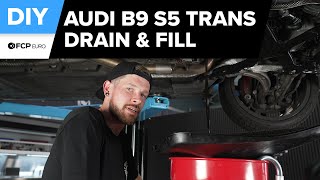
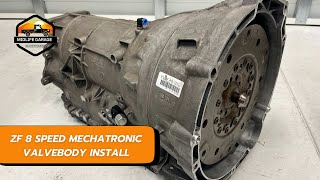
Technical Specifications
OEM Part Numbers: 0BK300041B001 0BK 300 041 B
Make: Audi; Model: A6; Years: 2016-2018; Engine: 2.0L Turbocharged (EA888, CYNB/CYN); Drivetrain: quattro All-Wheel Drive (AWD); Transmission Manufacturer: ZF; Transmission Model: 8HP55A HIS; Transmission Code: QLR; Other Codes: 0BK, AL551-8Q; Type: 8-Speed Automatic Longitudinal Transaxle; Fluid Specification: ZF Lifeguard 8 / Audi G 060 162 A2; Weight: ~210 lbs
We Have This Part in Stock


The information in this article is provided for general reference and educational purposes only. Vehicle specifications, procedures, and part compatibility can vary by production date, trim level, and region. Always consult your vehicle's factory service manual and verify part numbers before purchasing or performing repairs. Safety-critical components such as airbags, seat belts, and braking systems should be installed by a qualified professional.
- Audi A6:
- 🎬 Helpful Videos
- 🛍️ Shop This Part
- Part Identification: Confirming the 'QLR' Transmission
- How to Verify Your Vehicle's Transmission
- What Does Not Interchange?
- Common Failure Symptoms and Diagnosis
- Diagnostic Flowchart
- Known Issues, Bulletins, and Recalls
- Technical Service Bulletins (TSBs)
- Common Mechanical Failures
- What Fails at Every Mileage Band
- Under 60,000 Miles
- 60,000 - 100,000 Miles
- 100,000 - 150,000 Miles
- Over 150,000 Miles
- Real Owner Experiences
- Repair or Replace?
- When Repair Makes Sense
- When Replacement is Smarter
- Questions to Ask Your Installer
- Freight & Delivery Reality
- Installation and Programming: Critical Steps
- Component Protection and Programming
- Key Installation "Gotchas"
- Frequently Asked Questions (FAQ)
- 🎟️ Get 5% Off