

2005 Audi A6 4.2L V8 ZF 6HP: Problems, Identification, and Used Replacement
Identify the exact HLL transmission code, understand common Mechatronics failures, and learn when to replace it with a used OEM unit.
- You must match the three-letter transmission code 'HLL' exactly; no other codes are compatible.
- Due to Component Protection, a used transmission requires either dealer programming or swapping your original Mechatronics unit into the replacement.
- Always replace the Mechatronics bridge seal and four tubular sealing sleeves on any used unit during installation to prevent premature failure.
- The fluid fill and level check procedure is critical and must be performed with a scan tool while the fluid is between 35°C and 45°C.
Part Identification & Fitment Confirmation

The 2005 Audi A6 equipped with the 4.2L V8 engine and Quattro All-Wheel Drive uses a specific variant of the ZF 6HP family of transmissions, known as the ZF 6HP19A (also part of the broader 09L and ZF 6HP26A family designations). This is a six-speed automatic transmission designed for a longitudinal engine layout, meaning the engine and transmission run from the front to the back of the car. The 'A' in the model name designates it as an all-wheel-drive unit, which integrates the front and center differentials required for Audi's Quattro system. These units were produced from 2004 to 2011.
How to Confirm Your Vehicle's Transmission Code
To ensure you are ordering the correct part, you must verify the three-letter transmission code. For this specific 2005 4.2L V8 AWD vehicle, the code is HLL.
| Location | Description |
|---|---|
| Vehicle Data Sticker | This sticker is typically located in the trunk, often in the spare tire well. It lists all the option codes for the vehicle, including the transmission code. |
| Transmission Tag | A metal plate is riveted to the bottom front of the transmission case, directly next to the 16-pin electrical connector. This tag will have the transmission model (e.g., ZF 6HP19A) and the specific build code (e.g., HLL) stamped on it. |
Warning: You must match the HLL code exactly. Transmissions from other vehicles, even other Audis, are not compatible. Other codes like HLK, HWD, HWE, JER, KGZ, HYS, HKE, or GUT, or versions from other engines (like the 3.2L V6) or other brands (BMW, Jaguar, Land Rover) will not work. They have different gear ratios, final drive ratios, torque converter calibrations, and bellhousing bolt patterns. Installing the wrong code will result in mechanical incompatibility or complete electronic failure.
Common Symptoms of a Failing Transmission

A failing ZF 6HP19A transmission can present several distinct symptoms. Recognizing them early can help determine if a replacement is necessary.
- Shuddering or Squeaking: A noticeable shudder, vibration, or squeak during light acceleration or between gear shifts, especially the 3-4 shift, often points to a problem with the torque converter clutch.
- Harsh Downshifts or Clunking: A prominent "clunk" or harsh engagement when the vehicle downshifts as you slow to a stop is a common complaint, often related to the transmission's electronic controller or its software.
- Slipping or Delayed Engagement: If the engine RPMs flare up during a shift or if there's a long delay when shifting from Park into Drive or Reverse, it can indicate internal hydraulic pressure loss from worn seals or failing solenoids.
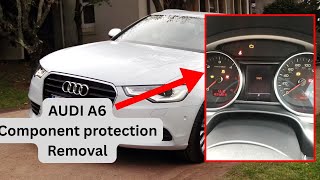
- "SAFE" Mode on Dashboard: The instrument cluster may display the word "SAFE," and the transmission will lock itself into a single gear (limp mode). This is a direct result of the vehicle's anti-theft system, known as Component Protection, being activated because the transmission's control module is not recognized by the car. 🎬 See how to solve the SAFE instrument cluster error
- Failure to Move: In severe cases, particularly when the fluid is cold, the vehicle may not move in Drive or Reverse, or may require significant engine revs to engage. This can be a sign of extremely low fluid or catastrophic internal failure.
Diagnostic Flowchart

Known Problems, Recalls, and Technical Service Bulletins (TSBs)
This transmission has several well-documented issues that owners and technicians should be aware of. There are no major recalls, but several TSBs address common complaints.
TSB: Torque Converter Clutch Shudder & Squeak
Audi released Technical Service Bulletin 37-06-13 (also TPI 2028279) to address complaints of a severe shudder, vibration, or squeaking noise during the 3-4 gear shift on 2005-2011 models. This is caused by the material properties of the original torque converter clutch and the transmission fluid. The official fix involves flushing the system and refilling with an updated, green-colored ATF (ZF Lifeguard 8 / Audi Part No. G 060 162 A2), followed by a transmission control module (TCM) software update and an adaptation drive.
TSB: Harsh Downshifts / Clunking
Complaints of moderate harsh 2-1 downshifts when stopping are addressed by TSB 2011732 / 2028053 for 2005-2011 models. This problem is not typically a mechanical failure but a software calibration issue within the TCM. The solution is to have an Audi dealer or specialist update the TCM software using the Software Version Management (SVM) system and then perform a transmission adaptation drive to relearn shift points.
Common Failure: Mechatronics Adapter and Sealing Sleeves
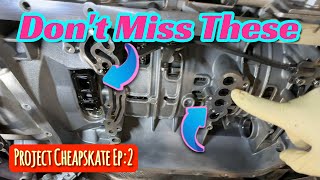
A severe and very common failure point across all years is the set of rubber seals between the Mechatronics unit (the combined valve body and computer) and the transmission case. These include a rectangular "bridge" seal and four tubular sealing sleeves. Over time, these seals harden and crack from heat cycles, causing a loss of hydraulic pressure that leads to poor shift quality, slipping, and eventually, transmission failure.
Pro Tip: It is essential to replace the Mechatronics bridge seal (ZF P/N 0501215718) and all four tubular sealing sleeves whenever the transmission is serviced or replaced. These parts are inexpensive, but failing to replace them on a used unit is a leading cause of premature failure after installation.
Other Known Issues
- Solenoid Failure: Solenoids within the Mechatronic unit can fail, causing harsh downshifts, slipping, or failure to engage. Replacing the solenoids often resolves this moderate issue.
- Torque Converter Lock-Up Clutch Wear: Severe wear to the torque converter clutch can cause shuddering, RPM fluctuations, and fluid contamination with friction material. Replacement of the torque converter is required.
What Fails at Every Mileage Band
Pro Tip: The mileage bands below describe what typically fails on USED replacement units at these mileages. The checklists provided are things you should do WHILE INSTALLING the purchased unit, not maintenance for your current broken transmission.
Under 60,000 Miles
Even at low mileage, age and heat cycles take a toll on rubber components. The Mechatronic adapter seal (bridge seal) and sealing sleeves can harden and crack, causing hydraulic pressure loss. Solenoid malfunctions (weak or failing solenoids causing harsh shifts) and rare valve body defects can also occur.
- ✓Do during install (required): Replace the Mechatronic adapter seal (bridge seal) and the four tubular sealing sleeves. This is a cheap preventative measure against the most common failure point.
- ✓Do during install (required): Inspect the Mechatronic electrical connector sleeve for leaks and replace if necessary.
- ✓Do during install (recommended): Perform a full fluid and filter pan service with the correct specification fluid (ZF Lifeguard 6 or equivalent).
- ✓Do during install (recommended): Flush the transmission cooler lines to remove any potential debris from the donor vehicle.
60,000 - 100,000 Miles
Failure of the Mechatronic adapter seal and sealing sleeves is highly probable in this range, as they often have a service life of only 60,000-70,000 miles. Torque converter shudder issues begin to appear. Critical valves in the valve body, like the pressure regulator, begin to wear, leading to shift flares and harsh downshifts. Solenoid failure becomes much more common.
- ✓Do during install (required): Replace the Mechatronic adapter seal (bridge seal), all four tubular sealing sleeves, and the pan/filter assembly with new fluid.
- ✓Do during install (required): Replace the Mechatronic electrical connector sleeve.
- ✓Do during install (recommended): Consider replacing the pressure and shift solenoids as a preventative measure while the valve body is accessible.
- ✓Do during install (recommended): If swapping your original Mechatronics unit, install a new set of seals on it before it goes into the replacement transmission.
- ✓Cheap insurance while the engine is out: Proactively replace the torque converter if the donor vehicle's history is unknown to prevent future shudder issues.
100,000 - 150,000+ Miles
Assume a full refresh is needed. Significant wear in the valve body bores is common, meaning new solenoids alone may not fix shifting problems. Torque converter lock-up clutch failure is a high probability. Prolonged operation with low hydraulic pressure leads to slipping and burning of the internal 'A' and 'E' clutch packs. The Mechatronics (TCM) electronic control unit itself can also fail at higher mileages.
- ✓Do during install (required): Replace all Mechatronic seals (bridge, tubes, connector sleeve) and the pan/filter with new fluid.
- ✓Do during install (required): Replace the full solenoid pack.
- ✓Do during install (recommended): Install a remanufactured torque converter. Installing a high-mileage used torque converter is a major risk.
- ✓Cheap insurance while the engine is out: At this mileage, installing a remanufactured valve body or complete Mechatronic unit is a wise investment over just replacing solenoids, as the valve body casting itself is likely worn. Check pump bearings for wear during the torque converter replacement.
Real Owner Experiences
The service life of the ZF 6HP family is highly dependent on maintenance. With no fluid changes, significant problems often arise between 60,000 and 100,000 miles. With regular fluid and filter services every 50,000-60,000 miles, the mechanical components can last well beyond 200,000 miles. Here is what real owners have experienced:
| Source | Mileage | What Happened | Cost |
|---|---|---|---|
| BIMMERPOST | 47,000 | A Mechatronic unit failed on a 2020 model just outside of the time warranty. The owner was quoted $5,000 for the part and $2,400 for labor. | $7,400 |
| PistonHeads UK | Not Specified (Low) | Owner experienced intermittent, hard downshifts and slamming sensations while stationary and driving. The gear indicator would disappear from the cluster, and the transmission module would seem to reset. A slight leak from the Mechatronic sleeve adapter was noted. | Not specified |
| Reddit r/Audi | 99,000 | After a long drive, an '06 A6 4.2L went into limp mode on the highway. After restart, it drove fine. The owner later experienced delays and limp mode in reverse. A shop quoted $2,750 for a remanufactured valve body from Audi. | $2,750+ (quote) |
| 5Series.net Forums | 94,000 | Owner experienced slipping in clutches (codes 4F81, 4F85). Replacing the fluid and resetting adaptations did not fix it. The owner then replaced the shift solenoids to resolve the issue. | DIY parts cost |
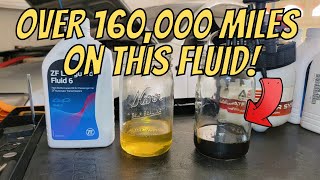
| BobIsTheOilGuy Forums | 120,000 | Owner performed a fluid and filter change on a ZF 6HP19 due to some undesirable shifts. The old fluid was black and contained some metal/clutch debris, which was considered normal for the mileage. A fluid change and adaptation reset resolved the shift quality issues. | DIY parts cost |
| Automotive Faults | 125,000+ | General owner reports indicate timing chain tensioner issues arise after 125,000 miles in the 4.2L V8 engine, which is a separate but relevant concern for buyers of a complete engine/transmission dropout. | Not specified |
| AudiWorld Forums | Not Stated | Attempted a transmission rebuild on a 2005 A6 4.2. | Almost $6,000 |
| Not Stated | Quoted for a new transmission by a shop. | $12,000 | |
| 130,000Km | Dealer recommended full replacement over Mechatronic repair on a 2016 Audi S7. | $9,200 for Mechatronic, $27,000 for full transmission. |
Replacement Cost Estimates
The cost to replace a 2005 Audi A6 transmission can vary significantly based on the type of replacement unit chosen. These prices are estimates and do not include taxes or potential shipping charges.
| Part Type | Price Estimate (USD) | Notes |
|---|---|---|
| New (OEM) | $9,000 - $12,000+ | Brand new from an Audi dealer. May be a remanufactured unit sold as new. |
| Remanufactured | $4,800 - $6,700 | Professionally rebuilt with updated parts. Often comes with a warranty. |
| Used (OEM) | $475 - $2,600 | A salvaged unit from a donor vehicle. Mileage and condition vary widely. |
| Shop Labor | $1,200 - $2,500 | Estimated 10 to 14 hours of labor for removal and replacement. Does not include programming. |
Repair or Replace?
Deciding whether to repair your existing transmission or replace it entirely depends on the specific failure mode.
| Failure Mode | Typical Repair Cost | When to Repair |
|---|---|---|
| Mechatronics Adapter Seal & Sleeves | $400 - $900 (seals only) or $288 - $650 (Mechatronic repair service) plus labor. | Repair makes sense when symptoms are related to pressure loss (sluggish shifts) but the transmission otherwise functions. |
| Torque Converter Clutch | $1,500 - $2,200 (part costs $200 - $700). | Repair makes sense when symptoms are isolated to the torque converter (shuddering, RPM fluctuation, whining noise). |
| Solenoid / Valve Body Issues | $800 - $1,500. | Repair makes sense for harsh shifts traced to specific solenoids, assuming the rest of the mechanical parts are in good condition. |
When Replacement is Smarter: Replacement with a quality used unit is the smarter economic choice when there is evidence of catastrophic internal mechanical failure (e.g., metal debris in the pan, no engagement in multiple gears) or when the combined cost of multiple repairs (like a torque converter AND a full mechatronics rebuild) approaches or exceeds the price of a low-mileage used transmission ($475 - $2,600). Full rebuilds can easily exceed $6,000.
Questions to Ask Your Installer
- Have you confirmed the transmission code on my vehicle is HLL and the donor unit is an exact match?
- How do you plan to address the Component Protection (CP) programming? Will you swap my original mechatronics/TCM into the donor unit, or will it require online dealer programming?
- Will you be replacing the mechatronics bridge seal and the four tubular sealing sleeves as a preventative measure during the swap?
- Does your quote include replacing the single-use subframe stretch bolts?
- What specific brand and type of ATF will you be using? (Confirming it matches the required spec, either G 060 162 A2 green or G 055 005 A2 tan).
- How will you perform the fluid fill to ensure the temperature is correct (between 35°C and 45°C)?
- Does your process include a full flush of the external transmission cooler and lines before connecting the replacement unit?
- Can you confirm the torque converter is fully seated before the transmission is bolted to the engine?
Key Considerations for Installation

Programming and Component Protection
This transmission contains a major anti-theft feature called Component Protection (CP). The Transmission Control Module (TCM), which is physically located inside the transmission as part of the Mechatronics unit, is electronically locked to the original vehicle's VIN. When a used transmission is installed, the car will detect the mismatch and put the transmission into a restricted "limp mode," displaying "SAFE" on the dash.
You have two primary options to resolve this:
- Dealer Programming: An Audi dealer or a certified independent shop with the official ODIS diagnostic tool and online (GEKO) access can perform a procedure to unlock the component protection and adapt the used transmission to your vehicle.
- Mechatronics Swap: The most common and cost-effective workaround is to carefully remove the original Mechatronics unit from your old transmission and install it into the replacement unit. Since the TCM is part of this assembly, the car will recognize its original module and Component Protection will not be triggered.
Pro Tip: Swapping your original Mechatronics unit into the donor transmission is the highly recommended method. It avoids the time and expense of dealer programming. This is also the perfect time to replace the Mechatronics bridge seal and sealing sleeves.
Required Parts, Fluids, and Tools for Installation
To ensure a successful installation, a number of consumable parts, fluids, and special tools are required.
| Category | Details |
|---|---|
| Special Tools | VCDS (Vag-Com) or ODIS diagnostic scan tool, transmission fluid fill pump with angled adapter, Torx and triple-square socket sets, engine/transmission support fixture, and a transmission jack. |
| Automatic Transmission Fluid (ATF) | ZF Lifeguard 6 (Audi Spec G 055 005 A2, tan/gold) OR ZF Lifeguard 8 (Audi Spec G 060 162 A2, green). Do not mix. |
| Filter and Pan Gasket Kit | Always replace. Verify if your pan has 13 or 23 bolts to get the correct kit. |
| Mechatronics Seals | Mandatory replacement: rubber bridge seal (ZF P/N 0501215718) and four tubular sealing sleeves. |
| Differential Fluids | Front: ~1.1L SAE 75W90 (G 052 145 S2). Center (Torsen): ~0.55L (G 055 145 A2 with Sturaco modifier). |
| Hardware | Single-use subframe stretch bolts (Audi P/N N-910-666-01) must be replaced. |
| Other | Torque converter input shaft seal and aerosol transmission cooler flush. |
Warning: Do not mix transmission fluid types. Using the wrong ATF or mixing colors can cause severe damage to the torque converter and clutches. Verify the correct fluid for your specific vehicle and software version.
Critical Installation Steps ("Gotchas")
- Torque Converter Seating: The torque converter must be carefully installed onto the transmission's input shaft until it drops into place twice. If it is not fully seated, bolting the transmission to the engine will break the internal oil pump.
- Fluid Fill Procedure: The transmission must be filled from the bottom using a fluid pump. The final fluid level check must be performed with the engine running, transmission in Park, and the ATF temperature strictly between 35°C and 45°C, as monitored with a diagnostic scan tool.
- Subframe Crossmember Removal: Requires removing the subframe crossmember to access the pan, which uses single-use stretch bolts that must be replaced.
- Starter Removal: On the 4.2L V8, the starter motor must be removed to gain access to the bolts that secure the torque converter to the engine's flexplate.
- Cooler Flush: Always flush the external transmission cooler and lines before connecting them to the replacement unit to prevent old debris from contaminating the new transmission.
- Pan Bolts: Be careful not to strip the soft Torx pan bolts during removal or installation.
Freight & Delivery Reality

When ordering a used transmission assembly, it is important to understand how it will arrive. This is a heavy, bulky industrial component, not a standard parcel.
| Aspect | Details |
|---|---|
| Size and Weight | Approximately 195 lbs and measures roughly 32" x 20" x 24" before crating. |
| Shipping Method | LTL (Less Than Truckload) freight on a wooden pallet. Not via standard UPS or FedEx. |
| Delivery Requirements | Requires a forklift or a truck with a liftgate. You must request liftgate service for residential or non-dock delivery. |
| Inspection | Thoroughly inspect for physical damage to the case, pan, or connectors before signing the delivery receipt. |
| Pre-Purchase Verification | A reputable seller will conduct an interview to confirm your exact transmission code (HLL), engine size (4.2L V8), and drivetrain (Quattro AWD). |
Frequently Asked Questions (FAQ)
What parts are included with a used transmission assembly?
A standard used transmission assembly includes the transmission case, all internal lubricated parts, the integrated front differential, the Torsen center differential (transfer case), the transmission oil pan, the torque converter, and the valve body with internal solenoids. It typically does not include external sensors, external wiring harnesses, shifter linkages/cables, the flexplate (flywheel), or external transmission cooler lines.
Can I use a transmission from a 3.2L A6 or a BMW?
No. You must use a transmission with the exact HLL code. Other transmissions have different internal ratios, electronic controls, torque converter calibrations, and physical bellhousing mounting points that make them completely incompatible.
Do I have to program this transmission?
Yes, due to Component Protection. If you install a used transmission as-is, it will be locked in "SAFE" mode. You must either have it programmed by a dealer using ODIS or physically swap the Mechatronics unit (computer/valve body) from your original transmission into the replacement one to bypass the programming requirement.
What is a Mechatronics unit?
The Mechatronics unit is the electro-hydraulic brain of the transmission. It combines the hydraulic valve body, electronic solenoids, and the Transmission Control Module (TCM) into a single assembly located inside the transmission oil pan.
What type of transmission fluid does the ZF 6HP19A take?
It depends on the vehicle's software version. It requires either ZF Lifeguard 6 (Audi Spec G 055 005 A2, tan/gold color) or the updated ZF Lifeguard 8 (Audi Spec G 060 162 A2, green color). You must check your current fluid color or TCM software version to determine the correct fluid. Never mix the two types.
How do I check the fluid level after installation?
The fluid level must be checked from underneath the vehicle using the fill plug on the transmission pan. The engine must be running, the transmission in Park, and the fluid temperature must be strictly between 35°C and 45°C, which you monitor using a diagnostic scan tool like VCDS or ODIS.
Helpful Videos
Technical Specifications
OEM Part Numbers: G 060 162 A2 G 055 005 A2 0501215718 G 052 145 S2 G 055 145 A2 N-910-666-01
Model: ZF 6HP19A; Family: 09L / ZF 6HP26A; Type: 6-Speed Automatic; Layout: Longitudinal; Drivetrain: All-Wheel Drive (Quattro); Production Years: 2004-2011; Vehicle Specific Code: HLL; Weight: ~195 lbs; Dimensions: ~32" x 20" x 24"
We Have This Part in Stock


The information in this article is provided for general reference and educational purposes only. Vehicle specifications, procedures, and part compatibility can vary by production date, trim level, and region. Always consult your vehicle's factory service manual and verify part numbers before purchasing or performing repairs. Safety-critical components such as airbags, seat belts, and braking systems should be installed by a qualified professional.
- Audi A6:
- 🎬 Helpful Videos
- 🛍️ Shop This Part
- Part Identification & Fitment Confirmation
- How to Confirm Your Vehicle's Transmission Code
- Common Symptoms of a Failing Transmission
- Diagnostic Flowchart
- Known Problems, Recalls, and Technical Service Bulletins (TSBs)
- TSB: Torque Converter Clutch Shudder & Squeak
- TSB: Harsh Downshifts / Clunking
- Common Failure: Mechatronics Adapter and Sealing Sleeves
- Other Known Issues
- What Fails at Every Mileage Band
- Under 60,000 Miles
- 60,000 - 100,000 Miles
- 100,000 - 150,000+ Miles
- Real Owner Experiences
- Replacement Cost Estimates
- Repair or Replace?
- Questions to Ask Your Installer
- Key Considerations for Installation
- Programming and Component Protection
- Required Parts, Fluids, and Tools for Installation
- Critical Installation Steps ("Gotchas")
- Freight & Delivery Reality
- Frequently Asked Questions (FAQ)
- 🎟️ Get 5% Off