

2010-2015 Lexus RX350 Transfer Case Module: Fixing the 'Check AWD System' Light
This guide explains the common 'Check AWD System' warning, why the C1298 code doesn't always mean a bad module, and the critical programming steps required for replacement.
- A replacement Transfer Case Control Module MUST be programmed to the vehicle; it is not plug-and-play.
- The common trouble code C1298 does not automatically mean the module is bad. The wiring or the solenoid on the rear differential should be tested first.
- The module is located behind the glove box, making the physical swap relatively easy, but programming requires dealer or specialist tools.
- Driving with a failed module is possible, but the vehicle will be in front-wheel drive only, losing all AWD capability.
What the Transfer Case Control Module Does on Your RX350

The Transfer Case Control Module is the dedicated computer for your Lexus RX350's All-Wheel Drive (AWD) system. Unlike traditional 4x4 systems with a manual lever, the RX350 uses a sophisticated electronic system called Dynamic Torque Control AWD. This module acts as the command center, taking in information from sensors all over the vehicle to intelligently distribute power between the front and rear wheels. It controls an electromagnetic coupler on the rear differential, telling it exactly when and how much to engage to provide optimal traction without driver intervention. When this module fails, the system typically defaults to a fail-safe mode, disabling the AWD and leaving the vehicle in two-wheel drive (2WD).
Symptoms of a Failing RX350 Transfer Case Control Module

The most common sign of a problem is a warning message on your dashboard. Because the module is electronic, it rarely gives physical symptoms like noise or vibration itself; instead, it reports its failure through the vehicle's diagnostic system.
- "Check AWD System" Warning Light: This is the most frequent symptom. The message will appear in the multi-information display, and the AWD indicator light will illuminate.
- Vehicle Stuck in 2WD Mode: The system will disable all-wheel drive as a precaution, and the vehicle will operate in front-wheel drive only.
- AWD Lock Button Inoperative: The button used to manually lock the center coupling for maximum traction in slippery conditions will no longer function.
- Illuminated Check Engine Light: In some cases, a fault in the AWD system can trigger other warnings, though this is less common.
Common Diagnostic Trouble Codes (DTCs)
A professional scan tool is required to read these codes. A basic OBD-II reader may not be able to access the 4WD ECU.
- C1298 - Linear Solenoid Circuit: This is the most common code associated with this issue. It indicates a problem in the circuit between the control module and the electromagnetic control coupler (solenoid) on the rear differential.
- C1299 - Cancellation of 4WD Control: This code often appears alongside other codes and indicates that the 4WD ECU has detected a fault in a related system and has shut down AWD operation as a result.
Important: The presence of code C1298 does not automatically mean the Transfer Case Control Module has failed. The fault is often found in the wiring to the rear differential's solenoid or the solenoid itself. Proper diagnosis is essential to avoid replacing a perfectly good module.
Diagnosing the AWD System

If you have the "Check AWD System" light and code C1298, follow these diagnostic steps before replacing the module:
- Check for Power and Ground at the Module: A technician can verify that the 4WD ECU is receiving proper voltage and has a solid ground connection. Low battery voltage can sometimes cause spurious electronic faults.
- Inspect Wiring Harness: Visually inspect the wiring harness that runs from the main vehicle body to the rear differential. Look for any signs of corrosion, chafing, or damage from road debris.
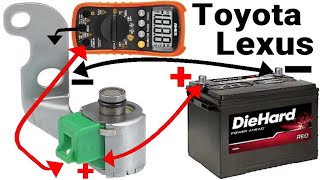
- Test the Electromagnetic Control Coupler Solenoid: The service manual specifies a resistance test for the solenoid at the rear differential. 🎬 Watch: How to test transmission solenoids step-by-step A technician can disconnect the solenoid and measure its resistance. The standard resistance should be around 2.0 to 2.6 Ohms. If the resistance is out of specification, or if there is a short to ground, the solenoid/coupler assembly is faulty, not the control module. 🎬 Watch: Diagnosing a rare AWD fault on a Lexus RX350
Only after confirming the wiring and solenoid are good should the Transfer Case Control Module itself be condemned.
Buying a Used Transfer Case Control Module for Your 2010-2015 RX350
Given the high cost of a new OEM module, a used unit is an excellent value. However, there are critical factors to consider when buying a recycled part for this specific application.
CRITICAL: Programming is Required
A used Transfer Case Control Module is NOT a plug-and-play part. The module is tied to the vehicle's other electronic systems. Simply installing a used module will not fix the problem; the car may not even recognize it. The replacement module must be programmed or synchronized to your vehicle's specific configuration. 🎬 Watch: How to sync a Lexus ECU after replacement You have three main options for programming:
- Lexus Dealership: A dealer can program the replacement module using their proprietary Techstream software. This is the most reliable but also the most expensive option.
- Qualified Independent Shop: Some independent repair shops have high-end diagnostic tools (like Autel or Snap-On) and a J2534 Pass-Thru device that can perform OEM-level programming. You MUST confirm with the shop that they have the specific capability to program a Lexus 4WD ECU before you purchase the part.
- Mail-In Cloning/Programming Service: Many online specialists offer services where you mail in your original module and the used replacement. They will either clone the data from your old module to the new one or "virginize" the used module and program it with your vehicle's VIN. This can be a very cost-effective option, as the module arrives ready for plug-and-play installation.
How to Inspect a Used Module
- Match the Part Number: Ensure the part number on the used module is exactly 89630-48010.
- Check for Physical Damage: Inspect the casing for any cracks or signs of being pried open.
- Examine the Connectors: The pins in the electrical connectors should be straight, clean, and free of any corrosion or water damage. Bent or corroded pins are a major red flag.
Replacement Overview
Physically replacing the module is a relatively simple task, but the programming is not a DIY job for most people.
- Location: The Transfer Case Control Module (4WD ECU) is located inside the cabin, behind the glove box on the passenger side. You will need to remove the glove box assembly to gain access.
- Physical Installation: After disconnecting the battery, the module can be unbolted and its electrical connectors unplugged. The new module is then installed by reversing the process.
- Programming: After the physical swap, the vehicle must be taken to a dealer or specialist for programming, unless you used a mail-in service to have the module pre-programmed.
Cost Breakdown (2026 Estimates)
| Part/Service | Estimated Cost |
|---|---|
| New OEM Module | $2,100 - $2,200 |
| Used OEM Module | $40 - $125 |
| Shop Labor (Physical Swap) | $100 - $200 |
| Shop Labor (Programming) | $150 - $300 |
Known Issues, TSBs, and Recalls
As of mid-2026, there are no specific recalls or Technical Service Bulletins (TSBs) issued by Lexus or the NHTSA for the failure of the Transfer Case Control Module on the 2010-2015 RX350. While several recalls exist for this vehicle generation, they pertain to other components like fuel pipes and brake actuators.
Frequently Asked Questions (FAQ)
Does a used 2010-2015 RX350 Transfer Case Control Module need to be programmed?
Yes, absolutely. A replacement module, whether new or used, must be programmed to your vehicle's VIN and synchronized with the other control units. It is not a plug-and-play part.
Where is the Transfer Case Control Module located on the RX350?
The module, also called the 4WD ECU, is located inside the vehicle's cabin. You can access it by removing the glove box assembly on the passenger side.
Can I drive my RX350 with a bad transfer case module?
Yes, but with limitations. When the module fails, the AWD system is disabled, and the vehicle will operate in front-wheel drive (FWD) only. While drivable, you will not have the benefit of all-wheel drive traction in slippery conditions like rain, snow, or ice.
Does the C1298 code always mean the module is bad?
No. The C1298 code points to a fault in the entire circuit for the rear differential's control solenoid. This could be the module, the wiring harness running to the rear of the car, or the solenoid itself. It is common for the wiring or the solenoid to be the actual cause of the fault. Proper diagnosis is required.
Helpful Videos
Technical Specifications
OEM Part Numbers: 89630-48010 8963048010
Controls the Dynamic Torque Control AWD system by sending signals to the electromagnetic coupler on the rear differential.
We Have This Part in Stock


The information in this article is provided for general reference and educational purposes only. Vehicle specifications, procedures, and part compatibility can vary by production date, trim level, and region. Always consult your vehicle's factory service manual and verify part numbers before purchasing or performing repairs. Safety-critical components such as airbags, seat belts, and braking systems should be installed by a qualified professional.
- Lexus RX350:
- 🎬 Helpful Videos
- 🛍️ Shop This Part
- What the Transfer Case Control Module Does on Your RX350
- Symptoms of a Failing RX350 Transfer Case Control Module
- Common Diagnostic Trouble Codes (DTCs)
- Diagnosing the AWD System
- Buying a Used Transfer Case Control Module for Your 2010-2015 RX350
- CRITICAL: Programming is Required
- How to Inspect a Used Module
- Replacement Overview
- Cost Breakdown (2026 Estimates)
- Known Issues, TSBs, and Recalls
- Frequently Asked Questions (FAQ)
- 🎟️ Get 5% Off