

2018-2021 Kia Stinger AWD Control Module: Faults, Programming, and Replacement Costs
Diagnose common AWD system errors and understand the critical programming steps required when replacing your Stinger's Transfer Case Control Module.
- Programming is mandatory. A replacement TCCM must be calibrated to the vehicle using a Kia dealer's diagnostic tool (KDS).
- This part is for AWD models only and will not work in a RWD Stinger.
- The most common symptom of failure is an 'AWD' warning light on the dash, often accompanied by other system lights like ABS and ESC.
- Always match the OEM part number exactly when buying a used module. The primary part numbers are 95447-4J105 and 95447-4J110.
Symptoms of a Failing Transfer Case Control Module


A problem with the TCCM will almost always trigger a warning light on the instrument cluster. Diagnosing the issue requires a scan tool capable of reading chassis codes (often starting with 'C').
- AWD Warning Light: The most common symptom is an amber "AWD" warning light on the dashboard. This indicates the system has detected a fault and has likely disabled all-wheel drive, defaulting the car to Rear-Wheel Drive (RWD).
- Multiple Warning Lights: It is common for a single fault to cause a cascade of warnings. A TCCM or related sensor issue can also trigger the ABS, Electronic Stability Control (ESC), and Forward Collision-Avoidance Assist lights.
- Inability to Switch Drive Modes: While the Stinger's AWD is mostly automatic, a failed TCCM can prevent the system from engaging the front wheels when needed, leaving you with only RWD.
- Binding or Shuddering in Turns: Some owners report a shuddering or binding feeling during low-speed turns, which can indicate a problem with the transfer case or the module controlling it. This happens if the AWD system is improperly engaged on dry pavement.
- Diagnostic Trouble Codes (DTCs): While there isn't one single code for a bad TCCM, several codes can point to a problem in the system. Communication codes like C1623 (Lost Communication with Steering Angle Sensor) or C1628 (Lost Communication with Instrument Cluster) are significant, as the TCCM relies on these other modules to function. A generic P0700 code indicates a general transmission system fault, which could be related.
Known Issues, TSBs, and Recalls

While there are no recalls specifically for the Transfer Case Control Module, several related issues are important for owners to know.
Technical Service Bulletin (TSB) PS750: AWD System and Tires
Kia issued a bulletin (PS750) warning that using tires with different circumferences (due to mismatched sizes or uneven wear) can cause problems with the AWD system. The TCCM expects all wheels to rotate at very similar speeds; significant differences can be interpreted as a fault, leading to warning lights and potential strain on the transfer case clutches.
Recall SC196: HECU Fire Risk
A major safety recall (NHTSA ID 20V518, Kia recall SC196) was issued for a fire risk in the Hydraulic Electronic Control Unit (HECU), which manages the anti-lock brakes. A short circuit in the HECU can cause multiple warning lights, including the ABS light, which may appear alongside an AWD light, potentially confusing the diagnosis. Ensure this recall has been performed on your vehicle.
Warning: This module is ONLY for All-Wheel Drive (AWD) Kia Stinger models from 2018-2021. It is not compatible with and will not work on Rear-Wheel Drive (RWD) vehicles.
Programming and Calibration: A Dealer Visit is Required

This is the most critical factor when replacing the TCCM. A new or used module is NOT plug-and-play. The module must be programmed and calibrated to the vehicle using the Kia Diagnostic System (KDS) tool. This process is essential for the module to learn the specific characteristics of the clutch pack inside your transfer case.
According to Kia's service procedures, a technician must perform a "clutch learning back-up and writing" procedure. This involves reading calibration data from the old module and writing it to the new one. If the old module is dead, a different procedure may be needed. Failure to perform this step will result in the AWD system not working correctly and will likely keep the warning light illuminated.
- Can an independent shop do it? Only if they have invested in an authentic Kia KDS tool or a high-end aftermarket scanner with the same capabilities. Most general repair shops will not have this.
- Can a locksmith do it? No. This is not related to keys or the immobilizer system.
You must factor the cost of this programming service—typically 1-2 hours of labor at a Kia dealership—into the total cost of your repair.
Buying a Used Transfer Case Control Module
A used OEM module can be a cost-effective alternative to a new part, especially since new aftermarket options are not readily available. However, you must follow these guidelines to ensure a successful repair.
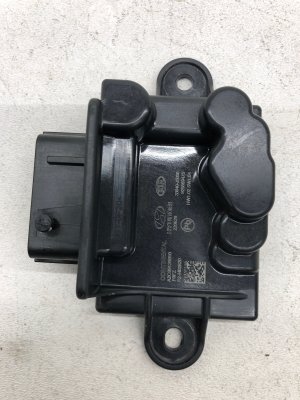
- Match the Part Number Exactly: The part number on your original module must be identical to the one you are buying. The primary part numbers are 95447-4J105 and 95447-4J110. Do not rely on visual appearance alone.
- Verify Vehicle Compatibility: Ensure the donor vehicle had the same engine and model year range. While modules may look the same, internal software can differ.
- Inspect for Damage: Check the module's casing for cracks and the connectors for any signs of corrosion, moisture, or bent pins. Do not buy a module that appears to have come from a flood-damaged or collision-damaged vehicle.
- Budget for Programming: Remember that a used module still requires programming by a Kia dealer or specialist. Call your local dealer beforehand to confirm they are willing to install and program a customer-supplied used part and ask for a quote.
- Why Used OEM is a Good Choice: For an electronic part like this, a used OEM module that has been tested is often more reliable than a non-existent or unproven aftermarket alternative. It was designed specifically for your vehicle's systems.
Cost to Replace the TCCM
The total cost includes the part, labor for physical installation, and separate labor for programming.
| Part or Service | Estimated Cost |
|---|---|
| New OEM Module | $470 - $670 |
| New Aftermarket Module | Not Available |
| Used OEM Module | $150 - $350 |
| Shop Labor (Installation) | $100 - $200 (approx. 1 hour) |
| Shop Labor (Programming) | $150 - $300 (1-2 hours at dealer rates) |
| Total Estimated Cost | $400 (Used) - $1170 (New) |
Pro Tip: The TCCM is likely located on or near the transmission/transfer case assembly, accessed from underneath the vehicle. While the physical swap is straightforward for a mechanic (disconnecting the battery, removing connectors, and unbolting the module), the real challenge is the electronic calibration that must follow.
Frequently Asked Questions (FAQ)
Does a replacement Transfer Case Control Module need to be programmed?
Yes, absolutely. A new or used TCCM must be electronically calibrated to your specific vehicle using a Kia-specific diagnostic tool (KDS). It is not a plug-and-play part. This procedure ensures the module learns the engagement characteristics of your transfer case clutch.
Can I drive my Kia Stinger with a bad TCCM?
Yes, but with limitations. When the TCCM fails, the AWD system is typically disabled, and the car will operate in Rear-Wheel Drive (RWD) only. While the car is safe to drive on normal, dry roads, you will not have the benefit of all-wheel drive traction in rain, snow, or other slippery conditions.
Where is the TCCM located on a 2018-2021 Kia Stinger?
Evidence from service manuals suggests the TCCM is located on or near the transfer case and transmission assembly, which is accessed from under the vehicle. It is an external module with electrical connectors that must be detached during replacement.
Could my AWD problem just be a bad sensor?
Yes. A very common cause for an AWD warning light is a faulty wheel speed sensor. The TCCM relies on accurate speed readings from all four wheels. If one sensor fails, the system will set a fault and shut down. It's critical to have the diagnostic codes read by a professional to determine if the fault lies with a sensor, wiring, or the control module itself.
Technical Specifications
OEM Part Numbers: 95447-4J105 95447-4J110
Controls the electronically-actuated multi-plate clutch in the transfer case. Requires vehicle-specific programming and clutch learning calibration via Kia Diagnostic System (KDS).
We Have This Part in Stock




The information in this article is provided for general reference and educational purposes only. Vehicle specifications, procedures, and part compatibility can vary by production date, trim level, and region. Always consult your vehicle's factory service manual and verify part numbers before purchasing or performing repairs. Safety-critical components such as airbags, seat belts, and braking systems should be installed by a qualified professional.
- Kia Stinger:
- 🛍️ Shop This Part
- Symptoms of a Failing Transfer Case Control Module
- Known Issues, TSBs, and Recalls
- Technical Service Bulletin (TSB) PS750: AWD System and Tires
- Recall SC196: HECU Fire Risk
- Programming and Calibration: A Dealer Visit is Required
- Buying a Used Transfer Case Control Module
- Cost to Replace the TCCM
- Frequently Asked Questions (FAQ)
- 🎟️ Get 5% Off