

2018-2021 Expedition & Navigator Transfer Case Control Module: Fixing 'Service 4WD' Errors
A complete guide to diagnosing, replacing, and programming the TCCM in your 2018-2021 Ford Expedition or Lincoln Navigator to resolve common 4x4 problems.
- This module is ONLY for 3-mode (2H, 4H, 4L) systems and is NOT compatible with 4-mode (4A) systems.
- A replacement TCCM, whether new or used, MUST be programmed to the vehicle by a dealer or qualified shop.
- A grinding noise from the front wheels is often linked to this module's software, per Ford TSB 22-2219.
- The most common symptom of failure is a 'Service 4WD' light on the dashboard.
Symptoms of a Failing Transfer Case Control Module


When the TCCM begins to fail, it can cause a range of frustrating and confusing 4WD issues. Because it's a computer, failure is often electronic rather than mechanical.
- "Service 4WD" Warning Light: This is the most common symptom. The vehicle's main computer detects a fault in the 4WD system, and the TCCM is often the source of the problem.
- Inability to Switch 4WD Modes: You may find the truck is stuck in 2H and will not shift into 4H or 4L, or it may be stuck in a 4WD mode. The indicator lights on the switch may blink and then return to the original setting.
- Grinding or Clicking from Front Wheels: While often caused by a vacuum leak in the Integrated Wheel End (IWE) system, Ford has issued multiple Technical Service Bulletins (TSBs) that correct this noise by reprogramming the TCCM. The module controls the vacuum solenoid that locks and unlocks the front hubs, and faulty logic can cause partial engagement and grinding.
- 4WD System Engages or Disengages Randomly: In rare cases, a faulty module might cause the system to shift modes without driver input.
Associated Diagnostic Trouble Codes (DTCs) often include codes from the P1800-P1891 range, which are specific to transfer case and 4WD systems. Common codes pointing to a module or related circuit failure include:
- P1812: 4WD Mode Selector Circuit Failure
- P1838: Transfer Case Shift Motor Circuit Failure
- P1867: Transfer Case Contact Plate General Circuit Failure
- U0102: Lost Communication with Transfer Case Control Module
Known Issues, TSBs, and Recalls

While there are no direct recalls for the TCCM on these vehicles, it is at the center of several well-documented issues.
TSB for IWE Grinding Noise (TSB 22-2219)
Many 2018-2020 Ford Expedition and Lincoln Navigator owners have reported a grinding, clicking, or ratcheting noise from the front end, especially in 2WD. This is often due to the front wheel hubs (IWEs) partially engaging because of a loss of vacuum. Ford's official fix, outlined in TSB 22-2219 (which supersedes earlier versions like 20-2307 and 21-2076), involves reprogramming the TCCM with updated software. This new software changes the strategy for when vacuum is applied to the hubs, often keeping them engaged for a short period after startup to ensure the vacuum system is fully charged. In some cases, the TSB also advises mechanics to simply cap the vacuum lines, permanently engaging the front hubs.
Customer Satisfaction Program 21B47
For a specific batch of 2021 Lincoln Navigators built between December 2, 2020, and March 9, 2021, a 1-speed transfer case was incorrectly installed on vehicles that should have received a 2-speed unit. The official fix involves replacing the entire transfer case, the wiring harness, and the TCCM to make the vehicle function as intended. This highlights how the TCCM is specifically matched to the hardware in the vehicle.
Compatibility Warning: This guide and the associated part numbers are for vehicles with a 3-mode Electronic Shift-On-the-Fly (ESOF) transfer case (2H, 4H, 4L). It will NOT work on vehicles equipped with the 4-mode Torque-On-Demand (TOD) transfer case, which includes a "4A" (4-Auto) setting. Installing the wrong module will result in system malfunction.
Buying a Used Transfer Case Control Module
A used OEM module is an excellent, cost-effective alternative to a new part, especially since these modules have no moving parts to wear out. Here’s what to look for:
- Match the Part Number Exactly: The most critical step is to match the part number on your original module. While several numbers may be compatible, an exact match is the safest bet. Common part numbers include JL1Z-7E453-C and engineering numbers like JL1A-7H417-AD.
- Verify the 4WD System: Ensure the donor vehicle had the same 3-mode (2H, 4H, 4L) transfer case as your truck. Do not buy a module from a vehicle with the 4A (4-Auto) option.
- Inspect the Connectors: Check the pins in the electrical connectors for any signs of corrosion, bending, or damage. A clean connector is a good sign.
- Ignore Mileage: Unlike mechanical parts, the mileage of the donor vehicle is irrelevant for an electronic module. Functionality is what matters.
- Why Used OEM is a Good Choice: Used OEM modules contain the original Ford firmware and are built to a higher quality standard than many aftermarket alternatives. Given that a brand new module will require the same programming as a used one, you can save significantly without sacrificing reliability.
Programming and Installation Requirements
Warning: A replacement Transfer Case Control Module—whether new or used—MUST be programmed to your vehicle. It is not a plug-and-play part.
This is the most critical part of the replacement process. The TCCM needs to be configured with your vehicle's specific information, such as its VIN, tire size, axle ratio, and other options. This process is often called "Programmable Module Installation" (PMI).
- Who can program it? A Ford or Lincoln dealership is the most straightforward option. Many independent repair shops that specialize in domestic vehicles also have the necessary tools, such as a Ford-specific scan tool (FDRS) or a J2534 pass-thru device with a subscription to the Ford service software.
- What is "As-Built" Data? If the original module is lost or damaged to the point where its data cannot be read, the technician can download your vehicle's original configuration data from Ford's servers using the VIN. This "as-built" data is then loaded onto the replacement module.
- Is there an anti-theft link? The TCCM is not typically linked to the vehicle's immobilizer system, so you will not need to reprogram keys.
Replacement Location
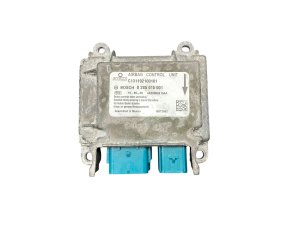
The TCCM is located on the passenger side of the vehicle. Sources indicate it is in the passenger footwell area. You will likely need to remove the kick panel and possibly the glove box or a lower access panel to gain access. On some models, it is mounted to the side of the transmission tunnel, potentially behind a trim cover. It is a small black box with two large electrical connectors and is typically held in place by two bolts.
Cost to Replace the TCCM
Costs can vary by location and whether you choose a new or used part. Programming is a mandatory additional cost.
| Part/Service | Estimated Cost |
|---|---|
| New OEM Module | $105 - $160 |
| Used OEM Module | $50 - $100 |
| Shop Labor (Installation & Programming) | $150 - $300 |
| Total Estimated Cost (with Used Part) | $200 - $400 |
| Total Estimated Cost (with New Part) | $255 - $460 |
Frequently Asked Questions (FAQ)
Do I absolutely have to program a replacement TCCM?
Yes. A replacement TCCM, whether new or used, must be programmed to your vehicle's VIN and specific configuration. Failure to do so will result in a non-functional 4WD system and persistent warning lights.
Where is the TCCM located on my 2019 Expedition/Navigator?
It is located in the passenger footwell area. You will need to remove trim panels, such as the kick panel by the door or the panel under the glovebox, to access it. It is a black plastic module with two large wiring harnesses connected to it.
Can I drive my truck with a bad Transfer Case Control Module?
Yes, but your four-wheel-drive system will be inoperative. The vehicle will likely default to and remain in two-wheel drive (2H). While safe to drive on pavement, you will not have 4WD capability in snow, mud, or off-road conditions.
What's the difference between a TCCM, a TCM, and a PCM?
These are three different computers. The TCCM (Transfer Case Control Module) controls only the 4WD system. The TCM (Transmission Control Module) controls the automatic transmission's shifting. The PCM (Powertrain Control Module) is the main engine computer that oversees engine function and emissions and communicates with the other modules.
Technical Specifications
OEM Part Numbers: JL1Z-7E453-C JL1Z-7E453-A JL1A-7H417-AD JL1A-7H417-AE JL1A7H417AB JL1A7H417AC TM317 TM353
Controls 3-mode Electronic Shift-On-the-Fly (ESOF) transfer case.
We Have This Part in Stock



The information in this article is provided for general reference and educational purposes only. Vehicle specifications, procedures, and part compatibility can vary by production date, trim level, and region. Always consult your vehicle's factory service manual and verify part numbers before purchasing or performing repairs. Safety-critical components such as airbags, seat belts, and braking systems should be installed by a qualified professional.
- Ford Expedition:
- Lincoln Navigator:
- 🛍️ Shop This Part
- Symptoms of a Failing Transfer Case Control Module
- Known Issues, TSBs, and Recalls
- TSB for IWE Grinding Noise (TSB 22-2219)
- Customer Satisfaction Program 21B47
- Buying a Used Transfer Case Control Module
- Programming and Installation Requirements
- Replacement Location
- Cost to Replace the TCCM
- Frequently Asked Questions (FAQ)
- 🎟️ Get 5% Off