

2009-2010 Pontiac Vibe & Toyota Matrix Transfer Case: Noises, Leaks, and Replacement Guide
A guide to diagnosing common failures, choosing the right used part, and understanding the critical hanger bearing bracket on 2.4L AWD models.
- This transfer case only fits 2009-2010 Vibe and 2009-2014 Matrix models with the 2.4L engine and AWD.
- The Pontiac Vibe and Toyota Matrix are mechanical twins; parts and repair information are interchangeable.
- CRITICAL: Before buying a used unit, you must visually compare the right shaft hanger bearing bracket on the replacement part to your original one to ensure they match.
- Most failures are caused by fluid loss from aging seals. Whining or grinding noises are the first sign of a problem and should be addressed immediately to avoid catastrophic failure.
Symptoms of a Failing Transfer Case

A failing transfer case rarely fails silently. It will almost always provide audible or physical warnings. Paying attention to these signs can help you diagnose the problem before it causes more severe damage to the drivetrain.
Whining, Grinding, or Humming Noises
This is the most common symptom. A continuous whining or humming noise that changes pitch with vehicle speed (not engine speed) often points to worn-out internal bearings or gears. Grinding sounds, especially when accelerating or turning, suggest more severe internal damage. These noises are typically caused by a low fluid level or contaminated fluid that has lost its ability to lubricate properly.
Clunking or Clicking Sounds
A distinct "clunk" or "bang" when you shift from Park into Drive or Reverse can indicate excessive slack in the transfer case's internal chain or worn gears. You might also hear clicking or popping noises during tight, slow-speed turns as the damaged components bind and release.
Fluid Leaks
The transfer case has several seals that can wear out over time, leading to fluid leaks. You may notice reddish or dark brown, thick fluid dripping from the center of the vehicle, just behind the transmission. The fluid might have a burnt smell. Any leak is serious, as low fluid levels will quickly lead to overheating and catastrophic internal failure.
Vibrations Under the Vehicle
A vibration felt through the floor, especially during acceleration, can be caused by failing bearings or an imbalanced component within the transfer case. This can feel similar to an unbalanced tire, but it will be more directly related to applying power.
Known Issues, TSBs, and Recalls

While there are no specific recalls or Technical Service Bulletins (TSBs) from GM or Toyota that directly target the transfer case assembly for the 2009-2010 Vibe and Matrix, several recalls were issued for these vehicles. These include issues with accelerator pedals and floor mats. The 2.4L (2AZ-FE) engine used in AWD models has been noted in some Toyota applications for excessive oil consumption, though this is separate from the transfer case itself. The primary cause of transfer case failure is typically age, mileage, and most importantly, fluid loss from leaking seals.
Pro Tip: The 2009-2010 Pontiac Vibe is mechanically identical to the Toyota Matrix. When searching for parts or troubleshooting information, expanding your search to include the 2009-2014 Toyota Matrix with the 2.4L AWD configuration will yield many more results.
Buying a Used 2009-2010 Vibe Transfer Case: What to Look For

Since new OEM units are extremely expensive or discontinued, a quality used OEM transfer case is the most practical and cost-effective solution for most owners. Here’s what to check before you buy.
Verify Compatibility: The 2.4L AWD Rule
This transfer case only fits 2009-2010 Pontiac Vibe and 2009-2014 Toyota Matrix models equipped with both the 2.4L engine and All-Wheel Drive (AWD). It will not fit 1.8L models or any Front-Wheel Drive (FWD) vehicles.
Warning: A critical compatibility check is the hanger bearing holder for the right-side intermediate shaft. This bracket is part of the transfer case assembly. You must compare the bracket on the replacement unit to your original one to ensure it matches. An incorrect bracket will prevent proper installation.
Physical Inspection Checklist
- Inspect the Case: Check the aluminum housing for any cracks, especially around the mounting points and where the driveshafts connect. A cracked case is junk.
- Check for Leaks: Look for dark staining around the input and output seals. This indicates a past or present leak. Plan on replacing these seals regardless.
- Turn the Shafts: The input and output shafts should turn smoothly by hand with minimal resistance and no grinding sounds.
- Check for Play: Try to wiggle the input and output shafts. A small amount of in-and-out play is normal, but excessive up-and-down or side-to-side movement points to worn bearings.
- Drain Plug Magnet: If possible, ask the seller to remove the drain plug. The plug has a magnet on the end designed to catch metal particles. A fine, fuzzy metallic paste is normal wear. However, large metal chunks or shavings are a major red flag indicating severe internal damage.
Replacement and Installation Tips

Replacing the transfer case is a moderately difficult job that can be done by an experienced DIY mechanic with the right tools. It involves removing driveshafts and working in a tight space.
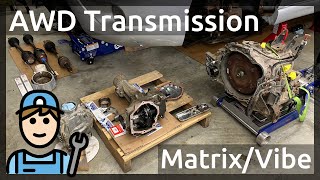
🎬 Watch Matrix and Vibe transfer case removal tipsRelated Parts to Replace
Any time the transfer case is removed, it is highly recommended to replace the following parts to prevent future leaks:
- Transfer Case Input Seal (where it meets the transmission)
- Front Output Seal (to the front driveshaft)
- Rear Output Seal (to the rear driveshaft)
- Right Side Intermediate Shaft Seal
- Crush washers for the drain and fill plugs
Fluid Requirements
Proper fluid is essential for the longevity of the transfer case. Using the wrong type can cause damage.
- Fluid Type: SAE 75W-90 Hypoid Gear Oil (API GL-5)
- Capacity: Approximately 0.85 quarts (0.8 liters or 1.7 pints).
- Procedure: Fill through the upper fill plug until fluid begins to seep out of the hole. Always remove the fill plug before the drain plug to ensure you can refill it.
Rebuilding vs. Replacing
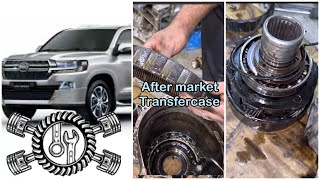
Rebuilding a transfer case involves complete disassembly to replace individual bearings, seals, and gears. This requires specialized tools and knowledge, making it impractical for most DIYers and many general repair shops. 🎬 See how a Toyota transfer case rebuild is done For these vehicles, replacing the entire assembly with a low-mileage used unit is almost always faster and more cost-effective.
Cost Comparison
| Part Type | Estimated Cost |
|---|---|
| New OEM | $2,500 - $3,500+ (often discontinued) |
| New Aftermarket | Not commonly available |
| Used OEM | $400 - $950 |
| Remanufactured | $1,000 - $1,800 (if available) |
| Shop Labor | $400 - $700 |
Frequently Asked Questions (FAQ)
Is the 2009 Pontiac Vibe transfer case the same as the Toyota Matrix?
Yes, for the AWD models with the 2.4L engine, the Pontiac Vibe and Toyota Matrix are mechanically identical and use the same transfer case. The OEM part numbers 88975532 (GM), 36100-44020 (Toyota), and 36100-44021 (Toyota) all refer to this compatible part.
What kind of fluid does the 2009 Vibe transfer case use?
It uses SAE 75W-90 API GL-5 gear oil. The capacity is approximately 0.85 quarts (1.7 pints). You fill it until the fluid level reaches the bottom of the fill hole.
Can I drive with a bad transfer case?
It is not recommended. Driving with a noisy or leaking transfer case can lead to a sudden and complete failure. This could lock up the drivetrain, causing a loss of control, or leave you stranded. It will also cause more expensive damage to surrounding components.
How do I check the transfer case fluid level?
With the vehicle on a level surface, you must remove the upper fill plug, which typically requires a 10mm hex socket or a 24mm wrench depending on the specific plug design. The fluid level should be right at the bottom of the plug's opening. If you can't feel any fluid with your finger, it needs to be topped off. Access can be tight due to the exhaust pipe.
Helpful Videos

Technical Specifications
OEM Part Numbers: 88975532 36100-44020 36100-44021
Fluid Type: SAE 75W-90 API GL-5 Gear Oil. Fluid Capacity: Approx. 0.85 Quarts (1.7 Pints).

The information in this article is provided for general reference and educational purposes only. Vehicle specifications, procedures, and part compatibility can vary by production date, trim level, and region. Always consult your vehicle's factory service manual and verify part numbers before purchasing or performing repairs. Safety-critical components such as airbags, seat belts, and braking systems should be installed by a qualified professional.
- Pontiac Vibe:
- 🎬 Helpful Videos
- Symptoms of a Failing Transfer Case
- Whining, Grinding, or Humming Noises
- Clunking or Clicking Sounds
- Fluid Leaks
- Vibrations Under the Vehicle
- Known Issues, TSBs, and Recalls
- Buying a Used 2009-2010 Vibe Transfer Case: What to Look For
- Verify Compatibility: The 2.4L AWD Rule
- Physical Inspection Checklist
- Replacement and Installation Tips
- Related Parts to Replace
- Fluid Requirements
- Rebuilding vs. Replacing
- Cost Comparison
- Frequently Asked Questions (FAQ)
- 🎟️ Get 5% Off