

2007-2013 Tundra Transfer Case: Actuator Failures, Leaks, and Replacement Guide
Diagnose grinding noises, fluid leaks, and 4WD engagement problems in your 2007-2013 Toyota Tundra and learn how to choose a quality used transfer case.
- The most common failure is the electronic actuator motor, which prevents shifting into or out of 4WD and causes blinking dash lights.
- This transfer case fits 4.6L and 4.7L V8 Tundras only; the 5.7L V8 uses a different part.
- Fluid leaks from the output seals are a critical issue that will lead to rapid internal failure if ignored.
- When buying a used unit, physically inspect the case for cracks and ensure the input/output shafts turn smoothly by hand.
Symptoms of a Failing Transfer Case

A failing transfer case assembly on a 2007-2013 Tundra often gives clear warning signs. The most common issues are related to the electronic actuator, but mechanical problems can also occur. Paying attention to these symptoms can help you diagnose the problem before it leads to a complete failure.
Inability to Switch 4WD Modes
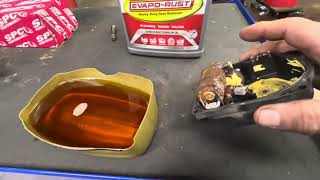
The most frequent complaint is difficulty shifting into or out of 4WD. You might turn the dash switch and experience a long delay, or it may fail to engage entirely. Often, the '4HI' or '4LO' indicator lights on the dashboard will blink continuously instead of staying solid. This almost always points to a problem with the transfer case actuator motor, which may have seized due to internal rust or electrical failure.
Unusual Noises: Grinding, Whining, or Clicking
Strange noises from underneath the center of the truck are a strong indicator of internal transfer case problems.
- Grinding: A grinding or growling noise that changes with vehicle speed can signal worn bearings, a loose chain, or damaged gears inside the case, often due to low fluid levels.
- Clicking or Whirring: A clicking or whirring sound specifically when you try to engage 4WD is another symptom of a struggling or failed actuator motor.
- Whining: A high-pitched whine coming from the transfer case area could indicate fluid breakdown or bearing wear.
Fluid Leaks
Any sign of reddish or dark gear oil dripping from the transfer case is a serious issue. Leaks commonly occur at the front and rear output shaft seals where the driveshafts connect. A low fluid level will quickly lead to overheating and catastrophic internal damage. If you see a puddle forming under your truck, check the fluid level immediately.
Vibrations
A worn internal chain or bearing can cause vibrations that you feel through the floor of the truck. This may be more noticeable at certain speeds or during acceleration. If a component fails catastrophically, it can cause a severe banging sound and a total loss of power.
Pro Tip: Before assuming the transfer case is bad, check other related systems. Sometimes, issues with the Automatic Disconnecting Differential (A.D.D.) on the front axle can produce similar 4WD engagement symptoms. A methodical diagnosis is key.
Known Issues, TSBs, and Recalls

While there have been no major recalls specifically for the transfer case assembly on the 2007-2013 Tundra, the most well-documented and common point of failure is the electronic actuator motor.
Transfer Case Actuator Failure
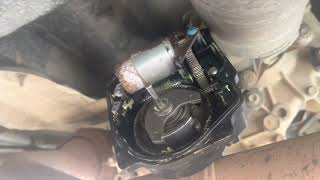
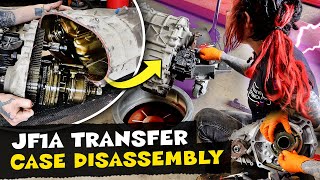
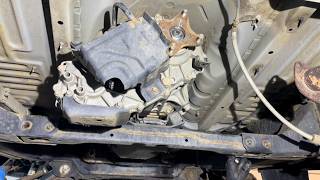
The actuator is an electric motor mounted to the transfer case that physically shifts the internal mechanisms. Its vent hose can sometimes allow moisture to enter, causing the motor and internal contacts to rust and seize. This prevents the truck from shifting into or out of 4WD. In many cases, the mechanical parts of the transfer case are perfectly fine, but the failed actuator makes the entire unit inoperable. 🎬 See how to disassemble the case and remove the actuator. Some early 2007-2008 models may also require the 4WD computer (ECM) to be replaced along with the actuator or transfer case due to logic changes.
Recalls and TSBs
Searches of the National Highway Traffic Safety Administration (NHTSA) database show no recalls directly targeting the transfer case assembly for this generation of Tundra. There was a TSB (TSB-0325-08) issued in 2008 for various warning lights, including the 4WD light, which could be caused by a faulty brake actuator assembly, not the transfer case itself. Owners should also be aware of a significant warranty enhancement program for frame corrosion on 2007-2008 models, which is unrelated but important for overall vehicle health.
Buying a Used Transfer Case Assembly

A used OEM transfer case can be a smart, cost-effective solution, especially since the main failure point is often the bolt-on electronic actuator. Here’s what to look for to ensure you get a quality part.
Compatibility Check
Warning: This transfer case assembly fits 2007-2013 4WD Toyota Tundra models equipped with the 4.6L V8 or 4.7L V8 engines. It does NOT fit models with the larger 5.7L V8, which uses a different unit. Always verify the OEM part number on the case itself or provide the donor vehicle's VIN to the seller to confirm fitment.
Physical Inspection Checklist
- Check the Housing: Carefully inspect the entire aluminum case for cracks, deep gouges, or signs of impact from road debris. Pay close attention to the mounting points.
- Inspect the Actuator: Look at the black plastic housing of the actuator motor. Check for cracks or signs that it has been tampered with or improperly opened.
- Turn the Shafts: By hand, try to rotate the input and output shaft flanges. They should turn smoothly without any grinding, notchiness, or binding. Some resistance is normal, but it should be consistent.
- Look for Leaks: Check for any signs of old fluid leaks around the output shaft seals and where the two halves of the case are joined. Staining is a red flag that the seals may be bad.
- Examine the Connectors: Ensure the electrical connectors on the actuator are clean, intact, and free of corrosion.
Mileage Considerations
While mileage is a factor, the condition and maintenance history are more important. A well-maintained transfer case from a higher-mileage truck that saw mostly highway use can be in better shape than one from a lower-mileage truck used heavily for off-roading or towing. Generally, a unit with under 150,000 miles is a safe bet, but a thorough physical inspection is the best way to judge its condition.
Cost Comparison
Replacing a transfer case can be expensive, but buying a used OEM assembly can offer significant savings over a new part from the dealer.
| Part Type | Estimated Cost Range |
|---|---|
| New OEM | $2,600 - $3,400 |
| New Aftermarket | $1,500 - $2,500 |
| Used OEM | $450 - $900 |
| Remanufactured | $1,800 - $2,800 |
| Shop Labor | $500 - $800 |
Installation Tips and Procedures
Replacing the transfer case is a job that can be done by an experienced DIY mechanic, but it requires proper tools, including a transmission jack.
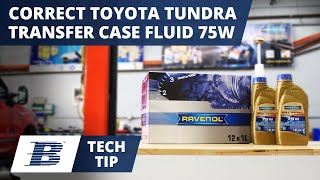
🎬 Watch this step-by-step guide on removing and installing the assembly.- Fluid Type: It is critical to use the correct fluid. For 2007-2012 models, Toyota specifies SAE 75W-90 gear oil (API GL-4 or GL-5). For 2013 models, Toyota switched to a specific SAE 75W fluid (Part No. 08885-01806 or equivalent). Do not mix them up. 🎬 Check this video to confirm the correct fluid for your year.
- Driveshafts: Before removing the front and rear driveshafts, make match marks on the flanges so you can reinstall them in the same orientation to maintain balance.
- Support the Transmission: The transfer case is heavy. You must support the transmission with a transmission jack before unbolting the crossmember and the transfer case itself.
- Torque Specs: While specific specs can vary, here are some general guidelines from replacement videos:
- Crossmember-to-Frame Nuts: ~81 ft-lbs
- Transmission Mount-to-Crossmember Bolts: ~30 ft-lbs
Important: Always disconnect the battery before unplugging any electrical connectors. After installation, fill the transfer case with the correct type and amount of new fluid before driving.
Frequently Asked Questions (FAQ)
Can I just replace the transfer case actuator instead of the whole assembly?
Yes, if the problem is diagnosed as a failed actuator, it can be replaced separately. However, on 2007 and newer models, this can be a complex job that may require significant disassembly of the transfer case to access the actuator's internal components. For many, replacing the entire used assembly is a faster and simpler repair.
What fluid should I use in my 2007-2013 Tundra transfer case?
For 2007-2012 Tundra models, use a quality synthetic 75W-90 gear oil. For 2013 models, you should use Toyota Genuine Transfer Gear Oil LF SAE 75W or an equivalent fluid. Always double-check your owner's manual for the exact specification.
Is a grinding noise always a sign of a bad transfer case?
Not always, but it's a strong possibility. Grinding noises can also come from wheel bearings, the front or rear differential, or even the transmission. A common diagnostic step is to see if the noise changes or disappears when you switch from 2WD to 4WD, which can help isolate the problem to the transfer case.
Is it common to rebuild these transfer cases?
Rebuilding is less common for the average owner than replacement. It requires special tools and knowledge to disassemble the case, press out bearings, and check tolerances. Given the availability and reasonable cost of good-quality used OEM units, most shops and DIYers opt for a direct replacement to save on labor and downtime.
Helpful Videos
Technical Specifications
OEM Part Numbers: 3610034160 3610034161 3610034162 3610034163
Fluid Type (2007-2012): SAE 75W-90 GL-4/GL-5. Fluid Type (2013): Toyota Genuine Transfer gear oil LF (SAE 75W).
We Have This Part in Stock



The information in this article is provided for general reference and educational purposes only. Vehicle specifications, procedures, and part compatibility can vary by production date, trim level, and region. Always consult your vehicle's factory service manual and verify part numbers before purchasing or performing repairs. Safety-critical components such as airbags, seat belts, and braking systems should be installed by a qualified professional.
- Toyota Tundra:
- 🎬 Helpful Videos
- 🛍️ Shop This Part
- Symptoms of a Failing Transfer Case
- Inability to Switch 4WD Modes
- Unusual Noises: Grinding, Whining, or Clicking
- Fluid Leaks
- Vibrations
- Known Issues, TSBs, and Recalls
- Transfer Case Actuator Failure
- Recalls and TSBs
- Buying a Used Transfer Case Assembly
- Compatibility Check
- Physical Inspection Checklist
- Mileage Considerations
- Cost Comparison
- Installation Tips and Procedures
- Frequently Asked Questions (FAQ)
- 🎟️ Get 5% Off