

2014-2023 Jeep Cherokee & 2015-2017 Chrysler 200 Power Transfer Unit (PTU) Failures and Noises Explained
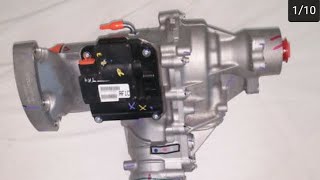
This guide covers the common failures, symptoms, and critical compatibility differences for the single-speed Power Transfer Unit (PTU) used in all-wheel-drive Jeep Cherokee and Chrysler 200 models.
- This PTU is for single-speed 'Active Drive I' systems ONLY and will NOT fit two-speed 'Active Drive II' vehicles.
- Whining or grinding noises that change with speed are the most common sign of failure.
- Multiple recalls have been issued for Jeep Cherokees for PTU issues that can cause a loss of power or rollaway risk.
- Checking the fluid level and condition is the first diagnostic step; low or contaminated fluid indicates a problem.
Critical Compatibility: Active Drive I vs. Active Drive II

Warning: The single most important factor when replacing this part is identifying which 4WD system the vehicle has. The part numbers listed in this guide fit vehicles with the single-speed Active Drive I system. They are NOT compatible with the two-speed Active Drive II or Active Drive Lock systems found on some Jeep Cherokee models (like the Trailhawk). Active Drive II systems use a different, larger unit that includes a low-range gear reduction (4-Low mode). Physically inspect the existing unit or verify the vehicle's original equipment before purchasing.
Symptoms of a Failing Power Transfer Unit

A failing PTU can produce a range of distinct symptoms, from noises to drivability issues. Early detection is key to preventing more severe damage.
1. Whining, Grinding, or Growling Noises
The most common symptom is a persistent whining or growling noise that changes with vehicle speed. This noise is often most noticeable during acceleration and deceleration at lower speeds (under 50 mph). Some owners describe it as a grinding or grating sound. In the Chrysler 200, this may be one of the first signs of trouble. In the Jeep Cherokee, owners have reported banging or jolting feelings accompanying the noise.
2. Shuddering or Vibration
A failing PTU can cause a noticeable shudder or vibration, especially when pulling away from a stop or at low speeds. This can be caused by worn internal gears or bearings creating excessive play in the driveline.
3. "Service 4WD" Warning Light
The vehicle's computer monitors the 4WD system for faults. If it detects a problem with the PTU's engagement or operation, it will illuminate a "Service 4WD" or similar warning light on the dashboard. This is a clear indication that the system needs to be diagnosed professionally.
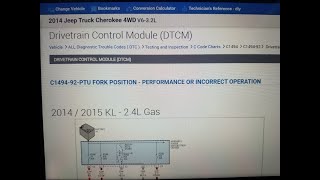
🎬 Watch: Understanding the Service 4WD warning light issue4. Leaking Fluid
The PTU has its own gear oil. If you notice reddish-brown or dark brown fluid spots on the ground under the passenger side of the engine bay, it could be a leaking PTU axle seal or cover seal. Because the unit holds a very small amount of fluid, even a minor leak can lead to catastrophic failure from oil starvation.
5. Burning Smell
In severe cases, a failing PTU can overheat its gear oil, producing a strong, burning smell often compared to propane or burnt gear lube. This indicates extreme friction and imminent failure.
Known Issues, Recalls, and Technical Service Bulletins (TSBs)

The PTU in the Jeep Cherokee has been the subject of several recalls and investigations due to a risk of the input splines wearing out or an internal snap ring failing. This can cause a sudden loss of power while driving or prevent the vehicle from engaging Park, potentially leading to a rollaway.
- NHTSA Recall 20V-343 (FCA #W47): Issued in June 2020 for 2014-2017 Jeep Cherokees with the two-speed PTU (Active Drive II). Movement between the transmission output shaft and the PTU input splines could cause the splines to wear off, resulting in a loss of power or park function.
- NHTSA Recall 23V-302 (FCA #45A): An expansion of the previous recall, issued in May 2023 for 2016-2017 Jeep Cherokees, addressing the same spline wear issue. The remedy for these recalls was a software update that engages the rear axle and electronic parking brake if a failure is detected, rather than a mechanical replacement of the PTU.
- NHTSA Recall 25V011000 (FCA #01C): Issued in early 2025 for 2017-2019 Jeep Cherokees. This recall addresses a different issue where an input shaft snap ring may not be fully seated, which can lead to internal damage and a loss of power or park function.
While the Chrysler 200 was not included in these specific recalls, it uses a similar drivetrain platform, and owners have reported similar whining and grinding noises that can be attributed to the PTU or related driveline components.
Diagnosing the Issue

The first step in diagnosis is to check the PTU fluid level and condition. The fill plug is located on the side of the PTU case. The fluid should be at the bottom of the fill plug hole. If the fluid is low, the unit is leaking. If the fluid is dark, smells burnt, or contains metallic particles (looks like glitter), the internal components are damaged and the unit needs to be replaced. Note that many of these units do not have a drain plug, so the old fluid must be extracted with a suction pump.
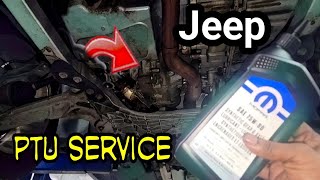
🎬 See how to service and check your PTU fluidPro Tip: Differentiating a bad PTU from a bad wheel bearing can be tricky. A wheel bearing noise will typically change when turning or swerving, while a PTU noise is more consistent with acceleration and deceleration in a straight line.
Buying a Used Transfer Case Assembly
A used OEM Power Transfer Unit is often the most cost-effective solution. Given the known issues with these parts, here’s what to look for:
- Verify Compatibility: Double-check that the part is from a vehicle with the same 4WD system (Active Drive I). Do not trust that it will fit just because it came from another Cherokee or 200. Match the OEM part number if possible.
- Check Mileage: Lower mileage is always better. Failures can occur at various mileages, but the risk increases with age and use. Aim for a unit with under 100,000 miles if possible.
- Physical Inspection: Look for any signs of fluid leaks around the seals and case seams. Check for cracks or damage to the aluminum housing. If possible, turn the input and output shafts by hand; they should spin smoothly without grinding or binding.
- Check the Fluid: If the seller allows, remove the fill plug and check the fluid. Milky fluid indicates water contamination, while fluid with a strong burnt smell or visible metal shavings is a major red flag.
- Supplier Reputation: Purchase from a reputable salvage yard that offers a warranty. This protects you in case the part is defective.
Replacement Overview
Replacing the PTU is a difficult job that typically requires removing the passenger side CV axle, the rear driveshaft, and the exhaust components that are in the way. It is recommended for experienced DIY mechanics or professionals.
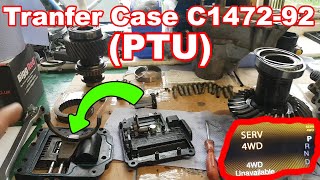
🎬 Watch: Step-by-step PTU removal and disassembly walkthrough- Difficulty: 4 out of 5
- Estimated Time: 4-6 hours
- Special Tools: A lift is highly recommended. You will also need a variety of extensions, pry bars for the CV axle, and torque wrenches.
- Related Parts: It is highly recommended to replace the passenger side CV axle seal and the driveshaft seal when replacing the PTU to prevent future leaks.
No computer reprogramming or re-flashing is necessary after a standard PTU replacement.
Cost Comparison
| Part Type | Estimated Cost |
|---|---|
| New OEM | $1,700 - $2,500 |
| Used OEM | $400 - $1,000 |
| Remanufactured | $1,000 - $1,800 |
| Shop Labor | $800 - $1,200 |
Frequently Asked Questions (FAQ)
How do I know if my Jeep Cherokee has Active Drive I or Active Drive II?
The easiest way to tell is by looking at the Selec-Terrain knob or buttons inside the vehicle. Active Drive I systems have modes like Auto, Snow, Sport, and Sand/Mud. Active Drive II systems will have all of those, plus a dedicated button for "4WD Low" or a low-range gear. Additionally, Cherokees with Active Drive II have a one-inch higher ride height.
Can I drive my vehicle with a failing PTU?
It is not recommended. A noisy PTU will eventually fail completely. A severe failure can cause the unit to lock up, potentially causing a loss of vehicle control. If the failure results in a loss of engagement with the transmission, you could lose all motive power or the ability to keep the vehicle in Park.
What kind of fluid does the PTU use?
The PTU uses a specific gear oil, typically 75W-90 synthetic. It is critical to use a fluid that meets Mopar specifications. Always verify the correct fluid type for your specific vehicle year and model before filling.
Is this part the same as a traditional transfer case?
No. While it performs a similar function of sending power to another axle, its design and placement are different. A traditional transfer case is a separate unit behind the transmission in a rear-wheel-drive based vehicle. A PTU is bolted directly to a front-wheel-drive transaxle.
Helpful Videos

Technical Specifications
OEM Part Numbers: 68090604AB 68090604AC 68090604AD 68090604AE 68090604AF 68090604AG 68090604AH 68282446AA 68282446AB 68282446AC 68282446AD 68307402AA 68307402AB 68307402AC 68307402AD 68307402AE 68307402AF 68307402AG 68307402AH 68307402AI 68307402AJ
Fits vehicles with the single-speed 'Active Drive I' 4WD system. Fluid type: 75W-90 Synthetic Gear Oil.
We Have This Part in Stock



The information in this article is provided for general reference and educational purposes only. Vehicle specifications, procedures, and part compatibility can vary by production date, trim level, and region. Always consult your vehicle's factory service manual and verify part numbers before purchasing or performing repairs. Safety-critical components such as airbags, seat belts, and braking systems should be installed by a qualified professional.
- Jeep Cherokee:
- Chrysler 200:
- 🎬 Helpful Videos
- 🛍️ Shop This Part
- Critical Compatibility: Active Drive I vs. Active Drive II
- Symptoms of a Failing Power Transfer Unit
- 1. Whining, Grinding, or Growling Noises
- 2. Shuddering or Vibration
- 3. "Service 4WD" Warning Light
- 4. Leaking Fluid
- 5. Burning Smell
- Known Issues, Recalls, and Technical Service Bulletins (TSBs)
- Diagnosing the Issue
- Buying a Used Transfer Case Assembly
- Replacement Overview
- Cost Comparison
- Frequently Asked Questions (FAQ)
- 🎟️ Get 5% Off