

Hyundai & Kia AWD Transfer Case Failure (2013-2026): The Stripped Spline & Whining Noise Guide
Covering the Santa Fe, Sorento, Tucson, Sportage, Santa Cruz, and K5, this guide explains the common transfer case failures, from rusted splines to premature bearing noise, and how to fix them.
- The number one failure is rusted splines between the transfer case and transmission, caused by moisture intrusion. Prevention requires greasing the splines during installation.
- Newer models (2021+) can suffer from premature bearing failure, identified by a loud whining noise at very low mileage.
- When buying a used unit, physically inspecting the input splines for rust and wear is more important than the mileage on the part.
- Symptoms like clunking from the rear or AWD warning lights can also be caused by the separate AWD coupling at the rear differential, which requires different diagnosis and repair.
The Two Main Failures: Spline Corrosion and Premature Bearing Noise

Transfer case problems on these shared Hyundai and Kia platforms typically fall into two categories. Understanding which one you have is key to a successful repair.
Problem 1: Rusted & Stripped Input Splines (The Most Common Failure)
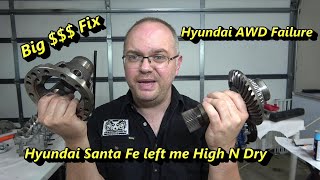
This is the most widespread issue, affecting many 2013-2020 AWD models, particularly the Hyundai Santa Fe, Hyundai Tucson, and Kia Sorento. The problem lies in the connection between the transmission's differential and the transfer case input shaft. These two parts connect via a set of splines—like two gears meshing together.
From the factory, these splines were often poorly sealed and assembled with little to no grease. Over time, moisture and road salt work their way into this connection, causing the splines to rust severely. The rust eats away at the metal until the splines are so weak that they strip completely under engine power. When this happens, the transfer case is no longer connected to the transmission, and all power to the wheels is lost.
Problem 2: Loud Whining Noise & Early Failure (Newer Models)
Owners of newer models, especially the 2022-2025 Hyundai Tucson, 2022-2025 Hyundai Santa Cruz, and 2021-2025 Kia K5 AWD, have reported a different issue. A loud, high-pitched whining or humming noise develops, which gets louder with speed. This often happens at extremely low mileage, sometimes under 5,000 miles. This is not caused by rust, but rather by premature failure of the internal bearings within the transfer case. In these cases, the only solution is a complete replacement of the unit.
Symptoms of a Failing Transfer Case

Diagnosing a bad transfer case can be tricky because the symptoms can sometimes be mistaken for transmission or rear differential problems. Here’s what to look and listen for.
Failure Sounds and Vibrations
- Grinding or Clicking: A metallic grinding or repetitive clicking sound from the front-center of the vehicle, especially when accelerating from a stop or during turns, can indicate stripped splines trying to catch.
- Loud Whining or Howling: A continuous, high-pitched whine that rises and falls with vehicle speed is the classic sign of bad internal bearings, common on newer models like the K5 and Tucson.
- Clunking on Acceleration: A loud 'clunk' when you press the gas can be the sound of the stripped splines engaging and disengaging abruptly.
- Sudden Loss of Power: The most dramatic symptom is a sudden loss of all forward movement, even though the engine is running and the transmission is in gear. This happens when the splines strip completely.
Pro Tip: A clunking or shuddering from the rear of the vehicle during low-speed turns might not be the transfer case. Kia and Hyundai have issued Technical Service Bulletins (TSBs) like TRA108 and TRA105 for issues with the rear AWD coupling actuator, which can cause similar noises. If the noise seems to come from the back, investigate the AWD coupling first.
Fluid Leaks
A leak from the area where the passenger-side axle (front right) meets the transmission is a major red flag. The transfer case is sandwiched between the transmission and this axle. There are two types of fluid here, and the color tells you what's leaking.
- Reddish Fluid: This is Automatic Transmission Fluid (ATF) leaking from the transmission output seal.
- Brown or Amber, Thick Fluid: This is gear oil leaking from the transfer case input seal.
Any leak here is bad news, as it allows the vital lubricant to escape and moisture to enter, accelerating the spline corrosion process.
Known Issues, TSBs, and Recalls

While there are no widespread safety recalls specifically for this transfer case failure, Hyundai and Kia have released several Technical Service Bulletins (TSBs) acknowledging related problems.
- TSB HFE15-52-P050-DMLM: For some 2012-2015 Santa Fe and 2009-2013 Tucson models, this TSB addresses "4WD Malfunction" with abnormal noise caused by wear on the differential spline gear and transfer case oil seal. The fix involves replacing the entire differential assembly and related seals.
- TSB TRA108: For various 2021-2023 Kia models, this bulletin addresses an inoperative AWD system with fault codes P195800 or P196000, caused by abnormal wear in the AWD coupling actuator motor. This is not the transfer case itself but a related component.
- Corrosion Campaigns: Both Hyundai and Kia have issued service campaigns for applying underbody corrosion protection in 'salt belt' states. While not specific to the transfer case, this highlights the known issue of corrosion on underbody components.
Warning: Many of these vehicles were recalled for issues with the 7-speed and 8-speed Dual-Clutch Transmissions (DCT). Symptoms like hesitation or loss of power can also be caused by the transmission. It's important to have a professional diagnose whether the issue is the transmission or the transfer case.
Buying a Used Transfer Case Assembly: What to Look For

Given the high cost of a new unit, a used OEM transfer case is a popular and cost-effective choice. However, because of the common spline failure, you must inspect a used part carefully.
- Inspect the Input Splines: This is the most critical check. Look inside the input shaft where it connects to the transmission. The splines should be sharp, clean, and free of rust. If you see significant rust, rounding, or metal flakes, do not buy the part. It is already failing.
- Check for Leaks and Damage: Inspect the case for any cracks or signs of heavy leaking around the seals. A little grime is normal, but evidence of a major fluid loss is a bad sign.
- Verify Compatibility by Part Number and VIN: These vehicles have many different transfer cases depending on the engine, transmission, and model year. The warnings below are critical. Always verify the OEM part number and provide the seller with your vehicle's VIN to guarantee fitment.
- Mileage vs. Condition: For this specific part, condition is more important than mileage. A low-mileage unit from a 'salt belt' state could have severely rusted splines, while a higher-mileage part from a dry, southern state might be in perfect condition. The spline inspection is everything.
- Used OEM vs. Remanufactured: A quality remanufactured unit can be an excellent option, as remanufacturers often address the original factory flaw by using better seals and properly greasing the splines. They cost more than a typical used part but come with a warranty and peace of mind. Avoid cheap, no-name aftermarket units, as their quality and durability are often poor.
Compatibility Warnings: One Size Does NOT Fit All
It is extremely important to match the part number to your vehicle's specific configuration. The wrong transfer case will not fit or function correctly. Use your VIN to confirm the exact part number with a dealer or trusted seller.
Hyundai Santa Fe:
- 2013-2016 Santa Fe (LWB): Fits 3-row, Long Wheelbase models with the 3.3L V6 engine. Part numbers include 47300-3B510 and 47300-3B830.
- 2017-2019 Santa Fe / Santa Fe XL: Fits 3-row models only (named 'Santa Fe' for 2017-18 and 'Santa Fe XL' for 2019). Will NOT fit the smaller 2-row 'Santa Fe Sport'.
- 2019-2020 Santa Fe (SWB): Fits 2-row models with the 2.4L engine only. Part numbers include 47300-4G130.
Hyundai Tucson / Kia Sportage:
- 2.0L Turbo Models: Often uses a specific transfer case that will not fit the 2.4L non-turbo engine.
- 1.6L PHEV Models: The Plug-in Hybrid uses a unique transfer case (e.g., 47300-3D310) that is not compatible with standard Hybrid (HEV) or gasoline models.
Hyundai Santa Cruz / Kia K5:
- 2.5L Non-Turbo Models: Requires a specific transfer case for the naturally aspirated 2.5L engine. Verify your engine by checking that the 8th digit of your VIN is 'F'.
Replacement and Installation Tips

Replacement is a moderately difficult job that can be done by an experienced DIYer, but it requires care. Shop labor time is typically 3-4 hours.
- The Golden Rule: Grease The Splines! Before installing the new or used transfer case, liberally apply a high-quality, high-temperature molybdenum or spline grease to both the female splines in the transfer case and the male splines on the transmission/differential output. This is the single most important step to prevent a repeat failure from corrosion.
- Seal Replacement: It is highly recommended to replace the axle seals and the transfer case input/output seals while the unit is out. They are inexpensive and will prevent future leaks.
- Torque Specifications: It is critical to torque the transfer case mounting bolts and the driveshaft bolts to the manufacturer's specification. While specific values vary by model, typical torque for driveshaft bolts is around 40-50 lb-ft and mounting bolts can be higher. Always refer to the factory service manual for your exact vehicle.
- Fluid Fill: After installation, fill the transfer case with the correct type and amount of gear oil specified by Hyundai/Kia. Do not overfill. The fill plug is also the level check plug; fill until fluid begins to seep out of the hole.
Cost of Replacement
The cost can vary significantly based on the path you choose. The part itself is the most expensive component.
| Part Source | Estimated Part Cost | Notes |
|---|---|---|
| New OEM | $1,200 - $4,000+ | Highest cost, but brand new from the dealer. |
| Remanufactured OEM | $800 - $1,500 | A great balance of cost and reliability, often with design flaws corrected. |
| Used OEM | $350 - $900 | Most affordable option, but requires careful inspection of splines. |
| Shop Labor | $400 - $800 | Based on 3-4 hours of labor at typical shop rates. |
Frequently Asked Questions (FAQ)
Can I still drive my car with a bad transfer case?
If the splines are completely stripped, you will not be able to drive at all. If the unit is making noise but still functioning, it is not recommended to drive for long distances. Continued driving can cause more damage or leave you stranded when the unit fails completely. If it is leaking heavily, you risk catastrophic failure from lack of lubrication.
Why did the transfer case on my brand new car fail?
If your newer (2021+) vehicle's transfer case failed at very low mileage with a loud whining sound, it is likely due to a manufacturing defect in the internal bearings, not the rust issue that affects older models. This is a known issue and should be fully covered under the manufacturer's powertrain warranty.
Is rebuilding my old transfer case a good idea?
Rebuilding is possible but not common for this part. It requires special tools and knowledge to set bearing preloads correctly. For most people, purchasing a quality used or remanufactured unit is faster, more reliable, and often more cost-effective than attempting to rebuild a failed unit.
How do I prevent my new transfer case from failing?
The key is proper installation. Ensure the mechanic liberally applies a high-quality spline grease to the input shaft before installation. This creates a barrier against moisture and prevents the rust that destroys the splines. Also, periodically washing the vehicle's underbody, especially in winter, can help reduce the buildup of corrosive road salt.
Helpful Videos
Technical Specifications
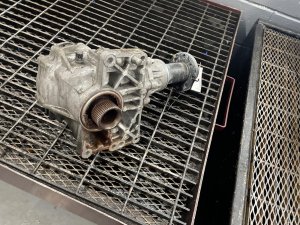
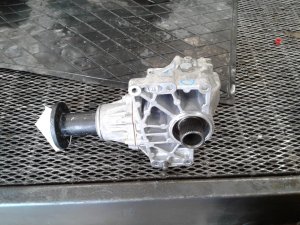
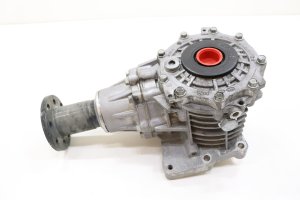
OEM Part Numbers: 47300-3D310 47300-4G130 47300-4G300 47300-4G330 473003B510 473003B511 473003B830 473004G101 473004G130 473004G330
Fluid type is typically a full synthetic 75W-90 gear lubricant, but always confirm with the owner's manual or dealer for your specific model. Torque specs are vehicle-specific and must be looked up in a factory service manual.
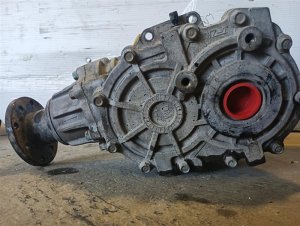
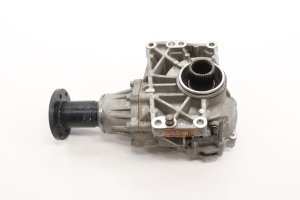
We Have This Part in Stock

The information in this article is provided for general reference and educational purposes only. Vehicle specifications, procedures, and part compatibility can vary by production date, trim level, and region. Always consult your vehicle's factory service manual and verify part numbers before purchasing or performing repairs. Safety-critical components such as airbags, seat belts, and braking systems should be installed by a qualified professional.
- Hyundai Santa Fe:
- Kia Sorento:
- Kia Sportage:
- Hyundai Tucson:
- Hyundai Santa Cruz:
- Kia K5:
- 🎬 Helpful Videos
- 🛍️ Shop This Part
- The Two Main Failures: Spline Corrosion and Premature Bearing Noise
- Problem 1: Rusted & Stripped Input Splines (The Most Common Failure)
- Problem 2: Loud Whining Noise & Early Failure (Newer Models)
- Symptoms of a Failing Transfer Case
- Failure Sounds and Vibrations
- Fluid Leaks
- Known Issues, TSBs, and Recalls
- Buying a Used Transfer Case Assembly: What to Look For
- Compatibility Warnings: One Size Does NOT Fit All
- Replacement and Installation Tips
- Cost of Replacement
- Frequently Asked Questions (FAQ)
- 🎟️ Get 5% Off