

2017-2022 BMW Transfer Case Shudder: A Guide for X5, X6, X7, 7 Series & More
This in-depth guide covers the common transfer case shudder in modern BMW xDrive models, explaining the cause, symptoms, and solutions from a simple fluid change to a full replacement.
- The most common failure symptom is a shudder or jerk during low-speed turns, often caused by degraded factory-fill fluid as noted in BMW SIB 27 02 20.
- A fluid change with BMW DTF-1 and a software recalibration is the first and most common fix; if this fails, a replacement is necessary.
- After replacing the transfer case, it is mandatory to calibrate the new unit with a BMW-specific scan tool to prevent immediate damage.
- Using mismatched or unevenly worn tires is a primary cause of premature transfer case wear and failure.
The Infamous BMW Drivetrain Shudder

If you own a 2019-2020 BMW X5, 2020 BMW X6, 2019-2020 BMW X7, or other specified 7 Series, M550i, and M850i models, you may have experienced a distinct and unnerving shudder or jerking from the drivetrain. This is the single most common symptom of a problem with the ATC13 transfer case found in these vehicles. The issue is so widespread that BMW has issued a technical service bulletin and it has resulted in a class-action lawsuit.
The problem typically feels like the tires are skipping, the transmission is slipping, or the wheels are binding against each other. It is most noticeable in these situations:
- During low-speed turns, such as in a parking lot or making a U-turn.
- Under light to moderate acceleration from a stop.
- When driving up a slight incline at low speeds.
What Causes the Shudder?
The primary cause of this shudder is not a catastrophic mechanical failure, but rather an issue with the fluid inside the transfer case. In May 2020, BMW released Service Information Bulletin (SIB) 27 02 20, which acknowledged that the "factory-filled transfer case oil does not meet BMW specifications." This incorrect or degraded fluid loses its specific frictional properties, causing the internal multi-plate clutch pack to engage erratically, leading to the binding and releasing that you feel as a shudder. 🎬 Watch: A quick overview of why your BMW is shuddering. The problem can begin to appear at surprisingly low mileage, with some owners reporting symptoms as early as 30,000 to 45,000 miles.
Symptoms of a Failing Transfer Case

While the low-speed shudder is the most common sign, other symptoms can also indicate a problem with the transfer case assembly.
1. Shuddering, Jerking, or Binding
As detailed above, this is the hallmark symptom. It feels like a vibration or a series of jerks from the center of the vehicle, most often during low-speed turns or light acceleration. It may get worse as the vehicle warms up. In many cases, a simple fluid change and software recalibration can resolve this if caught early.
2. Grinding, Whining, or Clunking Noises
Any unusual noises from underneath the center of the car that change with speed can point to internal mechanical problems. A grinding or whining noise could indicate worn bearings or gears, while a clunking sound when accelerating or shifting could be a sign of a stretched internal chain skipping over the gears. If you hear these noises, the problem is likely beyond a simple fluid issue and may require a rebuild or replacement.
3. "Drivetrain Malfunction" or 4x4 Warning Lights
While the fluid-related shudder often occurs without any warning lights, a more serious internal or electrical fault will trigger a "Drivetrain Malfunction" or "4x4" warning on your instrument cluster. This could be caused by a failed actuator motor, a faulty position sensor, or significant internal wear.
4. Fluid Leaks
The transfer case is a sealed unit. Any sign of reddish or brown fluid dripping from the area behind the transmission indicates a failed seal. Low fluid levels will quickly lead to overheating and catastrophic internal damage. Leaks must be addressed immediately.
Diagnosing the Issue

If you're experiencing the shudder, there is a simple and effective diagnostic test. The procedure involves temporarily disabling the transfer case's all-wheel-drive function, which effectively puts the car into rear-wheel-drive (RWD) mode.
- Use a Diagnostic Tool: Modern BMWs require a diagnostic tool like ISTA to perform this test. The function is typically found under Vehicle Management > Troubleshooting > Function structure > Drive > Transfer box > Temporary deactivation of all-wheel-drive system. Following the on-screen prompts will electronically disengage the transfer case clutch.
- Test Drive: With the transfer case deactivated (a warning light for the xDrive system will appear and should be ignored), drive the vehicle under the same conditions that previously caused the shudder.
- Evaluate: If the shudder is completely gone, you have confirmed the problem is within the transfer case. If the shudder remains, the issue lies elsewhere in the drivetrain or suspension.
Pro Tip: Before suspecting the transfer case, always check your tires. Severely or unevenly worn tires can cause the xDrive system to bind, creating similar symptoms. Ensure all four tires are the same brand, model, and have similar tread depth.
Known Issues, TSBs, and Recalls

There are no active safety recalls from the NHTSA for transfer case failure on these models. Recalls for the 2019-2022 BMW X5, X6, and X7 have been for issues related to starter motors, seat belts, airbags, and front axle supports.
- SIB 27 02 20: This is the key document for this issue. It instructs technicians who encounter a customer complaint of "jerking or shuddering" to first check the tires. If the tires are okay, the next step is to perform a transfer case fluid change with BMW DTF-1 fluid (Part No. 83 22 2 409 710), replace the fill plug, and perform a software recalibration. 🎬 See this DIY guide for servicing your transfer case fluid. The bulletin notes it may take up to 125 miles of driving for the new fluid to fully saturate the clutch plates and for the symptom to disappear.
- Class-Action Lawsuit: A lawsuit was filed against BMW alleging the company knowingly sold vehicles with defective transfer cases that fail prematurely. The suit covers a wide range of xDrive models from 2019-2025.
Buying a Used Transfer Case Assembly

For vehicles out of warranty, a full replacement at the dealership can be prohibitively expensive. A quality, low-mileage used OEM transfer case is often the most cost-effective and reliable solution. Here’s what to look for:
1. Physical Inspection
- Check for Leaks: Inspect the unit thoroughly for any signs of fluid leaks, especially around the input/output shaft seals and the case seams. Any wetness or heavy staining is a major red flag.
- Inspect the Connectors: Ensure the main electrical connector for the actuator motor is clean, dry, and free of any corrosion or damage.
- Check the Flanges: Look at the input and output flanges where the driveshafts connect. There should be no visible damage or excessive play.
- Drain the Fluid (If Possible): If the seller allows, draining the fluid can tell you a lot. Fluid that is black and smells burnt indicates extreme wear. The presence of metallic particles or shavings points to severe internal gear or bearing damage, and the unit should be avoided.
2. Verifying Compatibility
The primary OEM part number for these vehicles is 27107889034. This part is also known as the ATC13 transfer case. This part number may supersede older numbers like 27109469020 and 27108686666. Always verify the part number on the unit you are buying matches the required part for your vehicle's VIN.
3. Mileage and History
Since these units can fail due to fluid breakdown, mileage is a critical factor. A transfer case from a vehicle with under 60,000 miles is ideal. Units with higher mileage (e.g., over 100,000 miles) carry a much higher risk unless there is documented proof of a recent fluid change. If possible, ask the seller for the VIN of the donor vehicle to check its history. A used unit from a newer model year (e.g., 2021+) may be less likely to have suffered from the initial factory-fill fluid issue.
Rebuild vs. Replace
For the skilled DIYer or independent shop, rebuilding the ATC13 transfer case is a viable option. Rebuild kits are available from various suppliers.
- Rebuild Kits: A basic clutch kit with new friction and steel plates can cost around $250-$300. More comprehensive kits that include bearings, seals, and the internal chain are also available. This can be a cost-effective repair if only the internal wear components have failed.
- Replacement: For a quicker turnaround or if there is damage to the case itself, a full replacement is necessary. A used OEM unit offers the best value, while a new OEM unit is the most expensive but comes with a warranty.
Replacement Procedure & Special Procedures
Replacing the transfer case is a job for an experienced DIYer or a professional shop. It has a difficulty rating of 4/5 and can take between 4 and 8 hours.
- Preparation: The vehicle must be lifted safely and kept level. If equipped with air suspension, it must be put into service/jack mode to prevent the system from auto-leveling.
- Access: A large plastic undertray and a metal transmission/transfer case cross-member brace must be removed to access the unit.
- Driveshaft Removal: The front and rear driveshafts must be disconnected from the transfer case flanges.
- Removal & Installation: The transfer case is unbolted from the rear of the transmission and lowered out of the vehicle. Installation is the reverse of removal.
Warning: After installing a new or used transfer case, it is absolutely mandatory to perform a calibration and reset the adaptations using a BMW-specific diagnostic tool like ISTA. The procedure is typically found under Service functions > Drive > Transfer box VTG > Transfer box (VTG): Calibration. Failure to do this will cause the system to operate incorrectly and can lead to rapid failure of the newly installed unit.
Key Torque Specs:
Always use new, one-time-use bolts where specified by BMW. Consult the official BMW TIS for your specific vehicle, as specs can vary.
| Component | Torque Spec | Notes |
|---|---|---|
| Transfer Case Fill/Drain Plug | 60 Nm (44 ft-lbs) | Always use a new plug (P/N 33117525064). |
| Transmission Cross-Member to Body | 19 Nm | These are the smaller E10 bolts. |
| Cross-Member Mount Bolt/Nut | 68 Nm (50 ft-lbs) | The large bolt passing through the rubber mount. |
| Driveshaft Flex Disc (Guibo) Bolts | Varies: 100-115 Nm | For M12, 10.9 grade bolts. Some models use a torque-plus-angle spec. Verify with TIS for your VIN. |
Related Parts to Inspect/Replace:
- Transfer Case Fluid: If installing a used unit, it's essential to drain the old fluid and refill with 1 liter of approved BMW DTF-1 fluid (P/N 83222409710).
- Driveshaft Flex Disc (Guibo): While the driveshaft is out, inspect the rubber flex disc for cracks, tearing, or deterioration. If it shows any signs of wear, replace it to prevent future vibrations.
- Differential Fluids: Since you are working on the drivetrain, it is a good time to consider changing the front and rear differential fluids as a preventative measure.
Cost Comparison
Prices can vary based on location and the specific shop. These are estimates to help understand the value of different repair options.
| Repair Option | Estimated Cost | Notes |
|---|---|---|
| New OEM Part | $5,100 - $6,400 | Part only, plus a core charge of ~$1,750. |
| Remanufactured Part | $1,500 - $4,900 | Wide range depending on supplier. |
| Used OEM Part | $500 - $1,800 | Dependent on mileage, condition, and seller. |
| Shop Labor (Replacement) | $800 - $1,500 | Based on 4-8 hours of labor. |
| Shop Labor (Fluid Service) | $380 - $650 | Includes fluid and calibration. |
Frequently Asked Questions (FAQ)
Can I fix the transfer case shudder just by changing the fluid?
Yes, in many cases, especially if the issue is caught early. BMW's own service bulletin (SIB 27 02 20) prescribes a fluid change and software recalibration as the first step. This often resolves the shuddering symptom completely. However, if the fluid change does not work or the symptoms return quickly, it indicates more advanced wear inside the transfer case, which will require a rebuild or replacement.
Is it safe to drive with a shuddering transfer case?
You can drive the vehicle, but it is not recommended for long distances. Continued driving can cause further damage to the internal clutch packs and gears, eventually leading to a more expensive failure. It can also potentially affect vehicle stability in certain situations. It is best to have it diagnosed and serviced as soon as possible.
Do I need to program a new or used transfer case?
Yes. After installation, the transfer case control module (VTG) must be calibrated using a BMW-specific scan tool. This procedure teaches the system the engagement points of the internal clutch. Skipping this step will result in poor performance and can quickly damage the new unit.
Why are matching tires so important for the xDrive system?
The xDrive system is extremely sensitive to differences in the rolling circumference of the tires. If one tire is more worn than the others, or if you mix brands and sizes, that tire will spin at a slightly different speed. The transfer case interprets this as wheel slip and constantly tries to correct for it by engaging the internal clutch. This continuous, unnecessary action generates excess heat and leads to premature wear of the fluid and the clutch pack itself.
Helpful Videos
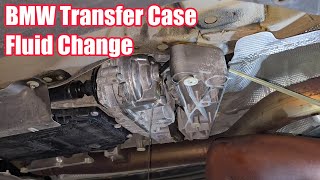

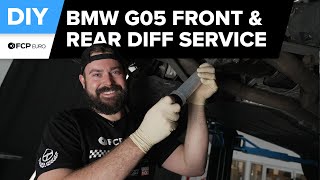
Technical Specifications
OEM Part Numbers: 27107889034 27109469020 27108686666 27109470188 27108740626 27108684860 27108487144 27108485037
Model: ATC13. Fluid Type: BMW DTF-1 (Shell TF-0870). Fluid Capacity: Approx. 0.7 Liters. Fill Plug Torque: 60 Nm (44 ft-lbs).
We Have This Part in Stock

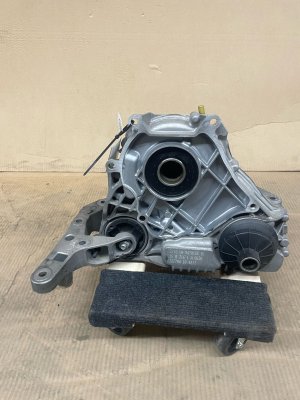


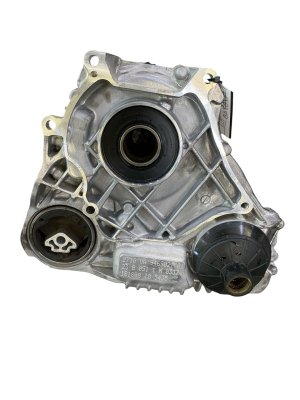


The information in this article is provided for general reference and educational purposes only. Vehicle specifications, procedures, and part compatibility can vary by production date, trim level, and region. Always consult your vehicle's factory service manual and verify part numbers before purchasing or performing repairs. Safety-critical components such as airbags, seat belts, and braking systems should be installed by a qualified professional.
- BMW X5:
- BMW X6:
- BMW X7:
- BMW 750i xDrive:
- BMW M550i xDrive:
- BMW M850i xDrive:
- BMW 740i xDrive:
- BMW 745e xDrive:
- BMW M760i xDrive:
- 🎬 Helpful Videos
- 🛍️ Shop This Part
- The Infamous BMW Drivetrain Shudder
- What Causes the Shudder?
- Symptoms of a Failing Transfer Case
- 1. Shuddering, Jerking, or Binding
- 2. Grinding, Whining, or Clunking Noises
- 3. "Drivetrain Malfunction" or 4x4 Warning Lights
- 4. Fluid Leaks
- Diagnosing the Issue
- Known Issues, TSBs, and Recalls
- Buying a Used Transfer Case Assembly
- 1. Physical Inspection
- 2. Verifying Compatibility
- 3. Mileage and History
- Rebuild vs. Replace
- Replacement Procedure & Special Procedures
- Key Torque Specs:
- Related Parts to Inspect/Replace:
- Cost Comparison
- Frequently Asked Questions (FAQ)
- 🎟️ Get 5% Off