

Acura & Honda Transfer Case Failures: 2015-2026 TLX, MDX, Passport, Pilot & RDX
This guide covers the common symptoms, causes, and costs associated with transfer case assembly failures in popular V6 and Turbo 4-cylinder Acura and Honda AWD vehicles.
- A major failure point is the stripping of splines between the transmission and transfer case, causing a sudden loss of AWD, which is under NHTSA investigation for some Acura models.
- Symptoms often include whining/grinding noises, fluid leaks, or a sudden loss of rear-wheel power without any dashboard warning lights.
- Using the correct fluid (Honda/Acura HGO-1 75W-85) and checking it regularly is the most critical preventative maintenance step.
- A used OEM unit from a low-mileage vehicle is a cost-effective and reliable replacement option compared to an expensive new part.
Symptoms of a Failing Transfer Case

A failing transfer case can present several distinct symptoms. Early detection is key to preventing more widespread drivetrain damage. Some failures, particularly spline stripping, can occur suddenly with a loud bang, resulting in an immediate loss of power to the rear wheels.
1. Whining, Grinding, or Humming Noises
One of the most common signs of a problem is unusual noise coming from the center of the vehicle that changes with speed. Owners often describe a whining sound that gets louder with acceleration, which can indicate failing bearings or gears due to fluid contamination or low fluid levels. A grinding or growling noise might point to more severe internal mechanical problems like a loose chain or damaged gears.
2. Sudden Loss of All-Wheel Drive
A significant issue, particularly noted in Acura TLX and MDX models, is the stripping of splines where the transfer case connects to the transmission. This can happen suddenly, sometimes with a loud "bang," and results in a complete loss of power to the rear wheels. The vehicle will still be drivable in front-wheel drive, but you may notice significant front wheel spin when accelerating, a clear sign the AWD system is not working. Crucially, this failure often does not trigger any check engine lights or warning messages on the dashboard.
3. Fluid Leaks
A puddle of fluid under the center of the vehicle is a clear warning sign. The transfer case uses specific gear oil, and leaks can occur from failing input or output shaft seals or the main case gasket. A leak found between the transmission and transfer case is a common issue. Driving with low fluid will quickly lead to overheating and catastrophic internal failure.
4. Difficulty Shifting or Engaging 4WD (Less Common on these models)
While more common on part-time 4WD systems, issues like being unable to engage or disengage AWD can point to transfer case problems. However, on the Acura/Honda full-time AWD systems, this symptom is less prevalent than noises or a complete loss of rear power.
Known Issues, TSBs, and Recalls

The most significant known issue for these vehicles is the failure of the splines connecting the transmission and the transfer case. This problem has become prevalent enough to trigger a formal investigation by the National Highway Traffic Safety Administration (NHTSA).
NHTSA Investigation DP26001: Spline Failure
In March 2026, the NHTSA's Office of Defects Investigation (ODI) opened a Defect Petition to investigate the loss of all-wheel drive capability in 2021-2023 Acura TLX and 2022-2023 Acura MDX vehicles. The petition alleges that the interfacing splines between the transmission and the power takeoff unit (transfer case) are failing, preventing power from reaching the rear wheels and turning the vehicle into a front-wheel-drive car unexpectedly. This can result in a loss of traction and directional control, especially in adverse weather conditions. Many owners report this failure happens at low mileage, sometimes under 40,000 miles.
Pro Tip: A simple way to check for this failure is to raise the vehicle on a lift, put it in drive, and observe the wheels. If the front wheels spin but the rear wheels and the main driveshaft (propeller shaft) do not, it confirms a mechanical failure between the transmission and transfer case.
Vehicle-Specific Information
While these vehicles share a common platform and drivetrain architecture, there are some distinctions to be aware of.
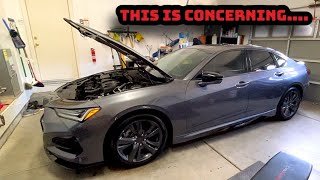
- Acura TLX (2015-2024) & MDX (2016-2020, 2022+): These models, especially the performance-oriented Type S versions, appear to be the most frequently cited for the spline failure issue, which is the subject of the NHTSA investigation. 🎬 Watch: A detailed look at the TLX Type S spline failure. The higher torque output of the V6 engines may contribute to this stress.
- Honda Pilot (2016-2022) & Passport (2019-2026): These models use the same fundamental 3.5L V6 and 9-speed transmission combination. While not the primary focus of the NHTSA petition, they share the same transfer case design (part number 29000-5L9-000) and can be susceptible to similar issues like fluid leaks from seals.
- Acura RDX (2019-2025): The RDX uses a 2.0L turbocharged 4-cylinder engine and a 10-speed automatic transmission. However, it shares a transfer case design with the TLX (part number 29000-5YK-060). While the spline failure seems less common, likely due to different power delivery characteristics, issues like fluid leaks between the transmission and transfer case have been reported by owners. 🎬 See this step-by-step RDX transfer case fluid service guide.
Compatibility Warning: This transfer case is only for All-Wheel Drive (AWD) models. It is primarily designed for vehicles with the 3.5L V6 engine mated to the 9-speed ZF automatic transmission. While the RDX uses a compatible transfer case, it is paired with a 2.0L Turbo engine and 10-speed transmission. Always verify the exact OEM part number for your specific vehicle, year, and trim before purchasing.
Diagnosis and Inspection

Checking Transfer Case Fluid
The most important diagnostic step is checking the fluid. The vehicle should be on a level surface. Locate the fill plug on the side of the transfer case assembly. Remove the plug (typically with a 3/8" square drive ratchet) and check the fluid level. The fluid should be right up to the edge of the fill hole. When draining the fluid, inspect it closely. A dark, burnt smell or the presence of metallic particles or sludge on the magnetic drain plug indicates significant internal wear and impending failure.
Fluid Type and Specifications
Using the correct fluid is critical. Honda and Acura specify HGO-1 (Hypoid Gear Oil), which is a GL-5 rated 75W-85 gear oil. Do not substitute with automatic transmission fluid (ATF) or other gear oil weights unless specified as an acceptable alternative. The fluid capacity is typically around 0.5 quarts, so one bottle is usually sufficient 🎬 Watch: How to drain and fill Honda Pilot transfer case fluid. for a drain and fill service.
Buying a Used Transfer Case Assembly

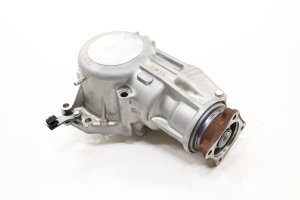
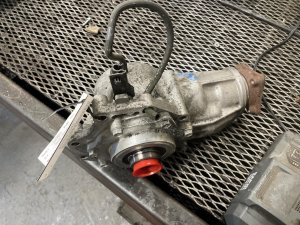
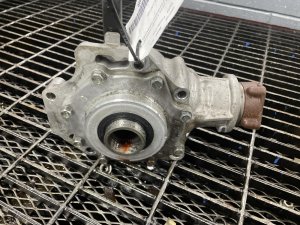
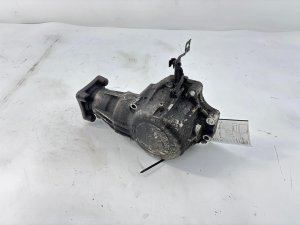
A used OEM transfer case can be a cost-effective alternative to a brand-new unit. Since these units are not typically rebuilt, a low-mileage recycled part is often the best option outside of a new one from the dealer.
- Inspect for Leaks: Check the unit thoroughly for any signs of fluid leaks, especially around the input and output shaft seals. A clean, dry unit is a good sign.
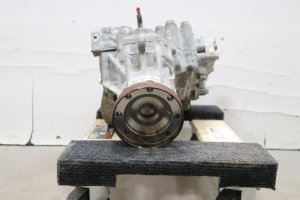
- Check the Splines: If possible, inspect the input shaft splines for any signs of wear, twisting, or stripping. This is the primary failure point on many Acura models.
- Verify Part Numbers: Match the OEM part number exactly. Acura part numbers like 29000-5YK-060 have superseded older versions (like -020, -030, -040, and -050). The Honda part number is typically 29000-5L9-000.
- Mileage and Source Vehicle: Opt for a unit from a lower-mileage, accident-damaged vehicle. This increases the likelihood of getting a part with minimal wear. Ask for the VIN of the donor vehicle to verify its history.
- Warranty: Purchase from a reputable seller that offers a warranty. This protects you against receiving a defective part.
Replacement and Installation Tips

Replacing the transfer case is a moderately difficult job that typically requires dropping the exhaust and propeller shaft (driveshaft).
- Difficulty: 4 out of 5
- DIY Feasible: For experienced mechanics with a lift and proper tools.
- Estimated Time: 3-5 hours
Key Procedures & Torque Specs
- New Seals: It is highly recommended to replace the input and output shaft seals on the replacement transfer case to prevent future leaks.
- Fluid Fill: Always fill the new transfer case with the correct type and amount of new fluid before starting the vehicle.
- Torque Specs: Proper torque is crucial. While specs can vary slightly by model, common values are:
- Drain and Fill Plugs: 32-33 ft-lbs (44 N·m). Always use new crush washers.
- Propeller Shaft to Transfer Case Bolts: Refer to the specific service manual for your vehicle, but this is a critical torque point.
Cost Breakdown
The cost to replace a transfer case assembly can vary significantly based on the source of the part and labor rates.
| Item | Estimated Cost | Notes |
|---|---|---|
| New OEM Part | $1,750 - $2,900 | Price from Acura/Honda dealerships. |
| Used OEM Part | $150 - $600 | A common price range from automotive recyclers and online marketplaces. |
| Remanufactured Part | $1,500 - $1,700 | Less common for this specific part, but an option from specialty powertrain suppliers. |
| Shop Labor | $650 - $1,000 | Labor costs can range from approximately 4 to 6 hours at standard shop rates. |
| Total Replacement (New OEM) | $2,400 - $3,900+ | Using a new part from the dealer installed by a professional shop. |
| Total Replacement (Used OEM) | $800 - $1,600 | Using a recycled part installed by a professional shop offers significant savings. |
Frequently Asked Questions (FAQ)
Can I still drive my vehicle with a failed transfer case?
Yes, but with caution. If the failure is due to stripped splines, the vehicle will operate in front-wheel drive only. This can cause unexpected handling, especially during acceleration or in slippery conditions, as you will no longer have the benefit of all-wheel drive traction. It is not a safety-critical failure that prevents driving, but it should be repaired to restore normal vehicle operation and safety.
Do I need to reprogram the car's computer after replacing the transfer case?
No. The transfer case on these models is a purely mechanical unit. There are no electronic modules or sensors that require programming or calibration after installation.
Is it better to rebuild my existing transfer case or replace it?
Replacement is almost always the better option. These transfer cases are not commonly rebuilt by local shops, and internal parts can be difficult to source. A low-mileage used assembly or a new OEM unit is a more reliable and often more economical repair.
How often should the transfer case fluid be changed?
Honda and Acura's maintenance schedule typically recommends changing the transfer case fluid as part of the "B" service, indicated by the Maintenance Minder system. This often aligns with intervals of 15,000 to 30,000 miles, depending on driving conditions. Given the potential for issues, performing a fluid change at the earlier end of this spectrum is inexpensive preventative maintenance.
Helpful Videos




Technical Specifications
OEM Part Numbers: 29000-5YK-030 29000-5YK-040 29000-5YK-050 29000-5YK-060 29000-5L9-000 29000-5YK-020
Fluid Type: Acura/Honda HGO-1 (Hypoid Gear Oil) GL-5 75W-85. Drain/Fill Plug Torque: 32-33 ft-lbs (44 N·m).
We Have This Part in Stock


The information in this article is provided for general reference and educational purposes only. Vehicle specifications, procedures, and part compatibility can vary by production date, trim level, and region. Always consult your vehicle's factory service manual and verify part numbers before purchasing or performing repairs. Safety-critical components such as airbags, seat belts, and braking systems should be installed by a qualified professional.
- Acura TLX:
- Acura MDX:
- Honda Passport:
- Honda Pilot:
- Acura RDX:
- 🎬 Helpful Videos
- 🛍️ Shop This Part
- Symptoms of a Failing Transfer Case
- 1. Whining, Grinding, or Humming Noises
- 2. Sudden Loss of All-Wheel Drive
- 3. Fluid Leaks
- 4. Difficulty Shifting or Engaging 4WD (Less Common on these models)
- Known Issues, TSBs, and Recalls
- NHTSA Investigation DP26001: Spline Failure
- Vehicle-Specific Information
- Diagnosis and Inspection
- Checking Transfer Case Fluid
- Fluid Type and Specifications
- Buying a Used Transfer Case Assembly
- Replacement and Installation Tips
- Key Procedures & Torque Specs
- Cost Breakdown
- Frequently Asked Questions (FAQ)
- 🎟️ Get 5% Off