

2019-2022 Honda Pilot & Passport AWD Control Module: VSA Lights and Programming Explained
Diagnosing the AWD control unit (48310-RMZ-A22) in your Honda Pilot or Passport and understanding the critical programming step required for replacement.
- This module (part # 48310-RMZ-A22) is for AWD models only and is NOT plug-and-play.
- Professional programming by a Honda dealer or specialist is required after installation.
- Before replacing the module, check for a TSB related to water intrusion and corrosion at the rear differential pump connector, as this can cause the same warning lights.
- Buying a used OEM module can save significant money, but you must budget for the mandatory programming cost.
Symptoms of a Failing AWD Control Module

When the AWD Control Module fails or can't communicate properly, the vehicle's main computer will disable the stability and traction systems as a precaution. This typically results in one or more warning lights on your dashboard.
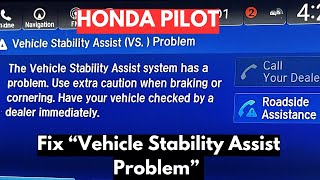
- Solid VSA System Indicator: The most common symptom is the Vehicle Stability Assist (VSA) warning light coming on and staying lit. A blinking VSA light is normal and indicates the system is actively working; a solid light indicates a fault.
- "AWD System Problem" Message: A message may appear on the multi-information display indicating a problem with the all-wheel-drive system.
- Check Engine Light: In some cases, a fault in the VSA or AWD system can trigger the main check engine light as well.
- Other System Warnings: Because systems like Forward Collision Warning (FCW), Lane Departure Warning (LDW), and Collision Mitigation Braking System (CMBS) rely on the VSA system for data, a fault here can cause warning messages for those systems to appear, too.
- Hesitation or Reduced Power: In rare cases, owners have reported a blinking traction control light accompanied by a sudden loss of acceleration, where the vehicle refuses to go above a certain speed. This can happen if the system incorrectly believes the wheels are slipping and tries to limit power.
Common Diagnostic Trouble Codes (DTCs)
A professional scan tool that can read Honda-specific codes is necessary for proper diagnosis. While many codes point to the main ABS/VSA modulator in the engine bay, codes related to communication errors or specific AWD functions can point to this module. Common VSA-related codes include:
- 121-11, 123-11: VSA Solenoid Valve Malfunction
- 84-1: VSA Sensor Logic Failure
- 85-01: Problem in VSA System
- U0155: Lost Communication with Gauge Control Module
It is important to have the codes professionally diagnosed, as issues with wheel speed sensors, the steering angle sensor, or wiring can also cause the VSA light to come on.
Known Issues, TSBs, and Recalls

While there are no specific recalls for the AWD Control Module itself, several related service bulletins and recalls are important for owners of the 2020-2022 Honda Pilot and 2019-2021 Honda Passport.
Technical Service Bulletin: AWD Light from Water Intrusion
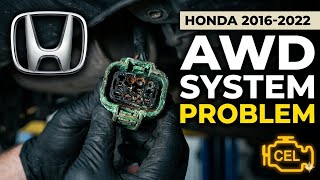
For the 2019 Honda Pilot (and likely applicable to other models on this platform), Honda issued a Technical Service Bulletin (TSB) regarding the AWD warning light illuminating. The cause was identified as water getting into the rear differential pump motor connector, leading to corrosion on the terminals. Before replacing the AWD control module, it is critical to inspect this connector for any signs of green or white corrosion, 🎬 Watch this guide on fixing the Honda AWD light before replacing parts as a simple cleaning or connector repair may solve the problem.
Major Recalls for These Vehicles
Owners should be aware of other significant recalls affecting these vehicles, even though they are not directly related to this specific part:
- Rear Subframe Corrosion: A major recall was issued for vehicles sold in "salt belt" states due to premature corrosion of the rear subframe. This can cause suspension components to detach, leading to a loss of control.
- Software Glitches: Multiple recalls were issued to fix software problems that could cause the rearview camera image to not display or the instrument panel to go blank.
- Fuel Pump Failure: An expanding recall addressed fuel pumps that could fail while driving, causing the engine to stall.
Pro Tip: Always check for open recalls on your vehicle by entering your VIN on the NHTSA website (nhtsa.gov/recalls). A dealer will perform recall-related repairs for free.
Programming and Calibration Requirements

Warning: This module is NOT plug-and-play. It requires professional programming to integrate with your vehicle's specific systems.
The official Honda part name is "CONTROL UNIT, AWD (REWRITABLE)". The term "rewritable" is a clear indicator that the module must be programmed after installation. This process pairs the module to your vehicle's VIN and ensures it can communicate correctly with the engine computer, VSA modulator, and other systems. Failure to program a new or used module will result in it not working, and the warning lights will remain on.
- Who can program it? A Honda dealership is the most reliable option. Some high-end independent shops with access to Honda's HDS (Honda Diagnostic System) software 🎬 Watch how to set up and diagnose Honda vehicles using HDS may also be able to perform the programming. A standard OBD-II code reader cannot program this module.
- Is calibration needed? After programming, the technician may also need to perform a "VSA sensor neutral position memorization" to ensure the system has a correct baseline for the vehicle's sensors.
Buying a Used AWD Control Module
Given the significant cost savings, a used OEM module is an excellent option for this repair, provided you account for the mandatory programming. Cheap aftermarket copies of this module are not available, making a recycled OEM part the best value.
- Verify the Part Number: You must match the part number exactly. For these vehicles, the correct number is 48310-RMZ-A22. An incorrect part will not communicate with your vehicle, even if it looks identical.
- Factor in Programming Costs: The price of the used module (around $75) is only part of the total cost. Call your local dealer or a trusted independent shop beforehand to get a quote for programming. This can range from $150 to $300.
- Buy from a Reputable Source: Purchase from a seller that offers a warranty. This protects you in case the module is faulty. Since it's an electronic part, there's no way to test it until it's installed and programmed in the car.
- Physical Inspection: When the part arrives, check the connector pins to ensure none are bent or corroded. Otherwise, there is little to inspect visually.
Replacement Overview

The AWD Control Module is located inside the vehicle, in the left-hand rear quarter panel area. Accessing it requires removing interior trim panels. While the physical swap is straightforward for a DIY mechanic (disconnecting the battery, removing trim, unbolting the old module, and installing the new one), the job is not complete until the module is professionally programmed. For this reason, most owners will find it more efficient to have a shop perform the entire job.
Cost Comparison
The total cost of this repair can vary significantly based on the part source and labor rates. Here are typical estimates:
| Item | Estimated Cost |
|---|---|
| New OEM Part | $300 - $350 |
| Used OEM Part | $75 - $125 |
| Shop Labor (Installation & Programming) | $200 - $400 |
| Total (with New Part) | $500 - $750 |
| Total (with Used Part) | $275 - $525 |
Frequently Asked Questions (FAQ)
Can I replace the AWD control module myself?
While you can physically swap the module, the vehicle will not be fixed until the part is professionally programmed. Because of this mandatory final step, it is not considered a complete DIY job for most people. You would need to install the part and then drive the vehicle to a dealer for programming.
Is it safe to drive with the VSA/AWD light on?
Yes, but with caution. When the VSA light is on, the traction control, stability control, and all-wheel-drive systems are disabled. Your vehicle will operate like a standard front-wheel-drive car with normal brakes. However, you will not have the added safety net of these systems in an emergency maneuver or on slippery roads. It should be repaired as soon as is practical.
Is this the same as the ABS module?
No. This is the specific control unit for the all-wheel-drive system. The main ABS/VSA modulator is a much larger and more expensive assembly located in the engine bay, which includes the hydraulic pump and valves for the anti-lock brakes. This AWD module works with the main VSA system but is a separate component.
Could a bad wheel speed sensor cause the same problem?
Yes. A faulty wheel speed sensor will provide incorrect data to the VSA and AWD systems, causing them to shut down and turn on the warning light. This is a common point of failure and should be ruled out by a proper diagnostic scan before condemning the more expensive control module.
Helpful Videos
Technical Specifications
OEM Part Numbers: 48310-RMZ-A22 48310RMZA22
Rewritable electronic control unit for the i-VTM4 All-Wheel-Drive system. Located in the left-hand rear quarter panel.
We Have This Part in Stock



The information in this article is provided for general reference and educational purposes only. Vehicle specifications, procedures, and part compatibility can vary by production date, trim level, and region. Always consult your vehicle's factory service manual and verify part numbers before purchasing or performing repairs. Safety-critical components such as airbags, seat belts, and braking systems should be installed by a qualified professional.
- Honda Pilot:
- Honda Passport:
- 🎬 Helpful Videos
- 🛍️ Shop This Part
- Symptoms of a Failing AWD Control Module
- Common Diagnostic Trouble Codes (DTCs)
- Known Issues, TSBs, and Recalls
- Technical Service Bulletin: AWD Light from Water Intrusion
- Major Recalls for These Vehicles
- Programming and Calibration Requirements
- Buying a Used AWD Control Module
- Replacement Overview
- Cost Comparison
- Frequently Asked Questions (FAQ)
- 🎟️ Get 5% Off