

2015-2020 Ford F-150 Tow Hooks: Replacement, Upgrades, and Installation
A complete guide to inspecting, replacing, and adding factory tow hooks to your F-150, covering common issues like rust and compatibility with 2WD models.
- Before buying hooks for a truck not originally equipped, you MUST check for threaded mounting holes in the front frame rails.
- The correct torque for the two mounting bolts is 85 lb-ft; do not guess, as this is critical for safety.
- Inspect used hooks for any signs of bending or deep, flaking rust. Reject any that are not perfectly straight.
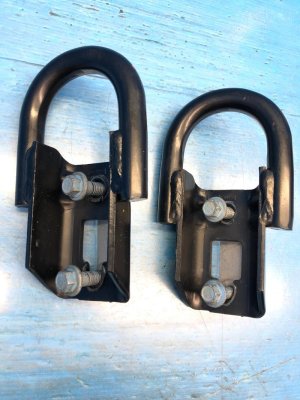
- These hooks do not fit Raptor models. The standard black part is FL3Z-17A954-E, and they are interchangeable from left to right.
Symptoms of a Damaged or Failing Tow Hook

As simple, solid pieces of steel, tow hooks don't "fail" like mechanical parts. Instead, their failure is related to physical damage or corrosion. You should inspect your tow hooks regularly, especially if you use them for recovery or live in an area with heavy road salt use.
Visible Bending or Deformation
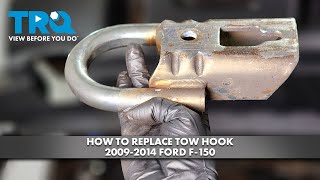
A tow hook that is bent, twisted, or has an elongated mounting hole has been compromised. This is usually caused by improper use, such as pulling at an extreme angle (side-loading) or severe shock-loading (jerking a recovery strap). A deformed hook has lost its structural integrity and should be replaced immediately, as it could snap under load.
Heavy Rust and Flaking
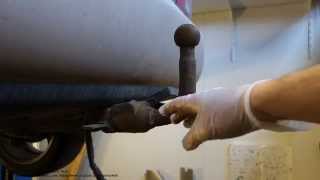
Surface rust is common and usually not a major concern. However, deep, pitting corrosion or flaking metal indicates that the hook's strength is compromised. Pay close attention to the area around the mounting bolts and the inside curve of the hook, where moisture can sit. A severely rusted hook 🎬 Watch: How to inspect your tow hook's condition can fail during a recovery operation.
Damaged Mounting Bolts or Threads
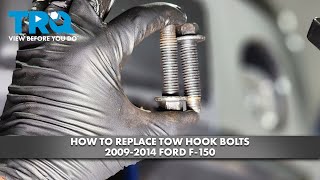
The bolts that secure the tow hook to the frame are just as important as the hook itself. If the bolts are heavily rusted, stripped, or have been over-torqued, they may not provide the necessary clamping force. A loose or improperly secured tow hook is a significant safety hazard.
Warning: Never use a tow hook for recovery if it shows signs of bending, cracking, or severe rust. A failing hook can become a dangerous projectile.
Buying a Used 2015-2020 F-150 Tow Hook: What to Check

A used OEM tow hook is an excellent, budget-friendly option, as they are incredibly durable. However, a careful inspection is crucial to ensure you're getting a safe part.
- Inspect for Bends and Twists: Lay the hook on a perfectly flat surface. It should sit flush with no wobbling or gaps. Any sign of deformation means the hook has been over-stressed and should be rejected.
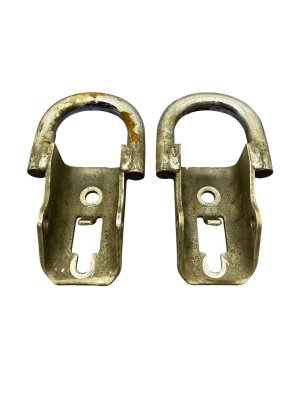
- Check for Corrosion: Minor surface rust can be cleaned and painted. Avoid any hook with deep pits, flaking, or significant rust around the mounting holes. This structural decay cannot be safely repaired.
- Verify Mounting Surfaces: The surfaces that bolt to the frame must be flat and clean. Ensure the bolt holes are perfectly round and not stretched or elongated.
- Get the Hardware (If Possible): Always try to get the original factory mounting bolts with the hook. These are high-strength, specific-grade bolts. If you cannot get them, purchase new OEM bolts. Do not use standard hardware store bolts.
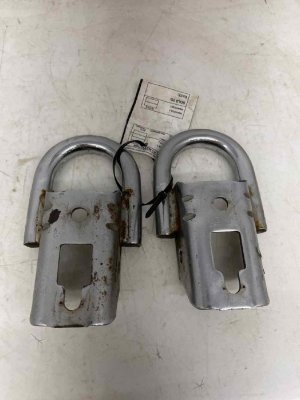
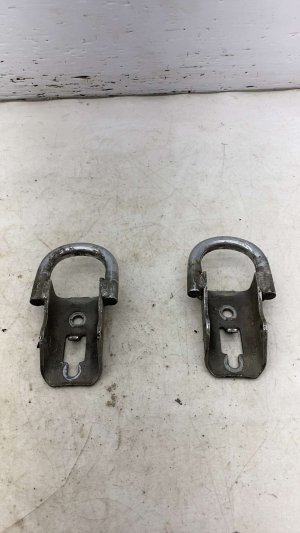
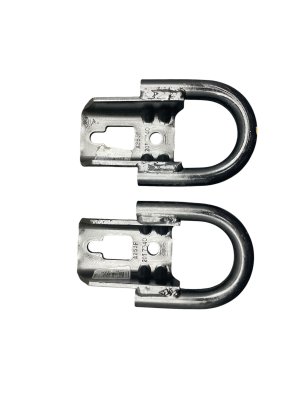
- Confirm Part Numbers: The standard black tow hook is part number FL3Z-17A954-E, which supersedes FL3Z-17A954-C. Chrome hooks were available as part of a kit, FL3Z-17N808-A, which includes two hooks and hardware. The left and right hooks are identical and interchangeable.
Known Issues and Compatibility Warnings

Adding Tow Hooks to a Truck Not Equipped from the Factory
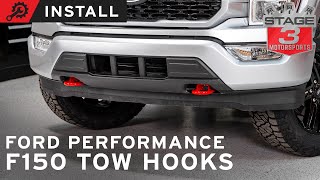
Many base model and 2WD F-150s did not come with front tow hooks. While you can often add them, it's not always a simple bolt-on process.
- Check for Frame Mounts: Before buying hooks, get under your truck and inspect the front of the frame rails. Look for the pre-drilled, threaded holes where the hooks mount. Some trucks have them, while others do not. If the holes are not present, installation is not feasible without significant modification.
- Lower Valance Panel: Trucks without tow hooks have a solid lower bumper valance. You will either need to carefully cut openings in your existing valance or purchase the 4x4-style valance that has the correct openings and rubber boots.
Raptor Incompatibility
These standard F-150 tow hooks will not fit Ford F-150 Raptor models. The Raptor has a different frame and front bumper design that uses its own specific recovery points.
Recalls and Technical Service Bulletins (TSBs)
As of mid-2026, there are no specific NHTSA recalls or Ford TSBs related to the failure of the tow hooks themselves on 2015-2020 Ford F-150s. A related TSB (18-2106) addresses a faulty trailer tow connector that could cause a "trailer connected/disconnected" message, but this does not involve the tow hooks.
Cost of Replacement (2015-2020 F-150)
| Part Type | Estimated Cost (Per Pair) |
|---|---|
| New OEM (Black) | $110 - $160 |
| New OEM (Chrome Kit) | $120 - $150 |
| New Aftermarket | $40 - $120 |
| Used OEM | $50 - $90 |
| Shop Labor Cost | $50 - $125 |
Installation Guide

Replacing or installing front tow hooks is a straightforward process that most DIYers can complete in under an hour.
- Difficulty: 2 out of 5
- Time: 0.5 - 1.0 hours
- Tools Needed: Ratchet, 15mm socket (deep well may help), breaker bar, torque wrench.
Step-by-Step Replacement
- If present, pull the rubber bezel or plastic cover away from the tow hook to get better access to the bolts.
- Using a 15mm socket, loosen the rear bolt a few turns but do not remove it completely. This will hold the nut plate inside the frame in place.
- Completely remove the front 15mm bolt.
- Slide the old tow hook backward off the loosened rear bolt and pull it out from the front of the bumper.
- Clean the mounting surface on the frame.
- Slide the new tow hook into position, hooking it over the rear bolt first.
- Install the new front bolt and tighten it by hand.
- Torque both bolts to the factory specification of 85 lb-ft.
- Re-install the rubber bezel if you are using it.
Pro Tip: If you live in a rust-prone area, apply a small amount of anti-seize compound to the bolt threads before installation. This will make future removal much easier.
Frequently Asked Questions (FAQ)
Are the left and right tow hooks the same part?
Yes, for the 2015-2020 F-150, the front tow hooks are identical and can be installed on either the driver or passenger side.
Can I add tow hooks to my 2WD F-150?
Possibly. You must first check if your truck's frame has the necessary threaded mounting holes from the factory. If it does, you can install them, but you will also need to cut your lower bumper valance or replace it with one that has the tow hook openings.
What is the torque spec for the tow hook bolts?
The correct torque specification for the two 15mm mounting bolts is 85 lb-ft (115 N·m). It is critical to tighten them properly to ensure they are secure for recovery operations.
Is it safe to use a tow hook that has surface rust?
Yes, minor surface rust is generally cosmetic and does not compromise the strength of the hook. You can remove the rust with a wire brush and repaint it. However, if the rust is deep, causing pitting and flaking of the metal, the hook should be replaced.
What is the difference between the black and chrome tow hooks?
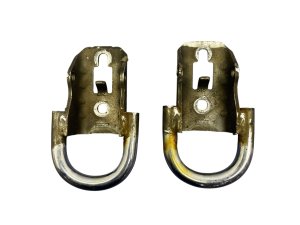
The only difference is the finish. The chrome hooks (part of kit FL3Z-17N808-A) offer a different appearance but have the same strength and function as the standard black hooks (FL3Z-17A954-E).
Helpful Videos
Technical Specifications
OEM Part Numbers: FL3Z-17A954-E (Black, supersedes FL3Z-17A954-C) FL3Z-17N808-A (Chrome Tow Hook Kit)
Mounting Bolt Torque: 85 lb-ft (115 N·m)
We Have This Part in Stock

The information in this article is provided for general reference and educational purposes only. Vehicle specifications, procedures, and part compatibility can vary by production date, trim level, and region. Always consult your vehicle's factory service manual and verify part numbers before purchasing or performing repairs. Safety-critical components such as airbags, seat belts, and braking systems should be installed by a qualified professional.
- Ford F-150:
- 🎬 Helpful Videos
- 🛍️ Shop This Part
- Symptoms of a Damaged or Failing Tow Hook
- Visible Bending or Deformation
- Heavy Rust and Flaking
- Damaged Mounting Bolts or Threads
- Buying a Used 2015-2020 F-150 Tow Hook: What to Check
- Known Issues and Compatibility Warnings
- Adding Tow Hooks to a Truck Not Equipped from the Factory
- Raptor Incompatibility
- Recalls and Technical Service Bulletins (TSBs)
- Cost of Replacement (2015-2020 F-150)
- Installation Guide
- Step-by-Step Replacement
- Frequently Asked Questions (FAQ)
- 🎟️ Get 5% Off