

1991-94 Explorer & Navajo Torque Converter Shudder, Diagnosis, and Replacement
This guide covers the common failure symptoms, replacement costs, and critical compatibility checks for the torque converter in 1991-1994 Mazda Navajo and 1992-1994 Ford Explorer models with the 4.0L V6 and A4LD automatic transmission.
- The most common failure symptom is a shuddering vibration between 30-50 mph, caused by a failing lock-up clutch.
- Compatibility is critical; you must verify the ID code ('DBA' or 'BAB') on your original unit before buying a replacement.
- Replacement is a major job (Difficulty 5/5) requiring removal of the entire transmission.
- Improper installation, specifically failing to fully seat the converter into the transmission pump, will cause catastrophic damage.
Symptoms of a Failing Torque Converter

A failing torque converter in a Ford Explorer or Mazda Navajo can cause several distinct symptoms. Because the A4LD transmission is known for having issues, it's important to diagnose the problem correctly. Many symptoms can point to either the converter or other internal transmission problems.
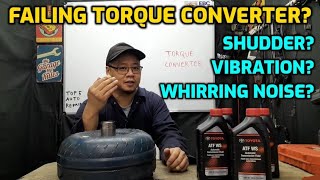
- Transmission Shudder: This is the most common complaint. It feels like driving over rumble strips and typically occurs at steady speeds between 30 and 50 mph. The shudder happens when the lock-up clutch inside the converter slips instead of engaging smoothly. Applying the brakes lightly while maintaining speed may cause the shudder to stop, which strongly points to the torque converter clutch as the culprit.
- Slipping or Delayed Engagement: The vehicle may struggle to accelerate from a stop, or the transmission may feel like it's slipping out of gear. This can be caused by internal wear or low fluid pressure, which prevents the converter from transferring power effectively.
- Overheating Transmission: A failing converter can generate excessive heat, which degrades the transmission fluid and can lead to widespread transmission damage. Burnt-smelling or dark, contaminated fluid is a major red flag.
- Unusual Noises: A whirring, whining, or clicking noise that changes with engine RPM can indicate failing bearings or damaged fins inside the torque converter.
- Stalling at a Stop: If the lock-up clutch fails to disengage when you come to a stop, it can stall the engine, similar to not pressing the clutch in a manual car.
Known Issues, TSBs, and Recalls

The 1991-1994 Ford Explorer and its Mazda Navajo counterpart were built on the same platform and share the 4.0L V6 engine and A4LD 4-speed automatic transmission. As such, their issues are nearly identical.
- A4LD Transmission Weaknesses: The A4LD is not known for its durability. Problems with solenoids, valve bodies, and overdrive bands are common. Often, a torque converter failure is a symptom of a larger transmission problem, or its failure can cause other components to fail by contaminating the fluid with debris.
- Torque Converter Clutch Failure: The lock-up clutch is a frequent point of failure, leading to the shudder mentioned above. This can be caused by worn friction material or issues with the solenoid that controls it.
- Recalls & TSBs: While there are no specific recalls for the torque converter itself, there was a recall for 1991 models with the A4LD transmission where the vehicle could appear to be in Park without the parking pawl being fully engaged. Several Technical Service Bulletins (TSBs) were issued related to the A4LD transmission, addressing fluid contamination after a failure and the introduction of new flushing tools, highlighting the importance of a clean system after any component replacement.
Warning: If you experience transmission issues, check the fluid immediately. If it is dark, has a burnt smell, or contains metallic particles, the entire transmission and cooling system may be contaminated. Simply replacing the torque converter without flushing the system can lead to repeat failure. A full transmission rebuild may be necessary.
Buying a Used Torque Converter: What to Check

A quality used OEM torque converter can be a reliable and cost-effective option, especially compared to cheap, new aftermarket units which may have lower quality control. Here’s what to inspect before buying.
1. Verify Compatibility & ID Codes
This is the most critical step. These vehicles used torque converters with specific characteristics. You must verify the ID code on your original unit before purchasing a replacement. Look for a stamped code like 'DBA' or 'BAB' on the converter housing. These codes indicate different stall speeds or clutch types, and using the wrong one can cause performance issues or damage. While search results did not specify the exact meaning of 'DBA' vs 'BAB', the consistent warnings from parts suppliers indicate their importance.
2. Physical Inspection
- Hub and Pilot: Inspect the hub (the neck that inserts into the transmission pump) for deep scratches, gouges, or heat discoloration. Any damage here can ruin a new transmission seal, causing a major leak.
- Mounting Studs/Pads: Check the mounting studs or bolt pads that connect to the flexplate. Ensure the threads are clean and not stripped or cross-threaded.
- Cracks and Damage: Carefully inspect the entire body of the converter, especially around the welds, for any cracks. A cracked converter will leak fluid and lose pressure.
- Rattles: Gently shake the converter. A slight noise from the internal components is normal, but loud rattling could indicate broken fins or bearings inside.
3. Donor Vehicle Information
If possible, get the mileage from the donor vehicle. A torque converter from a lower-mileage vehicle is always preferable. Also, ask about the reason the vehicle was taken off the road. Avoid parts from vehicles that had known transmission failures, as the converter could be contaminated or damaged.
Replacement Overview

Replacing a torque converter is a difficult and labor-intensive job. It requires removing the entire transmission from the vehicle.
- Difficulty: 5 out of 5. This is a job for experienced DIY mechanics or professionals.
- Process: The general steps involve lifting the vehicle, draining the fluid, removing the driveshaft(s), disconnecting linkages and cooler lines, unbolting the converter from the engine's flexplate, and then unbolting and lowering the entire transmission assembly.
- Critical Step - Seating the Converter: When installing the new converter onto the transmission's input shaft, it must be carefully rotated and pushed inward until it 'clicks' or drops into place multiple times (usually two or three). 🎬 Watch: How to properly seat a torque converter If it is not fully seated, installing the transmission will break the internal transmission pump, resulting in a catastrophic failure. There should be a small gap between the converter and the flexplate before the bolts are tightened.
Pro Tip: Before installing the new or used torque converter, pour about one quart of fresh automatic transmission fluid into it. This helps pre-lube the internal components and ensures the transmission pump isn't running dry on initial startup.
Cost Comparison
| Part Type | Estimated Cost |
|---|---|
| New OEM | $350 - $550+ (if available) |
| New Aftermarket | $150 - $300 |
| Remanufactured | $120 - $250 |
| Used OEM | $50 - $150 |
| Shop Labor | $600 - $1,000+ |
Note: Prices are estimates and can vary based on location, supplier, and part availability. Labor costs are based on an estimated 6-10 hours of work.
Technical Specifications & Part Numbers
| Specification | Details |
|---|---|
| Engine | 4.0L V6 |
| Transmission | A4LD 4-Speed Automatic |
| Ford OEM Part Numbers | F2TZ-7902-A, F2TZ-7902-ARM, F3TZ-7902-C, F3TZ7902CRM |
| Mazda OEM Part Numbers | ZZL2-19-100, ZZL3-19-100, ZZL319100 |
| Identification Codes | 'DBA', 'BAB' (Verify on original unit) |
Frequently Asked Questions (FAQ)
Can I just add a fluid additive to fix the shudder?
Sometimes, a fluid additive designed to reduce shudder can temporarily help if the problem is minor and caused by depleted friction modifiers in the old fluid. However, this is often a temporary fix. If the shudder is caused by worn-out clutch material, no additive will solve the problem, and replacement is the only long-term solution.
What causes the torque converter to fail in the first place?
The most common causes are heat and contaminated fluid. Towing heavy loads, aggressive driving, or a malfunctioning cooling system can overheat the transmission fluid, causing it to break down and lose its lubricating properties. This leads to wear on the internal lock-up clutch and bearings. Debris from other failing transmission parts can also circulate through the converter and cause damage.
If I replace the torque converter, should I replace anything else?
Absolutely. At a minimum, you should replace the transmission's front pump seal while the converter is out. It's also highly recommended to flush the transmission cooler and lines to remove any old, contaminated fluid and debris. Many mechanics would also recommend replacing the transmission filter and fluid. Given the high labor cost, it's wise to address these related items at the same time.
Is a remanufactured or a used torque converter better?
Both can be good options. A quality remanufactured unit will have been disassembled, cleaned, inspected, and rebuilt with new seals, bearings, and clutch lining. A good used OEM unit offers factory-level build quality at a lower price. The key with a used part is verifying its condition and the mileage of the donor vehicle. Avoid cheap, new aftermarket parts from unknown brands, as their internal components may not be as durable as OEM or quality remanufactured units.
Helpful Videos
Technical Specifications
OEM Part Numbers: F2TZ-7902-A F2TZ-7902-ARM F2TZ7902ARM F3TZ-7902-C F3TZ7902CRM ZZL2-19-100 ZZL3-19-100 ZZL319100
Fits 4.0L V6 engine with A4LD 4-speed automatic transmission. Includes lock-up clutch. Identification codes 'DBA' or 'BAB' must be verified.

The information in this article is provided for general reference and educational purposes only. Vehicle specifications, procedures, and part compatibility can vary by production date, trim level, and region. Always consult your vehicle's factory service manual and verify part numbers before purchasing or performing repairs. Safety-critical components such as airbags, seat belts, and braking systems should be installed by a qualified professional.
- Ford Explorer:
- Mazda Navajo:
- 🎬 Helpful Videos
- Symptoms of a Failing Torque Converter
- Known Issues, TSBs, and Recalls
- Buying a Used Torque Converter: What to Check
- 1. Verify Compatibility & ID Codes
- 2. Physical Inspection
- 3. Donor Vehicle Information
- Replacement Overview
- Cost Comparison
- Technical Specifications & Part Numbers
- Frequently Asked Questions (FAQ)
- 🎟️ Get 5% Off