

1994-1995 Jeep Wrangler Torque Converter: Shudders, Stalls, and Compatibility Guide
Diagnose a failing torque converter in your YJ Wrangler and learn how to buy the correct part for your 2.5L or 4.0L engine to avoid costly mistakes.
- The torque converter for the 2.5L 4-cylinder (30RH trans) and 4.0L 6-cylinder (42RE trans) are NOT interchangeable. Verifying your engine is the most critical step before buying.
- Improper installation, specifically failing to fully seat the converter into the transmission pump before bolting it to the engine, will cause instant and catastrophic damage to the transmission.
- A shuddering sensation like driving over rumble strips is a classic symptom of torque converter failure, especially on 4.0L models with a lock-up clutch.
- Before replacing the converter for shuddering, try changing the transmission fluid and filter and consider adding a friction modifier additive as a low-cost diagnostic step.
Crucial Compatibility: 2.5L vs. 4.0L Engines

Warning: The single most important factor when replacing the torque converter in a 1994-1995 Jeep Wrangler YJ is matching it to your engine. The two available automatic transmissions use completely different torque converters that are not interchangeable.
- 2.5L 4-Cylinder models are equipped with the 30RH 3-speed automatic transmission.
- 4.0L 6-Cylinder models are equipped with the 42RE 4-speed automatic transmission.
Installing the wrong torque converter will result in the vehicle not moving and can cause severe damage to the transmission's front pump.
Symptoms of a Failing Torque Converter

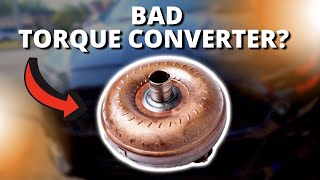
A bad torque converter can cause a range of problems, from subtle vibrations to complete transmission failure. 🎬 Watch this overview of bad torque converter symptoms and fixes Here are the most common signs to watch for:
- Shuddering or Vibration: The most classic symptom is a shudder or vibration that feels like driving over rumble strips. This often occurs during light acceleration or at steady cruising speeds between 40-50 MPH, especially on 4.0L models as the lock-up clutch engages or disengages.
- Transmission Slipping: You might feel the engine RPMs flare up without a corresponding increase in speed, as if the transmission is momentarily in neutral. This indicates the converter is not transferring power effectively.
- Overheating Transmission: A failing converter generates excessive friction and heat, which can cause the transmission to overheat. This can lead to widespread damage and seal failure.
- Stalling at Stops: If the converter fails to disengage properly when you come to a stop, it can load the engine and cause it to stall, similar to not pressing the clutch in a manual car.
- Unusual Noises: Whining, whirring, or rattling sounds that change with engine RPM can point to failing bearings or damaged fins inside the converter.
- Contaminated Fluid: Finding significant amounts of black or metallic debris in your transmission fluid is a major red flag. This indicates internal parts of the converter or transmission are breaking down.
Known Issues, TSBs, and Recalls
For the 1994-1995 model years, there are no specific recalls or Technical Service Bulletins (TSBs) from Jeep directly addressing torque converter failure. However, some TSBs for the 42RE transmission mention issues like overdrive cycling which could be misdiagnosed as a converter problem. Forum discussions among owners suggest that shudder in the 42RE is a relatively common complaint. Before condemning the converter, it's wise to investigate other potential causes like old fluid, a faulty Throttle Position Sensor (TPS), or transmission solenoids, which can produce similar symptoms.
One recall (02V041000) was issued for 1990-1995 Wranglers concerning a potential for the vehicle to roll away, but this is not directly related to the torque converter's function while driving.
Pro Tip: For minor shudder issues, especially on 4.0L models, some owners and mechanics report success using a friction modifier additive like Lubegard Instant Shudder Fixx. This can be a cheap first step to try after a fluid and filter change, before committing to a full replacement.
🎬 See how to eliminate torque converter shudder yourselfBuying a Used 1994-1995 Wrangler Torque Converter

A quality used OEM torque converter can be a reliable and cost-effective alternative to expensive new or remanufactured units. Here’s what to look for to ensure you get a good part.
1. Verify Compatibility Above All Else
Before you even look at a part, confirm your Jeep's engine and transmission. The VIN can help, but a visual check is best. The 30RH (2.5L) and 42RE (4.0L) are visually distinct. Ensure the seller guarantees the part is from a vehicle with the exact same engine as yours.
2. Physical Inspection Checklist
When you have the used converter in hand, inspect it carefully:
- Hub and Pump Drive Slots: The hub is the snout that inserts into the transmission. It should be smooth, with no deep scratches or gouges. The slots or flats on the end that drive the transmission pump must be crisp and not rounded or damaged. This is a critical surface.
- Mounting Pads/Studs: Check the four pads where the converter bolts to the flexplate. Ensure the bolt holes are not stripped, cracked, or elongated.
- Pilot: The pilot is the small nub at the very front that centers the converter in the crankshaft. It should be round and free of damage.
- Body and Welds: Look for any signs of leaking fluid, which would appear as oily residue. Inspect the main weld seam around the converter's circumference for any cracks or signs of repair.
- No Rattles: Gently shake the converter. It should not rattle. A rattling noise indicates broken internal components, and the part is junk.
3. Why Used OEM is Often a Good Choice
Original Equipment (OEM) Mopar torque converters were built to a high standard for durability. While a new aftermarket part might seem appealing, budget-level options can sometimes have lower quality internal bearings or clutch materials. A low-mileage used OEM converter is often a more reliable choice than a cheap new one.
Installation Difficulty & Procedure
- Difficulty Rating: 5 out of 5 (Professional / Advanced DIY)
- Estimated Time: 6-10 hours
Replacing the torque converter is a major undertaking because the entire transmission must be removed from the vehicle. This requires disconnecting driveshafts, the transfer case, exhaust components, crossmembers, and electrical connectors. It is not a job for a beginner.
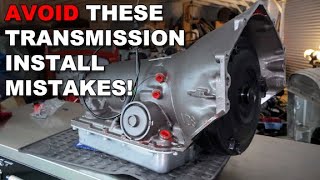
Critical Installation Step: Seating the Converter. You cannot simply slide the converter onto the transmission shaft and bolt everything up. The converter must be fully seated into the transmission's front pump. To do this, you must install the converter onto the transmission's input shaft *before* the transmission is installed in the vehicle. While pushing it on, you must rotate it back and forth until you feel and hear it drop into place multiple times (often described as 'three clicks'). Failure to fully seat the converter will cause it to bind when the bellhousing bolts are tightened, instantly destroying the front pump of the transmission upon startup.
🎬 Watch a demonstration on how to properly seat a torque converterCost Comparison
Prices can vary based on location and supplier, but here is a general breakdown of what to expect:
| Part Type | Estimated Cost |
|---|---|
| New OEM (Mopar) | $490 - $625 |
| New Aftermarket | $150 - $300 |
| Remanufactured | $150 - $250 |
| Used OEM | $75 - $150 |
| Shop Labor | $600 - $1000+ |
Technical Specifications and Part Numbers
Always verify part numbers against your vehicle's VIN with a dealership or trusted parts supplier. The following numbers are commonly associated with these vehicles, but compatibility must be confirmed.
- Known OEM Part Numbers (may fit multiple applications): CR97, 52117703, 52117703AB, 4736311, R2117703, R2117703AB, R4736388AD
- Transmission (4.0L): 42RE (A500-SE family) with lock-up clutch
- Transmission (2.5L): 30RH (A904 family), non-lock-up
Frequently Asked Questions (FAQ)
What is the difference between a 30RH and 42RE torque converter?
The 30RH converter (for the 2.5L engine) is a simple, non-lockup fluid coupling. The 42RE converter (for the 4.0L engine) is a more complex design that includes an internal lock-up clutch, which engages at higher speeds to improve efficiency. They have different dimensions, spline counts, and are not interchangeable.
Can I drive with a bad torque converter?
It is not recommended. While the vehicle may be drivable with minor symptoms like shudder, continued operation can lead to catastrophic failure. A failing converter can shed metal debris throughout the entire transmission, turning a single-part replacement into a full transmission rebuild.
My transmission fluid is black. Is the torque converter bad?
Black, burnt-smelling fluid or fluid with a lot of debris is a strong indicator of internal failure. This could be from the torque converter's clutch material or from other clutches within the transmission. In either case, it signals a serious problem that requires professional diagnosis. A simple fluid change will not fix the underlying mechanical damage.
How do I make sure the torque converter is fully seated during installation?
After sliding the converter onto the transmission's input shaft and rotating it to engage the pump (the 'three clicks'), you can verify its position. There should be a gap of about 1/2 to 3/4 inch between the bellhousing edge and the converter's mounting pads. When the transmission is bolted to the engine, you should be able to freely spin the converter by hand before you install the flexplate bolts.
Helpful Videos
Technical Specifications
OEM Part Numbers: CR97 52117703 52117703AB 4736311 R2117703 R2117703AB R4736388AD
Fitment is specific to engine and transmission type. 4.0L models use a lock-up style converter for the 42RE transmission. 2.5L models use a non-lock-up converter for the 30RH transmission.

The information in this article is provided for general reference and educational purposes only. Vehicle specifications, procedures, and part compatibility can vary by production date, trim level, and region. Always consult your vehicle's factory service manual and verify part numbers before purchasing or performing repairs. Safety-critical components such as airbags, seat belts, and braking systems should be installed by a qualified professional.
- Jeep Wrangler:
- 🎬 Helpful Videos
- Crucial Compatibility: 2.5L vs. 4.0L Engines
- Symptoms of a Failing Torque Converter
- Known Issues, TSBs, and Recalls
- Buying a Used 1994-1995 Wrangler Torque Converter
- 1. Verify Compatibility Above All Else
- 2. Physical Inspection Checklist
- 3. Why Used OEM is Often a Good Choice
- Installation Difficulty & Procedure
- Cost Comparison
- Technical Specifications and Part Numbers
- Frequently Asked Questions (FAQ)
- 🎟️ Get 5% Off