

2020-2026 Tesla Model Y Tires: A Guide to Rapid Wear, T-Specs, and Replacement
This guide covers the unique, Tesla-specific (T0, T1, T2) tires for the Model Y, explaining why they wear quickly and what to look for in a used replacement.
- Expect rapid tire wear (15k-25k miles is common) due to the Model Y's weight, torque, and factory alignment.
- Look for Tesla-spec 'T-marked' (T0, T1) tires to maintain original noise levels, range, and handling.
- When buying used, check the DOT date code for age (under 6 years) and measure tread depth (aim for 5/32" or more).
- Frequent tire rotations (every 6,250 miles) and regular four-wheel alignments are essential to maximize tire life.
OEM Tire Specifications for the 2020-2026 Tesla Model Y

The Tesla Model Y comes with several wheel and tire combinations from the factory, depending on the trim and options selected. Each is designed to balance range, performance, and comfort. It's crucial to use the correct size for your vehicle's configuration.
| Wheel Size & Name | Tire Size | Common OEM Tire Models |
|---|---|---|
| 19" Gemini | 255/45R19 | Continental ProContact RX, Michelin Primacy MXM4 |
| 20" Induction | 255/40R20 | Goodyear Eagle F1 Asymmetric 5, Michelin Pilot Sport EV |
| 21" Überturbine (Performance) | 255/35R21 (Front) 275/35R21 (Rear) |
Pirelli P Zero, Michelin Pilot Sport All Season 4 |
Warning: The 21" Überturbine wheels use a staggered setup, meaning the front and rear tires are different sizes. They cannot be rotated front-to-back. All other standard Model Y setups use a "square" setup where all four tires are the same size.
What the 'T' Marking (T0, T1, T2) Means

Many OEM tires for the Model Y have a special marking on the sidewall, such as 'T0', 'T1', or 'T2'. This indicates a "Tesla-Specification" tire, co-developed by Tesla and the tire manufacturer. These tires are specifically tuned for the Model Y to optimize handling, noise, durability, and range.
- T0: The first-generation approved version of that tire model.
- T1, T2, etc.: Subsequent, updated versions that may feature improvements in compound, tread, or foam technology.
While you can install non-T-spec tires of the correct size, they may result in increased road noise, reduced range, and different handling characteristics. For the most consistent experience, it is recommended to use T-spec tires.
Known Issues and Rapid Tire Wear

The most significant issue reported by Model Y owners is rapid and often uneven tire wear. Many owners are surprised to find their tires need replacement in as little as 15,000 to 25,000 miles. Several factors contribute to this:
- Vehicle Weight: The Model Y is a heavy vehicle due to its large battery pack, which puts more strain and friction on the tires.
- Instant Torque: Electric motors deliver instant torque, causing more aggressive wear during acceleration compared to a gasoline engine.
- Factory Alignment: Teslas often come from the factory with an aggressive alignment setup (specifically, negative camber) to improve handling. This causes the inside edge of the tire to wear much faster than the outside edge.
- Softer Tire Compounds: To ensure a quiet ride and good grip, the OEM tires often use a softer rubber compound, which naturally wears down faster.
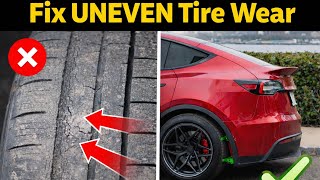
Pro Tip: To combat premature wear, perform tire rotations more frequently than on other vehicles. Tesla recommends a rotation every 6,250 miles (10,000 km). Regular four-wheel alignments are also critical to correct any excessive camber or toe settings that accelerate inner tire wear.
🎬 Watch: How to fix the alignment issues causing rapid wearSymptoms of Worn or Failing Tires

- Reduced Traction: The most obvious symptom, especially noticeable in wet or snowy conditions. The vehicle may feel less stable or slip during acceleration.
- Increased Road Noise: As the tread wears down, tires become louder. If the internal acoustic foam is damaged or missing, you may notice a significant increase in humming or droning sounds.
- Vibrations: A vibration felt in the steering wheel or through the chassis, particularly at highway speeds, can indicate an out-of-balance tire or uneven wear.
- Visible Wear Indicators: All tires have tread wear bars—small raised bars in the grooves. When the tread is worn down to the level of these bars, the tire is at its legal limit (2/32") and must be replaced.
- Cracks or Bulges: Any visible cracks in the sidewall or bulges are signs of structural failure. A tire with a bulge is unsafe to drive on and should be replaced immediately.
Warning: A recall was issued for some 2020-2025 Model Y vehicles because the Tire Pressure Monitoring System (TPMS) warning light might not stay on between drive cycles. This could fail to warn a driver of low tire pressure. The fix is a free over-the-air software update from Tesla.
Buying a Used 2020-2026 Tesla Model Y Tire
A used OEM tire can be a great value, especially if you only need to replace one or two tires. A high-quality used T-spec tire will often perform better than a cheap new aftermarket tire. Here’s what to check before buying:
- Check the DOT Code for Age: On the tire's sidewall, find the "DOT" code. The last four digits represent the week and year of manufacture (e.g., "1723" means the 17th week of 2023). Avoid purchasing tires that are more than 6 years old, regardless of tread depth, as the rubber degrades over time.
- Measure Tread Depth: Use a tread depth gauge for an accurate measurement. A new tire has around 9/32" to 11/32" of tread. While the legal minimum is 2/32", it's best to buy a used tire with at least 5/32" of tread to ensure a reasonable service life.
- Inspect for Patches and Plugs: Look at the inside of the tire for any patches. A properly installed internal patch-plug is a safe and permanent repair. Be wary of tires that have been repaired with an external plug only, as these are not considered permanent. Ask the seller about any repairs.
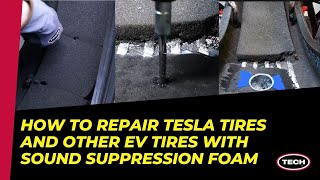
- Check the Acoustic Foam: If it's a T-spec tire, the acoustic foam should be largely intact. For a proper patch repair, a section of the foam must be cut away and then re-adhered. Some shops refuse to patch foam-lined tires, so a professionally repaired one is a good find. 🎬 See how to properly repair a foam-lined EV tire
- Look for Sidewall Damage: Carefully inspect the sidewalls for any bubbles, gouges, or cracks. A bubble indicates internal separation and means the tire is unsafe and must be discarded.
- Check for Uneven Wear: Look for wear that is significantly heavier on one shoulder than the other. This indicates the tire came from a vehicle with alignment problems. A tire with severe uneven wear will be noisy and will not last long.
Installation and Replacement
Replacing tires is not a DIY job for most owners as it requires specialized equipment for mounting and balancing.
- Difficulty: 4/5 (for DIY, due to required equipment)
- Process: A tire shop will demount the old tire, inspect the wheel, mount the new tire, and balance the wheel/tire assembly.
- TPMS Sensors: The Tire Pressure Monitoring System (TPMS) sensors are attached to the valve stems inside the wheel. They are reused with the new tires. Tesla's system typically relearns the new sensors automatically after a short drive.
- Alignment: It is highly recommended to get a four-wheel alignment after installing new tires. Given the Model Y's tendency for alignment-related wear, skipping this step can cause your new tires to wear out prematurely.
Cost Comparison
Prices for Model Y tires vary significantly based on size and whether they are Tesla-spec. Performance models with 21-inch staggered tires are the most expensive.
| Item | Estimated Cost |
|---|---|
| New OEM (T-Spec) Tire | $250 - $550 per tire |
| New Aftermarket (EV-Rated) Tire | $200 - $400 per tire |
| Used OEM Tire | $80 - $250 per tire (depending on tread) |
| Shop Labor (Mount & Balance) | $25 - $50 per tire |
| Four-Wheel Alignment | $150 - $250 |
Frequently Asked Questions
Why do my Tesla Model Y tires wear out so fast?
It's a combination of the car's heavy weight, the instant torque from the electric motors, and a factory alignment that prioritizes handling over tire longevity. Regular rotations and alignments are the best way to maximize tire life.
Can I use tires without the 'T' (Tesla-spec) marking?
Yes, as long as the size, load index, and speed rating are correct for your vehicle. However, you may experience more road noise, slightly less range, and different handling characteristics compared to the OEM T-spec tires.
Can a foam-lined Tesla tire be repaired if it gets a puncture?
Yes. A proper repair involves cutting away a small section of the internal acoustic foam, applying a patch-plug from the inside, and then sealing the area. Many tire shops are unfamiliar with this process and may incorrectly tell you the tire must be replaced. It is always best to use an internal patch, not an external plug.
How often should I rotate the tires on my Model Y?
Tesla recommends rotating the tires every 6,250 miles (10,000 km), or sooner if you notice a tread depth difference of 1.5mm (2/32") or more between the front and rear tires. This is more frequent than for many gasoline cars but is critical for extending tire life on a heavy EV.
Helpful Videos
Technical Specifications
OEM Part Numbers: 118822300B
Wheel Sizes: 19x9.5" +45 (Gemini), 20x9.5" +45 (Induction), 21x9.5" +40 Front / 21x10.5" +48 Rear (Überturbine). Bolt Pattern: 5x114.3. Center Bore: 64.1mm. Lug Nut Torque: 129 lb-ft.

The information in this article is provided for general reference and educational purposes only. Vehicle specifications, procedures, and part compatibility can vary by production date, trim level, and region. Always consult your vehicle's factory service manual and verify part numbers before purchasing or performing repairs. Safety-critical components such as airbags, seat belts, and braking systems should be installed by a qualified professional.
- Tesla Y:
- 🎬 Helpful Videos
- OEM Tire Specifications for the 2020-2026 Tesla Model Y
- What the 'T' Marking (T0, T1, T2) Means
- Known Issues and Rapid Tire Wear
- Symptoms of Worn or Failing Tires
- Buying a Used 2020-2026 Tesla Model Y Tire
- Installation and Replacement
- Cost Comparison
- Frequently Asked Questions
- 🎟️ Get 5% Off