

1998-1999 Nissan Maxima Temp Control: Fixing Blank Displays and Choosing the Right Unit
Your definitive guide to diagnosing, replacing, and buying the correct used automatic or manual climate control for your A32 Maxima.
- The most critical step is verifying if your Maxima has Manual controls (sliders/dials) or Automatic Temperature Control (digital display); they are not interchangeable.
- The most common failure on automatic units is a blank or flickering display, often repairable by re-soldering joints on the circuit board.
- Automatic units have a built-in self-diagnostic mode; hold the 'OFF' button for 5 seconds after turning the ignition on to check for fault codes.
- Used OEM units are the most practical replacement option, as new parts are prohibitively expensive or discontinued and aftermarket units are not available.
Critical First Step: Identify Your System (Manual vs. Automatic)

Before you begin troubleshooting or shopping for a replacement, you must identify which climate control system your 1998-1999 Maxima has. The two types are not interchangeable, as they use completely different wiring, sensors, and control modules.
Warning: You cannot upgrade a manual system to an automatic one simply by swapping the head unit. The entire vehicle wiring harness and multiple components under the dashboard are different.
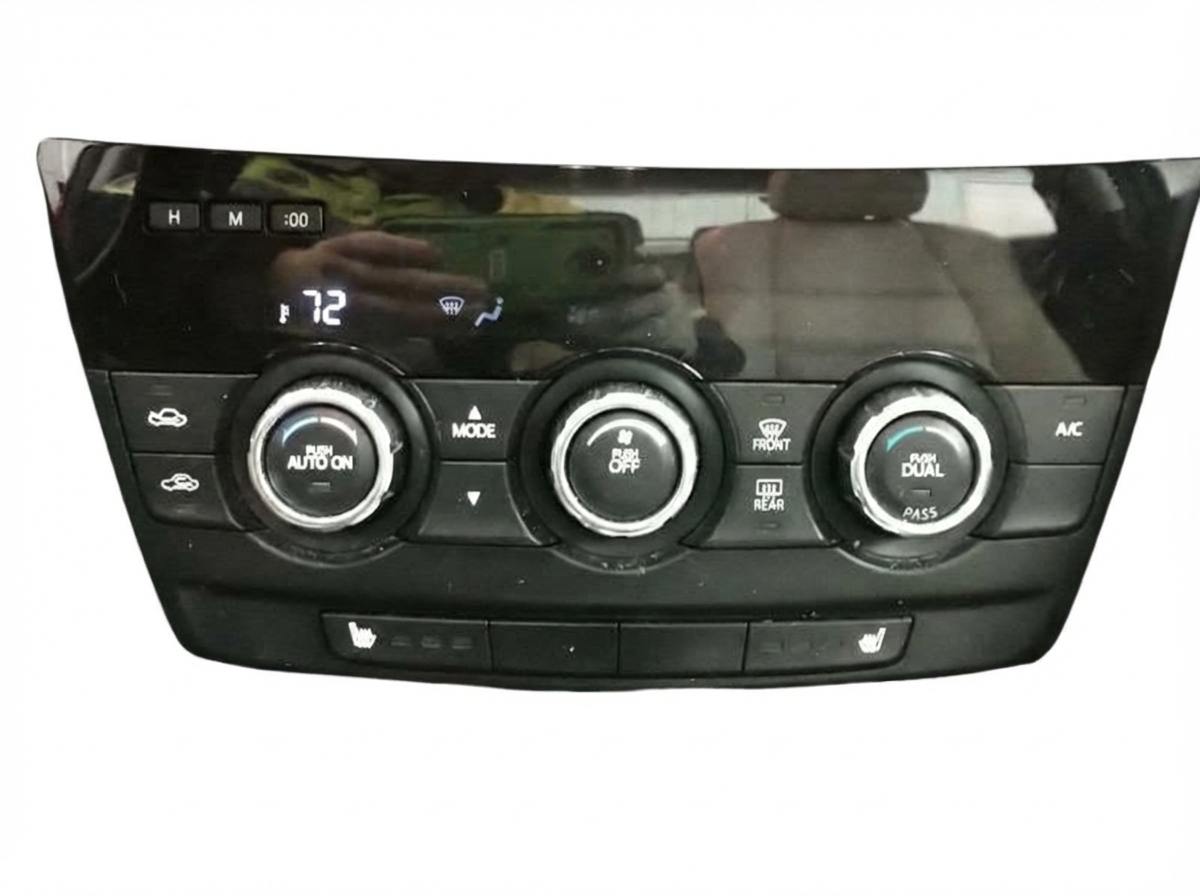
- Automatic Temperature Control (ATC): This unit features a digital screen that displays the temperature, fan speed, and mode. It has a series of push buttons for functions like 'Auto', 'Econ', 'A/C', and temperature adjustment. It automatically manages fan speed and air blending to maintain a specific temperature you select. Common part numbers include 27500-4L000 and 27500-4L010.
- Manual Control: This unit uses physical sliders for temperature (blue to red) and airflow direction (defrost, vent, floor). It has a rotary dial for fan speed and simple push buttons for A/C and recirculation. You directly control the system's settings. The most common part number is 27510-1L000.
Symptoms of a Failing Temp Control Unit

Failures in these units can range from minor annoyances to a complete loss of climate control.
For Automatic Temperature Control (ATC) Units:
- Blank or Flickering Digital Display: This is the most common failure. The display may go out intermittently or die completely, making it impossible to see your settings. This is often caused by failed solder joints on the internal circuit board.
- Unresponsive Buttons: Buttons may fail to register a press, preventing you from changing temperature, fan speed, or mode.
- Incorrect Temperature Output: The unit may command full heat even when set to cold, or vice-versa, indicating a logic failure.
- Inability to Control Fan Speed: The fan may be stuck on one speed or not work at all, even though the blower motor itself is functional.
For Manual Control Units:
- Burnt-Out Backlighting: The bulbs that illuminate the sliders and buttons burn out over time, making the controls hard to see at night.
- Stuck or Broken Sliders/Dials: The physical mechanisms can break, making it impossible to adjust temperature or airflow direction.
- Fan Only Works on High Speed: This is usually caused by a failed blower motor resistor, a separate part located near the blower motor. However, it is often misdiagnosed as a bad control unit.
How to Diagnose the System

ATC Self-Diagnostic Mode
The automatic system has a powerful built-in diagnostic tool that can help you identify problems.
- Turn the ignition key to the 'ON' position (do not start the engine).
- Within 5 seconds of turning the key on, press and hold the 'OFF' button on the climate control unit.
- Hold the button for about 5 seconds until all segments of the display light up. This confirms you are in diagnostic mode.
- The system will then run a self-check and display any fault codes. These codes can point to issues with sensors, motors, or the control unit itself.
Buying a Used 1998-1999 Maxima Temp Control: What to Look For

With new OEM parts being extremely expensive or discontinued, a quality used OEM unit is the best option for most owners. Here’s what to check before you buy.
Pro Tip: For an ATC unit, always ask the seller for a picture of the unit powered on. This is the only way to verify that the digital display works correctly.
- Match the Part Number EXACTLY: First, confirm if you need a manual (27510-1L000) or automatic (27500-4L000, 27500-4L010) unit. The part number is printed on a sticker on the unit's housing. Do not buy a part that doesn't match your original.
- Inspect the Digital Display (ATC): The screen is the most common failure point. Look for dark spots, dead pixels, or any signs of delamination. A working display should be bright and clear across the entire screen.
- Check All Buttons and Dials: Ensure all buttons have a positive 'click' when pressed and are not loose or sticky. For manual units, make sure the sliders move smoothly through their full range of motion.
- Examine the Connectors: Look at the electrical connector ports on the back of the unit. Check for any bent or corroded pins, or signs of melting, which would indicate a more serious electrical issue.
- Why Used OEM is a Smart Choice: Aftermarket replacements for these specific control units are virtually non-existent. A used OEM part guarantees perfect fitment, original button feel, and correct electronic communication with the rest of your car's HVAC system, all at a fraction of the cost of a new part.
Cost Comparison
The price difference between new and used is significant, making a recycled part a very attractive option.
| Part Type | Estimated Cost |
|---|---|
| New OEM | $700 - $900+ (if available) |
| New Aftermarket | Not Generally Available |
| Used OEM | $50 - $150 |
| Shop Labor for Installation | $100 - $200 |
Replacement Overview & Difficulty

Replacing the temp control unit in a 1998-1999 Maxima is a straightforward job suitable for a DIYer with basic tools.
- Difficulty: 2 out of 5
- Estimated Time: 0.5 - 1 hour
- Tools Needed: Phillips head screwdriver, plastic trim removal tools.
Basic Steps:
- Disconnect the negative battery terminal.
- Gently pry off the plastic trim surrounding the gear shifter.
- Remove the screws holding the main center dash bezel (which houses the radio and climate controls).
- Carefully pull the bezel away from the dash. You may need to disconnect the hazard light switch and other connectors first.
- The climate control unit is screwed to the back of this bezel. Remove the screws, unplug the electrical connectors from the back of the old unit, and swap in the new one.
- Reassembly is the reverse of removal.
Frequently Asked Questions (FAQ)
Can I fix my blank ATC display instead of replacing the whole unit?
Yes, it is often possible. The common cause is cracked solder joints on the circuit board. If you are experienced with electronics repair and soldering, you can disassemble the unit and reflow the solder on the power components of the board. Many guides for this can be found on Nissan enthusiast forums.
My A/C button light is blinking. Is the control unit bad?
Not necessarily. A blinking A/C light is a general fault indicator for the A/C system. The self-diagnostic system has detected a problem, which could be with the A/C compressor clutch, a pressure switch, or a sensor. Running the ATC self-diagnostic mode is the first step to finding the actual cause.
Can I install an automatic (digital) unit in my car that came with manual (slider) controls?
No, this is not a plug-and-play swap. The automatic system requires additional components that the manual car does not have, including a sunload sensor on the dash, an in-cabin temperature sensor, and different blend door actuator motors. The vehicle's wiring harness is also completely different to accommodate these parts.
Does a used temp control unit need to be programmed?
No. For the 1998-1999 Maxima, the climate control units do not require any special programming or calibration. As long as you install the correct part number for your vehicle, it will be plug-and-play.
Technical Specifications
OEM Part Numbers: 27500-4L000 27500-4L010 275004L000 275004L010 27510-1L000 275101L000
Two main variants exist: Manual Control (sliders/dials) and Automatic Temperature Control (digital display). No programming is required for replacement.
We Have This Part in Stock


The information in this article is provided for general reference and educational purposes only. Vehicle specifications, procedures, and part compatibility can vary by production date, trim level, and region. Always consult your vehicle's factory service manual and verify part numbers before purchasing or performing repairs. Safety-critical components such as airbags, seat belts, and braking systems should be installed by a qualified professional.
- Nissan Maxima:
- 🛍️ Shop This Part
- Critical First Step: Identify Your System (Manual vs. Automatic)
- Symptoms of a Failing Temp Control Unit
- For Automatic Temperature Control (ATC) Units:
- For Manual Control Units:
- How to Diagnose the System
- ATC Self-Diagnostic Mode
- Buying a Used 1998-1999 Maxima Temp Control: What to Look For
- Cost Comparison
- Replacement Overview & Difficulty
- Frequently Asked Questions (FAQ)
- 🎟️ Get 5% Off