

2002-2010 Saab 9-5 Yaw Sensor Failure: Diagnosing the ESP Light and Tech 2 Calibration
This guide explains why your Saab 9-5's ESP or TCS light is on and what you need to know about replacing and calibrating the yaw sensor.
- A failed yaw sensor will disable your Saab's ESP and TCS safety systems, increasing the risk of losing control in slippery conditions.
- After replacement, the new or used sensor MUST be calibrated with a Saab Tech 2 scan tool; the system will not work without this step.
- For 2010 models, this part only fits vehicles with the 4th VIN digit of 'E'.
- Buying a used OEM sensor is a major cost savings, but be sure to match the part number (5060710 or 265005251) and budget for professional calibration.
Symptoms of a Failing Yaw Sensor
When the yaw sensor fails, it can no longer provide accurate data to the stability control system. This immediately triggers a system fault and disables these important safety features.
- ESP or TCS Warning Light: The most common and immediate symptom is an illuminated warning light on your dashboard. This will typically be the "ESP" light, "TCS" light, or an icon of a car with squiggly lines behind it. The light will stay on, indicating the system is inactive.
- Disabled Stability and Traction Control: With the system offline, you will have no electronic assistance to prevent wheel spin during acceleration on slippery surfaces or to correct a slide during a sharp turn. This is a significant safety reduction, especially in rain, snow, or during emergency maneuvers.
- Associated ABS Light: In some cases, the Anti-lock Braking System (ABS) warning light may also illuminate. The ABS and ESP systems are interconnected and share information, so a fault in one can sometimes disable the other as a precaution.
- Diagnostic Trouble Codes (DTCs): A scan tool will reveal stored fault codes in the brake control module. These are typically "C" (Chassis) codes related to a missing or invalid signal from the yaw rate or lateral acceleration sensor.
Programming and Calibration Requirements
This is the most critical step of the replacement process. A newly installed yaw sensor—whether it is brand new or a used OEM part—must be calibrated to the vehicle before it will function correctly.
- Tech 2 Scan Tool Required: This calibration procedure, often called "Yaw Rate Sensor Learn," must be performed using a Saab-specific Tech 2 diagnostic scan tool or a professional-grade scanner with equivalent capabilities.
- What is Calibration? Calibration is a process that sets the sensor's "zero point." You must place the vehicle on a perfectly level surface, and the scan tool commands the sensor to learn this position as its baseline for 0° rotation and 0 G's of lateral force. Without this step, the ESP module will receive incorrect data, the warning light will remain on, and the system will not work.
- Is it DIY-Friendly? While the physical replacement can be done by a DIY mechanic, the final calibration step requires specialized equipment. You must factor in a visit to a Saab specialist or a well-equipped independent shop to have the sensor calibrated after installation. This is not the same as VIN-locking; a used sensor can be installed, but it must be calibrated to its new vehicle.
Warning: Do not skip the calibration step. The ESP system will not function without it, and the warning lights will not turn off.
Buying a Used Saab 9-5 Yaw Sensor
Given the high cost of a new OEM sensor, a used part from a reputable recycler is an excellent, cost-effective solution. Here’s what to look for:
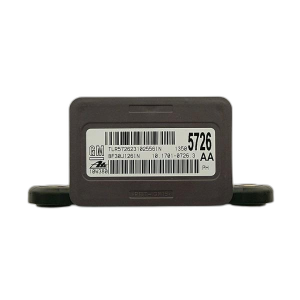
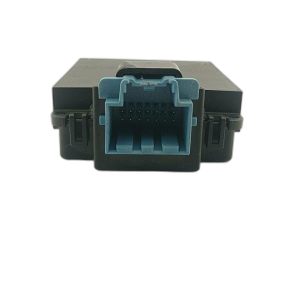
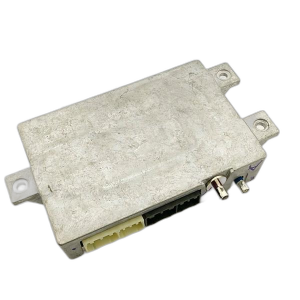
- Match the Part Number: The most important step is to match the OEM part number exactly. The two known part numbers are 265005251 and 5060710. Visually compare the used part to your original to ensure the casing and connector are identical.
- 2010 Model Year VIN Warning: For the 2010 model year, this part is only specified to fit vehicles where the 4th digit of the Vehicle Identification Number (VIN) is an 'E'. This 'E' designates the vehicle as the first-generation 9-5 platform. The 2010 model year was a changeover period, so this VIN check is crucial to ensure you get the correct part for your specific vehicle.
- Physical Inspection: Inspect the sensor for any signs of physical damage, such as cracks in the plastic housing or corrosion on the electrical connector pins. The sensor is located inside the cabin, so it should be clean and free of water damage.
- Factor in Calibration Costs: Remember that you will need to pay a shop for the Tech 2 calibration procedure. Call local Saab specialists for a quote before you buy the part so you know the total cost of the repair.
Part Number Confusion: Be aware that some online parts catalogs incorrectly cross-reference the part number 5060710 to a Dayco serpentine belt. This is an error in their databases. The Saab part 5060710 is an electronic yaw sensor module, not a rubber belt.
Replacement Overview
The yaw sensor is located under the center console, on a bracket just ahead of the gear selector assembly. The replacement process involves the following general steps:
- Disconnect the vehicle's battery.
- Remove the center console trim pieces to gain access to the area around the gear selector.
- Remove the gear selector housing itself.
- The yaw sensor will now be visible, mounted to a bracket on the transmission tunnel.
- Unplug the electrical connector and unbolt the sensor from its bracket. Note the orientation arrow on the sensor.
- Install the new sensor, ensuring the arrow points forward in the vehicle, and tighten the bolts to the correct torque specification (8-10 Nm, or 6-7 lbf ft, depending on VIN).
- Reassemble the gear selector housing and center console.
- Reconnect the battery and take the vehicle to a shop for Tech 2 calibration.
Cost Comparison
| Part Type | Estimated Price Range |
|---|---|
| New OEM | $400 - $500+ |
| New Aftermarket | Not commonly available |
| Used OEM | $40 - $100 |
| Shop Labor (Replacement & Calibration) | $150 - $300 |
Known Issues, TSBs, and Recalls
As of mid-2026, there are no specific recalls or Technical Service Bulletins (TSBs) issued by Saab or the NHTSA for widespread failure of the yaw sensor on the 2002-2010 Saab 9-5. Failures are typically due to the age of the electronic components. The vehicle was subject to other recalls, most notably for Takata airbag inflators, but none address the ESP system or yaw sensor.
Frequently Asked Questions (FAQ)
Does a used yaw sensor need to be programmed to my Saab 9-5?
It does not need to be programmed with your VIN, but it absolutely must be calibrated. A Saab Tech 2 scan tool (or equivalent) is required to teach the car the new sensor's zero position on a level surface. Without this calibration, the ESP system will not work.
Where is the yaw sensor located on a 2002-2010 Saab 9-5?
The yaw sensor is located inside the car, under the center console. It is mounted on a bracket on the transmission tunnel, just in front of the gear shift lever assembly.
Is it safe to drive with a bad yaw sensor and the ESP light on?
You can drive the vehicle, but do so with extra caution. Your primary safety systems—Electronic Stability Program and Traction Control—are disabled. This means the car will not automatically help you recover from a skid or prevent wheel spin. Your risk of losing control is significantly higher in slippery conditions or during an emergency maneuver.
Will a bad yaw sensor affect my ABS brakes?
Possibly. While the primary function of the ABS (preventing wheel lock-up during braking) may still work, the two systems are closely linked. Some faults can cause the car's computer to disable both the ESP and ABS systems as a precaution. If your ABS light is also on, assume your anti-lock brake function is also disabled.
Technical Specifications
OEM Part Numbers: 265005251 5060710
Combined yaw rate and lateral acceleration sensor. Requires calibration via Tech 2 scan tool after installation.
We Have This Part in Stock



The information in this article is provided for general reference and educational purposes only. Vehicle specifications, procedures, and part compatibility can vary by production date, trim level, and region. Always consult your vehicle's factory service manual and verify part numbers before purchasing or performing repairs. Safety-critical components such as airbags, seat belts, and braking systems should be installed by a qualified professional.
- Saab 9-5: