

Tesla Model X & S Air Strut Failure: Diagnosing Sagging, Clunks, and Leaks (2016-2025)
This guide covers common air suspension strut problems, part numbers, and replacement costs for the 2016-2025 Model X and 2021-2025 Model S.
- A sagging corner after parking is the most common sign of a leaking air strut.
- You MUST use 'Jack Mode' on the touchscreen before lifting the vehicle to prevent system damage and ensure safety.
- Part numbers are different for front/rear, left/right, and between pre-2021 and post-2021 'Refresh' models. Verify the part number on your old strut before buying.
- A four-wheel alignment is required after replacing any strut to prevent uneven tire wear and handling issues.
Symptoms of a Failing Air Suspension Strut

Because Tesla vehicles are so quiet, suspension noises are often more noticeable than in a gasoline-powered car. A failing air strut can produce several distinct symptoms.
Audible Noises
- Clunking or Knocking: A common symptom is a clunking or knocking sound, especially when driving over bumps or uneven pavement at low speeds. This often points to wear in the strut's internal damper or its mounting components.
- Hissing Sounds: A faint but audible hissing from a corner of the vehicle, particularly after parking, is a classic sign of an air leak. The air compressor may run to compensate, but the sound is from air escaping the strut's rubber bladder or an attached air line.
- Loud or Frequent Compressor Operation: If the air suspension compressor seems to run more often, for longer periods, or is louder than usual, it's likely working overtime to compensate for a leak in one or more struts. Ignoring this can lead to premature compressor failure.
Visual and Performance Issues
- Vehicle Sagging or Leaning: The most definitive sign of a failed air strut is one corner of the vehicle sitting visibly lower than the others. This is most often noticed after the vehicle has been parked overnight, as the leaking strut can no longer hold pressure.
- "Suspension Needs Service" Warning: The dashboard may display a yellow or red warning light, indicating a fault in the air suspension system. A yellow light typically indicates reduced performance, while a red light may signify that the system is disabled.
- Bouncy or Harsh Ride: A strut with a failed internal damper will lose its ability to control wheel movement, resulting in a bouncy, unstable, or overly harsh ride. The car may feel like it's floating or swaying, especially during turns.
Known Issues, Recalls, and Service Bulletins

While the air struts themselves have not been subject to a formal recall in the United States, related suspension components on early Model S and Model X vehicles have been investigated by the National Highway Traffic Safety Administration (NHTSA).
An NHTSA investigation focused on failures of the front suspension fore links on 2016-2017 Model X and 2015-2017 Model S vehicles. These failures could cause the tire to rub against the wheel arch liner. The investigation was closed without a mandatory recall after determining that drivers could maintain control of the vehicle if a failure occurred. However, NHTSA recommended that Tesla expand its service campaign to replace the part on more vehicles.
In China, Tesla did issue a recall for front and rear suspension link issues on some Model S and Model X vehicles, though the company stated it believed the root cause was driver abuse and uniquely severe road conditions.
Buying a Used Tesla Air Strut: What to Look For

For many owners, a low-mileage used OEM strut is a cost-effective and reliable alternative to expensive new parts. Here’s what to check before you buy.
1. Verify Compatibility and Part Numbers
This is the most critical step. Struts are specific to position (Front Left, Front Right, Rear Left, Rear Right) and vehicle generation. The 2021 "Refresh" (or "Palladium") platform for the Model S and Model X uses different parts than earlier models. Always match the part number from your existing strut to the replacement part.
Warning: Part numbers for the 2016-2020 Model X are different from the 2021+ Model S and X. They are not interchangeable. The list below is a guide; always confirm fitment for your specific vehicle's VIN.
| Position | Part Numbers (2016-2021 Model X) | Part Numbers (2021+ Model S Refresh/Plaid) |
|---|---|---|
| Front Left (Driver Side) | 1027061-00-C, 1027061-00-D, 1027061-00-E | 1420361-00-C, 1420361-00-E, 1420361-00-G |
| Front Right (Passenger Side) | 1027066-00-C, 1027066-00-D, 1027066-00-E | (Corresponds to a different part number series, verify by VIN) |
| Rear Left (Driver Side) | 1027062-00-C, 1027062-00-D | (Corresponds to a different part number series, verify by VIN) |
| Rear Right (Passenger Side) | 1027067-00-C, 1027067-00-D | (Corresponds to a different part number series, verify by VIN) |
Note: The 2021+ Model X shares its platform with the 2021+ Model S and is expected to use similar parts, but part numbers should always be verified.
2. Physical Inspection
- Check the Air Bladder: Inspect the rubber air spring for any cracks, perishing, or signs of abrasion. It should be pliable and free of damage.
- Look for Leaks: Check for any oily residue on the body of the strut. While the air system itself doesn't use oil, a leaking internal damper will allow hydraulic fluid to escape, indicating the shock-absorbing function has failed.
- Inspect the Electrical Connector: Ensure the connector and its pins are clean, straight, and free of corrosion. This is for the adaptive damping control.
3. Mileage and Value
Air struts typically have a lifespan of 50,000 to 70,000 miles, though this can vary widely with road conditions. A used strut from a low-mileage vehicle (under 50,000 miles) can offer excellent value. Given that a used OEM strut can often be found for a fraction of the price of a new one, it is often a better choice than a cheap, unproven aftermarket brand.
Cost of Replacement
Replacing a Tesla air strut can be expensive, primarily due to the cost of the part and the specialized labor involved.
| Part/Service | Estimated Cost |
|---|---|
| New OEM Strut (from Tesla) | $1,000 - $1,500+ per strut |
| New Aftermarket / Remanufactured Strut | $400 - $900 per strut |
| Used OEM Strut | $250 - $500 per strut |
| Shop Labor | $300 - $600 per strut |
| Total Shop Replacement (Single Strut) | $1,500 - $4,000+ |
Replacement Overview and Special Procedures

Replacing a Tesla air strut is a job for an experienced DIY mechanic or a professional. The process is similar to replacing a conventional strut but with critical extra steps for the air suspension system.
Critical Safety Warning: You MUST put the vehicle into 'Jack Mode' or 'Service Mode' before lifting it. This disables the auto-leveling suspension. Failure to do this can cause the vehicle to unexpectedly lower or attempt to adjust itself, creating a serious safety hazard and potentially damaging the air suspension system.
Key Steps & Procedures
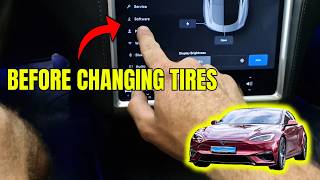
- Enable Jack Mode: On the vehicle's touchscreen, navigate to Controls > Suspension and activate 'Jack Mode'. 🎬 See how to safely enable Tesla Jack Mode For a full system depressurization, a more advanced 'Service Mode' may be required, which can be accessed via the touchscreen or Tesla's Toolbox software.
- Lift and Support the Vehicle: Use the designated lift points with proper pucks to avoid damaging the battery.
- Disconnect Components: This involves removing the wheel, disconnecting the sway bar link, brake caliper, wheel speed sensor, and any control arms necessary to free the strut assembly.
- Release Air Pressure: Carefully loosen the air line fitting at the top of the strut to release any residual pressure before removing the strut mounting bolts.
- Install the New Strut: Installation is the reverse of removal. Ensure the air line fitting is clean and properly seated.
- Torque to Spec: It is crucial to tighten all bolts to the manufacturer's specified torque values. Suspension components should only be fully torqued when the vehicle is at its normal ride height (with the weight on the wheels).
- Perform a Wheel Alignment: A four-wheel alignment is mandatory after replacing a strut to ensure proper handling and prevent uneven tire wear.
Important Torque Specs (Model X Front)
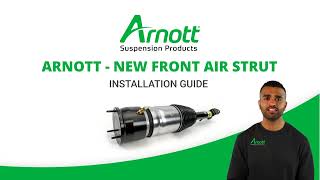
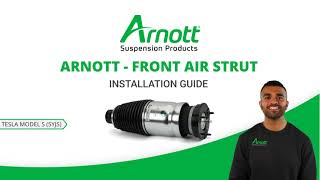
🎬 Watch: Step-by-step Model X front air strut replacementThese are for reference only. Always consult the official service manual for your specific model and year.
- Strut Top Mount Nuts (to shock tower): 39 Nm
- Strut Bottom Fork to Lower Control Arm: 140 Nm
- Upper Control Arm Ball Joint to Knuckle: 60 Nm
- Stabilizer Bar Link to Knuckle: 70 Nm
- Wheel Lug Nuts: 175 Nm
Frequently Asked Questions (FAQ)
Can I replace just one air strut?
While you can replace just the one failed strut, it is highly recommended to replace them in pairs (both front or both rear). This ensures that the damping and spring rates are even across the axle, providing balanced and predictable handling. An old strut will not perform the same as a new one.
What happens if I don't use Jack Mode?
If you lift the vehicle without enabling Jack Mode, the air suspension system will try to compensate for the wheel dropping by releasing air from the other struts to level itself. This can damage the air springs and makes the vehicle unstable on the lift, creating a significant safety risk.
Is a sagging suspension dangerous to drive on?
Yes, but with limitations. For a short, slow drive to a repair shop, it is generally manageable. However, driving for an extended period is unsafe. A failed strut severely compromises handling, braking, and stability. It also puts extreme strain on the air compressor and can cause uneven tire wear and damage to other suspension components.
My car is sagging but I don't hear a leak. What else could it be?
Besides a leaking strut, a sagging corner can be caused by a faulty ride height level sensor, a leak in an air line, or a problem with the air suspension valve block that distributes air to each corner. Proper diagnosis is key before replacing parts.
Helpful Videos

Technical Specifications
OEM Part Numbers: 1027061-00-C 1027061-00-D 1027061-00-E 1027062-00-C 1027062-00-D 1027066-00-C 1027066-00-D 1027066-00-E 1027067-00-C 1027067-00-D 1420361-00-C 1420361-00-E 1420361-00-G
Electronically controlled adaptive air spring and damper assembly. Requires vehicle-specific software for calibration and operation.
We Have This Part in Stock


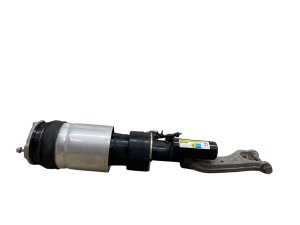
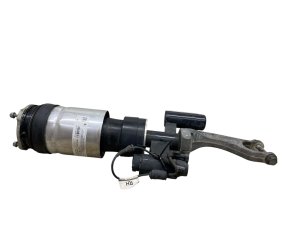
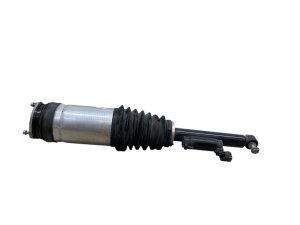

The information in this article is provided for general reference and educational purposes only. Vehicle specifications, procedures, and part compatibility can vary by production date, trim level, and region. Always consult your vehicle's factory service manual and verify part numbers before purchasing or performing repairs. Safety-critical components such as airbags, seat belts, and braking systems should be installed by a qualified professional.
- Tesla X:
- Tesla S:
- 🎬 Helpful Videos
- 🛍️ Shop This Part
- Symptoms of a Failing Air Suspension Strut
- Audible Noises
- Visual and Performance Issues
- Known Issues, Recalls, and Service Bulletins
- Buying a Used Tesla Air Strut: What to Look For
- 1. Verify Compatibility and Part Numbers
- 2. Physical Inspection
- 3. Mileage and Value
- Cost of Replacement
- Replacement Overview and Special Procedures
- Key Steps & Procedures
- Important Torque Specs (Model X Front)
- Frequently Asked Questions (FAQ)
- 🎟️ Get 5% Off