

1991-1995 Saturn SL2 Front Strut Guide: Clunks, Leaks, and Replacement
This guide covers common failure symptoms, replacement costs, and how to buy a good used front strut assembly for your 1991-1995 Saturn SL2.
- The most common failure signs are clunking noises over bumps, a bouncy ride, and fluid leaking from the strut body.
- The front strut for a 1991-1995 SL2 is a complete assembly that fits both the driver and passenger sides, making replacement easier.
- A professional wheel alignment is required immediately after replacing front struts to prevent unsafe handling and rapid tire wear.
- When buying a used strut, prioritize low-mileage units and visually inspect for fluid leaks and rust on the spring.
Symptoms of a Failing Front Strut
When the front struts on a 1991-1995 Saturn SL2 begin to fail, you'll likely notice several distinct signs. Because struts wear out gradually, you might not realize how much performance has been lost until they are replaced. According to RepairPal, front struts on an SL2 may start to wear out around 75,000 miles.
Noises and Vibrations
- Clunking or Banging Sounds: This is one of the most common symptoms. You may hear a hollow clunking or knocking sound when driving over bumps, potholes, or uneven road surfaces. This noise is often caused by worn internal components or loose strut mounts.
- Rattling or Popping: Forum users with S-Series Saturns report popping or clunking noises when turning the steering wheel, especially while accelerating from a stop or going over a bump at the same time. This can point to a bad strut mount bearing.
- Creaking: A creaking sound when turning the steering wheel can also indicate a problem with the strut mounts.
Poor Handling and Ride Quality
- Excessive Bouncing: A classic sign of a worn strut is the car continuing to bounce after hitting a bump. The strut's job is to dampen these oscillations, so when it fails, the car will feel floaty and less controlled.
- Nose-Diving and Squatting: If the front of the car dips excessively when you brake, or the rear squats during acceleration, the struts are no longer controlling the vehicle's weight transfer effectively.
- Swaying or Body Roll: You might feel the car lean or sway more than usual during turns or in crosswinds, giving a sense of poor control.
- Reduced Braking Performance: Worn struts can increase your stopping distance because they can't keep the tires firmly on the pavement during hard braking.
Visual Signs
- Fluid Leaks: The strut body contains hydraulic fluid. If you see oily, wet patches or fluid running down the side of the strut, the internal seals have failed and the strut needs to be replaced.
- Uneven Tire Wear: Worn struts can cause a specific type of tire wear called "cupping," which appears as scalloped or scooped-out patches on the tread. This happens because the tire is bouncing instead of rolling smoothly. It can also cause wear on the inside or outside edge of the tire if the strut mount affects alignment.
Buying a Used 1991-1995 SL2 Front Strut Assembly
A low-mileage used OEM strut assembly can be a smart, cost-effective choice, often providing better quality and performance than a new, cheap aftermarket part. The front struts for the 1991-1995 SL2 are complete assemblies, often called "quick struts," which makes them an excellent candidate for used purchase since they are easy to swap.
What to Inspect
- Check for Leaks: The most important check. The strut body should be dry. Any sign of oily residue means the strut is bad or failing.
- Inspect the Coil Spring: Look for heavy rust, cracks, or breaks in the coil spring. Surface rust is normal, but deep, flaky rust is a red flag.
- Examine the Top Mount: Check the rubber on the top strut mount for cracks, tears, or separation from the metal. The center bearing should feel smooth when turned by hand.
- Look at the Dust Boot: The rubber or plastic dust boot protects the strut's piston rod. A torn or missing boot can allow dirt and moisture in, causing premature failure. While not a deal-breaker on its own, it's a point against the part's condition.
- Ask About Mileage: Struts are a wear item. Aim for an assembly from a vehicle with the lowest possible mileage. A strut from a car with 50,000 miles is much better than one from a car with 150,000 miles.
Pro Tip: The front strut assemblies for the 1991-1995 Saturn SL2 are interchangeable between the driver's and passenger's sides. This makes sourcing a used part even easier.
Cost Comparison: SL2 Front Strut Replacement
OEM Saturn struts are no longer available new. Your options are new aftermarket assemblies, used OEM assemblies, or having a mechanic assemble a bare strut with new components (which is not cost-effective for this vehicle).
| Part Type | Estimated Cost (Per Strut) | Notes |
|---|---|---|
| New Aftermarket (Complete Assembly) | $70 - $150 | Prices vary by brand (e.g., FCS, Gabriel, Monroe, Duralast). This is the most common replacement option. |
| Used OEM (Complete Assembly) | $40 - $85 | A cost-effective option, especially from a low-mileage vehicle. Provides original ride quality. |
| Shop Labor | $100 - $200 | Labor time is relatively low (1-2 hours) since these are complete assemblies. An alignment is highly recommended after replacement. |
Front Strut Replacement Overview
Replacing the front strut on a 1991-1995 SL2 is a straightforward job for a DIY mechanic with the right tools, largely because it uses a complete assembly. This eliminates the need for a dangerous spring compressor.
The basic steps involve:
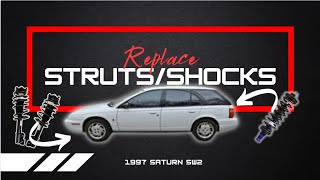
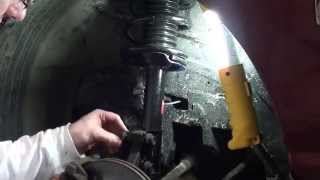
🎬 Watch: Step-by-step Saturn S-Series strut replacement guide- Safely lifting and supporting the front of the vehicle and removing the wheel.
- Disconnecting the sway bar link from the strut body, if equipped.
- Removing the two large bolts that secure the bottom of the strut to the steering knuckle.
- Removing the three smaller nuts on top of the strut tower in the engine bay.
- Removing the old strut assembly from the wheel well.
- Installation is the reverse of removal. It's important to get all bolts started by hand before tightening them to spec.
Warning: After replacing struts, the vehicle will need a professional wheel alignment. Driving without an alignment will cause premature tire wear and can affect handling.
Important Note on Washers
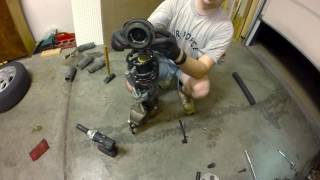
If you are disassembling a strut to reuse parts like the spring or mount (which is not typical when buying a complete assembly), be aware that there are crucial concave washers above and below the strut mount. On original struts, these may be part of the dust boot assembly. Failure to reinstall these washers can cause the strut rod to pull through the mount, leading to a catastrophic failure.
🎬 Watch: Why you can't forget the strut washersKnown Issues, TSBs, and Recalls
For a vehicle of this age, formal manufacturer documentation is sparse. There are no major recalls or Technical Service Bulletins (TSBs) specifically for the front struts on the 1991-1995 Saturn SL2. However, owner forums and repair databases consistently point to front suspension noise and strut wear as a common problem. Most issues are simply due to age and wear on components like struts, mounts, and control arm bushings.
Related Parts to Inspect
When you're working on the front suspension, it's a good time to inspect other related components that often wear out at the same time.
- Sway Bar Links: These connect the sway bar to the strut or control arm. Worn links can cause a clunking noise over bumps.
- Lower Control Arms (LCA): The bushings in the LCAs can wear out, causing clunking noises and poor handling.
- Tie Rod Ends: Both inner and outer tie rod ends can develop play, leading to steering looseness and alignment issues.
- Ball Joints: Worn ball joints are a safety concern and can cause knocking noises and steering problems.
Frequently Asked Questions (FAQ)
Do I need to get an alignment after replacing my front struts?
Yes, absolutely. Replacing the front struts will change the suspension geometry. You must get a professional wheel alignment to ensure proper handling, safety, and to prevent rapid tire wear.
Can I replace just one strut?
It is strongly recommended to replace struts in pairs (both front struts or both rear struts). Since struts wear out over time, replacing only one can result in unbalanced handling and stability, which can be unsafe.
Are the front struts the same for the driver and passenger side?
Yes, for the 1991-1995 Saturn SL2, the front complete strut assemblies are not side-specific and can be installed on either the driver's or passenger's side. Many aftermarket part numbers, like Monroe 171924, confirm this.
What tools do I need to replace the front struts?
You will need a good socket and wrench set (including 13mm, 18mm, and 21mm sockets/wrenches), a jack and jack stands, a torque wrench, and possibly a hammer to tap out the knuckle bolts. Because you are replacing the complete assembly, you do not need a spring compressor.
Technical Specifications and Part Numbers
The following part numbers are for the complete front strut assembly, also known as a "quick strut."
OEM Part Numbers
- Saturn: 21010889
- Saturn: 21012610
- Saturn: 21012612
Aftermarket Part Numbers
- Monroe: 171924
- Gabriel: G57013
- FCS: 1332344
Helpful Videos
Technical Specifications
OEM Part Numbers: 21010889 21012610 21012612
Part is a complete front strut assembly (quick strut). It is interchangeable for driver and passenger sides.
We Have This Part in Stock



The information in this article is provided for general reference and educational purposes only. Vehicle specifications, procedures, and part compatibility can vary by production date, trim level, and region. Always consult your vehicle's factory service manual and verify part numbers before purchasing or performing repairs. Safety-critical components such as airbags, seat belts, and braking systems should be installed by a qualified professional.
- Saturn SL2:
- 🎬 Helpful Videos
- 🛍️ Shop This Part
- Symptoms of a Failing Front Strut
- Noises and Vibrations
- Poor Handling and Ride Quality
- Visual Signs
- Buying a Used 1991-1995 SL2 Front Strut Assembly
- What to Inspect
- Cost Comparison: SL2 Front Strut Replacement
- Front Strut Replacement Overview
- Important Note on Washers
- Known Issues, TSBs, and Recalls
- Related Parts to Inspect
- Frequently Asked Questions (FAQ)
- Technical Specifications and Part Numbers
- OEM Part Numbers
- Aftermarket Part Numbers
- 🎟️ Get 5% Off