

2013-2018 Nissan Altima Front Strut Guide: Noises, Leaks, and Trim Level Traps
This guide covers common failure symptoms, replacement costs, and the critical differences between standard and SR sport suspension struts for the 2013-2018 Nissan Altima.
- Compatibility is critical: You must match the strut to your Altima's engine (2.5L vs 3.5L) and suspension type (Standard vs. SR Sport). They are not interchangeable.
- Common failure signs include clunking over bumps, a bouncy ride, fluid leaks, and a popping/drumming noise when turning at low speeds.
- Always replace struts in pairs (both front or both rear) to ensure balanced handling and safety.
- A professional wheel alignment is mandatory after replacing front struts to prevent poor handling and rapid tire wear.
Symptoms of a Failing Suspension Strut


A worn-out strut on a 2013-2018 Nissan Altima will give you several warning signs. Some are obvious noises, while others are changes in how the car feels on the road. Ignoring these can lead to unsafe driving conditions and cause extra wear 🎬 Watch: 5 symptoms of bad struts you should not ignore on other suspension parts and tires.
Noises and Vibrations
- Clunking or Banging: This is the most common sign. You'll hear a hollow clunking or banging sound from a corner of the car when driving over bumps, potholes, or uneven pavement. This is caused by worn internal components allowing for excessive movement.
- Drumming or Popping When Turning: Nissan issued a Technical Service Bulletin (TSB NTB12-090a) for 2013 models specifically addressing a 'drumming noise' from the front right strut area when turning left at low speeds (under 15 MPH). Another TSB mentions a 'popping noise' when turning, related to the coil springs and strut bearings. This sound is often caused by the coil spring shifting in its seat.
- Creaking or Groaning: A creaking or groaning sound when turning the steering wheel at low speeds can indicate a bad strut mount bearing. This bearing allows the entire strut assembly to pivot smoothly as you steer.
Poor Handling and Ride Quality
- Bouncy or 'Floaty' Ride: If the car continues to bounce up and down after hitting a bump, the strut's internal dampening has failed. It will feel unstable and 'floaty' at highway speeds.
- Nose-Diving and Squatting: A classic symptom of bad front struts is the front end of the car diving forward excessively during hard braking. Conversely, bad rear shocks will cause the rear of the car to squat during acceleration.
- Swaying or Leaning in Turns: The car will feel less stable and may roll or sway to the outside of a turn. This reduces driver control and confidence.
- Uneven Tire Wear: Worn struts can cause a specific type of tire wear called 'cupping' or 'scalloping'. This looks like a pattern of high and low spots across the tire tread because the tire is literally bouncing off the pavement as you drive.
Visual Signs
- Fluid Leaks: The strut body is filled with hydraulic fluid. If you see oily, wet residue on the outside of the strut, it means the seals have failed and the fluid has leaked out. A leaking strut can no longer dampen bumps and must be replaced.
Compatibility Warning: The biggest mistake when buying a strut for this Altima is choosing the wrong one for your trim level. The SR (Sport) trim has a sport-tuned suspension that is different from the standard suspension on S, SV, and SL trims. The parts are NOT interchangeable. You must also match the engine (2.5L 4-cylinder vs. 3.5L V6). Always verify the part fits your specific year, engine, and trim.
Known Issues, TSBs, and Recalls

While there are no direct recalls for the struts themselves, Nissan has issued several Technical Service Bulletins (TSBs) related to front suspension noises on the 2013-2018 Altima.
- TSB NTB12-090a: Addresses a drumming noise from the right front strut tower on 2013 Altimas when turning left at low speed. The fix involves replacing the coil spring and applying a corrosion-preventing wax to the strut tower where the spring was making contact.
- TSB NTB15-062A: Notes a popping noise from the front suspension when turning, pointing to potential issues with the front coil springs and strut bearings.
- Rear Suspension Link Warranty Extension: Nissan extended the warranty on the rear lower suspension links, which can corrode and cause a knocking or rattling noise from the rear of the vehicle. This could be mistaken for a bad rear shock absorber, so it's important to diagnose the source of the noise correctly. 🎬 See common 5th gen Altima problems to help your diagnosis
Buying a Used Suspension Strut
A high-quality, low-mileage used OEM strut assembly can be a great value, often providing better ride quality and longevity than a cheap, new aftermarket part. Here’s what to look for:
- Verify Compatibility: Double-check that the part comes from a donor vehicle with the exact same engine (2.5L or 3.5L) and suspension type (Standard for S/SV/SL or Sport for SR). This is the most important step.
- Check for Leaks: Inspect the entire strut body for any signs of hydraulic fluid. It should be dry and clean. Any oily residue is an immediate red flag.
- Inspect the Coil Spring and Mount: Look for heavy rust, cracks, or breaks in the coil spring. Check the rubber on the top strut mount for cracks or separation.
- Assess Mileage: Struts typically last between 50,000 and 100,000 miles. A used strut from a vehicle with under 60,000 miles is ideal. Be wary of parts with over 100,000 miles, as their remaining lifespan is limited.
- Rebound Test (If Possible): If the strut is off the car, try to compress it by hand (this is difficult). A good strut will offer strong resistance and rebound smoothly on its own. A bad strut will feel weak or get stuck.
Pro Tip: Always replace struts in pairs (both front or both rear). Replacing only one side can create an imbalance in handling and stability, making the vehicle unpredictable and unsafe.
Cost Comparison for Front Strut Replacement
Prices can vary based on brand, location, and your specific vehicle trim. The following table provides an estimated cost for replacing a single front strut assembly.
| Part Type | Estimated Price Range (Per Strut) |
|---|---|
| New OEM | $160 - $230 |
| New Aftermarket | $75 - $180 |
| Used OEM | $70 - $130 |
| Shop Labor (Pair) | $350 - $525 |
Replacement Overview and Torque Specs

Replacing the front struts on a 2013-2018 Altima is a feasible DIY job for someone with mechanical experience and the right tools. The most common method is to replace the entire strut assembly (quick-strut), which avoids the need for a dangerous spring compressor. The job takes approximately 1-2 hours per side.
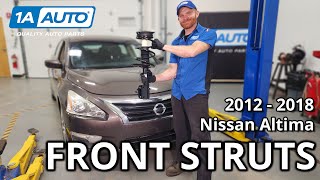
🎬 Watch this step-by-step guide to replacing your front strutsKey Steps:
- Safely raise and support the vehicle on jack stands and remove the front wheel.
- Disconnect the sway bar link from the strut body.
- Disconnect the ABS sensor wire and brake hose brackets from the strut.
- Support the steering knuckle with a jack.
- Remove the two large bolts that connect the bottom of the strut to the steering knuckle.
- Remove the three nuts on top of the strut tower in the engine bay.
- Remove the old strut assembly.
- Install the new strut assembly and tighten the bolts to the correct torque specifications.
Alignment is Required: After replacing front struts, you MUST get a professional wheel alignment. The new parts will change the suspension geometry, and skipping the alignment will cause poor handling and rapid tire wear.
Essential Torque Specs:
- Strut-to-Knuckle Bolts (Lower): 103 ft-lbs
- Strut Mount Nuts (Upper): 26 ft-lbs
- Sway Bar Link Nut: 62 ft-lbs
- Wheel Lug Nuts: 83 ft-lbs
Frequently Asked Questions (FAQ)
Do I need to replace the strut mount at the same time?
If you are buying a complete 'quick-strut' assembly, it will come with a new mount, bearing, and spring already installed. If you are only replacing the strut cartridge itself (not recommended for DIY), you should always replace the strut mount and bearing, as these rubber and plastic components wear out at a similar rate.
What's the difference between a strut for a 2.5L and a 3.5L Altima?
The 3.5L V6 engine is heavier than the 2.5L 4-cylinder. Because of this, the front struts use different coil springs and may have different damping rates to handle the weight difference properly. Using a 2.5L strut on a 3.5L car would result in incorrect ride height and poor handling.
Can I use struts from an Altima SR on my SV or SL model?
No. The SR trim has a sport-tuned suspension with different struts and springs designed for firmer handling. Using SR struts on a standard model (or vice-versa) will result in an unbalanced ride, incorrect ride height, and potentially unsafe handling characteristics. You must match the part to your car's original suspension type.
Is a clunking noise always a bad strut?
Not always, but it's a primary suspect. Other common sources of clunking noises in the front suspension include worn sway bar links, bad control arm bushings, or a failing ball joint. A thorough inspection is needed to pinpoint the exact cause.
Helpful Videos
Technical Specifications
OEM Part Numbers: 54010-9HS0B 54320-3JA0A 54325-3TA0A E4302-3NT0B E4302-3NT1B E4302-3NT1C E4302-9HS0A E4302-9HS0B E4302-9HS0H E4302-9HS1A E4302-9HS1H E4303-3NT1B E4303-3TA1B E4303-9HS0A E4303-9HS0B
Torque Specs: - Strut-to-Knuckle Bolts: 103 ft-lbs - Upper Strut Mount Nuts: 26 ft-lbs - Sway Bar Link Nut: 62 ft-lbs - Wheel Lug Nuts: 83 ft-lbs
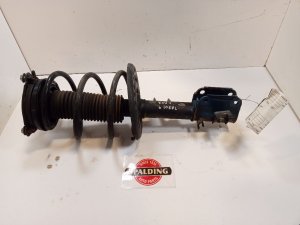
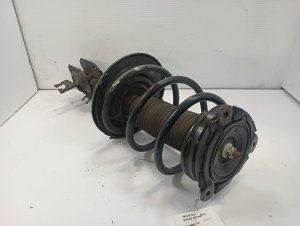
We Have This Part in Stock



The information in this article is provided for general reference and educational purposes only. Vehicle specifications, procedures, and part compatibility can vary by production date, trim level, and region. Always consult your vehicle's factory service manual and verify part numbers before purchasing or performing repairs. Safety-critical components such as airbags, seat belts, and braking systems should be installed by a qualified professional.
- Nissan Altima:
- 🎬 Helpful Videos
- 🛍️ Shop This Part
- Symptoms of a Failing Suspension Strut
- Noises and Vibrations
- Poor Handling and Ride Quality
- Visual Signs
- Known Issues, TSBs, and Recalls
- Buying a Used Suspension Strut
- Cost Comparison for Front Strut Replacement
- Replacement Overview and Torque Specs
- Key Steps:
- Essential Torque Specs:
- Frequently Asked Questions (FAQ)
- 🎟️ Get 5% Off