

2008-2017 Mitsubishi Lancer Struts: Clunks, Leaks, and Critical Fitment Warnings
This guide covers common failure symptoms, complex compatibility issues, and replacement costs for the 2008-2017 Mitsubishi Lancer suspension struts.
- Fitment is extremely complex; struts differ between FWD/AWD models and are not interchangeable with Ralliart or Evolution trims.
- Clunking noises over bumps are the most common failure symptom, often caused by the strut itself or the upper strut mount.
- Always replace struts in pairs (both front or both rear) and perform a wheel alignment immediately after replacing front struts.
- A low-mileage used OEM strut assembly can be a better value and provide superior ride quality compared to a cheap new aftermarket part.
Symptoms of a Failing Lancer Strut

Worn or failing struts on a Mitsubishi Lancer can produce a variety of noticeable symptoms. Early diagnosis can prevent further damage to tires and other suspension components.
Clunking, Popping, or Knocking Noises
This is the most common sign of a bad strut or related component. You will typically hear a loud clunking or knocking sound coming from a corner of the car when driving over bumps, potholes, or uneven pavement. A popping or creaking noise when turning the steering wheel at low speeds often points specifically to a failed strut mount bearing, which is a frequent issue. 🎬 See how to replace a noisy strut bearing Forum users frequently report chasing down these front-end clunks, which can also be caused by a loose center strut nut or worn sway bar end links.
Bouncy or Unstable Ride
When the internal damper of the strut wears out, it loses its ability to control the spring. This results in an excessively bouncy, floating, or unstable feeling. After hitting a bump, the car may continue to bounce multiple times instead of settling immediately. This can also manifest as increased body roll when turning or a noticeable "nose dive" when braking hard.
Visible Fluid Leaks
The strut body is filled with hydraulic oil. If the seals fail, this oil will leak out, leaving a greasy, wet film on the strut housing. A leaking strut has lost its damping ability and must be replaced. You can inspect the strut by looking into the wheel well with a flashlight.
Uneven Tire Wear
Because failing struts allow the wheel to bounce and move erratically, they can cause a specific type of tire wear called "cupping" or "scalloping." This appears as a pattern of alternating high and low spots on the tire tread. A bad strut can also throw off the wheel alignment, leading to accelerated wear on the inner or outer edges of the tire.
CRITICAL FITMENT WARNINGS: Read Before Buying

The 2008-2017 Mitsubishi Lancer has one of the more complex strut fitment systems, with many variations that are not interchangeable. Ordering the wrong part is a common and costly mistake. Verify your vehicle's exact specifications before purchasing.
Warning: The initial data provided for this article contained several fitment warnings that have been verified. These compatibility issues are the single most important factor when purchasing a replacement strut.
1. Drivetrain: Front-Wheel Drive (FWD) vs. All-Wheel Drive (AWD)
The rear suspension design is different between FWD and AWD models. Therefore, rear struts for FWD and AWD models are not interchangeable. The front struts, however, are often the same for both FWD and AWD base models (excluding Ralliart/Evolution). Always confirm part numbers for your specific drivetrain.
2. Trim Level: Base vs. Ralliart vs. Evolution (Evo)
The Ralliart and Evolution (Evo) models are turbocharged, high-performance variants with unique sport-tuned suspensions. Struts from a base model Lancer (DE, ES, SE, GT) will NOT fit a Ralliart or Evo, and vice-versa. These parts have different valving, spring rates, and mounting points to handle the increased power and performance demands.
3. Side and Position: Front vs. Rear & Left vs. Right
Struts are almost always side-specific (driver vs. passenger) and position-specific (front vs. rear). For example, a front right strut cannot be used on the front left or on the rear of the vehicle. Ensure you are ordering for the correct corner of the car.
Known Issues, Recalls, and Technical Service Bulletins (TSBs)

While there are no recalls specifically for the struts themselves, a major recall for front crossmember corrosion is highly relevant.
NHTSA Recall #20V279000: This recall affects 2008-2010 Lancers (among other Mitsubishi models) registered in states with heavy road salt usage. The front crossmember, which is a mounting point for the lower suspension arms, can corrode and potentially fail. A failed crossmember can cause a detachment of the lower control arm, leading to a sudden loss of steering control. During any strut replacement, it is critical to inspect the condition of this front crossmember for severe rust or damage.
No specific TSBs relating to strut failure were found, though many owner complaints focus on clunking noises from the front suspension.
Buying a Used OEM Suspension Strut
For many owners, a low-mileage used OEM strut is a smart choice, offering factory ride quality at a significant discount compared to new dealer parts. However, careful inspection is key.
Why Used OEM Can Be Better Than New Aftermarket
Original Equipment Manufacturer (OEM) struts are designed and tuned by Mitsubishi specifically for the Lancer's weight, handling characteristics, and comfort levels. Many cheap, new aftermarket struts use generic valving that can result in a ride that is either too stiff or too soft, failing to replicate the original driving dynamics. A high-quality used OEM strut from a low-mileage vehicle often provides superior performance and longevity compared to a budget aftermarket alternative.
Inspection Checklist
- Check for Leaks: The most important check. Look for any oily residue on the strut body. A wet or grimy strut is a failed strut.
- Inspect the Rod: The chrome-plated piston rod should be smooth, straight, and free of rust, pitting, or damage. A bent rod will destroy the seals quickly.
- Mileage: Struts are wear items. A used strut from a vehicle with over 80,000-100,000 miles is likely near the end of its service life. Aim for parts from vehicles with the lowest possible mileage.
- Physical Condition: Check for heavy rust on the strut body, spring perch, and mounting tabs. While surface rust is common, deep, flaking rust can compromise the part's integrity.
- Verify Part Numbers: Given the fitment complexity, cross-reference the part number from the used strut with a reliable catalog to ensure it matches your Lancer's year, model, and drivetrain.
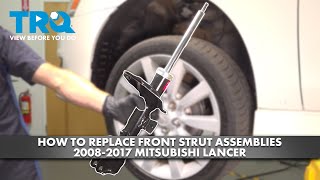
Pro Tip: Consider buying a complete used strut assembly, which includes the strut, coil spring, and top mount. This saves you the difficult and dangerous task of using a spring compressor 🎬 Watch: Step-by-step front strut assembly replacement guide to swap the spring from your old strut to the new one.
Cost Comparison for Lancer Strut Replacement (Per Corner)
Prices can vary based on location, brand, and whether you are buying a bare strut or a complete assembly. These are typical cost ranges.
| Part Type | Estimated Part Cost |
|---|---|
| New OEM (Dealer) | $230 - $340 |
| New Aftermarket (KYB, etc.) | $100 - $175 |
| Used OEM | $50 - $120 |
| Shop Labor | $100 - $150 per corner |
Replacement Information

Related Parts to Replace
When replacing struts, especially on higher-mileage vehicles, it is highly recommended to replace related components at the same time to save on future labor costs and ensure proper performance.
- Strut Mount & Bearing: The rubber mount degrades over time and the bearing wears out, causing noise and steering stiffness. Always replace these with the strut.
- Dust Boot & Bump Stop: The boot protects the strut rod from dirt and debris, while the bump stop prevents damage from harsh impacts. These are often sold as a kit and are inexpensive to replace.
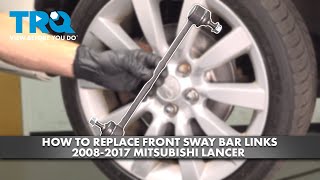
- Sway Bar End Links: These are a very common source of clunking noises on Lancers and are easy to replace at the same time as the struts. 🎬 Watch: How to replace front sway bar links
Special Procedures & Torque Specs
Replacing a strut requires care and the right tools. A wheel alignment is mandatory after replacing front struts.
Warning: If you are not buying a complete strut assembly, you will need to use a spring compressor to transfer the coil spring. This tool is extremely dangerous if used improperly and can cause serious injury. This part of the job is often best left to a professional.
Key torque specifications are essential for a safe installation. While specs can vary slightly by model year and source, these are commonly cited values:
| Fastener | Torque Spec (ft-lbs) | Source |
|---|---|---|
| Front Strut Top Mount Nuts (to body) | 33 ft-lbs | |
| Front Strut to Knuckle/Spindle Bolts | 80 - 123 ft-lbs | |
| Rear Shock Top Nuts | 33 ft-lbs | |
| Rear Shock Bottom Bolt | 70 ft-lbs | |
| Wheel Lug Nuts | 73 - 80 ft-lbs |
Note: Always tighten suspension bolts to their final torque value with the vehicle's weight on the suspension (on the ground or on ramps), not while it is jacked up with the wheels hanging.
Frequently Asked Questions (FAQ)
Do I have to replace my struts in pairs?
Yes, absolutely. Struts should always be replaced in pairs (both front or both rear) to ensure even damping, consistent ride height, and predictable handling. Replacing only one side can create a dangerous imbalance in vehicle stability.
What's the difference between a bare strut and a complete strut assembly?
A bare strut is just the damper body itself. A complete strut assembly (or "quick strut") comes pre-assembled with a new coil spring, strut mount, bearing, boot, and bump stop. While more expensive, complete assemblies are much safer and faster to install, especially for DIY mechanics, as they eliminate the need for a spring compressor.
Is a wheel alignment necessary after replacing struts?
Yes. Replacing the front struts will always change the wheel alignment angles (camber and toe). Skipping the alignment will cause poor handling, crooked steering, and rapid, uneven tire wear. You must get a professional alignment done immediately after the repair.
My car clunks but the struts aren't leaking. What else could it be?
Clunking noises on a Lancer are very common. If the struts themselves are dry, the most likely culprits are worn strut mounts/bearings, sway bar end links, or possibly lower ball joints. Check the strut mounts first, as they are a frequent failure point.
Helpful Videos
Technical Specifications
OEM Part Numbers: 339105 341425 4060A065 4060A066 4060A205 4060A206 4060A242 4060A283 4060A307 4060A308 4060A373 4060A374 4060A463 4060A481 4060A482
Front Strut Top Mount Nuts: 33 ft-lbs. Front Strut to Knuckle Bolts: 80-123 ft-lbs. Rear Shock Top Nuts: 33 ft-lbs. Rear Shock Bottom Bolt: 70 ft-lbs. Wheel Lug Nuts: 73-80 ft-lbs.
We Have This Part in Stock



The information in this article is provided for general reference and educational purposes only. Vehicle specifications, procedures, and part compatibility can vary by production date, trim level, and region. Always consult your vehicle's factory service manual and verify part numbers before purchasing or performing repairs. Safety-critical components such as airbags, seat belts, and braking systems should be installed by a qualified professional.
- Mitsubishi Lancer:
- 🎬 Helpful Videos
- 🛍️ Shop This Part
- Symptoms of a Failing Lancer Strut
- Clunking, Popping, or Knocking Noises
- Bouncy or Unstable Ride
- Visible Fluid Leaks
- Uneven Tire Wear
- CRITICAL FITMENT WARNINGS: Read Before Buying
- 1. Drivetrain: Front-Wheel Drive (FWD) vs. All-Wheel Drive (AWD)
- 2. Trim Level: Base vs. Ralliart vs. Evolution (Evo)
- 3. Side and Position: Front vs. Rear & Left vs. Right
- Known Issues, Recalls, and Technical Service Bulletins (TSBs)
- Buying a Used OEM Suspension Strut
- Why Used OEM Can Be Better Than New Aftermarket
- Inspection Checklist
- Cost Comparison for Lancer Strut Replacement (Per Corner)
- Replacement Information
- Related Parts to Replace
- Special Procedures & Torque Specs
- Frequently Asked Questions (FAQ)
- 🎟️ Get 5% Off