

1986-1987 Mazda RX-7 Strut Guide: Identifying AAS and Non-Turbo Models
This guide helps you choose the right front strut for your non-turbo RX-7 and avoid the common pitfalls of the optional Auto Adjusting Suspension (AAS).
- Compatibility is critical: This guide is for non-turbo 1986-1987 RX-7s WITHOUT the optional Auto Adjusting Suspension (AAS). Verify your car's setup before buying.
- Failure is a safety issue: Bad struts increase stopping distance, cause poor handling, and can lead to loss of control.
- Look for leaks: The most obvious sign of a completely failed strut is oily fluid leaking down the strut body.
- Replace in pairs and budget for an alignment: Always replace both front struts at the same time and get a wheel alignment immediately after to ensure safety and prevent tire damage.
Compatibility: The AAS and Turbo Trap
Before purchasing a replacement strut for a 1986-1987 Mazda RX-7, you must correctly identify your vehicle's original suspension setup. Using the wrong part can lead to improper fitment, poor handling, and potential safety issues. The two most important factors are the Auto Adjusting Suspension (AAS) system and the presence of a turbocharger.
Auto Adjusting Suspension (AAS) vs. Standard Suspension
For the second-generation (FC) RX-7, Mazda offered an advanced electronic suspension option called Auto Adjusting Suspension (AAS). This system used struts with electronically controlled actuators to change damping characteristics between a 'Normal' and 'Sport' mode, selectable via a switch on the center console.
- Vehicles with AAS: Have a switch on the dash or console to select the suspension mode. The struts themselves will have wiring and an electronic actuator at the top. These require specific, and now very rare, AAS-compatible struts.
- Vehicles without AAS: Have a standard, non-electronic 'passive' suspension. These are far more common. The struts listed in this guide are for these non-AAS models.
Warning: Standard (passive) struts and AAS struts are not interchangeable. Do not attempt to install a standard strut on a vehicle originally equipped with AAS without extensive modification to the system.
Turbo vs. Non-Turbo Models
Turbocharged RX-7 models (often called Turbo II) had different suspension tuning to account for the extra weight and performance. While the mounting points may be similar, the internal valving and sometimes the spring rates were different. For optimal performance and safety, it is crucial to use a strut designed for your specific model (Turbo or Non-Turbo). This guide and its associated part numbers focus on the non-turbo models without AAS.
Symptoms of a Failing Strut
Worn struts degrade ride quality and can become a safety hazard by increasing stopping distances and reducing vehicle control. Here are the most common signs of failure:
Noises and Vibrations
- Clunking or Knocking: A dull thud or clunking sound when driving over bumps often points to a worn strut mount or other loose suspension components. Forum users frequently chase down clunks that can be attributed to worn strut top nuts, ball joints, or sway bar links.
- Vibrations: A vibrating steering wheel, especially on smooth roads, can be a sign that the struts are no longer able to properly dampen small oscillations.
Ride and Handling Issues
- Excessive Bouncing: If the car continues to bounce up and down after hitting a bump, the internal damper has failed and is no longer controlling the spring's movement.
- Nose-Diving and Squatting: Worn front struts will cause the front end of the car to dip excessively during braking. Similarly, worn rear shocks can cause the rear to squat during acceleration.
- Body Roll and Poor Control: A feeling that the car is swaying or rolling excessively during turns indicates the struts are not providing adequate stability.
Visual Signs
- Fluid Leaks: The most definitive sign of a failed strut is hydraulic fluid leaking from the seals and running down the outside of the strut body. This fluid will be clear or light brown and oily.
- Uneven Tire Wear: When struts allow the tire to bounce, it can cause a specific type of wear pattern called "cupping" or "scalloping," where patches of rubber are gouged out of the tread.
Buying a Used 1986-1987 RX-7 Strut
Given the age of the FC RX-7, new OEM parts are often discontinued or prohibitively expensive. A high-quality, low-mileage used OEM strut can be a good alternative to a cheap aftermarket part, which may not have the correct valving for the car's handling characteristics.
What to Inspect
- Check for Leaks: The number one red flag is any sign of oil residue on the strut body. A leaking strut is a failed strut.
- Inspect the Piston Rod: The chrome rod that extends from the top of the strut should be smooth, clean, and free of rust or pitting. Any damage to this surface will quickly destroy the main seal.
- Examine the Housing: Look for major dents, heavy corrosion, or bent mounting tabs where the strut attaches to the steering knuckle.
- The Bounce Test (If on a car): Press down firmly on one corner of the car and release. It should rebound once and settle. If it bounces multiple times, the strut is worn out.
Mileage and Age Considerations
Suspension struts are wear items, typically lasting between 50,000 and 100,000 miles. For a car from this era, age is as much a factor as mileage. Rubber seals can dry out and fail over time regardless of use. When buying used, prioritize struts from a low-mileage vehicle. A used strut with over 100,000 miles is likely at the end of its service life.
Pro Tip: Many RX-7 owners purchase used strut housings specifically to install new, modern strut cartridges (e.g., from KYB or Tokico). If the housing is in good shape, this can be an excellent way to upgrade your suspension while saving money.
🎬 Watch: Restoring a 32-year-old FC RX-7 suspension to better than newReplacement and Installation
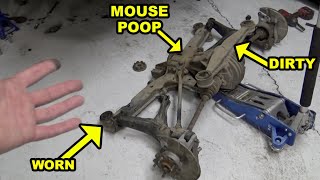
Replacing a front strut requires mechanical knowledge and special tools. 🎬 Watch: Step-by-step FC RX-7 suspension rebuild guide An alignment is mandatory after the job is complete.
Related Parts to Replace
It is highly recommended to replace struts in pairs (both front struts at the same time) to ensure even handling. While the strut is disassembled, it is the perfect time to replace other related wear items:
- Strut Mount (Top Mount): The rubber in these deteriorates over time, leading to clunking noises and poor alignment.
- Dust Boot and Bump Stop: These protect the strut's piston rod and prevent damage from bottoming out. They are almost always degraded on a 30+ year old car.
- Springs: If the original springs are heavily rusted or the car is sagging, consider replacing them as well.
Torque Specifications
Using correct torque specs is critical for safety. While values can vary slightly, common specs for the FC RX-7 are:
| Fastener | Torque Spec |
|---|---|
| Strut to Steering Knuckle Bolts | 69-86 ft-lbs (93-117 Nm) |
| Strut Mount to Body Nuts | 22-27 ft-lbs (30-37 Nm) |
Warning: A coil spring compressor is required to safely disassemble the strut assembly. This tool can be extremely dangerous if used incorrectly. The compressed spring contains a massive amount of energy.
🎬 See: How to install coilovers on an FC3SCost Comparison
Prices can vary, but this provides a general estimate for a single front strut.
| Part Type | Estimated Cost (per strut) |
|---|---|
| New OEM (Mazda) | $250+ (If available) |
| New Aftermarket (e.g., KYB Excel-G) | $120 - $160 |
| Used OEM | $50 - $100 |
| Shop Labor | $200 - $400 (per pair) |
Known Issues, TSBs, and Recalls
For the 1986-1987 model years, there are no specific recalls listed by the National Highway Traffic Safety Administration (NHTSA) for suspension struts. Most known issues are related to age and wear, as discussed in the symptoms section. Forum discussions on sites like RX7Club.com are the best resource for real-world problems, which primarily consist of clunking noises from worn bushings, mounts, and ball joints.
Frequently Asked Questions (FAQ)
Can I replace just one strut?
No. Struts should always be replaced in pairs (both front or both rear) to maintain balanced handling and prevent unpredictable steering behavior. Replacing only one can create a dangerous imbalance in damping from side to side.
What is AAS and how do I know if my RX-7 has it?
AAS stands for Auto Adjusting Suspension, an optional electronic system. The easiest way to check is to look for a switch on your center console that toggles between 'Normal' and 'Sport' suspension modes. If you have this switch, you have AAS, and standard struts will not work.
Do I need a wheel alignment after replacing my struts?
Yes, absolutely. The front struts are a key component in the front suspension geometry. Replacing them will alter the camber and toe settings. A professional wheel alignment is required to ensure proper handling, safety, and to prevent premature tire wear.
What's the difference between a strut and a shock absorber?
A shock absorber is simply a damper. A strut is a structural part of the suspension that incorporates the damper and also provides a mounting point for the coil spring and connects the knuckle to the chassis. The front of the FC RX-7 uses struts, while the rear uses separate shock absorbers and springs.
Helpful Videos
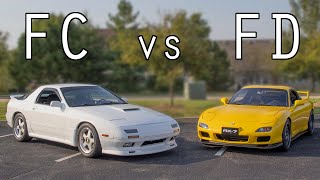
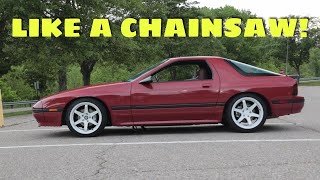
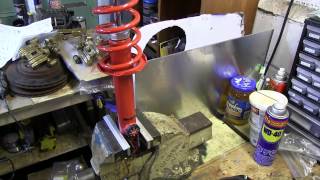
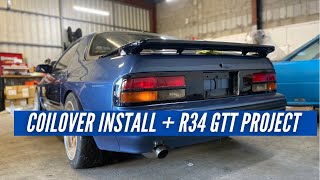
Technical Specifications
OEM Part Numbers: FB01-34-700C FB0134700C FB43-34-700D FB44-34-700C
Aftermarket Equivalent (Front Right): KYB 235012. Aftermarket Equivalent (Front Left): KYB 235013. Strut to Knuckle Torque: 69-86 ft-lbs. Strut Mount to Body Torque: 22-27 ft-lbs.
We Have This Part in Stock


The information in this article is provided for general reference and educational purposes only. Vehicle specifications, procedures, and part compatibility can vary by production date, trim level, and region. Always consult your vehicle's factory service manual and verify part numbers before purchasing or performing repairs. Safety-critical components such as airbags, seat belts, and braking systems should be installed by a qualified professional.
- Mazda RX-7:
- 🎬 Helpful Videos
- 🛍️ Shop This Part
- Compatibility: The AAS and Turbo Trap
- Auto Adjusting Suspension (AAS) vs. Standard Suspension
- Turbo vs. Non-Turbo Models
- Symptoms of a Failing Strut
- Noises and Vibrations
- Ride and Handling Issues
- Visual Signs
- Buying a Used 1986-1987 RX-7 Strut
- What to Inspect
- Mileage and Age Considerations
- Replacement and Installation
- Related Parts to Replace
- Torque Specifications
- Cost Comparison
- Known Issues, TSBs, and Recalls
- Frequently Asked Questions (FAQ)
- 🎟️ Get 5% Off