

2010-2016 Mazda 3 Front Strut Guide: Noises, TSBs, and Replacement Costs
This guide covers common failure symptoms, known issues, and replacement costs for the front suspension struts on the 2010-2016 Mazda 3, with specific details for both the 2nd (2010-2013) and 3rd (2014-2016) generations.
- The 2010-2016 range covers two different Mazda 3 generations (2010-13 and 2014-16) which use different strut part numbers; verify your year before buying.
- Clunking over bumps, a bouncy ride, and fluid leaking from the strut body are definitive signs of failure.
- For 2014-2016 models, specific squeaking and popping noises are a known issue covered by a Mazda TSB (02-005/17) that may require more than just a strut replacement to fix.
- Always replace front struts in pairs and get a wheel alignment immediately after to ensure safety and prevent tire damage.
Understanding the 2010-2016 Mazda 3 Generations

This guide covers two distinct generations of the Mazda 3, which use different suspension components. It is crucial to identify your vehicle's generation before purchasing parts.
- 2nd Generation (Gen 2): Model years 2010-2013.
- 3rd Generation (Gen 3): Model years 2014-2016.
Warning: Parts are generally not interchangeable between these two generations. Always verify fitment with your vehicle's specific year and VIN.
Symptoms of a Failing Front Strut


Because strut failure is gradual, you might not notice the slow decline in ride quality. However, certain sounds and handling issues are clear indicators that it's time for a replacement. A bad strut can also cause premature wear on other expensive suspension parts.
Common Noises
- Clunking or Banging: A hollow, clunking, or banging sound when driving over bumps, potholes, or uneven pavement is the most common sign of a worn-out strut. This is caused by excessive movement within the strut assembly. 🎬 Watch: Diagnosing a clunking sound on a 2013 Mazda 3
- Squeaking or Creaking: For 2014-2016 models, a squeaking noise when turning the steering wheel while stopped, or a creaking/popping sound over bumps, is a known issue addressed by a Technical Service Bulletin (TSB). This is often related to the strut bearing or spring seat.
- Rattling: A rattling noise from the front end could indicate a loose or worn sway bar end link, which is often diagnosed and replaced at the same time as the struts.
Poor Handling and Ride Quality
- Bouncy Ride: The vehicle will continue to bounce up and down after hitting a bump instead of settling immediately.
- Nose-Diving: The front end of the car dips excessively when you apply the brakes.
- Body Roll: The vehicle leans or sways more than usual during turns or lane changes.
- Stiff Steering: A worn strut bearing can make the steering feel difficult to turn or 'notchy'.
Visual Signs
- Fluid Leaks: The strut body may be covered in a grimy, oily film. This indicates that the hydraulic fluid inside has leaked out, and the strut can no longer dampen impacts. Note that Mazda TSB 02-006-18-3449 states that a light film of oil can be normal, but heavy, dripping fluid is a sign of failure.
- Uneven Tire Wear: Worn struts can cause a distinct pattern of wear on your tires called "cupping," which looks like a series of high and low spots on the tread. This happens because the tire is bouncing as it goes down the road instead of maintaining constant contact.
Known Issues, TSBs, and Recalls

2014-2016 Mazda 3 (Gen 3) Front Suspension Noises (TSB 02-005/17)
Many 3rd generation Mazda 3s may develop squeaking, popping, or creaking noises from the front suspension. Mazda issued a Technical Service Bulletin to address these issues. The causes include:
- Squeaking when turning: Caused by stick-slip between the front strut bearing and the coil spring.
- Popping over bumps: Caused by the bump stop contacting the strut bearing during compression.
- Creaking at low speeds: Caused by the front lower arm bushing.
The fix involves installing modified parts, including a new protector on the coil spring and an updated bump stop. If you are experiencing these specific noises on a 2014-2016 model, be aware that replacing only the strut may not solve the problem.
No-Start Condition After Strut Replacement (All Years)
This may sound strange, but it's a common mistake. The main engine ground wire attaches to the chassis near the driver's side strut tower. If this ground is not reconnected securely after a strut replacement, your car may not start, or you may experience various electrical issues. Always double-check this connection.
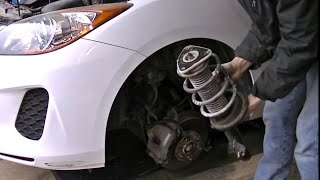
🎬 See this step-by-step strut replacement for 2010-2013 modelsIncorrect Recall Information
A safety recall was issued for other Mazda models (CX-3, CX-5, CX-9, Mazda2) from a similar time period for front strut bolts that could loosen and cause a loss of steering control. This recall did not include the Mazda 3. However, it highlights the importance of properly tightening all suspension bolts to the correct torque specifications.
Buying a Used Suspension Strut
While many mechanics advise against buying used suspension parts, a low-mileage, recycled OEM strut can be a smart choice, especially when compared to a new, cheap aftermarket part. OEM struts are designed specifically for your car's handling and ride characteristics, a feel that budget aftermarket parts often fail to replicate.
What to Inspect on a Used Strut Assembly:
- Check for Leaks: The strut body should be dry. Any sign of wet, dripping oil or a thick, caked-on layer of oily grime means the strut has failed.
- Push-Down Test: If it's a complete assembly, stand it upright and push down hard on the top mount. It should compress smoothly and, most importantly, rebound slowly and in a controlled manner. If it bounces back up quickly like a pogo stick, the internal valving is worn out.
- Examine the Mount: Look for cracks or severe dry rot in the rubber of the top strut mount. Spin the bearing by hand; it should move smoothly without grinding or binding.
- Inspect the Coil Spring: Look for any cracks, heavy rust, or breaks in the spring, especially at the very top and bottom where they sit in the perch.
- Check the Dust Boot: Ensure the rubber or plastic dust boot is intact. A torn boot allows dirt and debris to damage the strut's main seal, leading to premature failure.
Pro Tip: A used OEM strut with 50,000 miles is often a better choice for ride quality and fitment than a brand-new, entry-level aftermarket strut. However, if the used strut has over 100,000 miles, it's likely nearing the end of its service life.
Compatibility and Part Numbers
Fitment is very specific. The main warnings for the 2010-2013 models are for vehicles without a turbo (i.e., not a Mazdaspeed3) and originally equipped with 17-inch wheels. Always confirm the part number or provide your VIN to the seller.
| Generation | Position | Known OEM Part Numbers | Notes |
|---|---|---|---|
| 2010-2013 (Gen 2) | Front Left | BBM2-34-900A, BBM2-34-900E, BBN5-34-900A, BHP734900 | Fits non-turbo models with 17-inch wheels. |
| 2010-2013 (Gen 2) | Front Right | BBM2-34-700C, B32T34700D, BABF-34-900 | Fits non-turbo models with 17-inch wheels. |
| 2014-2016 (Gen 3) | Front Left | BJS7-34-900, BHN7-34-900 | Part numbers vary by build date and specific trim. |
| 2014-2016 (Gen 3) | Front Right | BJS7-34-700, BHN7-34-700 | Part numbers vary by build date and specific trim. |
Replacement Overview
Replacing the front struts is a job that can be done by a skilled DIYer, but it requires special tools and careful attention to safety. If you are not comfortable with the procedure, it is best left to a professional.
- Difficulty: 4/5 (Requires spring compressor if not using a quick-strut)
- DIY Feasible: Yes, for experienced individuals.
- Special Tools: Spring compressor (critical for safety), torque wrench, breaker bar, pass-through socket set for the top nut.
Warning: Compressing a coil spring is extremely dangerous. The stored energy is immense, and if the tool slips or fails, it can cause serious injury or death. Using a fully assembled "quick-strut" is a much safer alternative for DIY replacement as it eliminates this step.
🎬 Watch: How to install loaded quick-struts on a Gen 3Related Parts to Replace
To do the job right and avoid having to take everything apart again soon, it is highly recommended to replace these related components at the same time:
- Strut Mount & Bearing: The mount's rubber deteriorates, and the bearing wears out, causing noise and steering issues.
- Dust Boot & Bump Stop: These protect the new strut and are almost always worn out on the original.
- Sway Bar End Links: These are inexpensive and often wear out at the same time, causing similar clunking noises.
An alignment is required after replacing the front struts to prevent rapid tire wear and ensure proper handling.
Key Torque Specifications
Proper torque is critical for safety. These values are for reference; always verify with a service manual for your specific year.
| Fastener | Torque Spec (Gen 2) | Torque Spec (Gen 3) | Notes |
|---|---|---|---|
| Strut-to-Knuckle Pinch Bolt | ~63-80 ft-lbs (85-108 Nm) | ~39-54 ft-lbs | Critical for holding the assembly together. |
| Top Mount Nuts (3) | ~30 ft-lbs | ~14-20 ft-lbs | Do not overtighten. |
| Sway Bar End Link Nut | ~27 ft-lbs | ~32-44 ft-lbs | Use an Allen key or wrench to prevent the stud from spinning. |
| Strut Piston Rod Nut (Top Center) | ~43-56 ft-lbs | ~43-56 ft-lbs | Requires a special tool or pass-through socket. |
Cost Comparison
Prices can vary significantly based on brand, location, and whether you do the work yourself. Labor costs are for replacing a pair of front struts.
| Part/Service | Estimated Cost | Notes |
|---|---|---|
| New OEM Strut (Bare) | $170 - $250 each | Does not include spring, mount, or labor. |
| New Aftermarket Quick-Strut | $95 - $180 each | Complete assembly. Brands include KYB, Monroe, Duralast. |
| Used OEM Strut Assembly | $75 - $150 each | Price depends on mileage and condition. |
| Shop Labor Cost | $200 - $350 | For replacing a pair of struts. Alignment is extra. |
| Wheel Alignment | $75 - $150 | Mandatory after strut replacement. |
Frequently Asked Questions (FAQ)
Do I have to replace struts in pairs?
Yes, you should always replace front struts as a pair (left and right). Replacing only one will result in unbalanced handling, uneven braking, and unpredictable steering. All major manufacturers and repair shops mandate this.
Is a "quick-strut" or complete assembly better?
For most DIYers, a quick-strut is the best option. It includes the strut, spring, mount, and boot in one pre-assembled unit. This is much safer than using a spring compressor and ensures all related components are new. For professionals or those wanting to retain specific performance springs, replacing just the bare strut is also an option.
Will new struts fix my clunking noise?
Most likely, yes, if the strut is the cause. However, clunking noises can also come from worn sway bar end links, control arm bushings, or ball joints. It's important to inspect the entire front suspension to correctly diagnose the source of the noise before replacing parts.
Why is there a difference for cars with 17-inch wheels?
For the 2010-2013 models, Mazda likely used slightly different strut valving or spring rates to accommodate the different weight and handling characteristics of the larger, heavier 17-inch wheel and tire combination compared to the base model's smaller wheels. Using the wrong strut could result in a harsh ride or improper handling.
Helpful Videos
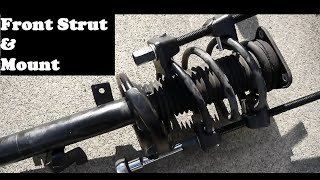
Technical Specifications
OEM Part Numbers: BBM2-34-900A BBM2-34-900E BBN5-34-900A BHP734900 B32T34700D BABF-34-900 BBM2-34-700C BJS7-34-900 BHN7-34-900 BJS7-34-700 BHN7-34-700
Compatibility is dependent on generation (2010-2013 vs 2014-2016), non-turbo engine, and, for Gen 2, original 17-inch wheel fitment.
We Have This Part in Stock

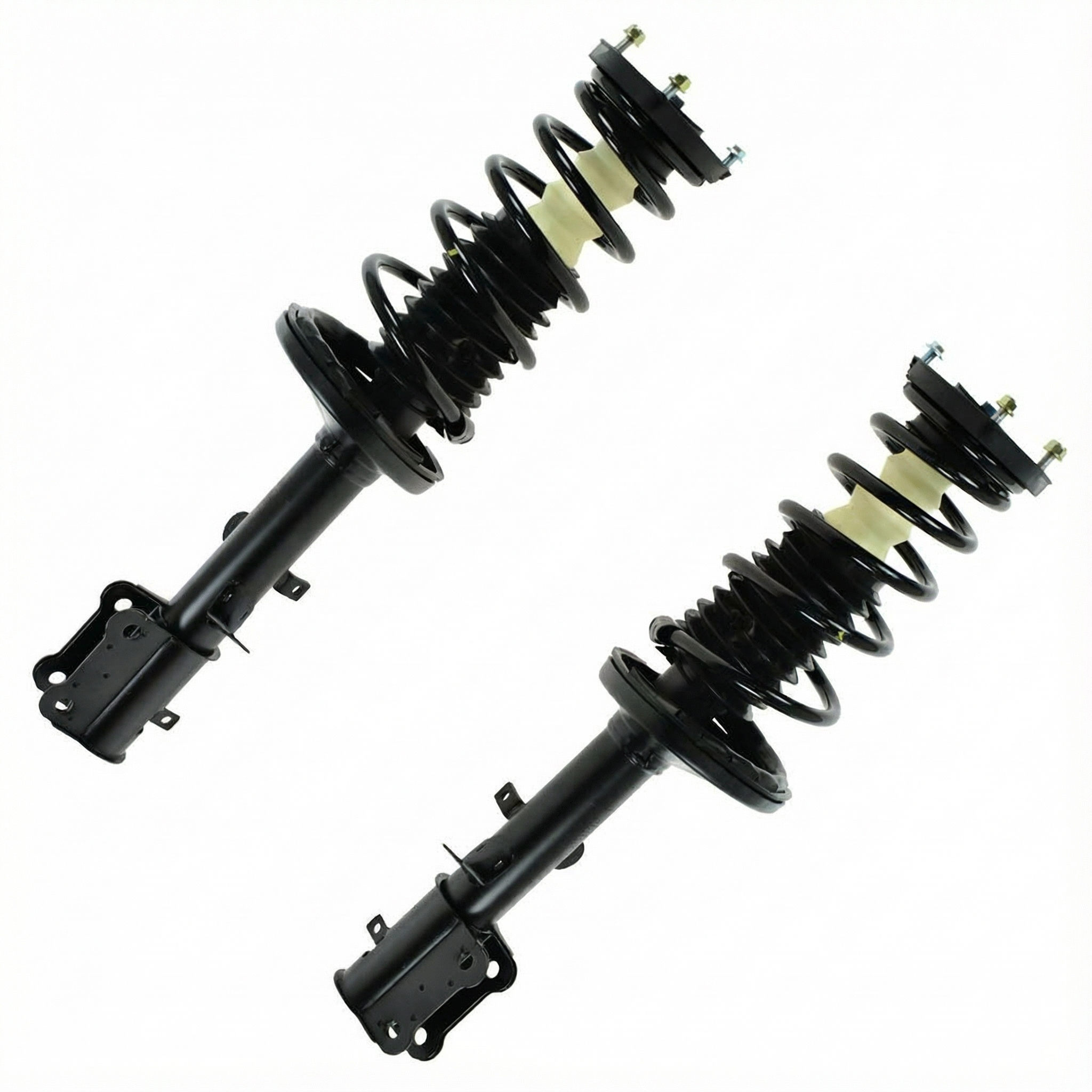


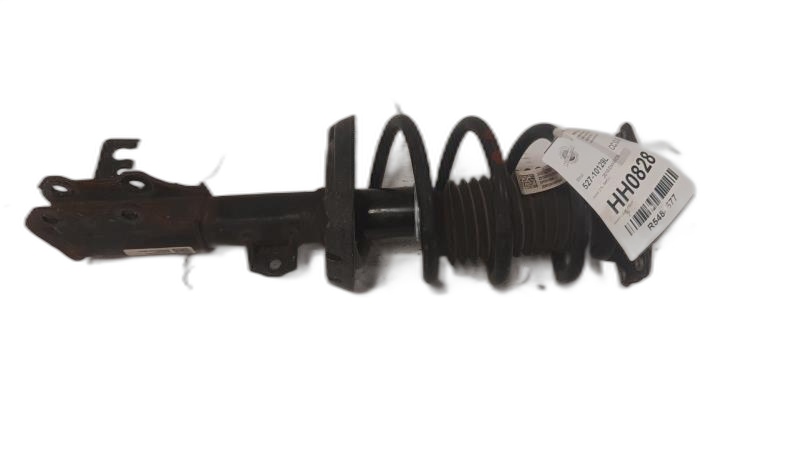

The information in this article is provided for general reference and educational purposes only. Vehicle specifications, procedures, and part compatibility can vary by production date, trim level, and region. Always consult your vehicle's factory service manual and verify part numbers before purchasing or performing repairs. Safety-critical components such as airbags, seat belts, and braking systems should be installed by a qualified professional.
- Mazda MAZDA 3:
- 🎬 Helpful Videos
- 🛍️ Shop This Part
- Understanding the 2010-2016 Mazda 3 Generations
- Symptoms of a Failing Front Strut
- Common Noises
- Poor Handling and Ride Quality
- Visual Signs
- Known Issues, TSBs, and Recalls
- 2014-2016 Mazda 3 (Gen 3) Front Suspension Noises (TSB 02-005/17)
- No-Start Condition After Strut Replacement (All Years)
- Incorrect Recall Information
- Buying a Used Suspension Strut
- What to Inspect on a Used Strut Assembly:
- Compatibility and Part Numbers
- Replacement Overview
- Related Parts to Replace
- Key Torque Specifications
- Cost Comparison
- Frequently Asked Questions (FAQ)
- 🎟️ Get 5% Off