

2010-2018 Mazda 3 Front Strut: Decoding Clunks, Leaks, and Part Number Confusion
This guide covers common failure symptoms, critical compatibility checks for engine and wheel size, and how to choose a quality used strut for your Mazda 3.
- Strut compatibility is complex for the 2010-2018 Mazda 3; you must verify the model year, engine size (2.0L vs 2.5L), and original wheel size before buying.
- Always replace front struts in pairs (left and right) to maintain safe and balanced handling. A four-wheel alignment is mandatory after the job is complete.
- The most common failure symptoms are clunking noises over bumps, a bouncy ride, visible fluid leaks on the strut body, and cupped tire wear.
- When replacing struts, it is highly recommended to also replace the strut mounts, bearings, and sway bar end links, as they wear out at a similar rate and cause similar noises.
Symptoms of a Failing Mazda 3 Strut

Because struts wear out gradually, you might not notice the slow decline in ride quality. However, certain sounds and handling issues are clear signs that it's time for a replacement. Ignoring them can lead to unsafe driving conditions and damage to other suspension parts.
Clunking or Banging Noises
This is the most common symptom of a bad strut. You may hear a hollow clunk, knock, or bang from the front of the car when driving over bumps, potholes, or uneven pavement. This sound is caused by internal wear, which allows for excessive movement within the strut assembly. It can also be caused by a worn or loose sway bar end link, a part often replaced with the struts.
Bouncy and Unstable Ride
A healthy strut should settle the car immediately after hitting a bump. If your Mazda 3 feels 'floaty' or continues to bounce up and down, the internal damper has worn out and can no longer control the spring. Other signs include:
- Nose-Diving: The front of the car dips down excessively when you brake hard.
- Body Roll: The car leans or sways more than usual in turns.
- Rear Squat: The rear of the car squats down during acceleration as the worn front struts fail to manage weight transfer.
Steering Noises and Issues
The strut mount at the top of the assembly contains a bearing that allows the strut to pivot with the steering. When this bearing wears out, you may experience:
- Squeaking or Creaking: A noise when turning the steering wheel, especially at low speeds or when parked.
- Binding or Stiffness: The steering may feel 'notchy,' stiff, or like it's catching at certain points.
- Vibrations: A worn strut mount can cause vibrations to be felt through the steering wheel.
Visible Fluid Leaks
Struts are filled with hydraulic fluid. If you see an oily, grimy film coating the body of the strut, it means the internal seals have failed and the fluid has leaked out. A completely failed strut can no longer dampen bumps, leading to a harsh, uncontrolled ride. Note that some TSBs mention that a very light film of oil can be normal from the seal's operation, but any significant wetness or dripping is a sign of failure.
Uneven Tire Wear
When a strut is worn, it allows the tire to bounce slightly as it rolls down the road. This bouncing action can cause a distinctive scalloped or 'cupped' wear pattern on the tire tread. You can often feel these dips by running your hand over the tire's surface. This type of wear is a classic sign of a bad strut or other suspension issue.
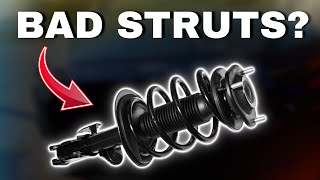
🎬 Watch: 5 symptoms of bad struts you should not ignoreKnown Issues, TSBs, and Recalls for 2010-2018 Mazda 3 Suspension

While no major safety recalls have been issued for the front struts on these models, several Technical Service Bulletins (TSBs) and common problems have been identified by owners and Mazda.
2010-2013 Mazda 3 (2nd Generation)
- Leaking Struts: It is common for the original front struts and rear shocks to begin leaking at higher mileage.
- Loose Top Strut Nut: Some owners have reported a clunking noise caused by the large center nut on the top of the strut coming loose. Tightening this nut can sometimes resolve the noise, but it should be inspected carefully.
- Sway Bar End Links: Worn sway bar end links are a frequent cause of clunking noises and are often misdiagnosed as bad struts. 🎬 See how to diagnose and fix front end clunking noises
2014-2018 Mazda 3 (3rd Generation)
- TSB 02-005/17: Addresses various front suspension noises. This includes a squeaking sound when turning the wheel while stopped (caused by the strut bearing) and a popping noise over bumps (caused by the bump stop). Mazda released modified parts to fix these issues.
- TSB 02-005/19: Pertains to a creaking noise caused by the front coil spring breaking at its lower end. This happens when mud and debris get trapped in the lower spring seat, leading to rust and eventual failure of the spring.
- TSB SA-057-22 / 02-003/24: This bulletin is for a rattle noise that can be mistaken for a bad strut. The actual cause is rusting front subframe bolts.
Pro Tip: Before replacing struts to fix a rattling noise on a 2014-2018 model, have a mechanic check for TSBs related to subframe bolts. This could save you from an unnecessary and expensive repair.
Buying a Used 2010-2018 Mazda 3 Strut: What to Look For

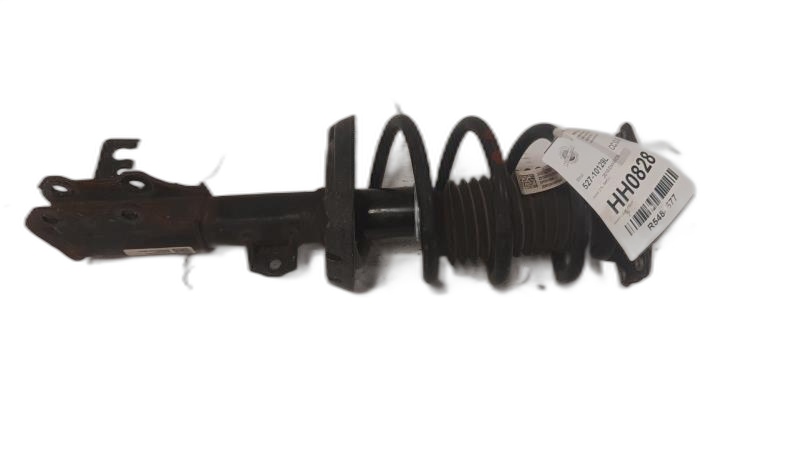
A high-quality, low-mileage used OEM strut can be an excellent value, often outperforming a cheap new aftermarket part. Here’s what to inspect to ensure you're getting a good part.
Physical Inspection
- Check for Leaks: The strut body should be dry. Any sign of wet, oily residue indicates the internal seals have failed.
- Inspect the Rod: The chrome-plated piston rod that extends from the top should be smooth, straight, and free of rust, pitting, or damage. Any imperfections will quickly destroy the new seal.
- Examine the Strut Mount: The rubber in the top mount should be intact, without large cracks or signs of tearing. The center should not be separated from the outer ring.
- Look at the Coil Spring: Check the spring for heavy rust, cracks, or breaks, especially at the very top and bottom where it sits in the perch.
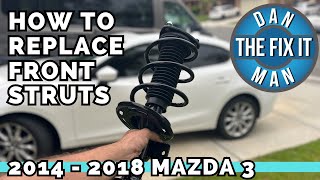
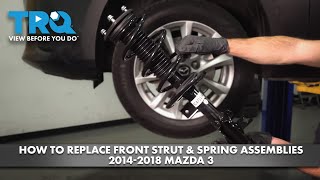
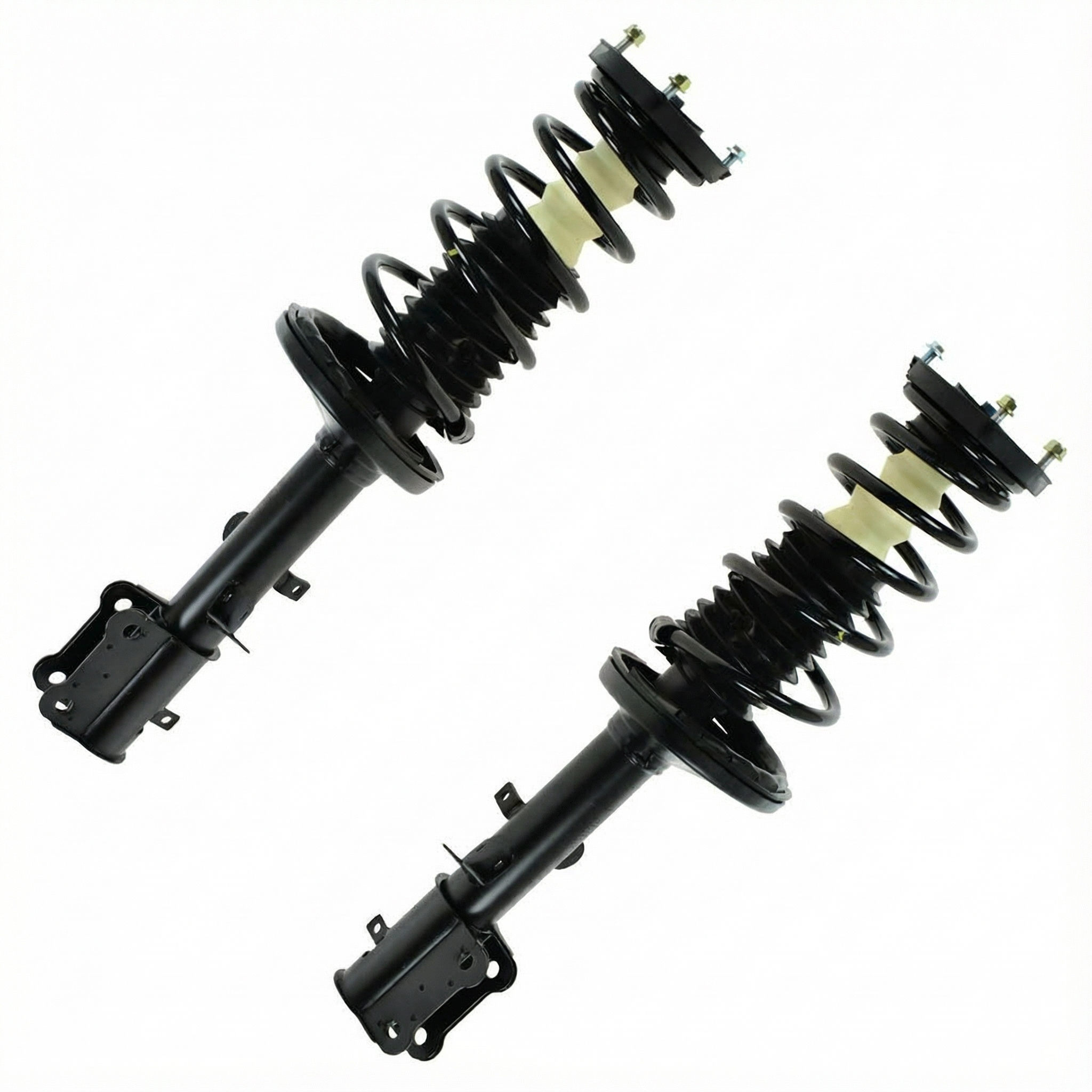
- Get the Complete Assembly: Always try to buy a complete 'quick strut' assembly, which includes the strut, spring, and mount. This is safer, easier to install, and ensures all related components have similar wear. 🎬 Watch: Step-by-step 2014-2018 Mazda 3 front strut replacement guide
Compatibility Checklist
Warning: Strut compatibility for the Mazda 3 is complex. Using the wrong strut can result in poor handling, incorrect ride height, and unsafe driving characteristics. Always verify the donor vehicle's specifications.
Before purchasing, confirm the following from the donor car:
- Model Year: The 2010-2013 (Gen 2) and 2014-2018 (Gen 3) models use completely different struts. They are not interchangeable.
- Engine Size (2.0L vs. 2.5L): The larger 2.5L engine is heavier, and the struts are valved differently to handle the weight. While they may physically bolt on, using a 2.0L strut on a 2.5L car (or vice-versa) will negatively affect ride and handling.
- Non-Turbo Models Only: These struts are for standard Mazda 3 models. They will NOT fit the high-performance Mazdaspeed3, which has a unique turbocharged engine and sport-tuned suspension.
- Wheel Size (16" vs. 17"): The factory wheel size can indicate different spring rates or damping. While the mounting may be identical, it's best to match the original specification of your vehicle to maintain the intended ride quality.
- Part Number: If possible, match the OEM part number directly. The provided list of part numbers (e.g., B45A-34-700A, BBM2-34-900E) covers various configurations.
Mileage Considerations
Struts are wear items, typically lasting between 50,000 and 100,000 miles. For a used part, look for one from a vehicle with the lowest mileage possible, ideally under 70,000 miles, to ensure you get a good service life from it.
Replacement Information
Related Parts to Replace
When replacing a front strut, it's best practice to replace several related components at the same time, as they wear at a similar rate. This saves you from having to do the same job twice.
- Both Front Struts: Always replace struts in pairs (left and right) to ensure balanced handling and stability.
- Strut Mount and Bearing: If not buying a complete assembly, these are critical to replace. They are a common failure point causing noise and steering issues.
- Sway Bar (Stabilizer) End Links: These are a very common source of clunking noises on the Mazda 3 and are inexpensive and easy to change during a strut replacement.
- Dust Boot and Bump Stop: The boot protects the strut rod, and the bump stop prevents damage from harsh impacts. They are almost always degraded on an old strut.
Warning: A four-wheel alignment is mandatory after replacing front struts. The strut is a key part of the suspension geometry. Skipping this step will cause poor handling, pulling to one side, and rapid, uneven tire wear.
Key Torque Specs
Torque specifications are critical for safety. These values can differ between the 2nd and 3rd generations. Always verify with a service manual for your specific year and model.
| Fastener | Torque Spec (Gen 2, 2010-2013) | Torque Spec (Gen 3, 2014-2018) |
|---|---|---|
| Three Top Strut Mount Nuts | 14-21 ft-lbs (20-30 Nm) | 30-40 ft-lbs (41-54 Nm) |
| Strut-to-Knuckle Bolts | 40-54 ft-lbs (Pinch Bolt) | ~117 ft-lbs (Two Bolts) |
| Sway Bar End Link Nut | ~35 ft-lbs (47 Nm) | 35-40 ft-lbs (47-54 Nm) |
| Center Strut Piston Rod Nut | 42-56 ft-lbs (57-76 Nm) (Use caution, requires special tools) | |
Cost Comparison: New vs. Used Mazda 3 Struts
Prices can vary based on brand, location, and whether you are buying a bare strut or a complete assembly. Labor costs for replacement are for a pair of front struts and do not include the mandatory wheel alignment.
| Part Type | Estimated Cost (Per Side) | Notes |
|---|---|---|
| New OEM | $120 - $180 | This is for the bare strut only, from a dealer. Does not include spring or mount. |
| New Aftermarket (Quick-Strut) | $130 - $220 | A complete assembly from brands like KYB, Monroe, or Duralast. This is the recommended option for most repairs. |
| Used OEM (Quick-Strut) | $75 - $150 | A complete assembly from a low-mileage recycled vehicle. Offers OEM quality at a lower price. |
| Shop Labor (Pair) | $200 - $350 | Cost to install two front struts. A wheel alignment will add another $80 - $150. |
Frequently Asked Questions (FAQ)
Do I have to replace both front struts at the same time?
Yes, it is essential to replace both the left and right front struts simultaneously. Replacing only one will create an imbalance in handling, braking, and stability, which can be dangerous. New and old struts will have different damping characteristics.
What's the difference between a strut and a shock absorber?
A shock absorber's only job is to dampen spring movement. A strut, like the one on the front of the Mazda 3, is a structural part of the suspension that also serves as a steering pivot and supports the vehicle's weight. While they perform a similar function, a strut is a much more complex and critical component.
How long do Mazda 3 struts typically last?
The lifespan of struts depends heavily on driving conditions. On smooth roads, they can last 80,000 to 100,000 miles. If you frequently drive on rough or poorly maintained roads, their lifespan could be shortened to 50,000 miles or less.
Can a bad strut cause a Check Engine Light?
No, a failing mechanical strut will not trigger the Check Engine Light. However, some modern vehicles have electronic or adaptive suspensions, and a failure in those systems could trigger a specific suspension warning light on the dashboard, but this does not apply to the standard 2010-2018 Mazda 3.
Helpful Videos
Technical Specifications
OEM Part Numbers: BGV9-28-910 B32T34700D B45A-34-700 B45A-34-700A BABF-34-900 BACS34900 BBM2-34-700C BBM2-34-900A BBM2-34-900B BBM2-34-900C BBM2-34-900E BBM3-34-900C BBN5-34-900A BHP734900 BR5V-34-900C BHN2-34-900C BCKE34900K
The front suspension uses a MacPherson strut design. Torque specs vary by generation: Gen 2 (2010-13) uses a single lower pinch bolt (40-54 ft-lbs), while Gen 3 (2014-18) uses two lower bolts (~117 ft-lbs).
We Have This Part in Stock




The information in this article is provided for general reference and educational purposes only. Vehicle specifications, procedures, and part compatibility can vary by production date, trim level, and region. Always consult your vehicle's factory service manual and verify part numbers before purchasing or performing repairs. Safety-critical components such as airbags, seat belts, and braking systems should be installed by a qualified professional.
- Mazda 3:
- 🎬 Helpful Videos
- 🛍️ Shop This Part
- Symptoms of a Failing Mazda 3 Strut
- Clunking or Banging Noises
- Bouncy and Unstable Ride
- Steering Noises and Issues
- Visible Fluid Leaks
- Uneven Tire Wear
- Known Issues, TSBs, and Recalls for 2010-2018 Mazda 3 Suspension
- 2010-2013 Mazda 3 (2nd Generation)
- 2014-2018 Mazda 3 (3rd Generation)
- Buying a Used 2010-2018 Mazda 3 Strut: What to Look For
- Physical Inspection
- Compatibility Checklist
- Mileage Considerations
- Replacement Information
- Related Parts to Replace
- Key Torque Specs
- Cost Comparison: New vs. Used Mazda 3 Struts
- Frequently Asked Questions (FAQ)
- 🎟️ Get 5% Off