

2011-2020 Kia Sorento Strut Failures: Clunks, Leaks, and Replacement Guide
This guide covers common strut failure symptoms, generation-specific part differences, and how to choose the right replacement for your 2011-2020 Kia Sorento.
- The most common symptom of a bad strut on a 2011-2020 Sorento is a clunking or knocking noise over bumps.
- Struts for FWD and AWD models are different and not interchangeable. You must verify the correct part for your drivetrain.
- Always replace struts in pairs (both front or both rear) and perform a wheel alignment immediately afterward to prevent tire damage and ensure safety.
- For DIY replacement, using a complete 'quick strut' assembly is significantly easier and safer than disassembling the old strut and spring.
Generation-Specific Differences: 2011-2015 (XM) vs. 2016-2020 (UM)

The 2011-2020 Kia Sorento covers two distinct generations, and their suspension parts are not interchangeable. It is crucial to identify your vehicle's generation before purchasing parts.
- 2nd Generation (XM): 2011-2015 Sorento. Owners of these models frequently report clunking noises and issues with front coil springs. A known issue for 2011-2013 models involves strut bearing corrosion from salt and water, which can cause a grinding or rubbing sound when turning at low speeds.
- 3rd Generation (UM): 2016-2020 Sorento. These models use different strut assemblies than the earlier generation. While general failure symptoms are similar, the part numbers are unique to this series.
Warning: The most critical compatibility factor is your Sorento's drivetrain. Front-Wheel Drive (FWD) and All-Wheel Drive (AWD) models use different struts. Installing the wrong one will negatively affect ride height, handling, and safety.
Known Issues, TSBs, and Recalls

- TSB CHA041: Kia issued this Technical Service Bulletin for 2011-2013 Sorento models to address suspension noises with a specific front strut replacement procedure.
- NHTSA Recall 16V480000 (2016 Models): While not for the struts themselves, some 2016 Sorentos were recalled for improper welds on the rear suspension cross-member, which could impact alignment and handling.
- Engine-Related Recalls: Numerous recalls exist for engine issues on 2011-2017 models that could cause stalling or fire, but none directly target the suspension struts.
Symptoms of a Failing Suspension Strut

Worn struts compromise safety by increasing stopping distances and reducing vehicle control. Look for these common symptoms:
- Clunking or Knocking Noises: This is the most frequent complaint, especially when driving over bumps, potholes, or uneven pavement. The sound can also be described as a rattle.
- Bouncy or Unstable Ride: The vehicle may bounce several times after hitting a bump instead of settling quickly. This can also feel like a "floppy" or wallowing sensation in corners.
- Nose-Diving and Squatting: The front end may dip excessively when you brake hard, or the rear may squat during acceleration.
- Visible Fluid Leaks: A blown seal can cause hydraulic fluid to leak out, leaving an oily or grimy film on the body of the strut. However, a light film of oil ("weepage") can be normal, whereas a wet, dripping strut indicates failure.
- Uneven Tire Wear: Bad struts can cause "cupping" or scalloping on your tires—a pattern of high and low spots on the tread.
- Grinding or Binding When Steering: A grinding noise that occurs when turning the steering wheel, especially at low speeds, often points to a failed strut mount bearing.
Pro Tip: A simple "bounce test" can help diagnose bad struts. Push down firmly on one corner of the vehicle and release. If it bounces more than once or twice, the strut on that corner is likely worn out.
🎬 Watch: Diagnosing and fixing common front end suspension noises.Buying a Used Sorento Suspension Strut: What to Look For

A low-mileage used OEM strut can be a smart purchase, often providing better performance and longevity than a cheap new aftermarket part. Here’s what to inspect:
- Verify the Part Number: This is the most important step. Cross-reference the part number from the used strut with your vehicle's specific requirements (year, engine, FWD/AWD). Part numbers like 54651-C6200 supersede older numbers like 54651-C6000 and 54651-C6100 for the 2016-2020 models.
- Check for Leaks: Inspect the strut body thoroughly. Avoid any strut that is wet with hydraulic fluid or covered in a thick, oily grime. A dry, dusty surface is ideal.
- Inspect the Coil Spring: Look for any signs of heavy rust, cracking, or breaks in the coil spring. Broken springs have been reported on 2011-2015 models.
- Examine the Top Mount: Check the rubber on the upper strut mount for cracks, tears, or separation. A worn mount can cause noise and alignment issues.
- Consider Mileage: Struts are wear items. A strut from a vehicle with 50,000 miles is a much better bet than one with 150,000 miles. Aim for the lowest mileage possible, as struts typically show wear after 60,000 miles.
Replacement Overview and Related Parts
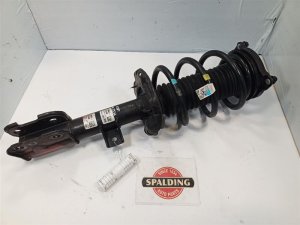
For DIY replacement, it is highly recommended to use a complete strut assembly (a "quick strut"). This includes the strut, spring, and mount, all pre-assembled. It eliminates the dangerous and difficult task of compressing the old spring to swap it over. Using a complete assembly can reduce installation time from 4 hours to less than 1 hour per side.
🎬 See this walkthrough for replacing front strut assemblies yourself.While you are replacing the struts, it's a good time to inspect and potentially replace related components that often wear out at the same time:
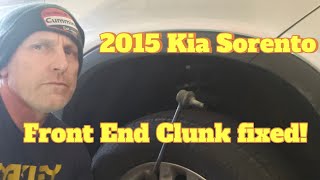
- Sway Bar Links: These are a very common source of front-end clunking on the Sorento and are inexpensive to replace. 🎬 Watch how replacing sway bar links fixes front end clunks.
- Control Arm Bushings and Ball Joints: Worn bushings or ball joints can also cause clunking and steering wander.
- Wheel Alignment: A four-wheel alignment is required after replacing front struts to prevent premature tire wear and ensure proper handling.
Installation Tips and Torque Specs
Always use a torque wrench to ensure all fasteners are tightened to specification. Do not use an impact wrench on the center strut shaft nut, as this can damage the new strut.
| Fastener | Torque Specification | Notes |
|---|---|---|
| Strut-to-Knuckle Bolts (2011-2015) | 130 ft-lbs (176 Nm) | |
| Strut-to-Knuckle Bolts (2016-2020) | ~75 ft-lbs (102 Nm) | This is an estimated value; always verify with a service manual if possible. |
| Upper Strut Mount Nuts (2011-2015) | 45-54 ft-lbs (61-73 Nm) | |
| Sway Bar Link Nut | 87-89 ft-lbs (118-121 Nm) | |
| Wheel Lug Nuts | ~80 ft-lbs (108 Nm) | Always tighten in a star pattern. |
Cost Comparison: Sorento Strut Replacement
Prices can vary based on location, part brand, and whether you are buying a bare strut or a complete assembly. Labor costs for a professional mechanic typically range from $150 to $300 per side.
| Part/Service | Estimated Cost (Per Side) |
|---|---|
| New OEM Strut (Bare) | $190 - $290 |
| New Aftermarket Complete Assembly ("Quick Strut") | $65 - $150 |
| Used OEM Complete Assembly | $50 - $120 |
| Shop Labor (Per Side) | $168 - $267 |
| Wheel Alignment (Required) | $150 - $200 |
Frequently Asked Questions (FAQ)
Do I need to replace struts in pairs?
Yes, it is highly recommended to replace struts in pairs (both front or both rear) to ensure even damping, consistent ride height, and predictable handling. Replacing only one side can lead to instability.
Is a wheel alignment necessary after replacing front struts?
Yes, absolutely. Replacing the front struts changes the suspension geometry. A four-wheel alignment is required to correct the camber and toe angles, preventing rapid tire wear and ensuring the vehicle drives straight.
What's the difference between a strut and a shock?
A strut is a structural part of the suspension that incorporates a shock absorber and a coil spring into one unit. A shock absorber is simply a damper and is not part of the vehicle's structural support; it's usually paired with a separate spring. The Sorento uses struts in the front suspension.
Can I use AWD struts on my FWD Sorento (or vice-versa)?
No. The struts are designed for the specific weight and ride height of either the FWD or AWD system. Using the wrong parts can lead to incorrect ride height, poor handling, and unsafe driving characteristics. Always verify the part number for your exact model configuration.
Helpful Videos
Technical Specifications
OEM Part Numbers: 54603-1U400FFF 546102P500 546301U504 54650-1U400 54651-1U700 54651-1U701 54651-C6000 54651-C6100 54651-C6200 54651-C6300 54651-C6400 54651-C6500 546511U700 54651C6400 54661-C6000
Torque Specs: Strut-to-Knuckle Bolts (130 ft-lbs for 2011-15), Upper Mount Nuts (45-54 ft-lbs for 2011-15), Sway Bar Link Nut (87-89 ft-lbs), Lug Nuts (~80 ft-lbs).
We Have This Part in Stock




The information in this article is provided for general reference and educational purposes only. Vehicle specifications, procedures, and part compatibility can vary by production date, trim level, and region. Always consult your vehicle's factory service manual and verify part numbers before purchasing or performing repairs. Safety-critical components such as airbags, seat belts, and braking systems should be installed by a qualified professional.
- Kia Sorento:
- 🎬 Helpful Videos
- 🛍️ Shop This Part
- Generation-Specific Differences: 2011-2015 (XM) vs. 2016-2020 (UM)
- Known Issues, TSBs, and Recalls
- Symptoms of a Failing Suspension Strut
- Buying a Used Sorento Suspension Strut: What to Look For
- Replacement Overview and Related Parts
- Installation Tips and Torque Specs
- Cost Comparison: Sorento Strut Replacement
- Frequently Asked Questions (FAQ)
- 🎟️ Get 5% Off