

2016-2025 Honda Pilot Suspension Noises: A Guide to Struts, Shocks, and Compatibility
This guide decodes the clunks and rattles from your Honda Pilot's suspension and explains the critical differences between FWD, AWD, and trim-specific parts.
- The 2016-2025 Pilot uses front struts and rear shocks; they are not the same.
- Part compatibility is critical and complex, with different rear shocks for FWD, AWD, and TrailSport trims. Always verify your OEM part number.
- The most common failure symptom is a clunking or rattling noise over bumps, which was noted in a Honda TSB for 2016 models.
- When buying used, the most important check is for any signs of fluid leakage on the shock body.
Understanding Your Pilot's Suspension: Front Struts vs. Rear Shocks

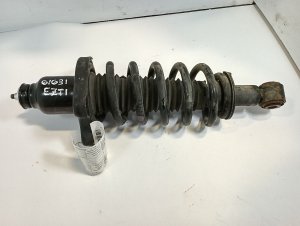
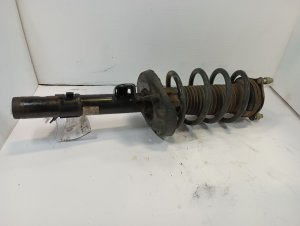
A common point of confusion for the 2016-2025 Honda Pilot is the terminology for its suspension components. The front of the vehicle uses a MacPherson strut assembly, where the shock absorber and coil spring are a single, integrated unit. The rear of the vehicle, however, uses a separate shock absorber and coil spring. This means you will not find a "rear strut assembly" for this generation of Pilot. Understanding this difference is key when searching for and purchasing replacement parts.
Symptoms of a Failing Strut or Shock


When the struts or shocks on your Pilot begin to wear out, you'll notice distinct changes in how it sounds and drives. These symptoms often develop gradually but should be addressed to maintain safety and prevent further damage.
Noises and Vibrations
- Clunking or Knocking Over Bumps: This is the most common symptom of a worn strut or shock. You may hear a distinct 'clunk' or 'knock' from a corner of the vehicle when driving over potholes or uneven pavement. A Technical Service Bulletin (TSB) was issued for the 2016 Pilot for a rattling or clunking noise from the rear suspension over bumps.
- Creaking or Popping When Turning: A creaking, binding, or popping sound when turning the steering wheel at low speeds can indicate a problem with a front strut mount or bearing. Some owners have reported a front-end creak or loud pop when turning or taking off from a stop. 🎬 Watch: Diagnosing and fixing common front end suspension noises
- Rattling Sounds: A rattle from the suspension, especially over rough roads, can point to a worn strut or a related component like a sway bar end link.
Ride and Handling Issues
- Excessive Bouncing: A classic sign of failure is a bouncy, boat-like ride. After hitting a bump, the vehicle will bounce multiple times instead of settling down immediately. You can check this by pushing down firmly on one corner of the vehicle; if it bounces more than once or twice, the shock or strut is likely worn.
- Nose-Diving and Squatting: When you brake, a worn front strut can cause the front end of the Pilot to dip or 'dive' forward excessively. Similarly, worn rear shocks can cause the rear of the vehicle to 'squat' down during acceleration.
- Uneven Tire Wear: Worn struts and shocks can cause tires to wear unevenly. Look for a pattern called 'cupping' or 'scalloping,' which appears as hollowed-out spots on the tire tread.
- Fluid Leaks: The shock absorber portion of the strut is filled with hydraulic fluid. If you see fluid leaking down the side of the strut or shock body, its internal seals have failed, and it needs to be replaced.
Compatibility Warning: The 2016-2025 Honda Pilot uses several different rear shock absorbers depending on the drivetrain (FWD vs. AWD) and trim level. It is absolutely critical to verify the correct OEM part number for your specific vehicle before ordering.
Known Issues, TSBs, and Recalls

- TSB for Rear Suspension Noise: Honda issued Technical Service Bulletin #10099337 on September 9, 2015, for the 2016 Honda Pilot. It addresses a customer complaint of a "rattling or clunking" noise from the rear suspension when going over a bump. This indicates an early awareness of potential issues with the rear shocks or related components.
- No Direct Recalls for Struts/Shocks: As of early 2026, there are no widespread recalls specifically for the struts or shock absorbers on the 2016-2025 Honda Pilot. However, numerous other recalls have been issued for this vehicle generation for issues related to brakes, seat belts, and the fuel system. Owners should always check for any open recalls on their vehicle.
Variant Differences: FWD, AWD, and TrailSport

Part compatibility is the biggest challenge with this component. Using the wrong part can negatively affect your vehicle's handling, ride height, and safety.
- FWD vs. AWD: The rear shock absorbers are different for Front-Wheel Drive (FWD) and All-Wheel Drive (AWD) models. These parts are not interchangeable. For example, OEM part number 52611-TG7-A01 is specified for AWD models.
- TrailSport Trim: The Pilot TrailSport model features a specific off-road-tuned suspension with a factory lift of about one inch. It uses unique struts and shocks designed for this configuration. Using parts from a standard Pilot on a TrailSport (or vice-versa) will result in incorrect ride height and poor handling.
- Other Trims (Touring, Elite, etc.): The initial buyer warnings suggest that even among standard AWD models, there may be different rear shock absorbers for Touring/Elite and Sport/EX-L trims. Always confirm the part number before purchase.
Buying a Used Suspension Strut or Shock
A used OEM strut or shock can be a great value, offering factory ride quality at a significant discount. However, since these are wear items, careful inspection is crucial.
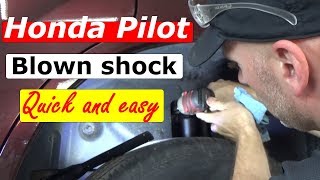
- Physical Inspection: The most important thing to check for is fluid leakage. Look for any oily residue on the strut or shock body. A light film of dust is normal, but any sign of wetness or dripping fluid 🎬 Watch: How to inspect and replace a blown rear shock means the part has failed. Also, inspect the rod for pitting or rust and check the mounting points for any cracks or damage.
- Mileage Considerations: There is no exact mileage for failure, but these are not lifetime parts. A strut from a low-mileage vehicle (under 60,000 miles) is a much safer bet. Failures have been reported on vehicles with around 90,000 miles. Given the low cost of a used part, it's wise to choose one with the lowest mileage possible.
- Verify Part Numbers: Due to the complex compatibility, the only way to be certain you are buying the correct part is to match the OEM part number from your original shock or strut to the replacement part.
- Why Used OEM Can Be Better: Original Equipment (OEM) struts and shocks were specifically tuned by Honda for the Pilot's weight and handling characteristics. Many cheap, aftermarket "quick strut" assemblies can be a downgrade in quality, sometimes altering the ride height and providing a harsher or floatier ride than the original. Reusing your original OEM coil spring with a quality used OEM shock is often a better choice than a complete, low-quality aftermarket assembly.
Pro Tip: Suspension components should always be replaced in pairs (both fronts or both rears) to ensure even damping and predictable handling. Mismatched struts or shocks can cause instability during cornering or braking.
Replacement Overview and Torque Specs
Replacing rear shocks is a feasible DIY job for many home mechanics. Front strut replacement is more complex and dangerous due to the need to compress the high-tension coil spring.
Rear Shock Replacement (2016-2025 Pilot)
The process generally involves removing the wheel, supporting the suspension, and unbolting the shock at the top and bottom. According to one guide for a 2018 Pilot, the torque specs are:
- Upper Mount Fastener(s): 32 ft-lbs (44 Nm)
- Lower Shock Bolt: 80 ft-lbs (108 Nm)
- Lug Nuts: 94 ft-lbs (127 Nm)
Note: Torque specs can vary. Always consult a service manual for your specific model year if possible.
Front Strut Replacement
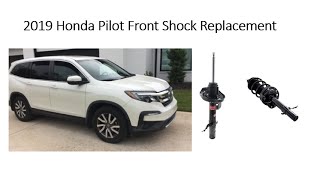
This job is more involved. If you are not replacing the entire assembly with a "quick strut," you must use a spring compressor to safely remove the coil spring from the old strut and install it on the new one. This tool can be very dangerous if used incorrectly. For most DIYers, purchasing a complete strut assembly is the safer and faster option. After replacing front struts, a professional wheel alignment is required.
🎬 See this walkthrough for replacing front struts on your PilotCost Comparison for Suspension Replacement
| Part/Service | Estimated Cost | Notes |
|---|---|---|
| New OEM Rear Shock (Single) | $170 - $260 | Price for one genuine Honda shock absorber (e.g., 52611-TG7-A01). |
| New Aftermarket Rear Shock (Single) | $45 - $90 | Price varies significantly by brand and quality. |
| New Aftermarket Front Strut Assembly (Single) | $110 - $200+ | Price for a complete "quick strut" assembly. |
| Used OEM Rear Shock (Single) | $35 - $75 | A low-mileage used part offers excellent value. |
| Shop Labor (Rear Shocks, Pair) | $140 - $250 | Typically 1-2 hours of labor. |
| Shop Labor (Front Struts, Pair) | $280 - $500 | Typically 2-4 hours of labor, plus the cost of an alignment. |
Frequently Asked Questions
Do I really need to replace struts and shocks in pairs?
Yes. Replacing only one side will result in unbalanced suspension, which can negatively affect handling, braking, and stability. Always replace both front struts or both rear shocks at the same time.
What's the difference between a strut and a shock?
A shock absorber simply dampens suspension movement. A strut is a structural component of the suspension that incorporates a shock absorber and a coil spring into one assembly. Your 2016-2025 Pilot has struts in the front and shocks in the rear.
Is a wheel alignment necessary after replacement?
An alignment is absolutely required after replacing front struts, as their installation directly affects suspension geometry. It is generally recommended but not always strictly necessary after replacing only the rear shocks, though it's a good practice to have it checked.
How can I be sure I'm buying the right part for my Pilot?
The best way is to find the OEM part number on your existing component or call a Honda dealership with your Vehicle Identification Number (VIN). Do not rely on visual matching alone, as the differences between FWD, AWD, and trim-specific shocks can be subtle.
What other parts should I inspect or replace at the same time?
When replacing struts or shocks, it's a good time to inspect the sway bar end links, as they can cause similar clunking noises and are inexpensive to replace. Also inspect strut mounts, boots, and bumpers on the front, and the coil springs at all four corners for cracks or heavy corrosion.
Helpful Videos
Technical Specifications
OEM Part Numbers: 52611-TG7-A01 52441-TG7-A01 52675-TZ5-A01 52611-TG8-A02 52441-TG8-A01 52446-TG8-A01 52611-TG8-A02 52621-T90-A02 52621-T90-A22 52621-T90-Y02
The front suspension uses a MacPherson strut design. The rear suspension is an independent multi-link design with separate coil springs and shock absorbers. Torque specs for rear shock replacement on a 2018 model are 32 ft-lbs (upper) and 80 ft-lbs (lower).
We Have This Part in Stock





The information in this article is provided for general reference and educational purposes only. Vehicle specifications, procedures, and part compatibility can vary by production date, trim level, and region. Always consult your vehicle's factory service manual and verify part numbers before purchasing or performing repairs. Safety-critical components such as airbags, seat belts, and braking systems should be installed by a qualified professional.
- Honda Pilot:
- 🎬 Helpful Videos
- 🛍️ Shop This Part
- Understanding Your Pilot's Suspension: Front Struts vs. Rear Shocks
- Symptoms of a Failing Strut or Shock
- Noises and Vibrations
- Ride and Handling Issues
- Known Issues, TSBs, and Recalls
- Variant Differences: FWD, AWD, and TrailSport
- Buying a Used Suspension Strut or Shock
- Replacement Overview and Torque Specs
- Rear Shock Replacement (2016-2025 Pilot)
- Front Strut Replacement
- Cost Comparison for Suspension Replacement
- Frequently Asked Questions
- 🎟️ Get 5% Off