

Ford Escape Strut Guide (2013-2022): Decoding Clunks, Noises, and Part Numbers
This in-depth guide covers the distinct suspension issues, part variations, and repair procedures for the 3rd generation (2013-2019) and 4th generation (2020-2022) Ford Escape.
- The 2013-2019 and 2020-2022 Ford Escapes use different suspension parts; compatibility is not interchangeable.
- A 'clunking' noise on 2013-2019 models is very common and often caused by cheaper, easier-to-replace parts like sway bar links or rear shocks, not necessarily the front struts.
- Part compatibility is extremely complex, depending on generation, FWD/AWD, engine, and suspension options. Always verify with a VIN before buying.
- For DIY replacement, always use a complete 'quick-strut' assembly. Disassembling the old strut requires a dangerous spring compressor tool.
Key Differences: 3rd Gen (2013-2019) vs. 4th Gen (2020-2022)

Before diagnosing a problem, it's essential to know which Ford Escape you're working on. The 2013-2022 model years span two completely different vehicle platforms with unique suspension designs, part numbers, and common problems.
- 3rd Generation (2013-2019): This generation is well-known for developing suspension noises, particularly clunks and rattles from the front and rear. Many issues are related to worn supporting components like sway bar links and strut mounts.
- 4th Generation (2020-2022): This newer platform has a redesigned suspension. While less prone to the same issues as the prior generation, it has its own specific set of technical service bulletins (TSBs) related to suspension noises.
Warning: The Ford Escape uses MacPherson struts for the front suspension and a separate shock absorber and coil spring configuration in the rear. A 'clunk' from the back of the car is likely a rear shock or other component, not a strut.
Symptoms of a Failing Front Strut

A worn or failing front strut can manifest in several ways. Some symptoms are obvious, while others are more subtle.
- Clunking or Knocking Noises: This is the most common complaint. A sharp 'clunk' or 'pop' when driving over bumps, potholes, or making sharp turns often points to a suspension issue. While the strut itself can fail internally, this noise is frequently caused by a worn strut mount or a broken sway bar link.
- Bouncy or Unstable Ride: If your Escape feels like it's floating, bouncing multiple times after hitting a dip, or swaying excessively on highway curves, the shock-absorbing part of the strut has likely failed. It's no longer controlling the spring's movement.
- Nose-Diving During Braking: When you apply the brakes firmly, a vehicle with bad front struts will dip forward excessively. This can increase stopping distances.
- Visible Fluid Leaks: The strut is filled with hydraulic fluid. If you see oily, wet residue coating the strut body, its main seal has failed. The strut must be replaced.
- Unusual Tire Wear: Worn struts can cause 'cupping'—a pattern of scalloped dips around the edge of the tire tread. This happens because the tire is bouncing as it rolls down the road.
Known Issues & TSBs by Generation

Third Generation (2013-2019) Common Problems
Owners of 2013-2019 Escapes frequently report suspension noises. Diagnosing the exact source is key to avoiding unnecessary repairs.
What's That Clunking Noise?
A clunking sound in this generation can come from several sources, often mistaken for a bad strut:
- Sway Bar (Stabilizer) Links: These are the most common culprits. A worn or broken sway bar link produces a distinct clunk or rattle over bumps, especially when one wheel hits a bump before the other. They are relatively inexpensive and easy to replace.
- Strut Mounts & Bearings: The rubber mount at the top of the strut can degrade and tear, while the bearing inside can wear out. A bad mount often causes a heavy 'thud' over bumps, while a bad bearing can cause a 'popping' or 'binding' sound when turning the steering wheel.
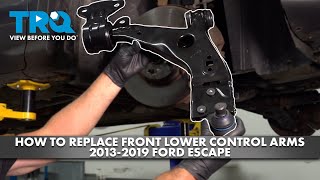
- Lower Control Arm Bushings: The rubber bushings on the control arms can crack and fail, leading to a clunking noise during steering, acceleration, or braking. 🎬 See how to replace front lower control arms yourself
- Rear Shock Absorbers: A widespread issue, especially on 2013-2015 models, involves premature failure of the rear shocks, causing a loud clunk from the back of the vehicle. Ford issued Technical Service Bulletin (TSB) 15-0194 to address this specific problem.
- Passenger Side Motor Mount: A failed upper engine mount on the passenger side can also produce a clunking sound over bumps as the engine moves excessively.
Fourth Generation (2020-2022) Common Problems
The newer Escape has fewer widespread strut failure complaints, but some documented issues can create suspension-related noises.
- TSB 23-2041 - Moan Noise in Reverse: Some 2020-2022 Escapes may exhibit a moaning or groaning noise from the rear when backing up, especially in cold or humid weather. Ford identifies this as being related to 'suspension sensitivity' and its interaction with the rear brake calipers. The fix involves replacing the rear caliper guide pin bushings.
- TSB 22-2161 - Grinding/Rubbing Noise: This TSB applies to some 2020-2022 AWD models that may have a grinding or rubbing noise coming from the floorpan or underbody area.
Buying a Used Suspension Strut
A low-mileage used OEM strut assembly can be an excellent value, often providing better ride quality and durability than a cheap, new aftermarket part. However, careful inspection and verification are critical.
Inspection Checklist
- Check for Leaks: The most important check. Run your hand over the main body of the strut. It should be dry and dusty. Any oily or greasy film indicates a leaking seal, and the part is no good.
- Inspect the Piston Rod: The shiny chrome rod that extends from the top of the strut body must be perfectly smooth. Any rust, pitting, or scoring will quickly destroy a new seal. Do not buy a strut with a damaged rod.
- Examine the Strut Mount: Look at the rubber in the top mount. It should be intact with no visible cracks, tears, or separation from the metal. Press down on the center and check for excessive play.
- Check the Coil Spring: Inspect the spring for heavy rust, cracks, or breaks. The protective coating should be mostly intact.
- Mileage is Key: A strut is a wear item. A part from a vehicle with 50,000 miles is a much better bet than one from a vehicle with 150,000 miles. Aim for the lowest mileage part available. Strut failure is common between 80,000 and 120,000 miles.
Compatibility is Crucial
Warning: Ford used many different struts for these vehicles. Compatibility depends on the model year, drivetrain (FWD or AWD), engine size, and even wheel size or suspension options (e.g., 'rough road suspension'). The part numbers provided in your vehicle's service history or by a dealer are the most reliable source. Always verify the part will fit your exact vehicle configuration using the VIN before purchasing.
Pro Tip: Consider buying a complete used 'knuckle assembly'. This often includes the strut, steering knuckle, hub/bearing, and sometimes the control arm. If sourced from a low-mileage vehicle, this can save significant labor and replace multiple potential wear items at once.
Replacement & Installation

Replacing the front struts on a Ford Escape is an advanced DIY job. The rear shocks, by contrast, are much simpler.
Front Strut Replacement Procedure
The process for the 3rd generation (2013-2019) involves several complex steps:
- Cowl Removal: To access the three nuts on top of the strut tower, the windshield wipers and the entire plastic cowl panel at the base of the windshield must be removed.
- Component Disconnection: The sway bar link, brake line brackets, and ABS sensor wire must be detached from the strut.
- Knuckle Separation: The strut is secured to the steering knuckle with two large bolts. These can be very tight and may require significant force to remove.
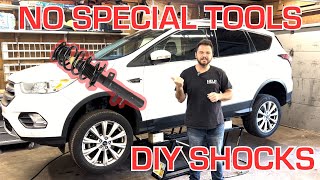
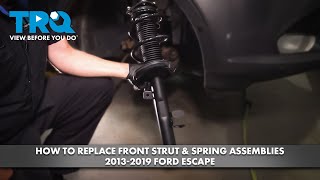
- Complete Strut Assembly ('Quick-Strut'): It is highly recommended to use a complete, pre-assembled 'quick-strut' which includes a new strut, coil spring, and mount. Disassembling the old strut to reuse the coil spring requires a special spring compressor tool, which is extremely dangerous if used improperly. 🎬 Watch: Step-by-step guide to replacing front strut and spring assemblies
Warning: A wheel alignment is required after replacing front struts to prevent rapid tire wear and ensure proper handling.
Important Torque Specs (2013-2019 Models)
Using a torque wrench is critical for safety. While specs can vary slightly, these are commonly cited values. Always consult the specific service manual for your year.
| Fastener | Torque Value |
|---|---|
| Upper Strut Mount Nuts (to body) | 26 ft-lbs (35 Nm) |
| Strut-to-Knuckle Bolts | 133 ft-lbs (180 Nm) + 90 degrees |
| Sway Bar Link Nut (to strut) | 46 ft-lbs (62 Nm) |
| Wheel Lug Nuts | 100 ft-lbs (135 Nm) |
Cost to Replace Ford Escape Struts
Prices can vary significantly based on location, part brand, and the shop's labor rate.
| Part/Service | Estimated Cost (Per Pair, Front) |
|---|---|
| New OEM (Ford/Motorcraft) | $220 - $450 (parts only) |
| New Aftermarket (Complete 'Quick-Strut') | $270 - $500 (parts only) |
| Used OEM | $95 - $200 (parts only) |
| Shop Labor | $300 - $600 |
Frequently Asked Questions (FAQ)
Do I need to replace struts in pairs?
Yes. Struts and shocks should always be replaced in pairs (both front or both rear) to ensure even damping, stable handling, and predictable braking. Replacing only one side can make the vehicle unstable.
What's the difference between a bare strut and a 'quick-strut'?
A bare strut is just the shock absorber body. A 'quick-strut' or complete strut assembly is a pre-assembled unit that includes the bare strut, coil spring, strut mount, and bearing. For DIY replacement, a quick-strut is much safer and easier as it eliminates the need to use a dangerous spring compressor.
My 2014 Escape clunks in the rear. Is that a strut?
No, the rear suspension on the Escape uses separate shock absorbers, not struts. A clunking noise from the rear of a 2013-2015 model is a very common problem caused by failed rear shocks, and was the subject of Ford TSB 15-0194.
Why do I have to get an alignment after replacing my front struts?
The front struts are a key part of the steering geometry. Even minor differences in manufacturing tolerances or installation position can change the camber and toe alignment angles. Failure to get an alignment will result in poor handling and rapid, uneven tire wear.
Can a bad strut cause my ABS light to come on?
A bad strut itself will not directly cause an ABS light. However, the ABS wheel speed sensor wire is often clipped to the strut body. If this wire is damaged during strut replacement or gets snagged by a broken suspension component, it can trigger an ABS fault.
Helpful Videos
Technical Specifications
OEM Part Numbers: CV6118K001PA CV6Z-18124-AV CV6Z-18124-AZ CV6Z-18124-BZ EJ7Z-18124-B EJ7Z-18124-M LX6Z-18124-Y LX6Z-18124-ER LX6Z-18124-EP
Torque Specs (2013-2019): Upper Mount Nuts: 26 ft-lbs (35 Nm). Strut-to-Knuckle Bolts: 133 ft-lbs (180 Nm) + 90 degrees. Sway Bar Link Nut: 46 ft-lbs (62 Nm). Wheel Lug Nuts: 100 ft-lbs (135 Nm).
We Have This Part in Stock
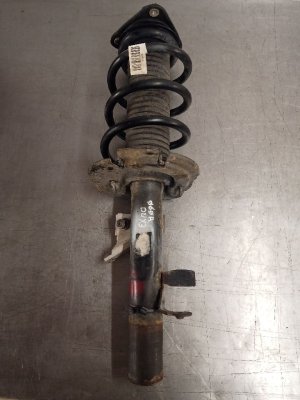
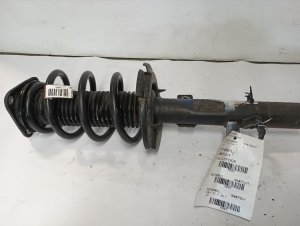



The information in this article is provided for general reference and educational purposes only. Vehicle specifications, procedures, and part compatibility can vary by production date, trim level, and region. Always consult your vehicle's factory service manual and verify part numbers before purchasing or performing repairs. Safety-critical components such as airbags, seat belts, and braking systems should be installed by a qualified professional.
- Ford Escape:
- 🎬 Helpful Videos
- 🛍️ Shop This Part
- Key Differences: 3rd Gen (2013-2019) vs. 4th Gen (2020-2022)
- Symptoms of a Failing Front Strut
- Known Issues & TSBs by Generation
- Third Generation (2013-2019) Common Problems
- What's That Clunking Noise?
- Fourth Generation (2020-2022) Common Problems
- Buying a Used Suspension Strut
- Inspection Checklist
- Compatibility is Crucial
- Replacement & Installation
- Front Strut Replacement Procedure
- Important Torque Specs (2013-2019 Models)
- Cost to Replace Ford Escape Struts
- Frequently Asked Questions (FAQ)
- 🎟️ Get 5% Off