

Audi TT Strut Guide (2000-2009): Clunks, Leaks, and Magnetic Ride Problems
This guide covers common strut failures, compatibility issues, and replacement tips for both Mk1 (8N) and Mk2 (8J) generation Audi TT models.
- You MUST identify if your TT is a Mk1 (2000-2006) or Mk2 (2007-2009) as their struts are not interchangeable.
- Clunking noises are the most common symptom, often caused by failed upper strut mounts and bearings, which should always be replaced with the struts.
- Mk2 models have an optional, expensive, and failure-prone 'Magnetic Ride' suspension; verify your car's setup via the trunk option sticker before buying parts.
- Struts must be replaced in pairs (both fronts or both rears) and a wheel alignment is required after replacement.
Crucial: Identify Your Audi TT Generation First
Before buying a suspension strut, you must know which generation of Audi TT you own. The 2000-2009 model years span two completely different platforms, and their parts are not interchangeable.
- Mk1 (Type 8N): Sold from 2000-2006 in North America. Characterized by its simple, rounded 'Bauhaus' design. It is based on the Volkswagen PQ34 platform, shared with the Mk4 Golf.
- Mk2 (Type 8J): Sold from 2007-2009 (and beyond). Features sharper, more aggressive styling with design cues from the R8 supercar. It is based on the newer PQ35 platform with more aluminum components.
Warning: A strut for a Mk1 (8N) will NOT fit a Mk2 (8J), and vice-versa. Always verify the vehicle's model year before ordering.
Symptoms of a Failing Suspension Strut
Worn struts degrade ride quality and can become a safety issue. Here are the most common signs of failure:
- Clunking or Knocking Noises: This is the most reported symptom. A hollow clunking or metal-on-metal knocking sound is often heard when driving over bumps, potholes, or speed bumps. This is frequently caused by worn internal components of the strut or, more commonly, a failed upper strut mount.
- Bouncy or Rough Ride: If the car continues to bounce up and down after hitting a bump, the strut's internal dampening has failed. The ride will feel harsh, and you'll feel every imperfection in the road.
- Nose-Diving and Body Roll: When braking hard, the front of the car may dip or 'dive' excessively. Similarly, you may notice excessive body lean or 'roll' when taking corners.
- Visible Fluid Leaks: The strut body is filled with hydraulic oil. If you see oily or greasy residue on the outside of the strut, its seals have failed and it needs immediate replacement. Audi has issued technical service bulletins (TSBs) regarding oil appearing on shock absorbers.
- Uneven Tire Wear: Worn struts can cause a specific type of tire wear called 'cupping' or 'scalloping,' which appears as high and low spots across the tread. This happens because the tire is bouncing off the road surface instead of maintaining constant contact.
- Steering Issues: A binding feeling or popping noise when turning the steering wheel can point to a failed strut bearing, which is part of the upper strut mount assembly.
- Magnetic Ride System Faults (Mk2 Only): On Mk2 models equipped with Audi Magnetic Ride, a failure will often trigger a warning light on the dashboard. The ride may become extremely harsh or uncomfortably soft, and you may hear clunking noises.
Known Issues, TSBs, and Recalls
Mk1 (8N) 2000-2006
- Recall 01V-325 (NHTSA ID): Issued for 2000-2001 models, this recall addresses corrosion on the rear track control arm mounting bolt, which could impede suspension movement.
- Recall (High-Speed Stability): Early in its life, the Mk1 TT's high-speed stability was questioned. Audi initiated a recall to install a rear spoiler, revised front and rear stabilizer bars, and firmer shock absorbers to improve handling dynamics.
- Upper Strut Mounts & Bearings: The most common failure point related to the front struts is not the strut itself, but the rubber upper mount and the bearing it contains. These parts degrade, collapse, and cause significant clunking noises. A visible gap between the top of the strut tower and the mount is a clear sign of failure. 🎬 Watch: How to replace failing upper strut mounts
Mk2 (8J) 2007-2009
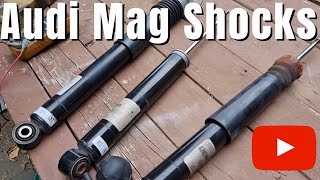
- Magnetic Ride Strut Failure: The optional magnetic ride struts are a known high-failure item. They are prone to leaking fluid and failing electronically, often between 40,000 and 80,000 miles. Replacement is extremely expensive. Failures are often related to the age of the internal seals rather than just mileage.
- TSB for Rear Shock Mounts: Audi issued a technical service bulletin for TTS models with magnetic ride concerning rumbling noises from the rear shock mounts on uneven roads. The fix involves replacing the rear shock mounts. 🎬 See: Testing faulty Audi magnetic ride shock absorbers
- TSB for Cracking Noises: TSB #A4022462047758_8 addresses cracking noises or spring jumps when steering. The procedure involves lubricating the contact surface between the bump stop and the shock absorber cap.
Pro Tip: Clunking noises from the front suspension on an Audi TT are very often caused by the upper strut mount and bearing, not the strut itself. It is highly recommended to replace the mounts, bearings, bump stops, and dust boots whenever you replace the struts.
Buying a Used OEM Suspension Strut
A used OEM strut can be a cost-effective way to restore your TT's original ride and handling characteristics, especially compared to cheap, new aftermarket parts which may alter the feel of the car. However, since struts are a wear item, careful inspection is critical.
Inspection Checklist:
- Check for Leaks: This is the #1 deal-breaker. Inspect the entire strut body for any sign of wetness, oil residue, or thick grime that indicates a past leak. A leaking strut is completely useless.
- Examine the Piston Rod: The shiny chrome rod that extends from the top of the strut body should be perfectly smooth. Reject any strut with rust, pitting, or deep scratches on the rod, as this will quickly destroy the new seal and cause it to leak.
- Perform a Manual Compression Test: A healthy strut should be difficult to compress by hand and should extend back out smoothly on its own. If it compresses with little resistance or fails to extend, it is worn out.
- Ask for Donor Vehicle Mileage: Struts typically have a lifespan of 60,000 to 100,000 miles. A strut from a low-mileage vehicle is always a better investment. Avoid struts from vehicles with over 100,000 miles unless the price is extremely low.
Compatibility Verification is Key:
You MUST buy the correct strut for your specific vehicle configuration. Using the wrong part can result in an improper ride height, poor handling, and warning lights.
- Generation: Confirm it's for a Mk1 (8N) or Mk2 (8J).
- Suspension Type: This is the most common mistake. Check the vehicle identification sticker, usually located in the trunk near the spare tire. Look for a 3-character 'PR code' for the suspension.
- 1BA: Standard Suspension
- 1BB/1BE/1BV: Sport Suspension (S-Line)
- 2MA/2MB: Audi Magnetic Ride (Mk2 only)
- Drivetrain: While front struts are often the same for Front-Wheel Drive (FWD) and Quattro (AWD) models, rear shocks are different. Always confirm compatibility.
- Position: Front struts on the TT are often universal and fit either the left or right side, but always verify the part number.
Replacement Overview and Related Parts
Replacing a front strut is an involved job that requires specialized tools and a strong understanding of suspension work. It is considered a difficult DIY job for a beginner.
Safety Warning: The coil spring is held under extreme compression. Attempting to remove the top nut without a proper, secure spring compressor can cause the spring to release violently, leading to serious injury or death. If you are not experienced, have a professional shop swap the spring onto the new strut.
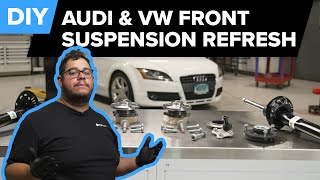
🎬 Watch: Step-by-step Mk2 front strut replacement DIYParts to Replace at the Same Time:
To do the job correctly and avoid future problems, it is essential to replace the following related components whenever you replace a front strut:
- Upper Strut Mount: A rubber and metal mount that secures the strut to the car's body. They degrade and collapse, causing noise.
- Strut Bearing: Sits on top of the spring and allows the strut to pivot as you steer. Failure causes binding and popping noises.
- Bump Stop and Dust Boot (Bellows): The bump stop is a foam buffer that prevents damage from bottoming out. The dust boot protects the strut's piston rod and seal from dirt and debris.
- Sway Bar End Links: These often have to be removed for the job and are a common wear item themselves. It's a good 'while you're in there' replacement.
An alignment is absolutely required after replacing front struts. Failure to do so will result in poor handling and rapid, uneven tire wear.
Cost Comparison for Front Strut Replacement (Per Pair)
| Part/Service | Estimated Cost | Notes |
|---|---|---|
| New OEM (Standard) | $400 - $700 | Price for a pair of standard struts from a dealer. |
| New OEM (Magnetic Ride) | $1600 - $2000+ | Magnetic ride struts are exceptionally expensive. |
| New Aftermarket (Standard) | $200 - $500 | Brands like Bilstein (B4 for OEM feel, B6 for sport) and Sachs are popular choices. |
| Used OEM (Standard) | $75 - $200 | Price for a pair. Varies by mileage and condition. |
| Shop Labor (Pair) | $350 - $600 | Labor costs to replace both front struts, mounts, and perform an alignment. |
Frequently Asked Questions (FAQ)
Can I replace just one strut?
No. Struts should always be replaced in pairs (both front or both rear) to ensure even damping, proper ride height, and predictable handling. Replacing only one can make the vehicle unstable.
How do I know if I have the expensive Magnetic Ride suspension?
On Mk2 (8J) models, there will be a button on the center console with a symbol of a shock absorber, which allows you to switch between comfort and sport modes. You can also check the option code sticker in the trunk for codes 2MA or 2MB. If you are still unsure, a visual inspection will show an electrical wire coming out of the bottom of the strut body.
Do I need an alignment after replacing struts?
Yes, a four-wheel alignment is mandatory after replacing front struts. The strut is a key part of the suspension geometry, and replacing it will alter the camber, caster, and toe settings.
What are the torque specs for the front strut?
Torque specs can vary slightly by generation. For the Mk2 (8J), common specs are: Top strut nut: 60 Nm (44 ft-lbs). Strut-to-knuckle pinch bolt: 70 Nm + 90 degrees. Wheel lug bolts: 120 Nm (89 ft-lbs). For the Mk1 (8N), the top strut nut is also 60 Nm (44 ft-lbs). Always consult a model-specific repair manual for the most accurate figures.
Helpful Videos
Technical Specifications
OEM Part Numbers: 8N0413031D 8N0413031E 8N0413031H 8N0413031K 8N0413031M 8J0413031H 8J0413031M 8J0413031R 8J0413031AD 1J0411105CB 1J0412341 357412341A 8J0411105A 8J0412331
Front Strut Top Nut Torque (Mk1 & Mk2): 60 Nm (44 ft-lbs). Front Strut-to-Knuckle Pinch Bolt Torque (Mk2): 70 Nm + 90 degrees. Wheel Lug Bolt Torque: 120 Nm (89 ft-lbs).
We Have This Part in Stock
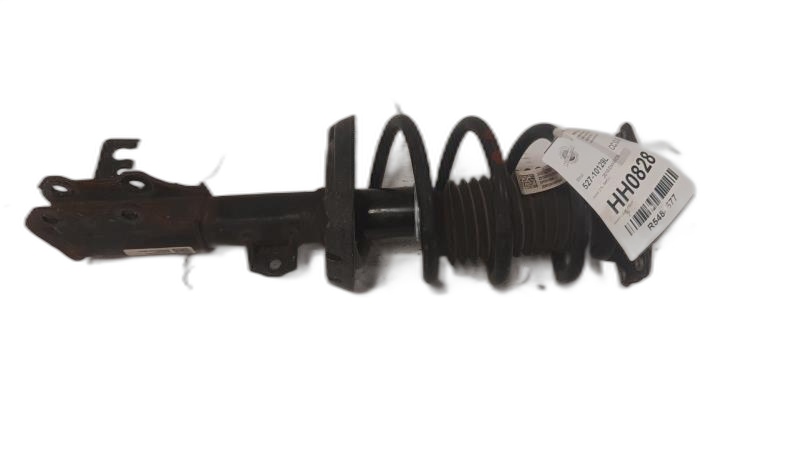



The information in this article is provided for general reference and educational purposes only. Vehicle specifications, procedures, and part compatibility can vary by production date, trim level, and region. Always consult your vehicle's factory service manual and verify part numbers before purchasing or performing repairs. Safety-critical components such as airbags, seat belts, and braking systems should be installed by a qualified professional.
- Audi TT:
- 🎬 Helpful Videos
- 🛍️ Shop This Part
- Crucial: Identify Your Audi TT Generation First
- Symptoms of a Failing Suspension Strut
- Known Issues, TSBs, and Recalls
- Mk1 (8N) 2000-2006
- Mk2 (8J) 2007-2009
- Buying a Used OEM Suspension Strut
- Inspection Checklist:
- Compatibility Verification is Key:
- Replacement Overview and Related Parts
- Parts to Replace at the Same Time:
- Cost Comparison for Front Strut Replacement (Per Pair)
- Frequently Asked Questions (FAQ)
- 🎟️ Get 5% Off