

2020 Nissan Sentra Stabilizer Bar: Diagnosing Clunks and Critical Tie Rod Recall Information
This guide covers the common failure symptoms, replacement costs, and what to inspect when buying a used stabilizer bar assembly for your 2020 Nissan Sentra, including crucial details on a related steering recall.
- The most common failure symptom is a clunking or rattling noise over bumps, usually caused by worn end links, not the bar itself.
- A critical safety recall (NHTSA #23V-581) exists for 2020-2022 Sentras for weak tie rods that can break and cause a loss of steering; its symptoms can be mistaken for stabilizer bar issues.
- When buying a used assembly, inspect the bar for damage but always plan on replacing the inexpensive end links and bushings with new parts for a complete repair.
- During installation, the vehicle's weight must be on the suspension before applying final torque to the bushing and link bolts to prevent premature wear.
Symptoms of a Failing Stabilizer Bar Assembly
Failure in the stabilizer bar system almost always involves the end links or frame bushings, not the steel bar itself. These components are considered wear items. When they fail, you will likely notice distinct sounds and changes in handling.
Clunking, Rattling, or Knocking Noises
This is the most common symptom. Worn stabilizer bar components create noise when the suspension moves.
- Worn End Links: Typically cause a sharp, metallic clunk or rattle when driving over bumps, potholes, or uneven pavement. The noise might be more noticeable when one wheel hits a bump before the other, such as when entering a driveway at an angle.
- Worn Frame Bushings: Often produce a duller, hollow-sounding thump or a squeaking/groaning noise, especially over speed bumps or during hard cornering. This sound may seem like it's coming from the floorboard area near the driver's or passenger's feet.
Poor Handling and Excessive Body Roll
A compromised stabilizer system can't do its job of controlling body lean. You may notice the Sentra feels less stable, leans more heavily in turns, or feels generally 'loose' and less responsive to steering inputs. In severe cases, like a completely broken end link, the vehicle may feel wobbly or unsettled at highway speeds.
Important: While the stabilizer bar assembly is a common source of suspension noise, a critical safety recall on the 2020-2022 Sentra for weak tie rods can cause similar symptoms. It is essential to rule this out.
Critical Safety Recall: Bent or Broken Tie Rods (NHTSA #23V-581)
Nissan issued a major safety recall for 236,238 Sentra vehicles from model years 2020-2022 because the inner tie rods may bend or break. A broken tie rod will cause a partial or complete loss of steering control, dramatically increasing the risk of a crash.
Symptoms of a failing tie rod include:
- An off-center steering wheel.
- A vibration felt in the steering wheel.
- The vehicle pulling to one side.
Under this recall (Nissan campaign ID R23B3), dealers will inspect and replace bent or broken tie rods. Once a newly designed, stronger part is available, dealers will replace both left and right tie rods free of charge for all affected vehicles. Before assuming your noise is from the stabilizer bar, check with a Nissan dealer or the NHTSA website to see if your vehicle is part of this recall.
Buying a Used 2020 Sentra Stabilizer Bar Assembly
For this part, a used OEM assembly can be a smart purchase, as the bar itself is a simple, durable piece of steel that rarely fails except in a collision. The value proposition depends on understanding what you're buying.
- Why Used OEM is a Good Choice: The original Nissan stabilizer bar is engineered with a specific diameter and steel composition to provide the exact handling characteristics intended for the Sentra. A used OEM bar is often superior to a cheap, new aftermarket bar that may have incorrect dimensions or material flex, negatively affecting handling.
- What to Inspect: The main thing to check on a used bar is for any signs of accident damage. Look for cracks, deep gouges, or any bends in the bar. Minor surface rust is cosmetic and generally not a concern.
- Assume Links & Bushings are Bad: The wearable parts of the assembly are the end links and frame bushings. It is very common for used stabilizer bars to be sold with broken or worn end links. You should plan to replace the end links and frame bushings with new parts when installing a used bar. This ensures a complete, quiet, and long-lasting repair.
- Compatibility Check: The front stabilizer bar assembly fits all 2020 Sentra trims (S, SV, SR). The most current OEM part number is 54610-6LB4A, which supersedes 54610-6LB2A and 54610-6LB3A. Verify you are purchasing the correct part for the front of the vehicle.
- Mileage is Not a Major Concern: The steel bar is not a mileage-sensitive part. The condition of the bar itself is far more important than the mileage of the donor vehicle.
Replacement Cost Comparison
Prices can vary by region and supplier. The costs below are estimates to help understand the value of a used part.
| Part Type | Estimated Cost | Notes |
|---|---|---|
| New OEM Assembly | $275 - $415 | Includes the bar and new bushings. Purchased from a Nissan dealer or online OEM parts retailer. |
| Used OEM Assembly | $50 - $175 | Bar only. Assumes you will need to purchase new end links and bushings separately. |
| New Aftermarket Links (Pair) | $50 - $90 | From brands like MOOG, Mevotech, etc. A highly recommended replacement. |
| Shop Labor (Bar Assembly) | $125 - $200 | Estimated 1.5-2.0 hours of labor. |
| Shop Labor (Links Only) | $65 - $100 | A common standalone repair. Estimated 1.0 hour of labor. |
Replacement Overview and Torque Specs
Replacing the stabilizer bar assembly is a feasible DIY project for someone with basic tools and jack stands. The most critical step is tightening the bolts under load.
Pro Tip: To prevent premature failure of the new bushings, the vehicle's weight must be on the suspension when you perform the final tightening of the end link nuts and frame bracket bolts. You can achieve this by placing the car on ramps or by using a jack to lift the control arm to its normal ride height before torquing the bolts.
- Safely lift and support the front of the vehicle on jack stands.
- Remove both front wheels.
- Unbolt the top nut of each stabilizer end link where it connects to the strut assembly.
- Unbolt the bottom nut of each stabilizer end link where it connects to the stabilizer bar.
- Remove the bolts from the two frame-mount brackets that hold the stabilizer bar bushings.
- Maneuver the bar and attached links out of the vehicle.
- Installation is the reverse of removal. Install new bushings and end links onto the replacement bar. Loosely attach all bolts.
- Load the suspension to ride height before torquing bolts to specification.
Torque Specifications (Reference)
While specific 2020 Sentra specs were not found in searches, similar models use the following, which can serve as a general guide. Always consult an official service manual for exact figures.
- Stabilizer Link Nuts: ~50-65 ft-lbs. A video for a previous Sentra generation showed 62 ft-lbs.
- Frame Bracket Bolts: ~35-45 ft-lbs.
- Wheel Lug Nuts: 83 ft-lbs.
Frequently Asked Questions (FAQ)
Can I just replace the stabilizer bar links or bushings instead of the whole assembly?
Yes, absolutely. In fact, this is the most common repair. The steel bar rarely fails, so if it is not bent or cracked, you only need to replace the worn links and/or bushings. This is much more cost-effective than replacing the entire assembly.
Do I need a wheel alignment after replacing the stabilizer bar or its links?
No. The stabilizer bar assembly does not affect the vehicle's primary alignment angles (camber, caster, or toe). An alignment is not necessary after this repair. However, if you are also replacing tie rods due to the recall, an alignment is mandatory.
Is the clunking noise dangerous to drive with?
Driving with worn stabilizer bar links or bushings is generally not immediately dangerous, but it is not recommended for long. The noise is an indicator of excess play, which compromises handling, reduces stability in emergency maneuvers, and can cause accelerated wear on other suspension components.
How do I know if my noise is the stabilizer bar or the recalled tie rods?
While both can cause noise, a failing tie rod is more likely to cause a loose or vibrating steering wheel and cause the car to pull to one side. Stabilizer bar noise is more often a distinct 'clunk' over bumps without a significant change in steering feel. Given the safety risk, any unusual front-end noise or steering feel on a 2020-2022 Sentra should be professionally inspected to rule out the tie rod recall.
Technical Specifications
OEM Part Numbers: 54610-6LB4A (Current) 54610-6LB3A (Superseded) 54610-6LB2A (Superseded)
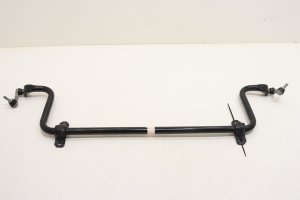
Fits all 2020 Nissan Sentra trims (S, SV, SR). Assembly includes the front stabilizer bar and frame bushings.
We Have This Part in Stock


The information in this article is provided for general reference and educational purposes only. Vehicle specifications, procedures, and part compatibility can vary by production date, trim level, and region. Always consult your vehicle's factory service manual and verify part numbers before purchasing or performing repairs. Safety-critical components such as airbags, seat belts, and braking systems should be installed by a qualified professional.
- Nissan Sentra:
- 🛍️ Shop This Part
- Symptoms of a Failing Stabilizer Bar Assembly
- Clunking, Rattling, or Knocking Noises
- Poor Handling and Excessive Body Roll
- Critical Safety Recall: Bent or Broken Tie Rods (NHTSA #23V-581)
- Buying a Used 2020 Sentra Stabilizer Bar Assembly
- Replacement Cost Comparison
- Replacement Overview and Torque Specs
- Torque Specifications (Reference)
- Frequently Asked Questions (FAQ)
- 🎟️ Get 5% Off