

2019-2025 Tesla Model S 'Raven' Air Shock: Diagnosing Clunks, Faults, and Sagging
This guide covers the common failure points of the adaptive air suspension shock absorbers in the 2019 and newer Tesla Model S, including Long Range and Plaid models.
- The 2019+ Model S uses a specific 'Raven' adaptive air suspension; parts are not interchangeable with earlier models.
- Clunking noises are a common symptom but can also be caused by less expensive parts like control arm bushings, so proper diagnosis is key.
- When buying a used shock, check for oily leaks on the body (indicates failure) and always match the OEM part number exactly.
- Replacement requires putting the car in 'Service Mode' to depressurize the system for safety; this is not a beginner-level repair.
Symptoms of a Failing 2019+ Model S Shock Absorber

Because the Model S cabin is so quiet, suspension noises that might be ignored in other cars become very noticeable. Failures in the adaptive air shocks can manifest in several ways, ranging from annoying sounds to serious ride quality problems.
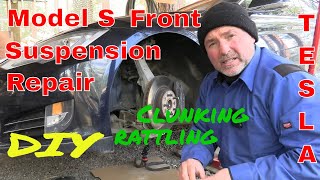
- Clunking or Rattling Noises: This is one of the most common complaints. A clunking, popping, or rattling sound, especially at low speeds over bumps, speed bumps, or driveway transitions, often points to a suspension issue. While the shock absorber itself can be the cause, these noises are also frequently caused by worn control arm bushings or sway bar end links. A thorough inspection is needed to pinpoint the exact source. 🎬 Watch: This DIY guide helps you diagnose and fix suspension noises.
- Vehicle Sagging: If you notice one corner of your Model S sitting lower than the others, especially after being parked overnight, it's a classic sign of an air leak 🎬 See how to troubleshoot a sagging suspension after sitting overnight. in the strut. The internal seals or the flexible air bladder can fail, allowing air to escape and the car to sag.
- Harsh or Bouncy Ride: A failed shock absorber loses its ability to dampen impacts. This can result in a ride that feels unusually harsh, stiff, or bouncy. You may feel the car bottoming out over bumps that it used to handle smoothly.
- Suspension Warning Messages: The vehicle's dashboard may display alerts related to the suspension system. Messages like "Suspension system fault" or "Air suspension compressor disabled" indicate the car's computer has detected a problem. This could be caused by a leak, a faulty sensor on the shock, or a failing air suspension compressor that has been overworked trying to compensate for a leak.
- Creaking or Groaning Sounds: Some owners report creaking, groaning, or 'whale' sounds at low speeds, particularly while turning or as the suspension levels itself. While Tesla has sometimes described these as normal operational sounds, they can also indicate wear in ball joints or bushings within the suspension assembly.
Known Issues, Recalls, and Service Bulletins
For the 2019-2025 model years, there are no major NHTSA safety recalls specifically for the Raven adaptive shock absorbers. However, Tesla's suspension systems have faced scrutiny over the years.
- No Active Recalls for Raven Shocks: Searches for the 2019-2025 period did not reveal any NHTSA recalls for the shock absorbers themselves.
- Previous NHTSA Investigation (Pre-Raven Models): NHTSA conducted an investigation into front suspension fore link failures on 2015-2017 Model S and Model X vehicles, but it was closed without a recall because the agency determined the vehicles remained controllable even after a failure. This issue pertains to older models but highlights a history of suspension component concerns.
- Service Bulletins for Noises: Tesla has issued service bulletins for older models to address suspension noises. For example, bulletin SB-18-31-009 was released for a front-end rattle on some 2017-2018 models, which involved replacing the front air spring modules. Forum discussions suggest that owners of Raven models with persistent clunking noises have sometimes had components replaced under warranty after specific complaints.
Pro Tip: The 'Raven' adaptive suspension was introduced in mid-2019 and is a significant upgrade from the earlier 'Smart Air Suspension'. Parts are generally not interchangeable between pre-Raven and Raven cars. All 2019+ Model S (Long Range and Plaid) are equipped with this system.
Buying a Used OEM Shock Absorber for Your Model S

Given the high cost of new OEM parts, a quality used OEM shock absorber is an excellent value. However, careful inspection and verification are crucial.
1. Physical Inspection Checklist
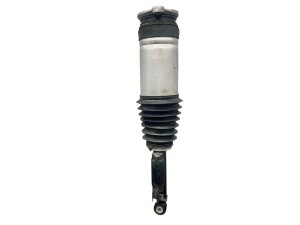
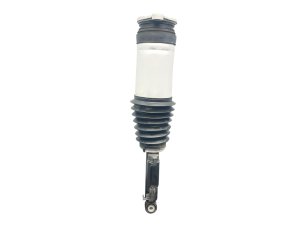
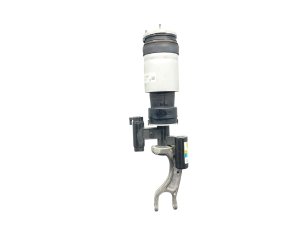
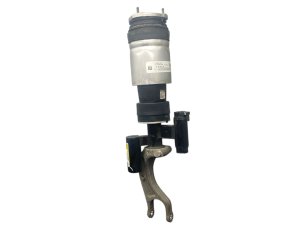
- Check for Leaks: The most important check. Look for any oily, greasy residue on the main body of the shock. This indicates that the internal hydraulic seals have failed, and the shock's damping capability is gone. The part is unusable if this is present.
- Inspect the Air Bladder: Carefully examine the flexible rubber air spring portion. Look for cracking, perishing, or deep scuffs. A damaged bladder will inevitably lead to an air leak.
- Examine the Electrical Connector: Check the connector and pins for any corrosion, damage, or bent pins. A bad connection will prevent the adaptive damping from working and will trigger a fault code.
- Check the Air Line Fitting: Ensure the threaded air line fitting is clean and the threads are not stripped or damaged. A bad fitting will cause a persistent leak.
- Verify the Part Number: This is absolutely critical. Part numbers change with revisions. Clean the part number sticker on the used shock and ensure it matches the one on your vehicle. An incorrect part may not function correctly with your car's software.
2. Why Used OEM is Often Better Than New Aftermarket
For a complex, electronically controlled part like this, a used OEM unit is often a safer bet than a cheap, new aftermarket alternative. The OEM shocks are specifically designed and calibrated for the Tesla's software and performance characteristics. Many lower-cost aftermarket air struts are passive replacements; they may hold air and provide a basic spring function, but they often lack the sophisticated, computer-controlled adaptive damping of the original part. Installing a non-adaptive part can lead to a poor ride, handling issues, and persistent error messages on the dash.
Cost Comparison for Model S Air Shock Replacement
Replacing a failed air shock on a 2019-2025 Model S is a significant expense. The costs below are estimates for a single corner.
| Part/Service | Estimated Cost |
|---|---|
| New OEM (from Tesla) | $1,000 - $1,500+ |
| New Aftermarket | $300 - $850+ |
| Used OEM (Recycled) | $250 - $500 |
| Shop Labor | $300 - $600 per corner |
Note: Total repair costs including diagnosis can range from $1,500 to over $4,000 for more extensive issues involving multiple components or the compressor.
Replacement Overview & Difficulty
Replacing a Model S air shock is a complex job best suited for experienced DIY mechanics or a professional shop.
- Difficulty Rating: 4 out of 5
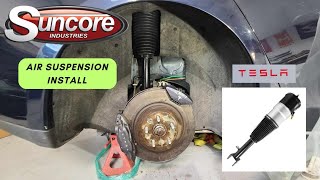
- Key Steps: The procedure involves putting the vehicle into 'Jack Mode' or 'Service Mode' via the touchscreen to disable the auto-leveling suspension and depressurize the system. The wheel and wheel arch liner must be removed, followed by disconnecting the air line, electrical connector, and unbolting the shock from the suspension arms and the top mount in the body. Access can be tight, especially for the top mount bolts. 🎬 Follow this step-by-step walkthrough for installing a rear air suspension.
- Special Tools: While standard mechanic's tools will suffice for much of the job, a torque wrench is essential for correctly tightening all suspension bolts. After replacement, a wheel alignment is highly recommended.
Warning: Never work on the air suspension without first enabling Service Mode and depressurizing the system. The system contains high-pressure air that can cause serious injury if a line is disconnected unexpectedly. Always use jack stands to support the vehicle properly.
Frequently Asked Questions (FAQ)
Do I need to replace my Model S air shocks in pairs?
While not strictly required, it is highly recommended. Shock absorbers wear out over time. If one has failed due to high mileage, the other on the same axle is likely not far behind. Replacing them in pairs ensures balanced handling and damping performance from side to side.
What is 'Raven' suspension?
Introduced in mid-2019, 'Raven' is the codename for an updated Model S and Model X powertrain and suspension. The key suspension change was a new, fully-adaptive air suspension system designed in-house by Tesla, which replaced the previous Bilstein-based system. It offers faster and more precise control over damping, improving both ride comfort and dynamic handling.
Can I drive my Model S with a failed air shock?
It is not recommended for extended periods. If the shock is leaking, the air compressor may run continuously to try and compensate, leading to premature compressor failure. A failed shock also compromises handling, stability, and braking performance, especially during emergency maneuvers. If the car is sagging severely, the tire could contact the wheel arch liner, causing damage.
Does a new shock absorber need to be programmed or calibrated?
Generally, no special programming is required for a direct, like-for-like replacement with an OEM part. After the part is installed and the system is re-pressurized, the car will typically recognize the new component. However, performing a ride height calibration using Tesla's service software can sometimes be beneficial to ensure everything is perfectly leveled. A wheel alignment is strongly recommended after any suspension work.
Technical Specifications & Part Numbers

Part numbers for the 2019-2025 Model S are specific to the Raven platform and vary by position (Front/Rear, Left/Right) and revision. Always confirm the part number on your vehicle before ordering a replacement.
| Description | Known Part Numbers |
|---|---|
| Front Right Air Shock | 1420366-00-C, 1420366-00-E, 1420366-00-G |
| Front Left Air Shock | 1420361-00-G |
| Rear Right Air Shock | 1420466-00-F |
| Rear Left Air Shock | 1420461-00-F, 1420467-00-D |
| Misc. Revisions | 1620361-00-C, 1620361-00-D, 1620361-00-E |
Note: This list is based on known data and may not be exhaustive. Revisions are common. The most reliable method is to match the number on your existing part.
Helpful Videos
Technical Specifications
OEM Part Numbers: 1420361-00-G 1420366-00-C 1420366-00-E 1420366-00-G 1420461-00-F 1420466-00-F 1420467-00-D 1620361-00-C 1620361-00-D 1620361-00-E
Electronically controlled adaptive air strut, part of the 'Raven' and later 'Plaid'/'Long Range' suspension architecture. Requires vehicle to be in 'Service Mode' for depressurization before service.
We Have This Part in Stock



The information in this article is provided for general reference and educational purposes only. Vehicle specifications, procedures, and part compatibility can vary by production date, trim level, and region. Always consult your vehicle's factory service manual and verify part numbers before purchasing or performing repairs. Safety-critical components such as airbags, seat belts, and braking systems should be installed by a qualified professional.
- Tesla Model S:
- 🎬 Helpful Videos
- 🛍️ Shop This Part
- Symptoms of a Failing 2019+ Model S Shock Absorber
- Known Issues, Recalls, and Service Bulletins
- Buying a Used OEM Shock Absorber for Your Model S
- 1. Physical Inspection Checklist
- 2. Why Used OEM is Often Better Than New Aftermarket
- Cost Comparison for Model S Air Shock Replacement
- Replacement Overview & Difficulty
- Frequently Asked Questions (FAQ)
- Technical Specifications & Part Numbers
- 🎟️ Get 5% Off