

2017-2024 Maserati Levante: Solving Air Suspension Faults and Ride Height Sensor Issues
A complete guide to diagnosing, replacing, and calibrating the front suspension ride height sensors on your Maserati Levante to fix common air suspension warnings.
- The front left (670037526) and front right (670037525) sensors are different parts and are not interchangeable.
- Calibration with a professional scan tool is mandatory after replacement; the system will not work correctly without it.
- The most common symptom of failure is a "Service Air Suspension" warning on the dashboard and an uneven vehicle stance.
- When buying a used sensor, verify the part number and carefully inspect the electrical connector pins for any signs of corrosion.
What the Front Ride Height Sensor Does on a Levante
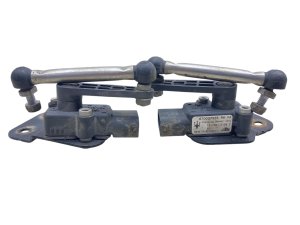
Every 2017-2024 Maserati Levante equipped with the factory air suspension relies on four ride height sensors to function correctly. This guide focuses on the two front sensors. Each sensor acts like a measuring stick for the suspension, constantly telling the vehicle's computer how high or low that specific corner is sitting. This data is essential for the system to perform its key functions: maintaining a level ride, compensating for weight changes, and allowing the driver to select different ride heights. When one of these sensors fails, the computer receives incorrect data, leading to a host of suspension problems and dashboard warnings.
Top Symptoms of a Failing Levante Ride Height Sensor
A bad ride height sensor will almost always trigger a warning on your instrument panel. Here are the most common signs of failure:
- "Service Air Suspension" or "Check Air Suspension System" Warning: This is the most frequent symptom. The message appears because the Air Suspension Control Module (ASCM) detects a problem it cannot resolve, often due to illogical signals from a failing sensor.
- Vehicle Leaning or Uneven: You may notice one corner of the Levante is visibly lower or higher than the others. This happens when a bad sensor reports an incorrect height, causing the system to overinflate or deflate the air spring at that corner.
- Stuck at One Height: The vehicle may become unable to raise or lower when you use the ride height selection buttons. The system disables adjustments as a safety precaution when it can't trust the height data it's receiving.
- Air Compressor Issues: While often a separate problem, a faulty sensor can cause the air compressor to run excessively or not at all. A sensor that is stuck reporting a "low" position can cause the compressor to overwork trying to raise the vehicle, potentially leading to overheating and failure. A Maserati technical document notes that fault code C1562-98 (Ride Height Air Pump Control-Component or System Over Temperature) can be related to general air suspension anomalies.
Pro Tip: Before assuming the sensor is bad, check the F41 fuse in the rear fuse box (Rear Distribution Unit). A blown compressor fuse can cause similar symptoms, such as the inability to change ride height.
Known Issues, TSBs, and Recalls for 2017-2024 Levante Suspension
Technical Service Bulletins (TSBs)
While there isn't a specific TSB just for the ride height sensor, Maserati has issued a "Diagnostic Sheet" for air suspension anomalies on all Levante models. This document addresses the "SERVICE AIR SUSPENSION" warning and vehicles being unable to change height. It guides technicians to check for height differences between the left and right sides of an axle. If the difference is greater than 5mm, it recommends performing a vehicle height calibration, which points to the sensors as a key part of the diagnostic process. The document also lists related fault codes, such as C15A1-00 (Unable to Obtain Desired Ride Height).
Recalls
There are no active recalls on the NHTSA database specifically for the suspension ride height sensors on the 2017-2024 Maserati Levante. There was a recall for some 2018 models (Recall #369) concerning incomplete welds on the front suspension sub-frame, but this is unrelated to the electronic sensors.
Buying a Used Front Ride Height Sensor: What to Check
Purchasing a used OEM ride height sensor can be a smart way to save money, as they are often more reliable than inexpensive aftermarket alternatives. However, you must inspect the part carefully.
- Verify the Part Number: This is the most critical step. The front left (driver side) and front right (passenger side) sensors are not interchangeable. They are physically mirrored and have different part numbers.
- Front Left (Driver Side): 670037526
- Front Right (Passenger Side): 670037525
- Inspect the Connector: Look closely at the electrical connector pins. They should be clean, straight, and free of any green or white corrosion. Corrosion is a major red flag and indicates the sensor may have been exposed to water, leading to internal failure.
- Check the Arm and Linkage: The plastic sensor arm should move smoothly without binding or feeling gritty. Ensure the linkage rod is straight and not bent. A bent rod will cause the sensor to report an incorrect height even if the electronics are fine.
- Examine the Housing: Check the plastic body of the sensor for any cracks or signs of being pried open. A compromised housing allows moisture and dirt to enter, destroying the sensitive internal components.
Cost of Replacing a Maserati Levante Ride Height Sensor
The cost can vary significantly based on the parts you choose and who performs the labor. Calibration is a mandatory extra step that adds to the cost.
| Item | Estimated Cost |
|---|---|
| New OEM Sensor | $145 - $160 |
| New Aftermarket Sensor | $50 - $75 |
| Used OEM Sensor | $40 - $95 |
| Shop Labor (Replacement) | $100 - $150 (approx. 1 hour) |
| Shop Labor (Calibration) | $75 - $150 (approx. 0.5-1 hour) |
| Total Professional Installation (New OEM) | $320 - $460 per side |
Replacement Guide & Calibration Requirements
Replacing the front ride height sensor is a relatively simple mechanical task. However, the final calibration step requires a specialized scan tool.
Installation Difficulty: 2 out of 5 (Easy to Moderate)
Estimated Time: 1 hour for replacement, 0.5-1 hour for calibration.
Step-by-Step Replacement
- Engage Jack Mode: Before lifting the vehicle, you must activate "Tire Jack mode" in the vehicle's settings menu on the infotainment screen. This deactivates the automatic leveling system.
- Lift and Support: Safely lift the front of the vehicle and support it with jack stands. Remove the wheel on the side you are working on.
- Locate the Sensor: The sensor is mounted to the vehicle's frame or subframe, with a short linkage arm connected to the lower control arm.
- Disconnect Electrics: Carefully unplug the electrical connector from the sensor.
- Remove Hardware: The sensor is typically held on by two bolts. The linkage arm is attached to the control arm with a single nut. Remove this hardware.
- Install New Sensor: Installation is the reverse of removal. Attach the new sensor to the frame and connect the linkage to the control arm. Plug in the electrical connector.
- Reassemble: Reinstall the wheel and lower the vehicle.
Warning: After replacement, the system must be calibrated. Without this step, the suspension will not know the correct ride height, and you will continue to have warning lights and an uneven stance.
Calibration Procedure
The calibration process tells the Air Suspension Control Module (ASCM) the new sensor's baseline or "zero" position. This is not optional.
- A professional-grade diagnostic scan tool with Maserati-specific software is required.
- The technician will navigate to the ASCM and initiate the "CAR HEIGHT CALIBRATION" procedure.
- The process involves measuring the vehicle height at each corner (usually from the center of the wheel to the fender lip) on a level surface.
- These measurements are entered into the scan tool, which saves them as the new reference points for the system.
Frequently Asked Questions (FAQ)
Are the front left and right ride height sensors the same part?
No, they are not. They are mirror images of each other and have unique part numbers. The front left (driver) is 670037526, and the front right (passenger) is 670037525. You must install the correct part on the correct side.
Do I have to calibrate the suspension after replacing a sensor?
Yes, calibration is mandatory. The new sensor needs to be taught the correct baseline height. Skipping this step will result in continued suspension faults and an incorrect ride height.
Can I replace just one sensor, or should I do both?
You can replace only the failed sensor. They do not have to be replaced in pairs. However, if one has failed due to age or exposure, the other may not be far behind.
What happens if I ignore a bad ride height sensor?
Ignoring the issue can lead to an unpredictable and potentially unsafe driving experience due to improper handling. It can also cause the air compressor to overwork and fail, leading to a much more expensive repair. The vehicle may also get stuck in a very low or high position, making it difficult to drive.
Technical Specifications
OEM Part Numbers: 670037525 670037526
The front sensors are side-specific potentiometers that provide a variable electrical signal to the Air Suspension Control Module (ASCM). They are not interchangeable.
We Have This Part in Stock

The information in this article is provided for general reference and educational purposes only. Vehicle specifications, procedures, and part compatibility can vary by production date, trim level, and region. Always consult your vehicle's factory service manual and verify part numbers before purchasing or performing repairs. Safety-critical components such as airbags, seat belts, and braking systems should be installed by a qualified professional.
- Maserati Levante:
- 🛍️ Shop This Part
- What the Front Ride Height Sensor Does on a Levante
- Top Symptoms of a Failing Levante Ride Height Sensor
- Known Issues, TSBs, and Recalls for 2017-2024 Levante Suspension
- Technical Service Bulletins (TSBs)
- Recalls
- Buying a Used Front Ride Height Sensor: What to Check
- Cost of Replacing a Maserati Levante Ride Height Sensor
- Replacement Guide & Calibration Requirements
- Step-by-Step Replacement
- Calibration Procedure
- Frequently Asked Questions (FAQ)
- 🎟️ Get 5% Off