

Tesla Model 3 & Model Y Front Control Arm Guide: Squeaks, Clunks, and Recalls (2017-2023)
Diagnose the notorious squeaking and clunking sounds from your Tesla's front suspension and learn what to look for when buying a replacement control arm.
- A squeaking noise at low speeds is the hallmark of a failing front upper control arm ball joint, a very common issue on 2017-2023 Model 3 and 2020-2023 Model Ys.
- A safety recall (NHTSA 21V-835) was issued for loose front lower control arm bolts on many of these vehicles, which must be inspected and torqued correctly to prevent a loss of control.
- Tesla frequently covers the labor for front upper control arm replacement as a 'goodwill' gesture, even on out-of-warranty cars, making the official service center an unusually affordable option.
- Suspension parts for the 2024+ Model 3 'Highland' are different and NOT interchangeable with earlier 2017-2023 Model 3 and 2020-2023 Model Y vehicles.
Vehicle and Part Compatibility: 2017-2023 vs. 2024+ 'Highland'

Critical Compatibility Warning: The front suspension was significantly redesigned for the 2024 Tesla Model 3, known as the 'Highland' refresh. Control arms for the 2017-2023 Model 3 and 2020-2023 Model Y are generally interchangeable, but they will NOT fit the 2024 and newer 'Highland' Model 3. Always verify your vehicle's production date and the OEM part number before purchasing a replacement.
The 2017-2023 Tesla Model 3 and 2020-2023 Tesla Model Y are built on the same platform and share their primary front suspension components. This guide applies to all versions of these vehicles, including Rear-Wheel Drive (RWD) and All-Wheel Drive (AWD) models, unless otherwise noted.
Known Issues, Recalls, and Technical Service Bulletins (TSBs)

Control arm issues are well-documented for the 2017-2023 Model 3 and 2020-2023 Model Y. Tesla has issued both a TSB for a common noise issue and safety recalls for loose fasteners.
The Notorious Front Upper Control Arm Squeak (TSB SB-20-31-006)
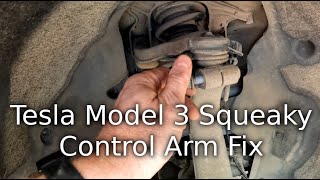
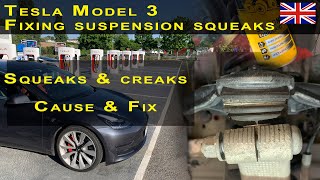
The most common complaint is a loud squeaking or creaking noise from the front suspension, especially when turning at low speeds or going over bumps. This sound is often compared to a rusty hinge or an old mattress. 🎬 Watch this video to hear the squeak and see the cause. The issue stems from the design of the front upper control arm (FUCA). Water can get past the seal of the ball joint, washing away the grease and causing the unlubricated metal-on-metal joint to corrode and squeak. This problem can appear at relatively low mileage, sometimes between 25,000 and 60,000 miles.
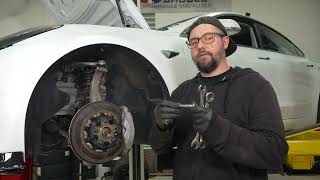
In response, Tesla issued Technical Service Bulletin SB-20-31-006. The official fix is not to replace the arm, but to inject and apply a urethane sealant around the ball joint 🎬 Watch a mechanic demonstrate the official TSB grease injection fix. to prevent further water intrusion. Tesla states this is a Noise, Vibration, and Harshness (NVH) issue and not a safety failure. However, many owners find the noise returns, and replacement of the arm is often the only permanent solution.
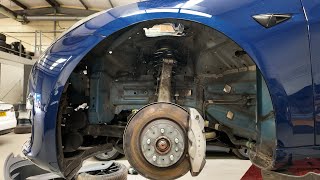
🎬 See a step-by-step walkthrough of the control arm replacement process.Recall: Loose Front Lower Control Arm Fasteners (NHTSA 21V-835)
In October 2021, Tesla issued a safety recall for approximately 2,800 vehicles, including 2019-2021 Model 3 and 2020-2021 Model Ys. The recall, identified as NHTSA Campaign Number 21V835000, addresses front suspension lateral link fasteners that may not have been torqued to the correct specification at the factory. The lateral link is one of the two lower control arms.
These loose bolts can allow the control arm to separate from the subframe, which would cause a sudden shift in wheel alignment and vehicle instability, increasing the risk of a crash. The remedy involves inspecting the fasteners and tightening them to the proper specification. This recall was later expanded to include a small number of 2018-2019 Model 3 vehicles.
Recall: Loose Upper Control Arm Fasteners on Model Y (SB-20-31-012)
A separate recall was issued for certain 2020 Model Y vehicles. On these cars, the bolt and nut connecting the front upper control arm to the steering knuckle could be loose or missing entirely. The fix is to inspect the fasteners and tighten or replace them as needed.
Symptoms of a Failing Control Arm

Listen and feel for these signs that a control arm, bushing, or ball joint is failing.
- Squeaking or Creaking: A loud, high-pitched squeak when turning the steering wheel at low speeds or going over speed bumps is the classic sign of a bad front upper control arm ball joint. The noise is often worse in wet or cold weather.
- Clunking or Popping: A clunk, pop, or knock from the front end when driving over bumps, accelerating, or braking often points to a worn-out lower control arm bushing or a loose ball joint. This happens when the worn rubber allows metal components to make contact.
- Sloppy or Vague Steering: If the steering feels loose, wanders on the highway, or the car pulls to one side, it can be caused by worn control arm bushings that are allowing unwanted movement in the suspension and affecting alignment.
- Vibrations: Excessive vibration felt in the steering wheel, especially at higher speeds, can be a symptom of worn bushings that can no longer absorb road imperfections.
- Uneven Tire Wear: A bad control arm can throw off the wheel alignment, causing the inside or outside edges of your front tires to wear out much faster than the rest of the tread.
Buying a Used Suspension Control Arm
A low-mileage recycled OEM control arm can be an excellent value, especially since Tesla often uses the same part for several years. Here’s what to look for.
- Verify Compatibility: This is the most important step. Ensure the part is from a 2017-2023 Model 3 or a 2020-2023 Model Y. Parts from a 2024+ 'Highland' Model 3 will not fit. Match the OEM part number from your original arm if possible.
- Inspect the Bushings: The large rubber bushings are a primary failure point, especially on the lower control arms. Look for any cracks, tearing, or separation of the rubber from the metal sleeve. The rubber should be firm and intact. Avoid any arm with visibly torn or degraded bushings.
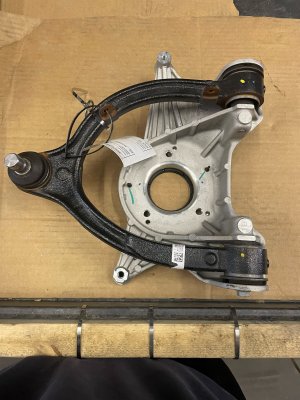
- Check the Ball Joint: For upper control arms, the ball joint is the weak link. The rubber boot around the joint should be intact with no rips or holes. Try to move the ball joint stud by hand; it should be stiff and smooth, with no looseness or gritty feeling. Any play indicates it is worn out.
- Examine the Arm Body: Inspect the arm for any signs of bending, cracking, or significant collision damage. Check for heavy corrosion, although surface rust is often just cosmetic.
- Consider Mileage: Since these parts can fail at low mileage (as early as 25,000 miles), a used part from a low-mileage vehicle (under 40,000 miles) is ideal. A high-mileage used arm may not last much longer than the one you are replacing.
Pro Tip: Given the high failure rate of the original upper control arm ball joints due to water intrusion, some aftermarket companies have designed improved, better-sealed versions. However, for geometry and material quality, a low-mileage used OEM part is often a safer and more cost-effective choice than a cheap, unbranded aftermarket arm.
Replacement Details and Torque Specs

Replacing a control arm is a feasible DIY job for someone with mechanical experience and the right tools, but an alignment is mandatory afterward.
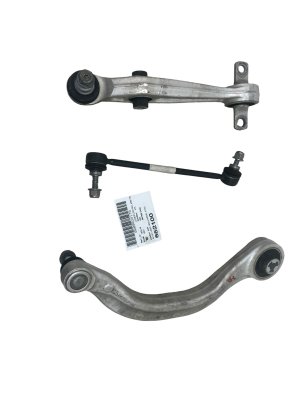
- Related Parts: While you have the suspension apart, it's a good time to inspect the other control arms, ball joints, and sway bar end links on that corner of the vehicle. Because the front suspension has three arms per side (one upper, two lower), a failure in one can put extra stress on the others.
- Alignment is Required: Replacing any control arm will change the vehicle's wheel alignment. You must have a professional four-wheel alignment performed immediately after the repair to ensure safety, proper handling, and to prevent rapid tire wear.
Torque Specifications
Torque specs are critical for safety. These values have been gathered from service manuals and technical videos; always verify with an official source for your specific vehicle if possible.
Important: Bolts that go through rubber bushings must be given their final torque only when the suspension is compressed to its normal ride height. Tightening these bolts with the wheels hanging in the air will preload and quickly destroy the new bushings.
| Fastener | Torque Spec | Notes |
|---|---|---|
| Front Upper Control Arm to Knuckle (Pinch Bolt) | 56 Nm / 41.3 ft-lbs | |
| Front Upper Control Arm to Body Mounts | 36.9 ft-lbs / 50 Nm | Torque at ride height. |
| Front Lower Arm (Lateral Link) to Subframe | 99.6 ft-lbs / 135 Nm | Subject of recall 21V-835. Torque at ride height. |
| Front Lower Arm (Compliance Link) to Subframe | 84.8 ft-lbs / 115 Nm | Torque at ride height. |
| Front Lower Arms (Both) to Knuckle | 132.7 ft-lbs / 180 Nm | |
| Stabilizer Bar Link to Strut | 98 Nm / 72.3 ft-lbs |
Cost to Replace Tesla Model 3 & Model Y Control Arms
Costs can vary widely depending on whether you visit a Tesla Service Center or an independent shop, and if Tesla offers a 'goodwill' repair.
| Item | Estimated Cost | Notes |
|---|---|---|
| New OEM (from Tesla) | $90 - $150 per arm | This is for the part only. |
| New Aftermarket | $70 - $200 per arm | Price varies by brand and quality. |
| Used OEM | $50 - $85 per arm | A cost-effective option if inspected carefully. |
| Shop Labor (Tesla Service) | $0 - $450 | For the common upper arm squeak, Tesla frequently waives labor as a goodwill gesture, even out of warranty. However, this is not guaranteed. A typical labor rate is $210/hr. |
| Shop Labor (Independent) | $250 - $1,500+ | Varies greatly depending on location and how many arms are being replaced. A full front-end refresh can be costly. |
| Total (Single Upper Arm at Tesla) | $195 - $550 | Often on the lower end if labor is covered as goodwill. |
| Total (Lower Arms at Independent Shop) | $750 - $1,800+ | Includes parts, labor for both sides, and alignment. |
Frequently Asked Questions (FAQ)
Why do my Tesla control arms squeak so much?
The squeaking is almost always from the front upper control arm's ball joint. Water drains from the windshield area directly onto the arm, seeps into the ball joint, washes out the grease, and causes the metal parts to rust and grind against each other, creating the noise.
Can I just inject grease into the ball joint to stop the squeaking?
Some owners have had temporary success by using a needle to inject grease into the ball joint's rubber boot. While this can quiet the noise for a while, it's often not a permanent fix because the original seal is already compromised, and the joint may already be damaged from running without lubrication.
Is it safe to drive with a bad control arm?
It is not recommended. While a squeaking noise may just be an annoyance, a clunking noise indicates significant wear. A worn bushing or ball joint compromises steering control and alignment. A complete failure of the arm or its fasteners can cause a loss of steering control or wheel separation, making the vehicle unsafe to drive. It should be inspected and repaired immediately.
Do I really need an alignment after replacing a control arm?
Yes, absolutely. The control arms are what set the wheel's position and angles (camber, caster, and toe). Replacing one, even with an identical part, will alter the alignment. Skipping the alignment will result in poor handling, pulling to one side, and will destroy your tires in a very short time.
Helpful Videos
Technical Specifications
OEM Part Numbers: 1044321-00-G 1044326-10-J 1044341-00-D 1044341-00-E 1044341-99-D 104434100E 1044354-00-A 1044359-00-A 1188321-00-A 1188341-00-C 1288321-00-A 1344321-10-A 1344326-00-A 1344326-10-A 1344341-10-B
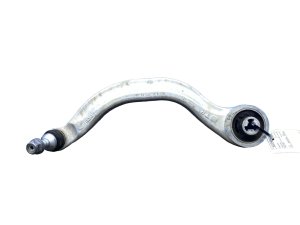
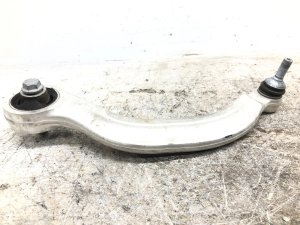
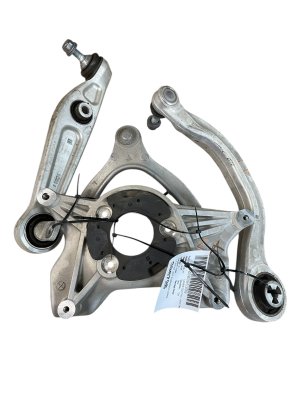
The front suspension features a multi-link design with one upper control arm and two separate lower control arms (a forward lateral link and a rearward compliance link) per side.
We Have This Part in Stock

The information in this article is provided for general reference and educational purposes only. Vehicle specifications, procedures, and part compatibility can vary by production date, trim level, and region. Always consult your vehicle's factory service manual and verify part numbers before purchasing or performing repairs. Safety-critical components such as airbags, seat belts, and braking systems should be installed by a qualified professional.
- TESLA MODEL 3:
- TESLA MODEL Y:
- 🎬 Helpful Videos
- 🛍️ Shop This Part
- Vehicle and Part Compatibility: 2017-2023 vs. 2024+ 'Highland'
- Known Issues, Recalls, and Technical Service Bulletins (TSBs)
- The Notorious Front Upper Control Arm Squeak (TSB SB-20-31-006)
- Recall: Loose Front Lower Control Arm Fasteners (NHTSA 21V-835)
- Recall: Loose Upper Control Arm Fasteners on Model Y (SB-20-31-012)
- Symptoms of a Failing Control Arm
- Buying a Used Suspension Control Arm
- Replacement Details and Torque Specs
- Torque Specifications
- Cost to Replace Tesla Model 3 & Model Y Control Arms
- Frequently Asked Questions (FAQ)
- 🎟️ Get 5% Off