

Tesla Model 3 & Y Front Upper Control Arm: Squeaks, Clunks, and Replacement Guide (2017-2024)
This guide covers the common failure points, symptoms, and replacement costs for the front upper control arm on the 2017-2023 Tesla Model 3 and 2020-2024 Tesla Model Y.
- The most common failure is a squeaking front upper control arm ball joint, caused by water intrusion on early designs.
- When buying a replacement (new or used), get the latest part number revision (e.g., 1044326-00-J or later) to ensure you have the updated, more durable design.
- Tesla Service Centers often replace these out of warranty as a 'goodwill' gesture, charging only for the part (~$90-$200) and not labor.
- A squeak is an annoyance, but a clunk indicates severe wear. A complete failure can lead to loss of steering control, so it should not be ignored.
Known Issues for Model 3 & Model Y Front Upper Control Arms

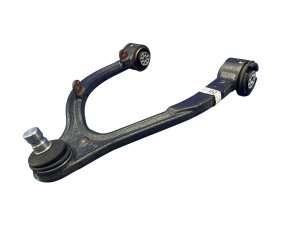
The front upper control arm on the Tesla Model 3 and Model Y is notorious for a specific failure: the ball joint. Early versions of this part were susceptible to water intrusion, which leads to a very distinct set of symptoms. This problem is so common that Tesla has revised the part multiple times, as indicated by the changing letter at the end of the part number (e.g., 1044326-00-F, -G, -H, -J). The primary issue stems from the ball joint's seal failing, allowing water and debris to wash away the internal grease. This causes metal-on-metal contact, leading to corrosion, noise, and eventual failure.
While the squeaking ball joint is the most common problem, there have also been recalls related to suspension fasteners. NHTSA recall 21V-835 was issued for some 2019-2021 Model 3 and 2020-2021 Model Y vehicles because the fasteners connecting the front suspension lateral links (a different control arm) could loosen, potentially causing a loss of vehicle control. Another recall (NHTSA campaign 20V-685) for certain 2020 Model Y vehicles noted that the bolts connecting the upper control arm to the steering knuckle could be loose. While these recalls don't directly address the ball joint squeak, they highlight the importance of checking all suspension fasteners.
Symptoms of a Failing Front Upper Control Arm

Diagnosing a bad control arm on these Teslas is usually straightforward based on the sounds it makes.
1. Squeaking or Creaking When Turning (The "Duck Call")
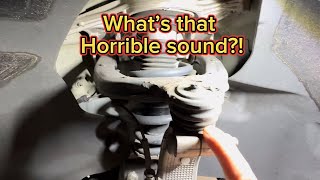
This is the most famous symptom. Owners describe a loud squeaking, creaking, or groaning noise—often compared to a duck call—that is most noticeable at low speeds, like when navigating a parking lot or turning the steering wheel while stationary. The noise is caused by the unlubricated, corroded ball joint moving. It is often worse in wet or cold weather, as moisture exacerbates the problem.
2. Clunking or Popping Noises
A clunking or popping sound when driving over bumps, braking, or turning is a sign of a more advanced failure. This indicates that the ball joint is loose and has excessive play, allowing the metal components to knock against each other. While this sound can also be caused by worn bushings on the lower control arms, a clunk from the upper arm points to a severely worn ball joint.
3. Steering Wander and Uneven Tire Wear
A worn control arm ball joint can cause the wheel alignment to shift unpredictably. This may result in the vehicle pulling to one side, a vague or loose feeling in the steering wheel, or excessive vibration. Over time, this misalignment will cause uneven tire wear, typically on the inner or outer edges of the front tires.
Pro Tip: To diagnose a worn ball joint, safely jack up the front of the vehicle so the wheel is off the ground. Place your hands at the 12 o'clock and 6 o'clock positions on the tire and try to rock it back and forth. If you feel any play or hear a clunking sound, the ball joint is likely worn and the control arm needs to be replaced.
🎬 Watch: Hear the specific squeaking and clunking sounds of a failing arm.Buying a Used Suspension Control Arm

Given the high failure rate of early designs, buying a used front upper control arm for a Model 3 or Model Y requires careful inspection. A used OEM part can be a great value, especially compared to expensive new OEM parts and potentially lower-quality aftermarket options, but you must verify what you are buying.
- Check the Part Number Revision: This is the most critical step. The part number is typically in the format 1044326-00-X. Aim for the latest revision possible (e.g., -J or newer). Later revisions have improved sealing to prevent the water intrusion that causes the squeaking failure. Avoid early versions if possible, unless it is from a very low-mileage vehicle.
- Inspect the Ball Joint Boot: The rubber boot around the ball joint is the first line of defense. Carefully inspect it for any rips, tears, or signs of grease leakage. A compromised boot means the joint is contaminated and will fail soon, if it hasn't already.
- Check for Play: Hold the main body of the arm and try to move the ball joint stud. It should be stiff and move smoothly. If it's loose, floppy, or feels gritty, the joint is bad.
- Mileage vs. Revision: For this specific part, the revision is more important than mileage. A high-mileage arm of a newer, improved design is likely a better bet than a low-mileage arm of an older, failure-prone design. Failure can occur in as little as 40,000-50,000 miles on the original parts.
- Why Used OEM is a Good Choice: A genuine, late-revision used Tesla control arm offers the fit and quality of an OEM part without the high cost of buying new from the dealer. Many aftermarket options exist, but their long-term durability and ball joint quality can be a gamble. Sticking with a verified, updated OEM part is often the safest and most cost-effective long-term solution.
Replacement Procedure & Torque Specs

Replacing the front upper control arm is a feasible DIY job for those with mechanical experience and the right tools. A wheel alignment is highly recommended after replacement to ensure proper handling and prevent tire wear.
Warning: Always use jack stands and follow proper safety procedures when working under a vehicle. The suspension is under load and can cause serious injury if not handled correctly.
While a detailed step-by-step guide is beyond this scope, the key steps involve removing the wheel, detaching the sway bar link, removing the pinch bolt that holds the ball joint to the steering knuckle, and unbolting the two inner mounting points from the chassis. The most important part of the installation is to only final-tighten the inner bushing bolts when the suspension is at its normal ride height. This prevents pre-loading the bushings, which can cause them to tear and fail prematurely.
🎬 See this step-by-step DIY replacement walkthrough for Model 3 and Y.Key Torque Specifications:
Torque specs can vary slightly by model year and fastener type. Always verify with the official service manual if possible. These are common values:
- Upper Control Arm to Knuckle Pinch Bolt/Nut: ~41.3 ft-lbs (56 Nm) to 60 Nm.
- Upper Control Arm to Chassis Mounts (x2): ~36.9 ft-lbs (50 Nm). These must be torqued at ride height.
- Sway Bar End Link to Strut: ~72.3 ft-lbs (98 Nm).
Cost Comparison for Front Upper Control Arm Replacement
Costs can vary significantly based on your location and whether you use a Tesla Service Center, an independent shop, or do the work yourself.
| Item | Estimated Cost (Per Arm) | Notes |
|---|---|---|
| New OEM (Tesla Service) | $90 - $200 (Part) | Tesla often provides goodwill labor coverage for this specific repair, even out of warranty, charging only for the part. Total cost can be as low as ~$200. |
| New Aftermarket | $150 - $250 (Part) | Quality varies. Brands like Meyle HD offer redesigned, heavy-duty options. |
| Used OEM (Recycled) | $75 - $150 (Part) | Excellent value, but ensure you get the latest part revision. |
| Shop Labor | $200 - $400 | An independent shop may charge 1.5-2.5 hours of labor. Tesla's labor rate is high (~$210/hr), but often waived for this repair. A full replacement at an independent shop could be $500+, while some quotes have reached $2500 for multiple arms. | 🎬 Watch: One owner's experience with Tesla service costs at 85k miles.
Frequently Asked Questions (FAQ)
Can I just inject grease into the old ball joint to fix the squeak?
Some owners have had temporary success by using a needle to inject grease into the ball joint boot. However, this is not a permanent fix. The original damage from corrosion and water intrusion remains, and the noise will likely return. Replacement with an updated part is the only long-term solution.
Is a squeaky control arm a safety issue?
A squeaky control arm is primarily a noise, vibration, and harshness (NVH) issue and is not immediately dangerous. However, it is a sign that the part is failing. If left unaddressed, the ball joint can develop excessive play (causing a clunk) and could theoretically separate, which would result in a complete loss of wheel control and is a major safety hazard.
Do I need to replace the control arms in pairs?
While not strictly required, it is highly recommended. If one side has failed due to a design flaw, the other side is likely to fail soon. Replacing both at the same time saves on labor costs for a future repair and ensures the front suspension is balanced.
Why did Tesla cover the labor for my out-of-warranty control arm replacement?
Due to the widespread and well-documented nature of this specific failure, Tesla Service Centers frequently offer a "goodwill" repair, charging the customer only for the parts and covering the labor cost. This is not a formal policy but is a common experience for many owners of early Model 3 and Model Y vehicles.
Helpful Videos
Technical Specifications
OEM Part Numbers: 1044326-00 1044326-00-E 1044326-00-F 1044326-00-G 1044326-00-H 1044326-00-I 1044326-00-J 1188326-10-A 1288326-00-A
Upper Control Arm to Knuckle Torque: 56-60 Nm. Upper Control Arm to Chassis Mounts Torque: 50 Nm (torqued at ride height).
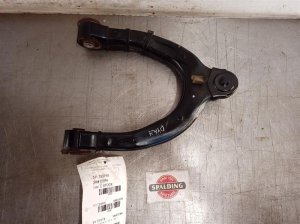
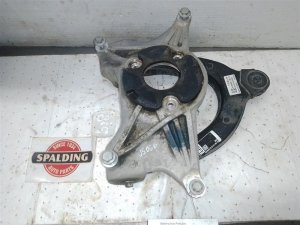
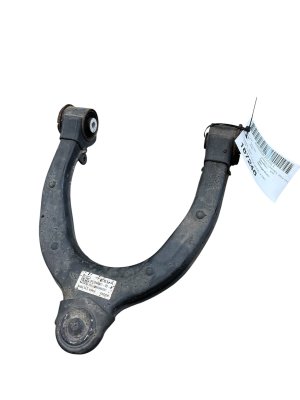
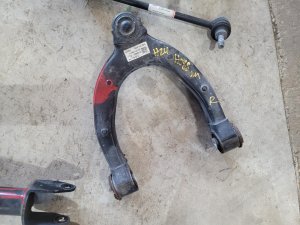
We Have This Part in Stock


The information in this article is provided for general reference and educational purposes only. Vehicle specifications, procedures, and part compatibility can vary by production date, trim level, and region. Always consult your vehicle's factory service manual and verify part numbers before purchasing or performing repairs. Safety-critical components such as airbags, seat belts, and braking systems should be installed by a qualified professional.
- Tesla Model 3:
- TESLA MODEL 3:
- Tesla Model Y:
- TESLA MODEL Y:
- 🎬 Helpful Videos
- 🛍️ Shop This Part
- Known Issues for Model 3 & Model Y Front Upper Control Arms
- Symptoms of a Failing Front Upper Control Arm
- 1. Squeaking or Creaking When Turning (The "Duck Call")
- 2. Clunking or Popping Noises
- 3. Steering Wander and Uneven Tire Wear
- Buying a Used Suspension Control Arm
- Replacement Procedure & Torque Specs
- Key Torque Specifications:
- Cost Comparison for Front Upper Control Arm Replacement
- Frequently Asked Questions (FAQ)
- 🎟️ Get 5% Off