

2024-2026 Model 3 'Highland' Rear Suspension Links: A Guide to Parts 1344426-00-C & 1344427-00-C
This guide covers how to diagnose noises and wear from the rear suspension on the refreshed 'Highland' Tesla Model 3, and what to inspect when buying these specific used OEM control links.
- These parts (1344426-00-C, 1344427-00-C) are REAR suspension links that ONLY fit the 2024+ Tesla Model 3 'Highland'.
- The most common failure symptoms are clunking noises from the rear over bumps and uneven rear tire wear.
- When buying a used link, the most important check is the condition of the rubber bushings; look for cracks, tears, or separation.
- A four-wheel alignment is absolutely required after replacing any of these control arm links to ensure safety and prevent tire damage.
Important Compatibility Warning: 'Highland' Models Only

Warning: These control arms, part numbers 1344426-00-C, 1344427-00-B, 1344427-00-c, and 1344427-10-C, are specifically for the rear suspension of the refreshed Tesla Model 3, known as the 'Highland', which began with the 2024 model year. They will NOT fit the front suspension or any earlier 2017-2023 Model 3 vehicles. Always verify your vehicle's production year and the part number on your original component before ordering.
Known Issues and Vehicle-Specific Information
The 2024+ Model 3 'Highland' is a relatively new vehicle, so long-term data on widespread failures is still emerging. However, some early owners have reported creaking or squeaking noises from the suspension. In some forum discussions, owners note that service centers are still learning about new issues specific to the Highland and may initially be unable to diagnose the source of a noise.
It is important not to confuse potential issues on the 'Highland' with the well-documented problems on earlier Model 3s. Previous 2017-2023 models had known issues with front upper control arms causing a squeaking sound due to water intrusion into the ball joint, which was addressed by TSB SB-20-31-006. There was also a recall (NHTSA 21V-835) for loose front suspension lateral link fasteners on 2019-2021 models. These specific issues do not apply to the different suspension components of the 2024+ 'Highland' model.
Symptoms of a Failing Rear Control Arm Link

A failing rear suspension link will compromise your vehicle's stability and ride quality. The symptoms are caused by worn-out rubber bushings or, less commonly, a bent or cracked arm. Listen and feel for these common signs:
- Clunking or Knocking Noises: This is the most common symptom. You may hear a distinct clunk or rattle from the rear 🎬 Watch this video to hear and diagnose rear suspension clunks. of the car, especially when driving over bumps, potholes, or uneven road surfaces. This sound is caused by excessive movement in the worn bushings, allowing metal components to make contact.
- Steering Wander or Instability: The vehicle may feel 'loose' from the rear and require constant steering corrections to keep it driving straight. This indicates that the worn link is no longer holding the wheel in its proper alignment.
- Uneven Tire Wear: A bad control arm link can cause a shift in wheel alignment. Inspect your rear tires for unusual wear patterns, particularly on the inside or outside edges. This is a strong sign that a suspension component is failing to hold its geometry.
- Vibrations: While more commonly associated with front suspension issues, a severely worn rear link can also cause vibrations that may be felt through the seat or floor of the car.
Buying a Used 2024-2026 Model 3 Rear Control Arm: What to Check

A used OEM control arm from a low-mileage vehicle can be an excellent value, offering the same fit and quality as a new part. However, a thorough inspection is critical to ensure you are getting a good component.
Pro Tip: For a part like this, a high-quality used OEM component is often a better choice than a cheap, new aftermarket part. The original Tesla parts are designed with specific materials and bushing stiffness for the vehicle's weight and performance characteristics.
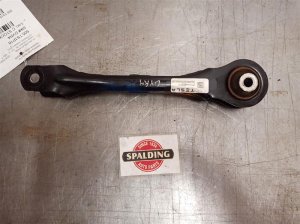
- Verify the Part Number: First, confirm you have the right part. For the 'Highland' Model 3, you are looking for rear links like 1344426-00-C (Rear Upper Aft) or 1344427-10-C (Rear Upper Fore).
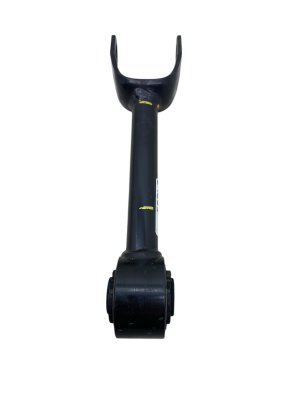
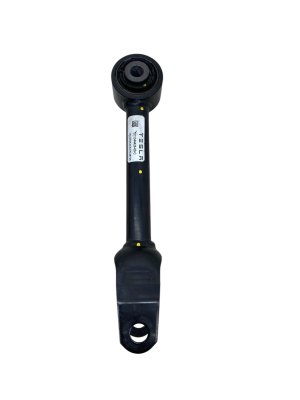
- Inspect the Arm Body: Look over the entire arm for any signs of cracks, heavy scraping, or bending. An arm from a vehicle involved in a collision could have subtle bends that will make alignment impossible. Minor surface rust is often cosmetic, but deep, flaking corrosion can weaken the part.
- Check the Bushings: This is the most important check. The rubber bushings at each end should be intact, without any major cracks, tears, or signs of dry rot. The rubber should not be separating from the inner or outer metal sleeves.
- Perform a Pry Bar Test: If possible, place one end of the arm in a vise. Insert a pry bar into the other end and try to move it. A good bushing will feel firm and resist movement, while a worn bushing will allow for noticeable play (more than 1/8th of an inch is a red flag). This mimics the forces the arm experiences in the vehicle.
Cost Comparison
Prices can vary based on your location and the chosen repair shop. As the 'Highland' model is new, aftermarket options are not yet widely available.
| Part Type | Estimated Cost | Notes |
|---|---|---|
| New OEM | $100 - $175 per arm | Purchased from Tesla or an OEM parts reseller. |
| New Aftermarket | Not Widely Available | As of early 2026, specific aftermarket options for 'Highland' rear links are scarce. |
| Used OEM | $50 - $85 per arm | A common price from online sellers and salvage yards for a good-condition used part. |
| Shop Labor | $150 - $300 per arm | Labor to replace one rear link. Does not include the cost of wheel alignment. |
Replacement Overview and Difficulty
- Difficulty Rating: 3 out of 5
- Estimated Time: 1.5 - 2.5 hours per side
- DIY Feasible: Yes, for those with mechanical experience and the right tools.
Replacing a rear control arm link is a moderately difficult job. It requires safely lifting and supporting the vehicle on jack stands, removing the wheel, and using wrenches and a torque wrench to remove and install the two bolts holding the link in place. 🎬 See a step-by-step walkthrough of the rear control arm replacement. Tesla's official service procedure outlines the process. The most critical step after the physical replacement is performing a four-wheel alignment.
🎬 Watch a complete guide on replacing Tesla rear suspension components.Warning: A four-wheel alignment is mandatory after replacing any control arm. Skipping this step will result in poor handling, vehicle instability, and rapid, uneven tire wear.
Frequently Asked Questions (FAQ)
Will a control arm from a 2023 Model 3 fit my 2025 Model 3?
No. The 2024+ 'Highland' Model 3 features a revised suspension design, and its parts are not interchangeable with the earlier 2017-2023 models. You must use parts specifically listed for the 2024 and newer model years.
Do I need to replace these rear links in pairs?
While not strictly required, it is highly recommended. Suspension components wear at a similar rate. If the link on one side has failed, the other side is likely not far behind. Replacing them in pairs ensures balanced handling and saves you from paying for a second alignment in the near future.
What is the difference between the 'fore' and 'aft' links?
In a multi-link suspension, there are multiple arms controlling the wheel's position. The 'fore' link (1344427-xx-x) is positioned toward the front of the car, and the 'aft' link (1344426-00-C) is positioned toward the rear. They work together to control the wheel's movement and toe angle.
Is a clunking noise from the suspension always a bad control arm?
Not always, but it's a primary suspect. Other potential causes for clunking noises include worn sway bar end links, a bad shock absorber, or a loose subframe bolt. A thorough inspection is needed to pinpoint the exact cause.
Helpful Videos
Technical Specifications
OEM Part Numbers: 1344426-00-C 1344427-00-B 1344427-00-c 1344427-10-C
Part 1344426-00-C: Rear Upper Aft Link. Part 1344427-xx-C: Rear Upper Fore Link.
We Have This Part in Stock




The information in this article is provided for general reference and educational purposes only. Vehicle specifications, procedures, and part compatibility can vary by production date, trim level, and region. Always consult your vehicle's factory service manual and verify part numbers before purchasing or performing repairs. Safety-critical components such as airbags, seat belts, and braking systems should be installed by a qualified professional.
- Tesla Model 3:
- 🎬 Helpful Videos
- 🛍️ Shop This Part
- Important Compatibility Warning: 'Highland' Models Only
- Known Issues and Vehicle-Specific Information
- Symptoms of a Failing Rear Control Arm Link
- Buying a Used 2024-2026 Model 3 Rear Control Arm: What to Check
- Cost Comparison
- Replacement Overview and Difficulty
- Frequently Asked Questions (FAQ)
- 🎟️ Get 5% Off