

1999-2001 Saab 9-5 Control Arm: Diagnosing Clunks, Bushing Failures, and Steering Wander
This guide covers the common failure points of the front control arms on the 1999-2001 Saab 9-5, helping you diagnose noises and choose the right replacement part.
- The most common failure symptom is a clunking noise from the front end over bumps, caused by worn bushings.
- It is critical to only tighten the bushing bolts when the suspension is compressed to its normal ride height to avoid immediate failure of the new part.
- A wheel alignment is mandatory after replacing a control arm to prevent unsafe handling and rapid tire wear.
- Replacing the entire control arm assembly is much easier than trying to press out individual bushings or the ball joint.
Symptoms of a Failing Saab 9-5 Control Arm
When a control arm or its components wear out, the symptoms are often noticeable from the driver's seat. The most common cause of failure on these Saabs is the deterioration of the rubber bushings, especially the large, fluid-filled rear bushing (hydro-bushing).
Clunking or Knocking Noises
This is the most frequent complaint. You may hear a distinct clunk, knock, or thud from the front suspension. This noise is most apparent when driving over bumps, potholes, or uneven pavement. It can also occur when accelerating from a stop or braking firmly, as the worn bushings allow the arm to shift and make metal-to-metal contact.
Steering Wander and Instability
A feeling that the car is 'wandering' or pulling to one side, requiring constant steering corrections to keep it straight, is a common symptom. This happens because the worn bushings can no longer hold the wheel in its correct alignment, leading to unpredictable handling, especially at higher speeds.
Vibrations Through the Steering Wheel
As the bushings and ball joint wear, they lose their ability to dampen road imperfections. This can translate into a noticeable vibration in the steering wheel that may increase or change with speed. Worn bushings are a frequent cause of wheel shimmy.
Uneven Tire Wear
A bad control arm will throw off the wheel alignment. Even if you get a professional alignment, the settings won't hold if the bushings are worn. This results in rapid and uneven tire wear, typically on the inner or outer edges of the front tires.
Pro Tip: You can perform a quick check for worn bushings. With the car safely lifted, use a pry bar to gently apply pressure between the control arm and the subframe where the bushings are located. If you see significant movement, cracking in the rubber, or fluid leaking from the rear hydro-bushing, the component has failed.
Buying a Used 1999-2001 Saab 9-5 Control Arm
For this specific vehicle, a high-quality, low-mileage used OEM control arm is often a smarter choice than a new, cheap aftermarket part. Original Saab arms were built to a high standard, and as long as the wear components are in good shape, the arm itself is very durable. Aftermarket parts can vary wildly in quality, sometimes using inferior rubber for the bushings or weaker ball joints that fail prematurely.
What to Inspect on a Used Part
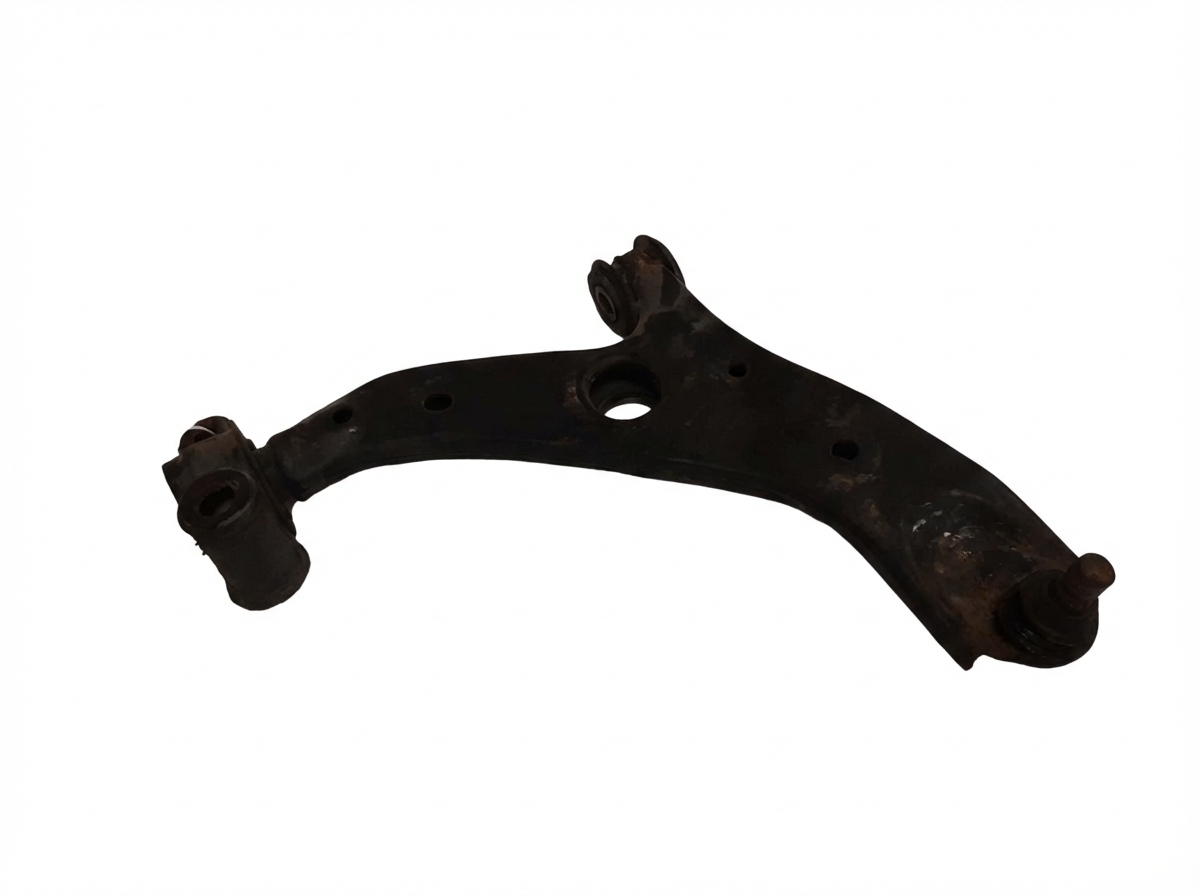
- Check the Bushings: The two rubber bushings are the most critical inspection points. Look for any cracks, tearing, or signs of dry rot in the rubber. The large rear hydro-bushing should be inspected for any signs of leaking fluid, which looks like a dark, oily stain.
- Inspect the Ball Joint: The ball joint is protected by a rubber boot. Ensure this boot is not torn or cracked. Squeeze the joint to feel for excessive play; it should feel firm and move smoothly, not loosely.
- Examine the Arm Itself: Look over the metal arm for any signs of bending, cracks, or significant corrosion that could compromise its structural integrity. Surface rust is normal, but deep, flaking rust is a red flag.
Compatibility and Part Numbers
Warning: Control arms are specific to the left (driver's) and right (passenger's) sides. They are not interchangeable. While many parts are listed for 1999-2001 models, the 1998 model year can sometimes use different components. Always verify the part number or provide the seller with your vehicle's VIN to ensure an exact match. The design changed significantly for the 2002 model year, and those parts will not fit.
Common OEM part numbers for the 1999-2001 era include 5231683 (ball joint kit), 5235574 (left arm), 93185279 (left arm), 5236674 (left arm), 5236682 (right arm), and 93185280 (right arm).
Known Issues, Recalls, and TSBs
There are no recalls specifically for control arm failure on the 1999-2001 Saab 9-5.
However, a related suspension recall was issued on December 23, 2002 (NHTSA Campaign ID: 02V333000) for 1999-2003 models. This recall addressed an issue where rust and debris could build up on the wheel hub when switching between steel and alloy wheels. This could lead to reduced clamping force and potential wheel bolt fracture. This is a wheel hub and bolt issue, not a defect in the control arm itself.
Replacement Overview and Torque Specs
Replacing the control arm is a feasible DIY job for someone with mechanical experience and the right tools. The arm is typically held in place by a bolt through the front bushing, two bolts holding the rear bushing bracket to the subframe, and the pinch bolt or nut for the ball joint at the steering knuckle.
CRITICAL STEP: The bolts for the control arm bushings must only be fully tightened when the vehicle's full weight is on the suspension (i.e., at normal ride height). You can achieve this by placing the jack under the control arm to compress the suspension before torquing the bolts, or by tightening them after the car is back on the ground. Tightening the bolts while the wheel is hanging in the air will twist and destroy the new bushings in a very short time.
| Fastener | Torque Spec |
|---|---|
| Front Bushing Bolt | 48 ft-lb + 90 degrees |
| Rear Bushing Bracket Bolts | 48 ft-lb + 90 degrees |
| Ball Joint to Spindle Bolt/Nut | 37 ft-lb |
Disclaimer: The torque values listed above are from a guide for a 2004 Saab 9-3 and are provided as an example only. Always consult the correct workshop information system (WIS) for your specific 1999-2001 Saab 9-5 to get accurate specifications.
Related Parts
An alignment is not optional after replacing a control arm. Your vehicle's alignment will be significantly out of spec, leading to poor handling and rapid tire wear if not corrected. It is also a good time to inspect and potentially replace the sway bar end links, as they are inexpensive and must be disconnected during the job.
Cost Comparison
Prices can vary significantly based on brand, location, and whether you do the work yourself. The following is an estimate for a single control arm replacement.
| Part/Service | Estimated Cost |
|---|---|
| New OEM | $250 - $500+ |
| New Aftermarket | $80 - $200 |
| Used OEM | $65 - $120 |
| Shop Labor (per side) | $150 - $300 |
| Wheel Alignment | $80 - $200 |
Frequently Asked Questions (FAQ)
Do I need to replace both control arms at the same time?
It is highly recommended. If one control arm has failed due to age or mileage, the other side is likely not far behind. Replacing them in pairs ensures balanced handling and saves you from having to do the same job twice. You will also save money on needing only one wheel alignment.
Can I just replace the bushings or ball joint instead of the whole arm?
While individual bushings and ball joints are available, replacing them requires a hydraulic press and specialized tools, making it a much more difficult job. Since the complete control arm comes with all components pre-installed, replacing the entire assembly is far easier, faster, and generally recommended for both DIY and professional repair.
What is a hydro-bushing?
The large, round rear bushing on the Saab 9-5 control arm is a 'hydro-bushing,' meaning it is filled with hydraulic fluid. This design is excellent at damping vibrations for a smoother ride, but it is a common failure point. When it fails, the fluid leaks out, and the bushing can no longer control the arm's movement, leading to clunking noises.
Is an alignment really necessary after replacing a control arm?
Yes, absolutely. The control arm is a primary component that dictates wheel alignment angles (camber, caster, and toe). Replacing it will alter these settings significantly. Skipping the alignment will result in poor handling, unsafe driving characteristics, and will destroy your front tires very quickly.
Technical Specifications
OEM Part Numbers: 4543484 5239124 93185280 5235574 93185279 5236674 5236682
The assembly includes a front bushing, a rear fluid-filled hydro-bushing, and a ball joint. Part is side-specific (Left/Right).
We Have This Part in Stock

The information in this article is provided for general reference and educational purposes only. Vehicle specifications, procedures, and part compatibility can vary by production date, trim level, and region. Always consult your vehicle's factory service manual and verify part numbers before purchasing or performing repairs. Safety-critical components such as airbags, seat belts, and braking systems should be installed by a qualified professional.
- Saab 9-5:
- 🛍️ Shop This Part
- Symptoms of a Failing Saab 9-5 Control Arm
- Clunking or Knocking Noises
- Steering Wander and Instability
- Vibrations Through the Steering Wheel
- Uneven Tire Wear
- Buying a Used 1999-2001 Saab 9-5 Control Arm
- What to Inspect on a Used Part
- Compatibility and Part Numbers
- Known Issues, Recalls, and TSBs
- Replacement Overview and Torque Specs
- Related Parts
- Cost Comparison
- Frequently Asked Questions (FAQ)
- 🎟️ Get 5% Off